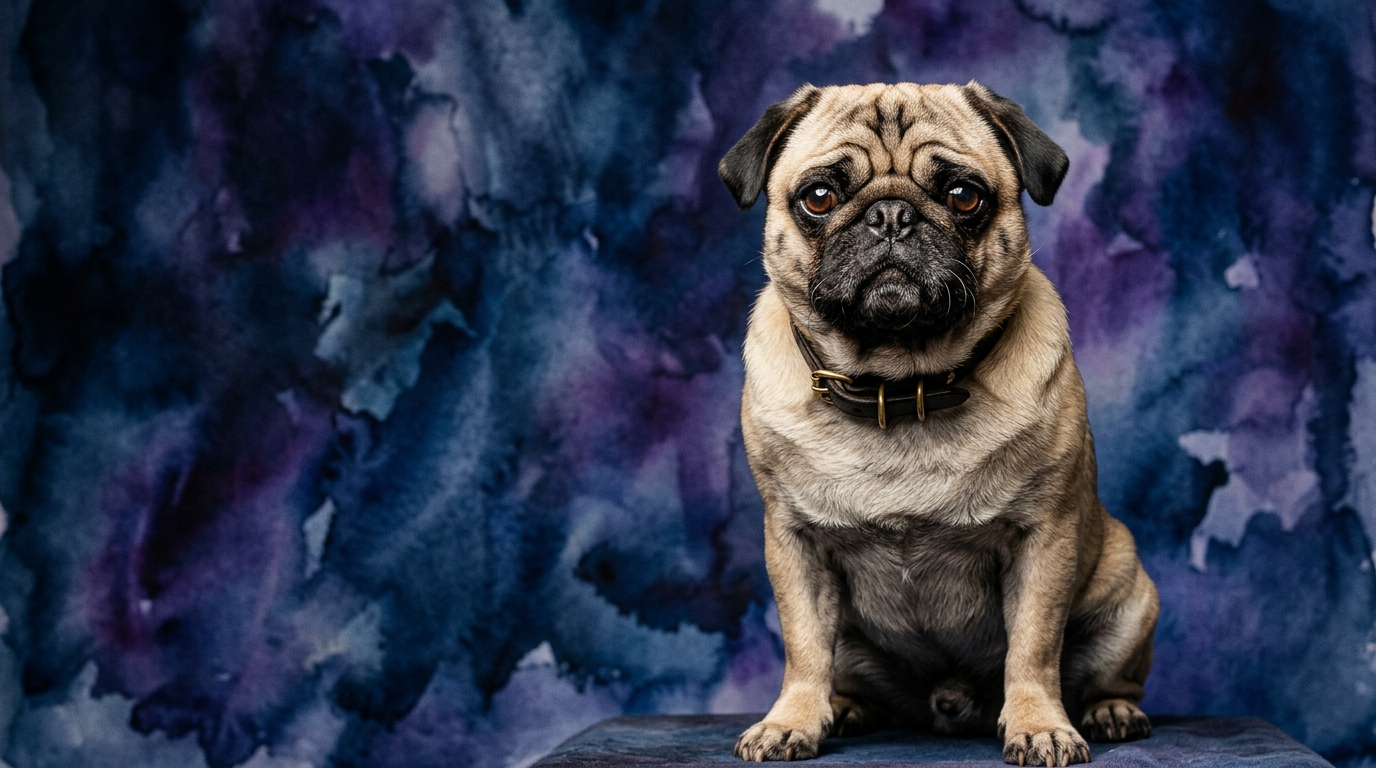
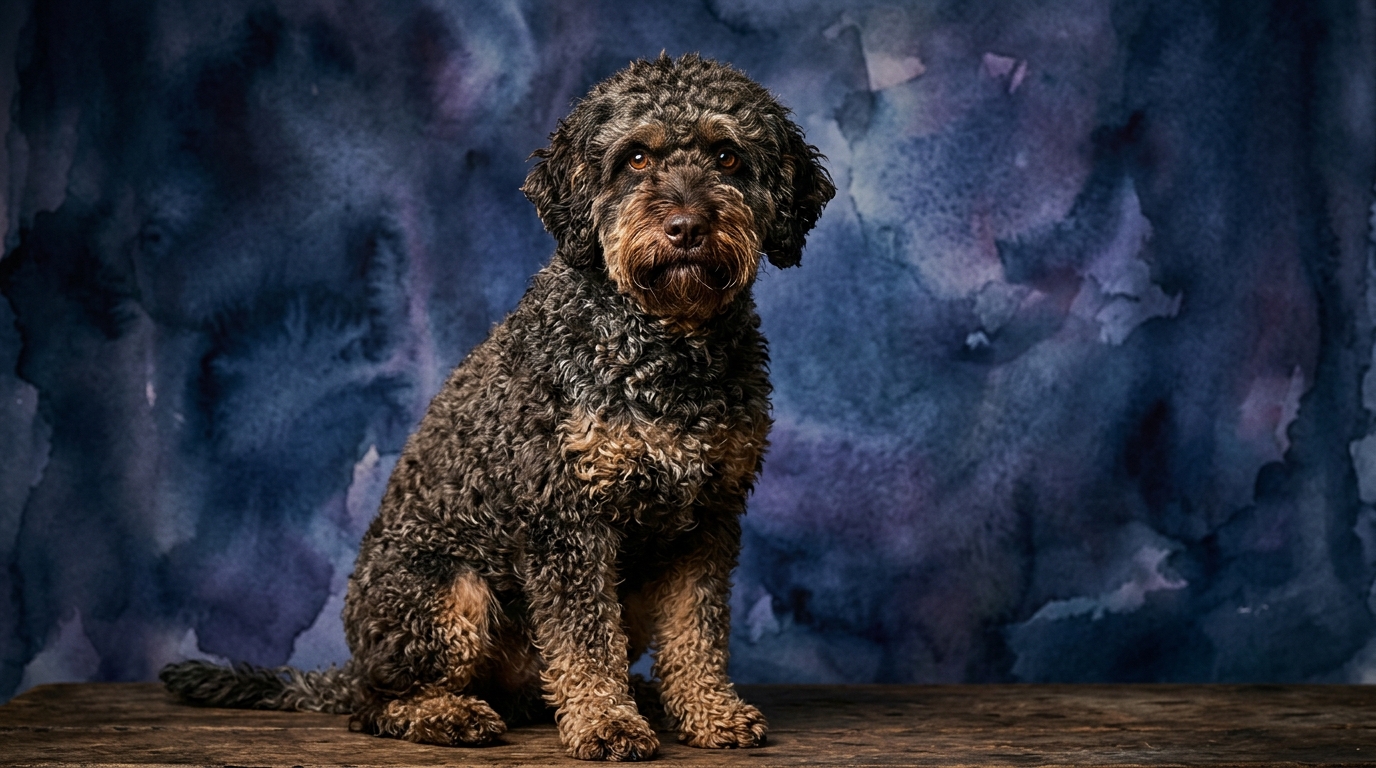
Side-by-Side IQ Profile: Pug vs. Spanish Water Dog
At The Cosmic Pet Pet IQ Lab, we evaluate canine intelligence across five key dimensions, offering a nuanced view beyond traditional rankings. For the Pug, a beloved Toy breed, and the Spanish Water Dog, a spirited Herding breed, these scores illuminate their inherent aptitudes and tendencies.
The Pug's cognitive blueprint shows a Problem Solving score of 2/5, indicating they typically approach novel challenges with less independent strategizing, often relying on learned routines or human guidance. Their Training Speed is also 2/5, meaning they require more repetition and consistent motivation to master new commands, progressing steadily rather than rapidly. However, the Pug truly shines in Social Intelligence, scoring an exceptional 5/5; they possess an uncanny ability to read human emotions and form deep, intuitive bonds. Their Instinctive Drive is a low 2/5, reflecting a focus on companionship over complex working tasks, while their Memory stands at a moderate 3/5, allowing them to retain familiar routines and social cues effectively.
In contrast, the Spanish Water Dog presents a more balanced cognitive profile across several dimensions. Their Problem Solving ability is rated 3/5, suggesting a moderate capacity for independent thought and navigating obstacles. They also boast a Training Speed of 3/5, indicating they learn at a respectable pace, absorbing new commands with moderate repetition due to their working background. Their Social Intelligence is 3/5, meaning they are adept at forming family bonds and understanding dynamics, though not as overtly people-centric as a Pug. Befitting their heritage, their Instinctive Drive is 3/5, manifesting in behaviors like gathering or patrolling. Like the Pug, their Memory is 3/5, enabling them to recall training cues and routines reliably.
Where the Pug Wins Cognitively
The Pug’s standout cognitive strength lies unequivocally in its Social Intelligence (5/5). These dogs are masters of human connection, demonstrating an almost uncanny ability to interpret subtle human emotions, vocal tones, and body language. A Pug will often anticipate a mood change or respond with comforting gestures, making them exceptionally empathetic companions. This deep social attunement allows them to integrate seamlessly into family life, often becoming the emotional barometer of the household. Their cognitive architecture is optimized for companionship, fostering bonds that are rich in mutual understanding and responsiveness.
Where the Spanish Water Dog Wins Cognitively
The Spanish Water Dog excels in areas demanding a blend of practical intellect and intrinsic motivation. Their superior Problem Solving (3/5), compared to the Pug, allows them to navigate more complex environmental challenges or figure out how to access desired objects with a degree of independent thought. Furthermore, their higher Instinctive Drive (3/5) means they possess an innate readiness for purposeful activity, making them more inclined to engage with tasks that require initiation and follow-through, such as retrieving or navigating agility courses. This combination equips them to be more self-directed and adaptable in varied working or active environments.
Which is Easier to Train and Why
When considering ease of training, the Spanish Water Dog generally holds an advantage due to its Training Speed (3/5) and Instinctive Drive (3/5). SWDs, rooted in a working background, often approach training sessions with a focused eagerness and a desire to perform tasks. They tend to grasp new commands and concepts with moderate repetition and respond well to clear instruction, making them suitable for various dog sports or complex tasks. Their inherent drive means they are often self-motivated to engage, translating into quicker progress and a more consistent work ethic.
In contrast, the Pug’s Training Speed (2/5) suggests a need for more patience and creative motivation. While Pugs are certainly trainable, their primary motivation is often comfort and companionship rather than task completion. They can be easily distracted by their human's presence or a cozy spot, requiring trainers to keep sessions short, engaging, and highly rewarding to maintain their focus. Their lower instinctive drive means they are less inclined to perform tasks for their own sake, often preferring to simply be near their people. Effective Pug training often leverages their strong social intelligence, making learning a cooperative, bonding experience rather than a strict obedience regimen.
Which Suits Active Owners vs. Relaxed Owners
The choice between these two breeds largely depends on an owner's lifestyle and energy levels. The Spanish Water Dog is an ideal match for active owners who relish outdoor adventures, dog sports, or mentally stimulating activities. Their higher instinctive drive and problem-solving abilities mean they thrive when given a job to do, whether it's herding, agility, or extensive hikes. Owners who can commit to daily rigorous exercise and consistent mental engagement will find the SWD to be a fulfilling and responsive companion. Their robust nature and need for purpose align perfectly with an energetic, task-oriented lifestyle.
Conversely, the Pug is exceptionally well-suited for relaxed owners who prioritize companionship and comfortable domesticity. Their lower instinctive drive and moderate exercise requirements mean they are content with shorter walks and ample cuddle time on the sofa. Owners who appreciate a dog deeply attuned to their emotional state and who seek a loyal, affectionate presence will find the Pug's exceptional social intelligence to be a perfect fit. They thrive in environments where their primary role is to be a loving, attentive family member, making them superb companions for those with a quieter, less demanding daily routine.
The Verdict
Opt for a Pug if your lifestyle is relaxed and you seek a deeply empathetic, socially attuned companion whose primary purpose is to offer unwavering affection and emotional support within the home.
Select a Spanish Water Dog if you are an active owner eager for a capable, task-oriented partner who thrives on mental challenges, physical exertion, and a clear sense of purpose.
🧠 Find Your Pet's IQ Score
Our Pet IQ Lab assessment covers 25+ tests across 5 cognitive dimensions — personalized to your breed.
Take the Full IQ Test →Frequently Asked Questions
Are Pugs difficult to train because of their low training speed score?
Pugs are not inherently difficult, but their training requires patience and consistent positive reinforcement. Their lower training speed means they may take longer to master commands, but their strong social intelligence makes them eager to please their human companions.
Does the Spanish Water Dog's instinctive drive make them hard to manage in a home environment?
The Spanish Water Dog's instinctive drive, while notable, can be channeled positively through training and purposeful activities. Providing ample mental and physical stimulation is key to managing their energy and ensuring they are well-behaved, preventing boredom-related behaviors.
How does a Pug's high social intelligence manifest in daily life?
A Pug's high social intelligence means they are exceptionally attuned to human emotions and social cues, often anticipating their owner's needs or mood. They are very responsive to interaction, making them intuitive companions who form deep, empathetic bonds with their families.