
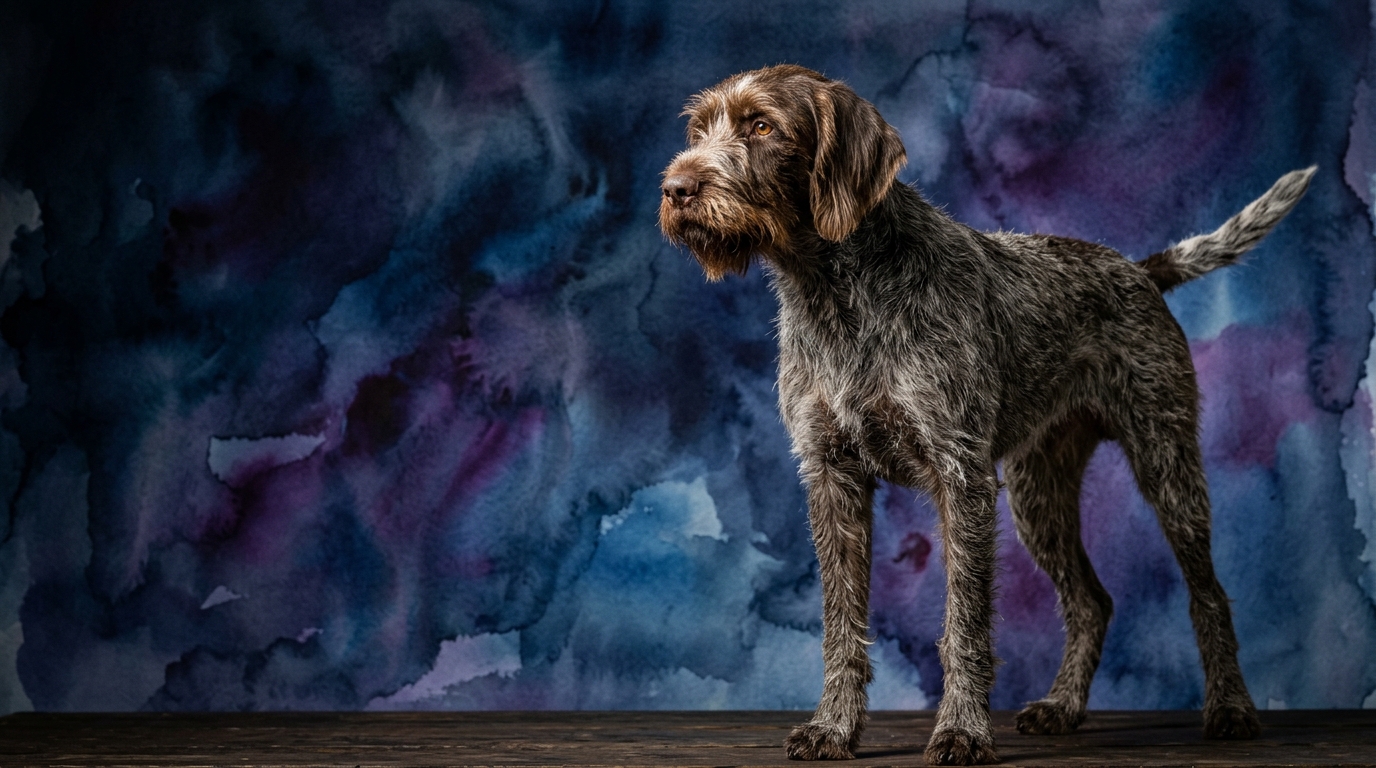
Side-by-Side IQ Profile: Pug vs. Wirehaired Pointing Griffon
The Cosmic Pet Pet IQ Lab employs a multi-dimensional approach to assess canine cognition, moving beyond singular intelligence metrics. For the Pug, a Toy breed, their Coren rank of #57 places them in a category often associated with specific learning styles, while the Wirehaired Pointing Griffon, a Sporting breed, does not have a Coren ranking, necessitating a direct look at its individual cognitive scores.
Let's break down the five key dimensions for each breed: Problem Solving, Training Speed, Social Intelligence, Instinctive Drive, and Memory.
**Pug (Toy Breed)**: With a **Problem Solving** score of 2/5, Pugs typically approach novel challenges with less independent strategy, often relying on learned routines or human guidance rather than intricate logical deduction. Their **Training Speed** at 2/5 suggests they may require more repetition and patience to master new commands, taking longer to form associations between actions and consequences. The Pug truly shines in **Social Intelligence** with a perfect 5/5, indicating an exceptional ability to read human emotions, respond to social cues, and form deep, nuanced bonds. Their **Instinctive Drive** is low at 2/5, reflecting a breed primarily developed for companionship rather than complex working tasks, meaning they possess minimal innate prey drive or guarding tendencies. Finally, their **Memory** score of 3/5 is average, allowing them to retain familiar routines and learned behaviors consistently.
**Wirehaired Pointing Griffon (Sporting Breed)**: The Wirehaired Pointing Griffon (WPG) presents a balanced cognitive profile across the board. Their **Problem Solving** score of 3/5 shows a moderate capacity for independent thought and strategic thinking when faced with new situations, demonstrating an ability to adapt and figure things out. A **Training Speed** of 3/5 indicates they learn new commands at a respectable pace, often responding well to structured training methods. Their **Social Intelligence** also stands at 3/5, suggesting they are capable of forming strong bonds and understanding human cues, though perhaps not with the same nuanced sensitivity as a Pug. The WPG's **Instinctive Drive** is a solid 3/5, reflecting their heritage as a hunting dog with a moderate but manageable desire to point, retrieve, and follow scent. Their **Memory**, like the Pug's, is 3/5, enabling them to recall training and experiences effectively.
Where the Pug Wins Cognitively
The Pug's undisputed cognitive strength lies in its profound social intelligence. Scoring a perfect 5/5, Pugs possess an unparalleled capacity for emotional attunement and human connection. This isn't merely about affection; it's a sophisticated ability to interpret subtle shifts in human mood, understand vocal intonations, and respond with appropriate comforting or engaging behaviors. A Pug can often anticipate a human's emotional state, offering a gentle nudge or a quiet presence precisely when needed, demonstrating a deep empathetic understanding that goes beyond simple learned responses. Their high social intelligence makes them exceptionally adaptable to various household dynamics and remarkably sensitive companions.
Furthermore, this social acumen contributes to their remarkable adaptability as household members. While they might not be quick to learn complex tricks, their ability to integrate seamlessly into a family's rhythm, understand social hierarchies, and seek appropriate attention from different individuals is a testament to their cognitive strength in this domain. They excel at being present and engaged in a way that enriches the human experience, demonstrating a mastery of the social contract inherent in pet ownership.
Where the Wirehaired Pointing Griffon Wins Cognitively
The Wirehaired Pointing Griffon's cognitive advantages are rooted in its practical intellect and working heritage. With higher scores in Problem Solving (3/5), Training Speed (3/5), and Instinctive Drive (3/5), the WPG demonstrates a more robust capacity for independent action and applied learning. Their problem-solving abilities allow them to navigate complex outdoor environments, figure out how to retrieve a hidden toy, or adapt to new training scenarios with more initiative. This cognitive flexibility means they are less likely to become flustered by unexpected situations and more inclined to find a solution independently.
Their superior training speed and moderate instinctive drive work synergistically, making them more amenable to learning and executing tasks that tap into their natural inclinations. For example, a WPG will likely grasp the concept of 'stay' or 'fetch' more quickly and reliably than a Pug, especially when these commands are linked to a rewarding activity like retrieving. This blend of attributes makes them highly capable partners for activities requiring focus, sequential learning, and a degree of independent decision-making, such as advanced obedience, agility, or field work.
Which is Easier to Train and Why
When considering ease of training, the Wirehaired Pointing Griffon generally presents a more straightforward path for most owners, primarily due to their higher Training Speed (3/5) and more balanced Problem Solving (3/5) and Instinctive Drive (3/5) scores. WPGs tend to pick up new commands and routines at a good pace, often showing a keen desire to work alongside their human. Their moderate instinctive drive means they are often motivated by tasks that mimic their natural hunting behaviors, such as retrieving or scent work, which can be effectively channeled into training. They respond well to consistent, positive reinforcement and typically generalize learned behaviors to new environments with relative ease.
In contrast, the Pug's lower Training Speed (2/5) and Problem Solving (2/5) scores mean they often require more patience, repetition, and creative motivation during training. Pugs might take longer to grasp new concepts or might need commands broken down into smaller, simpler steps. Their training success often hinges on an owner's ability to make learning fun and rewarding, utilizing their high social intelligence to foster cooperation rather than relying on their independent problem-solving skills. While Pugs can certainly be trained, the process typically demands a more dedicated and consistent approach, sometimes feeling more like gentle persuasion than direct instruction, especially for complex behaviors.
Which Suits Active Owners vs. Relaxed Owners
The distinction in cognitive profiles clearly delineates which breed would be a better fit for different owner lifestyles. For highly active owners who enjoy outdoor adventures, dog sports, or have a desire for a canine partner in working tasks, the Wirehaired Pointing Griffon is an ideal match. Their moderate instinctive drive, problem-solving skills, and training speed mean they thrive with regular physical exertion and mental stimulation. WPGs enjoy activities like hiking, running, fetching, and engaging in structured training sessions that challenge both their bodies and minds. An owner who can provide consistent outlets for their energy and intellect will find a devoted and capable companion in a Griffon, preventing boredom-induced behaviors.
Conversely, for relaxed owners seeking a devoted, low-key companion who excels at domestic life, the Pug is an excellent choice. Their high social intelligence makes them superb snuggle buddies and attentive household members, perfectly content with shorter walks, indoor play, and plenty of lap time. Pugs are less demanding of extensive physical exercise or complex mental challenges, preferring to be close to their humans and observing the daily rhythm of the home. An owner who appreciates a deeply affectionate, socially astute, and relatively low-maintenance companion in terms of activity requirements will find immense joy with a Pug.
The Verdict: When to Choose Each
Choosing between a Pug and a Wirehaired Pointing Griffon ultimately comes down to aligning their distinct cognitive strengths with your lifestyle and expectations for a canine partner. Both breeds offer unique companionship, but their innate predispositions guide their ideal roles.
If your life is centered around cozy companionship, profound emotional connection, and a relaxed pace, the Pug will be an unparalleled addition, providing deep social bonds and constant, gentle presence. If you lead an active, outdoors-oriented life, seeking a capable partner for adventures and mental engagement, the Wirehaired Pointing Griffon offers a robust combination of intellect, drive, and trainability.
The Verdict
Choose a Pug if you prioritize an exceptionally socially intelligent companion for a relaxed, affectionate home life, valuing emotional connection over complex training or high activity. They are masters of companionship and thrive on close human interaction.
Choose a Wirehaired Pointing Griffon if you're an active owner seeking a capable, trainable partner for outdoor adventures, dog sports, or hunting, who can engage in problem-solving and learn tasks with moderate speed and independence.
🧠 Find Your Pet's IQ Score
Our Pet IQ Lab assessment covers 25+ tests across 5 cognitive dimensions — personalized to your breed.
Take the Full IQ Test →Frequently Asked Questions
Are Pugs difficult to train?
Pugs are not inherently difficult to train, but their lower Training Speed and Problem Solving scores mean they require more patience and consistency. Owners often find success by using positive reinforcement, making training sessions fun, and keeping them short to accommodate their attention span.
Do Wirehaired Pointing Griffons need a lot of exercise?
Yes, Wirehaired Pointing Griffons do require a significant amount of exercise and mental stimulation due to their sporting dog heritage and moderate instinctive drive. Daily vigorous activity, such as long walks, runs, or engaging play, is essential to keep them content and well-behaved.
Which breed is better with children?
Both breeds can be good with children, but their approaches differ. Pugs, with their high social intelligence, are often gentle and adaptable, making them patient companions for respectful children. Wirehaired Pointing Griffons, being more active, might be better suited for families with older, active children who can engage in play and outdoor activities with them, though proper socialization is key for both.