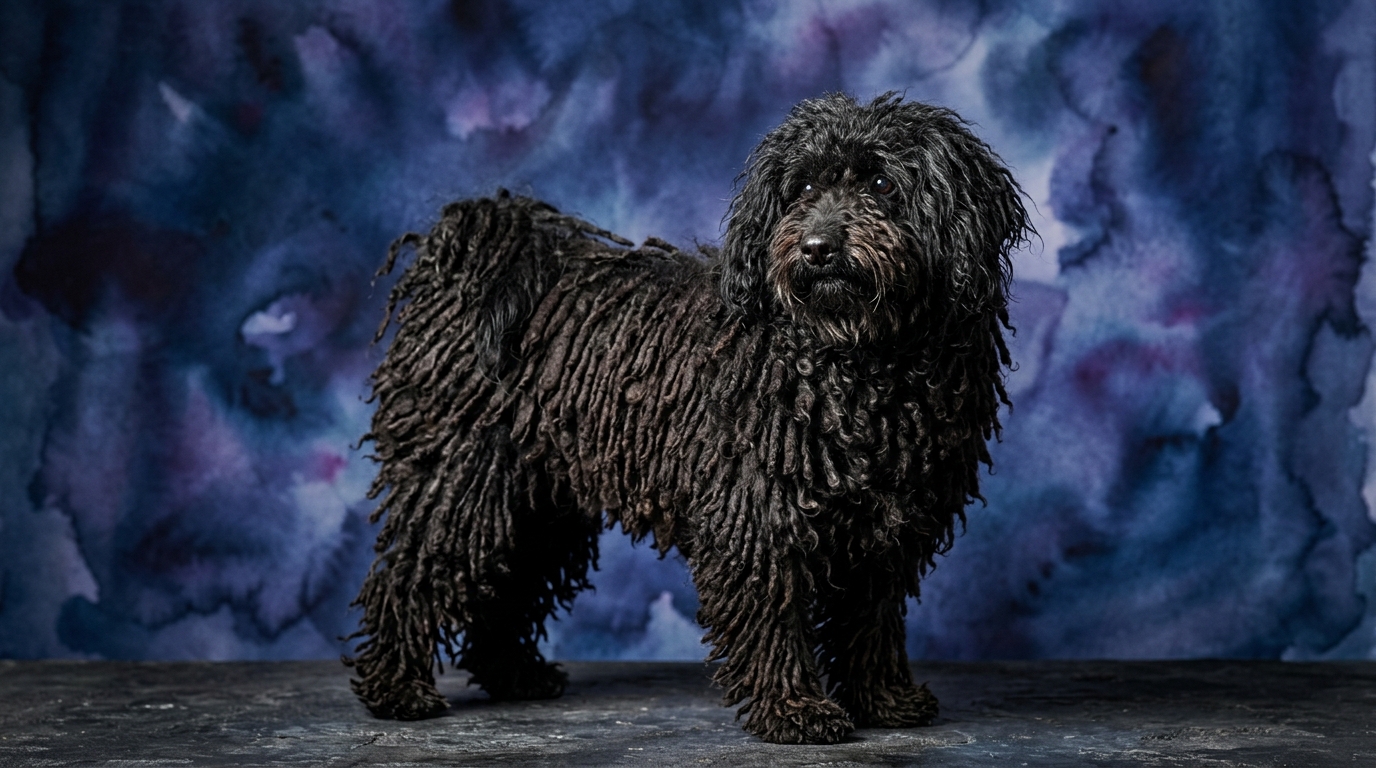
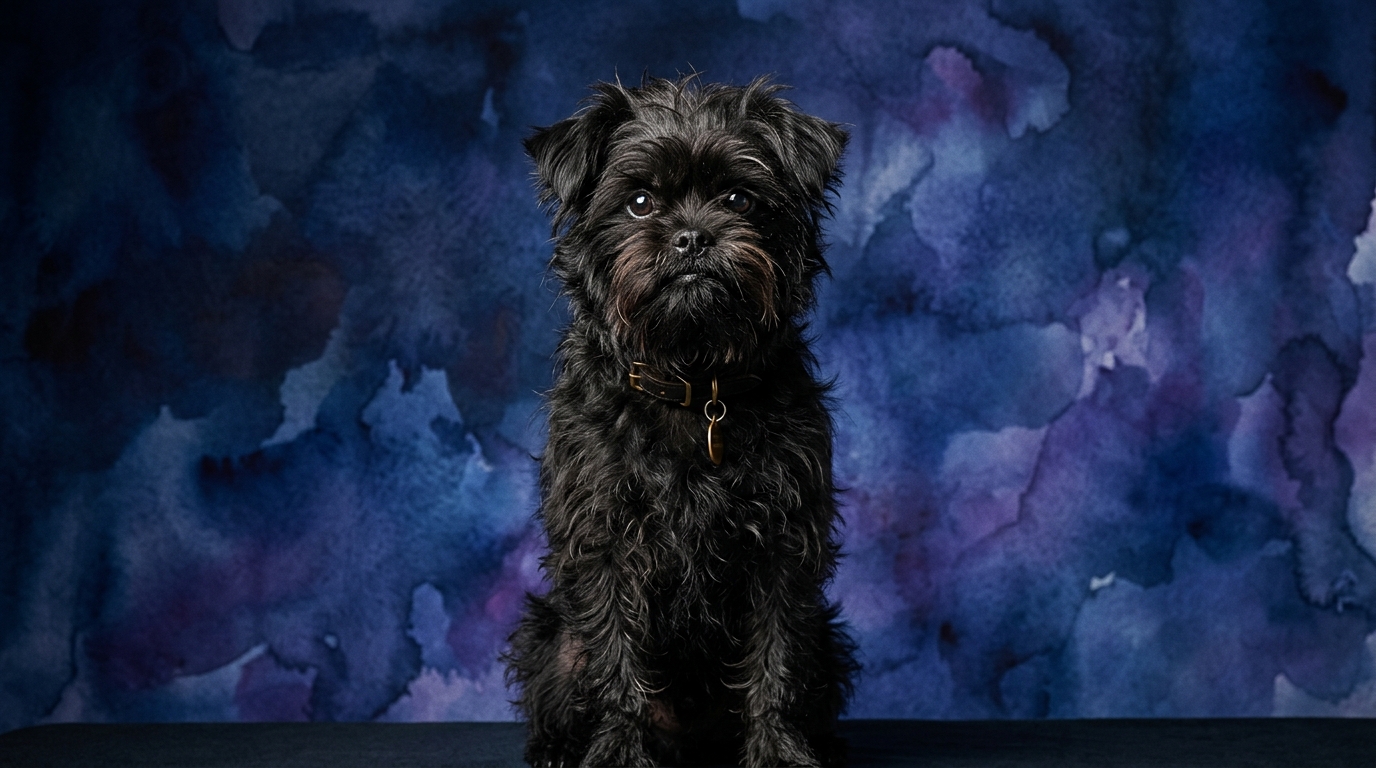
Side-by-Side IQ Profile: Puli vs. Affenpinscher
The Cosmic Pet Pet IQ Lab employs five key dimensions to evaluate canine cognitive faculties, offering a nuanced view beyond simple labels. For the Puli, a Herding breed, we observe a Problem Solving score of 4/5, indicating a strong capacity for navigating complex scenarios and devising multi-step solutions. Their Training Speed is also rated at 4/5, suggesting a rapid assimilation of new commands and concepts, often requiring fewer repetitions to solidify learning. Social Intelligence stands at 3/5, meaning they possess adequate understanding of social cues but may prioritize tasks over subtle social interactions. Instinctive Drive, rated 3/5, reflects their moderate herding impulses and a focused determination when engaged. Finally, Memory at 4/5 highlights their proficiency in retaining learned behaviors, spatial layouts, and command sequences over time. The Puli is notably ranked #25 by Coren, placing it among breeds that demonstrate a keen aptitude for obedience and adaptive working.
In contrast, the Affenpinscher, a Toy breed, presents a balanced cognitive profile suitable for its companion role. Its Problem Solving ability is rated 3/5, indicating they can tackle straightforward puzzles and learn through exploration, though they might require more guidance for intricate tasks. Training Speed also sits at 3/5; Affenpinschers learn consistently, benefiting from patient and positive reinforcement, steadily building their repertoire of learned behaviors. Their Social Intelligence is 3/5, demonstrating an ability to form strong bonds and respond to human moods, crucial for their close companionship. Instinctive Drive, rated 3/5, manifests as a curious engagement with their environment and a playful nature, rather than a strong working drive. Memory is 3/5, enabling them to recall familiar routines, people, and basic commands reliably. The Affenpinscher is not Coren-ranked, which is common for many toy breeds whose cognitive strengths often lie in social attunement and adaptability to domestic life rather than complex working obedience.
Where the Puli Wins Cognitively
The Puli exhibits clear cognitive advantages in areas demanding independent thought and complex information processing, directly stemming from its herding lineage. With a Problem Solving score of 4/5 compared to the Affenpinscher's 3/5, Pulis are adept at figuring out intricate challenges. This means they can often devise solutions to novel situations, such as navigating a complex agility course or understanding multi-stage commands without constant human intervention. Their herding background required them to assess dynamic situations, anticipate livestock movement, and make decisions autonomously, fostering a mind that thrives on cognitive engagement.
Furthermore, the Puli’s superior Training Speed (4/5 versus Affenpinscher’s 3/5) and Memory (4/5 versus 3/5) are significant differentiators. A Puli can typically grasp new commands and associate actions with cues more rapidly, consolidating that learning into long-term memory with greater efficiency. This allows for the teaching of a broader and more complex range of behaviors, from advanced obedience routines to intricate tricks, and they are less likely to forget these skills over time. Their memory also extends to spatial awareness, making them proficient at remembering routes or the location of objects, a valuable trait for a working dog.
Where the Affenpinscher Wins Cognitively
While the Affenpinscher's numerical scores may not surpass the Puli in raw problem-solving or training speed, their cognitive strengths are uniquely tailored to their role as a devoted companion, offering a different kind of mental aptitude. Their Social Intelligence, rated 3/5, is particularly effective within the context of a close human-dog bond. Affenpinschers often exhibit a nuanced understanding of their owner’s emotional state and intentions, making them highly responsive to subtle cues and excellent at providing comfort or companionship. This social attunement is a cognitive win for a breed whose primary function is to interact closely with people, fostering deep emotional connections.
The Affenpinscher’s Instinctive Drive (3/5) also manifests in a way that is highly beneficial for a companion animal. Rather than a drive for complex tasks, it translates into a lively curiosity and an engaging playfulness that enriches the owner-pet relationship. Their drive might be focused on exploring their immediate environment, engaging in interactive games, or simply observing family activities, demonstrating an active, curious mind that finds fulfillment in domestic settings. This type of cognitive engagement, while different from a herding dog's, is perfectly suited for a pet that thrives on consistent, loving interaction within the home.
Which Is Easier to Train and Why
When considering ease of training, the Puli generally presents a more straightforward path for owners seeking to teach a wide array of commands and behaviors. Their 4/5 Training Speed means they form associations quickly and are often eager to engage in structured learning. Pulis respond well to clear, consistent instruction and thrive on mental challenges, which can make training sessions highly productive. Their problem-solving acumen means they often 'figure out' what is expected, rather than just repeating a learned action, accelerating the training process for complex sequences or advanced skills. They are often motivated by the opportunity to work and please their handler.
The Affenpinscher, with a 3/5 Training Speed, requires a different approach to training. They are certainly trainable, but they benefit significantly from shorter, more frequent sessions and a highly positive, reward-based methodology. Their learning is steady, but it typically requires more repetition to solidify new behaviors compared to a Puli. Affenpinschers can also exhibit a playful stubbornness, a common trait in many smaller breeds, which means owners need patience and creativity to keep them engaged. Their training might focus more on consistent house manners, basic obedience, and charming tricks, often motivated by social rewards and tasty treats rather than the intrinsic satisfaction of a complex task.
Which Suits Active Owners vs. Relaxed Owners
The Puli is an ideal match for active owners who are prepared to meet a significant demand for mental and physical engagement. Owners who enjoy dog sports like agility, obedience trials, or even real-world herding will find the Puli's 4/5 problem-solving and training speed to be a tremendous asset. They require an owner who can consistently provide stimulating activities, varied walks, and opportunities for their dog to think and work. A Puli thrives when given a 'job' to do, even if that job is navigating a complex puzzle toy or mastering a new trick. Without sufficient mental exercise, their cognitive capacities can lead to boredom and potentially undesirable behaviors.
Conversely, the Affenpinscher is better suited for more relaxed owners who appreciate consistent, loving companionship and moderate activity levels. While not a sedentary breed, their cognitive needs are met through regular interactive play, short daily walks, and engaging with their human family. Owners who enjoy teaching basic manners, playing fetch in the living room, and cuddling on the couch will find the Affenpinscher's social intelligence and playful nature to be a perfect fit. They do not demand complex training or extensive outdoor adventures to be content, thriving instead on routine, affection, and being an integral part of daily household life.
The Verdict
Choose the Puli if you are an active owner seeking a highly trainable canine partner for advanced obedience, dog sports, or a working role, capable of complex problem-solving and rapid learning. This breed thrives on consistent mental challenges and a structured environment.
Opt for the Affenpinscher if you desire a devoted, charming companion who flourishes with consistent interaction, moderate physical activity, and engaging, positive-reinforcement based training in a relaxed home environment. They excel in social bonding and provide delightful companionship.
🧠 Find Your Pet's IQ Score
Our Pet IQ Lab assessment covers 25+ tests across 5 cognitive dimensions — personalized to your breed.
Take the Full IQ Test →Frequently Asked Questions
Do Pulis require a lot of mental stimulation?
Yes, Pulis, with their 4/5 problem-solving and memory, thrive on regular mental challenges like puzzle toys, advanced obedience training, and opportunities to use their herding instincts, preventing boredom and channeling their cognitive drive constructively.
Are Affenpinschers difficult to train?
Affenpinschers are not difficult but require consistent, positive reinforcement due to their 3/5 training speed; they learn steadily with patience and benefit from short, engaging sessions focused on basic manners and social skills rather than complex tasks.
How does a Herding dog's intelligence differ from a Toy dog's?
Herding dogs like the Puli often excel in complex problem-solving, multi-step tasks, and spatial reasoning due to their historical roles, while Toy dogs like the Affenpinscher often exhibit strengths in social attunement, adaptability to companion life, and responsiveness to human emotional cues.