
Side-by-Side Cognitive Profiles: Puli vs. Basset Hound
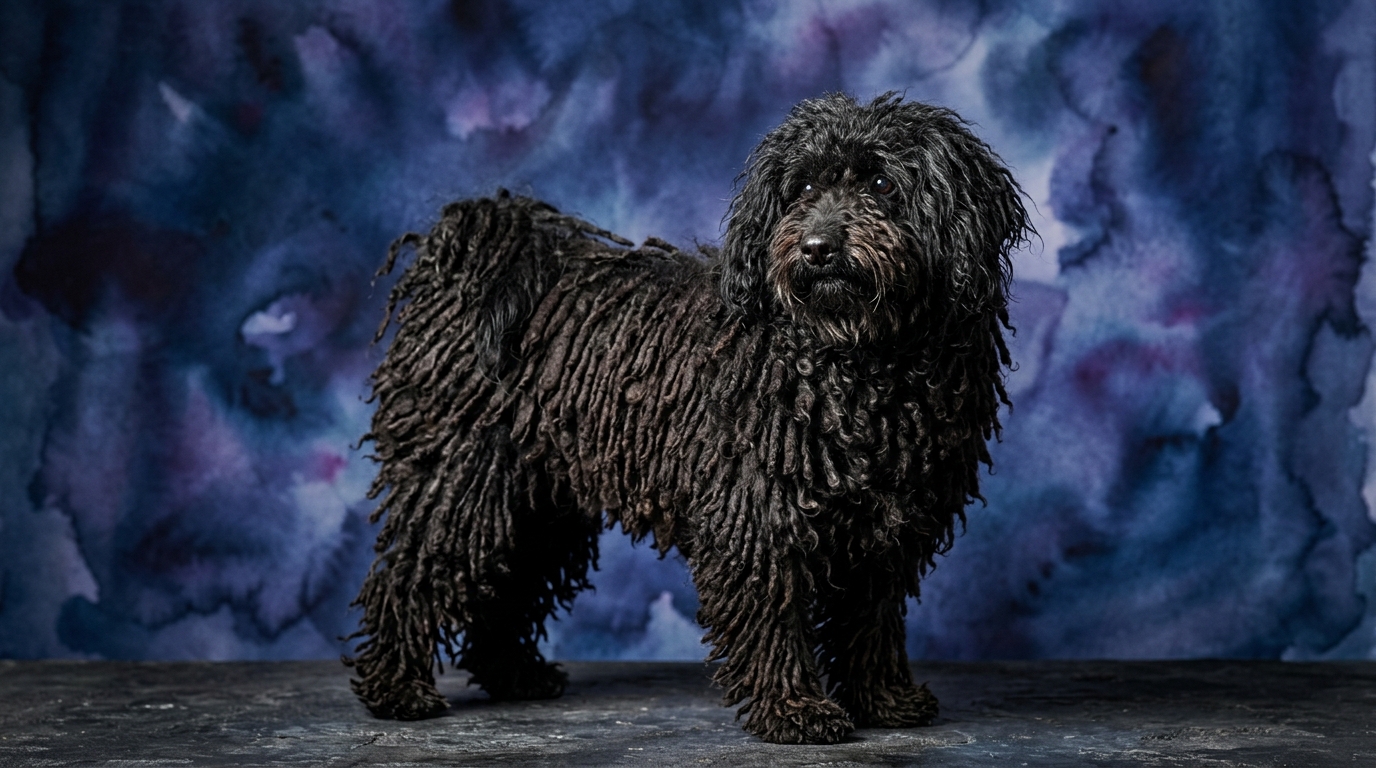
At The Cosmic Pet Pet IQ Lab, we delve into the intricate cognitive landscapes of different breeds to understand their unique mental strengths. The Puli, a Hungarian herding dog with a Coren rank of #25, presents a profile tuned for active collaboration and swift decision-making. Its Problem Solving is rated at 4/5, indicating an agile mind capable of navigating complex scenarios and adapting quickly. Training Speed for the Puli also stands strong at 4/5, reflecting a breed that typically grasps new commands and routines with enthusiasm and relative ease. Social Intelligence is 3/5, suggesting a capacity for connection but often with a reserved demeanor towards strangers, prioritizing its family unit. The Instinctive Drive is 3/5, channeling its herding heritage into a desire for order and control, which can be expressed in various activities. Finally, its Memory scores 4/5, demonstrating excellent retention of learned behaviors and experiences.
In contrast, the Basset Hound, a deep-chested hound breed with a Coren rank of #71, offers a cognitive profile shaped by centuries of independent scent-tracking. Its Problem Solving is rated 3/5, where solutions often revolve around the relentless pursuit of an olfactory target rather than abstract reasoning or quick strategic shifts. Training Speed is also 3/5, indicating that while Bassets can learn, their independent nature and powerful nose often lead to a more deliberate and patience-testing training process. Social Intelligence is 3/5; Bassets are generally amiable and good-natured, but their focus is frequently inward, engrossed in their scent world rather than constantly seeking human interaction cues. The Instinctive Drive, rated 3/5, is overwhelmingly dominated by their olfactory prowess, driving them to follow a scent trail with profound dedication. Their Memory, at 3/5, is particularly adept at recalling scent patterns and routes, though human-initiated commands might be subject to the whims of a compelling aroma.
Where the Puli's Cognitive Strengths Shine
The Puli’s cognitive architecture excels in scenarios demanding swift analysis and responsive action. With a Problem Solving score of 4/5, they demonstrate a remarkable capacity for navigating novel environments or tasks, such as figuring out how to bypass an unexpected obstacle on an agility course or understanding complex multi-step commands. This adaptive intelligence stems directly from their historical role as herders, where quick, independent decisions were crucial for managing livestock.
Furthermore, the Puli’s superior Training Speed (4/5) and Memory (4/5) combine to create a dog that not only learns new skills quickly but retains them with impressive fidelity. This allows for the development of an extensive repertoire of commands and tricks, fostering a highly communicative and collaborative relationship with their human companions. Their attentiveness to their handler, a hallmark of many herding breeds, means they are consistently looking for direction and eager to engage in mentally stimulating activities.
The Basset Hound's Unique Cognitive Advantages
While the Puli shines in agility and rapid learning, the Basset Hound possesses a distinct set of cognitive strengths rooted in its primary purpose: scent work. Its Problem Solving (3/5) might not involve complex abstract thought, but it demonstrates unparalleled determination in overcoming physical barriers to access a scent. A Basset will methodically work its way through dense undergrowth or around obstacles, driven by an unwavering olfactory goal, a specialized form of persistence that few breeds can match.
The Basset's Instinctive Drive (3/5) is a singular, powerful force, enabling it to track faint, aged trails for extended periods, tuning out distractions that would overwhelm other dogs. This deep-seated drive, combined with a memory particularly attuned to scent information (3/5), means they can follow incredibly complex paths. Their amiable Social Intelligence (3/5) further allows them to work alongside humans without requiring constant reassurance or direction, comfortable in their own focused pursuit.
Training Dynamics: Puli's Aptitude vs. Basset's Persistence
When it comes to training, the Puli’s 4/5 Training Speed makes them a generally receptive student. They are typically eager to please their human, quick to form associations between commands and actions, and respond well to positive reinforcement. Their herding background instills a desire for structure and a willingness to follow direction, making them excellent candidates for advanced obedience, rally, or dog sports where precision and teamwork are paramount. A Puli is likely to watch its handler for the next cue, ready to engage.
The Basset Hound, with its 3/5 Training Speed, presents a different challenge. While they are capable of learning, their independent nature and overwhelming scent drive often mean their attention is elsewhere. Training a Basset requires exceptional patience, consistency, and high-value rewards to compete with the allure of a captivating odor. A Basset might be perfectly aware of a command but choose to prioritize an interesting scent on the ground, making recall particularly challenging in distracting environments.
The fundamental behavioral difference lies in their intrinsic motivations: the Puli is often driven by a desire for collaboration and a 'job' alongside its human, whereas the Basset is primarily driven by its nose and its ancient instinct to track. This means that while both breeds can be trained, the Puli typically offers a more straightforward and rapid learning curve, while the Basset demands a more understanding and adaptable approach from its trainer, respecting its unique cognitive priorities.
Matching Owners: Active Engagement vs. Mellow Companionship
For owners seeking an active and mentally engaged companion, the Puli is often an ideal match. Their high Problem Solving and Training Speed scores mean they thrive on regular mental stimulation, structured activities, and consistent interaction. Owners who enjoy dog sports like agility, herding trials, or even just complex puzzle toys will find a Puli eager to participate and excel, appreciating a dog that is always ready for the next challenge.
Conversely, the Basset Hound suits owners who appreciate a more relaxed pace and a dog with a singular, deep-seated passion for scent. These are companions for individuals who are patient, understand the allure of a good sniff, and are content with leisurely, sniff-filled walks rather than high-octane exercise. Basset owners will find joy in their dog's placid demeanor at home and their profound dedication to following a trail, even if it means training requires more creative persistence.
The Verdict: Choosing Your Canine Companion
The Verdict
Choose a Puli if you seek an engaging, quick-learning companion that thrives on collaborative tasks, active pursuits, and complex mental stimulation. They are well-suited for owners who enjoy structured training and a dog that is highly attentive to their direction.
Opt for a Basset Hound if you desire a calm, persistent companion who appreciates their independent, scent-driven nature, and you are prepared for patient, consistent training methods. They are ideal for owners who enjoy leisurely explorations and a dog whose primary joy is following its nose.
🧠 Find Your Pet's IQ Score
Our Pet IQ Lab assessment covers 25+ tests across 5 cognitive dimensions — personalized to your breed.
Take the Full IQ Test →Frequently Asked Questions
Are Pulis good family dogs?
Pulis can be devoted family members, often forming strong bonds with their primary caregivers. They require proper socialization from a young age to ensure they are comfortable with various people and situations, given their sometimes reserved social intelligence, but thrive within a consistent family unit.
What kind of exercise does a Basset Hound need?
Basset Hounds require moderate, consistent exercise, primarily long, leisurely walks where they can indulge their powerful sense of smell. While not high-energy, regular activity helps maintain their physical health, prevents obesity, and provides essential mental enrichment through scent exploration.
Can a Basset Hound be trained for obedience?
Basset Hounds can certainly learn obedience, but their independent nature and strong scent drive mean training requires significant patience, positive reinforcement, and high-value rewards. Consistency in training is paramount to overcoming their selective attention, especially when a compelling scent is present.