Side-by-Side IQ Profile: Puli vs. German Wirehaired Pointer
**Puli (Herding, Coren rank #25)**
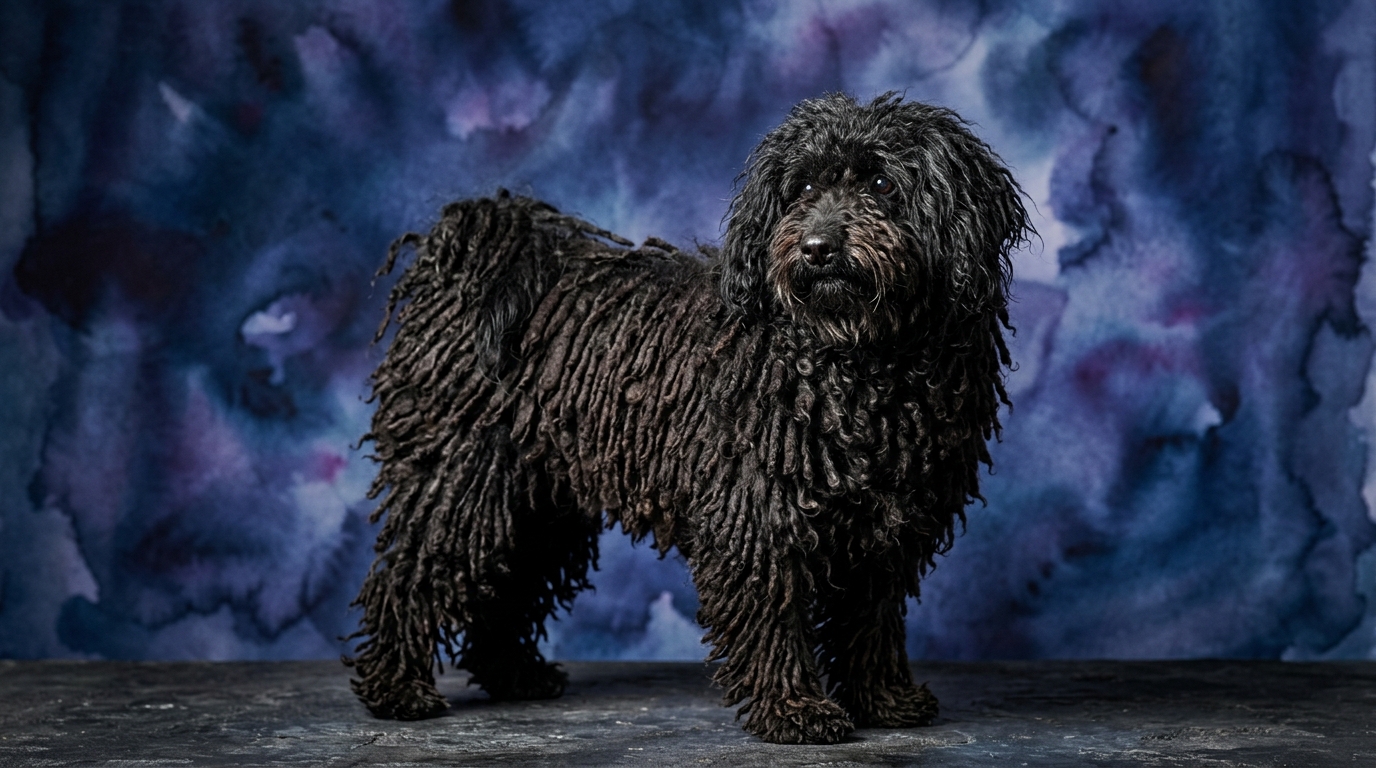
The Puli, a Hungarian herding dog, showcases a cognitive profile refined by centuries of managing livestock. Their **Problem Solving (4/5)** acumen is rooted in independently assessing dynamic situations, like a straying sheep, and devising on-the-spot solutions to maintain flock order. They excel at spatial reasoning within complex, shifting environments, making quick decisions without constant human intervention. Their **Training Speed (4/5)** reflects an eagerness to grasp intricate command sequences and understand the underlying purpose of tasks, particularly those aligning with their natural instincts to control and organize. Pulis can learn advanced obedience and agility routines with impressive efficiency, often anticipating the next step. While not overtly gregarious, their **Social Intelligence (3/5)** is geared towards their working unit – primarily their flock and handler. They are adept at interpreting subtle cues from their shepherd, understanding their position within the social hierarchy of the farm, and maintaining a watchful, protective stance towards their charges. Their **Instinctive Drive (3/5)** is primarily channeled into herding, a complex behavior involving circling, gathering, and driving livestock with controlled urges to manage and protect. This moderate drive allows for a balance between intense focus and responsiveness to human direction. Pulis possess an excellent **Memory (4/5)** for routines, commands, and spatial layouts, crucial for navigating large pastures and remembering precise methods for moving specific groups of animals.
**German Wirehaired Pointer (Sporting, Coren rank #28)**
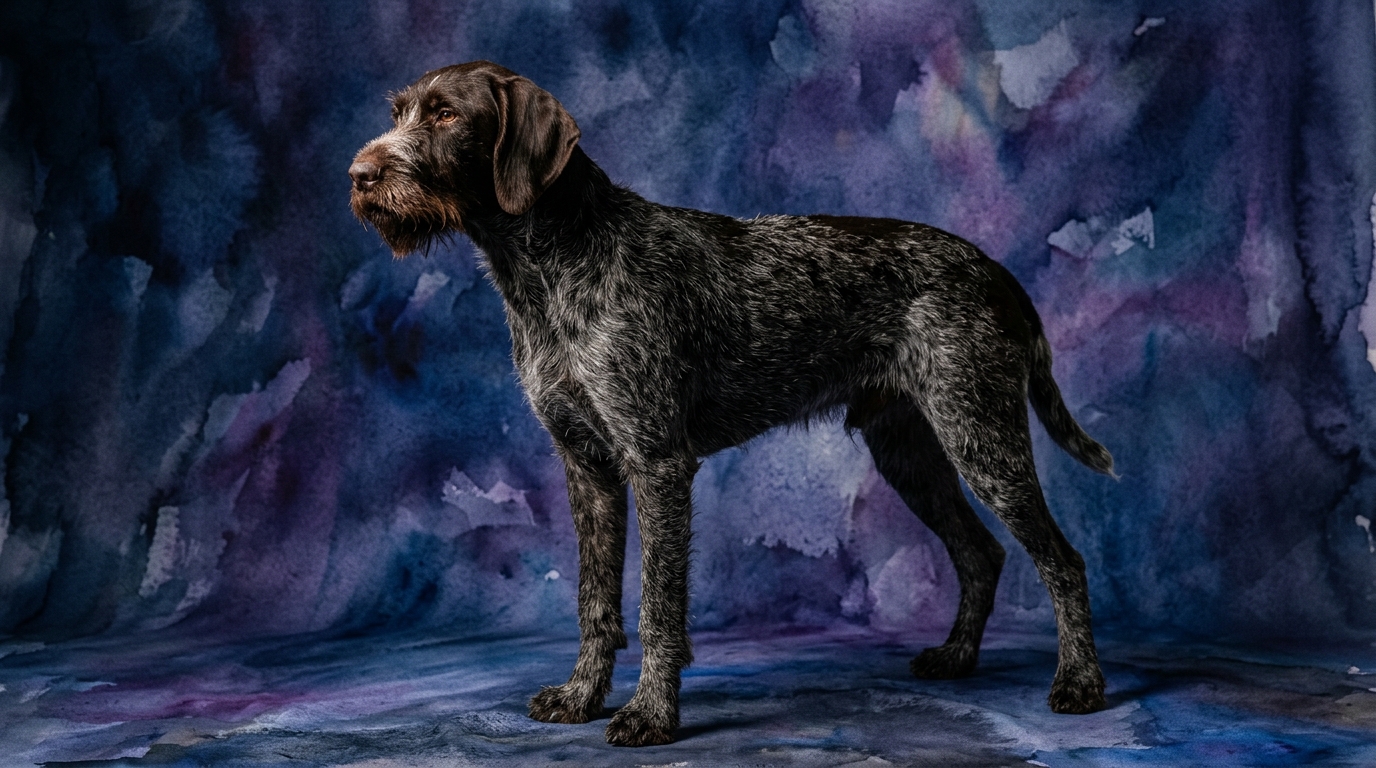
The German Wirehaired Pointer (GWP), bred for versatile hunting, applies its cognitive strengths to the field. Their **Problem Solving (4/5)** involves deciphering complex scent trails, navigating varied terrain to locate hidden game, and strategizing the most efficient path to retrieve. Their cognitive process often involves trial-and-error, learning from each attempt to refine their approach to finding and flushing game. GWPs demonstrate a rapid capacity to learn new commands and procedures, particularly those related to their hunting duties, reflecting their **Training Speed (4/5)**. Their drive to work alongside their human partner means they are highly motivated to understand and execute tasks such as pointing, retrieving, and tracking, quickly picking up on subtle cues. The GWP's **Social Intelligence (3/5)** is largely focused on its partnership with its primary handler. They are attuned to their owner's moods and intentions, working cooperatively and responding to direction during a hunt, where mutual understanding and trust are paramount. Their **Instinctive Drive (3/5)** is a robust combination of scenting, pointing, and retrieving. This isn't a simple chase; it's a nuanced, persistent drive to locate, indicate, and bring back game, allowing them to work tirelessly in demanding conditions. This moderate score indicates a controllable drive that can be finely tuned through training. GWPs exhibit a strong **Memory (4/5)** for scent patterns, the locations of previous finds, and specific commands associated with different hunting scenarios, vital for learning from past experiences and improving their effectiveness in the field.
Where the Puli Wins Cognitively
Despite identical numerical scores, the Puli often demonstrates a cognitive edge in scenarios demanding independent decision-making within a dynamic, multi-individual context. Their herding background fosters a unique brand of problem-solving that involves anticipating the collective behavior of a group (like a flock) and formulating strategies to influence it, often without direct human instruction. This requires a nuanced understanding of cause and effect within a fluid social structure, allowing them to proactively manage situations rather than merely react to commands. Furthermore, their memory excels in recalling complex spatial patterns and the specific 'rules' for interacting with different elements of their environment, such as particular livestock or boundaries, enabling them to maintain order and efficiency over vast areas.
Where the German Wirehaired Pointer Wins Cognitively
The German Wirehaired Pointer, while sharing similar scores, demonstrates a distinct cognitive superiority in tasks demanding precise, sustained sensory focus, particularly involving olfaction. Their problem-solving is exceptionally tailored to interpreting complex scent data, allowing them to unravel intricate trails and pinpoint hidden game with remarkable accuracy and persistence. This specialized application of intelligence extends to their memory, which is acutely tuned to recalling scent profiles and the geography of a hunt, enabling them to retrace steps or remember productive areas. The GWP’s cognitive strengths truly shine in situations requiring a deep, methodical engagement with their environment through their senses, coupled with a resolute drive to achieve a specific, tangible outcome in partnership with their handler.
Which is Easier to Train and Why
Both breeds boast a training speed of 4/5, suggesting rapid learning, yet their trainability differs due to inherent drives and social inclinations. The German Wirehaired Pointer often appears "easier" for owners seeking a cooperative partner in hunting or dog sports. Their instinctive drive to work *with* their handler, coupled with a desire to please and clear reward systems (finding game, retrieving), makes them highly motivated for structured, repetitive training toward a shared goal. They are typically eager for handler-directed tasks. In contrast, the Puli, while learning quickly, requires a trainer who understands their independent, "thinking" nature. Their herding background predisposes them to assess and make *their own* decisions; if a command seems illogical, they might question it or find a more efficient way, sometimes interpreted as stubbornness. Training a Puli involves convincing them of a command's *value*, appealing to their intellect rather than expecting rote compliance. They thrive on mental challenges, but can resist repetitive drills without a clear purpose.
Which Suits Active Owners vs. Relaxed Owners
Neither the Puli nor the German Wirehaired Pointer suits "relaxed" owners; both demand significant mental and physical engagement, though the *type* varies. The German Wirehaired Pointer is unequivocally for highly active, outdoorsy owners. Their robust instinctive drive and stamina require daily, vigorous exercise combined with mentally stimulating activities like scent work, long hikes, or field trials. Without outlets for their working drive, a GWP will likely become restless or destructive. Their cognitive strengths are best harnessed with a "job" involving extensive physical activity and problem-solving in natural environments. The Puli also requires activity, but suits owners interested in focused mental challenges and structured activities over sheer endurance. While needing regular exercise, their cognitive needs lean towards complex dog sports like agility, obedience, or urban herding, tapping into their problem-solving and memory. They can be content with slightly less *raw physical mileage* than a GWP if their minds are consistently engaged with puzzles, training, or a perceived "job," with activity often having a more intellectual bent.
The Verdict
Choose a Puli if you appreciate a dog with strong independent thought, thrive on providing complex mental challenges, and seek a watchful, thinking companion for activities like advanced obedience or agility.
Choose a German Wirehaired Pointer if you are an intensely active, outdoors-oriented individual seeking a devoted, tireless working partner for hunting, extensive hiking, or demanding scent-based dog sports.
🧠 Find Your Pet's IQ Score
Our Pet IQ Lab assessment covers 25+ tests across 5 cognitive dimensions — personalized to your breed.
Take the Full IQ Test →Frequently Asked Questions
Are Pulis or German Wirehaired Pointers good for first-time dog owners?
Both breeds possess strong working drives and require consistent training and mental stimulation, making them generally better suited for experienced owners who understand their specific needs. A first-timer would need to be exceptionally committed and willing to invest heavily in training and activity.
Do Pulis and German Wirehaired Pointers get along with other pets?
Pulis can be wary of strangers, including new animal introductions, but with proper socialization, they can coexist. German Wirehaired Pointers, with their strong prey drive, might require careful introduction to smaller pets, though they generally get along well with other dogs when socialized from a young age.
How do their grooming needs compare, given their coats?
Pulis have unique corded coats that require significant, specialized grooming to prevent matting and maintain their distinctive appearance. German Wirehaired Pointers have a dense, wiry coat that is relatively low maintenance, requiring regular brushing and occasional stripping to keep it healthy and functional.