Puli vs. Komondor: A Side-by-Side Cognitive Profile
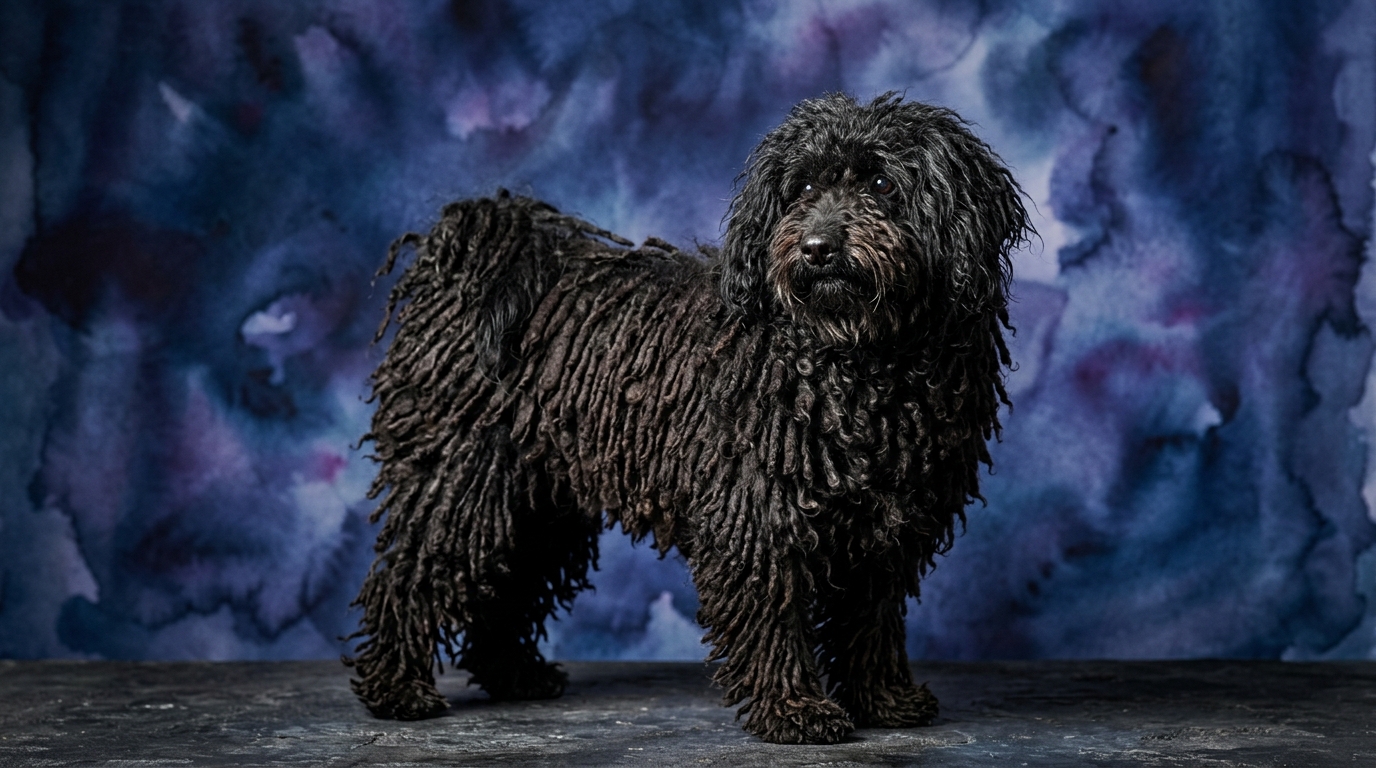
The Puli, a Herding breed ranked #25 by Coren for working intelligence, presents a profile built for dynamic interaction and rapid learning. Its Problem Solving is rated 4/5, indicating an adeptness at navigating complex scenarios and devising solutions independently. Training Speed also scores 4/5, suggesting a quick grasp of new commands and routines. Social Intelligence and Instinctive Drive are both 3/5, reflecting a balance between working closely with a handler and possessing the innate drive to manage livestock. Its Memory, at 4/5, underpins its capacity to retain intricate sequences and learned behaviors over time, crucial for its demanding herding tasks.
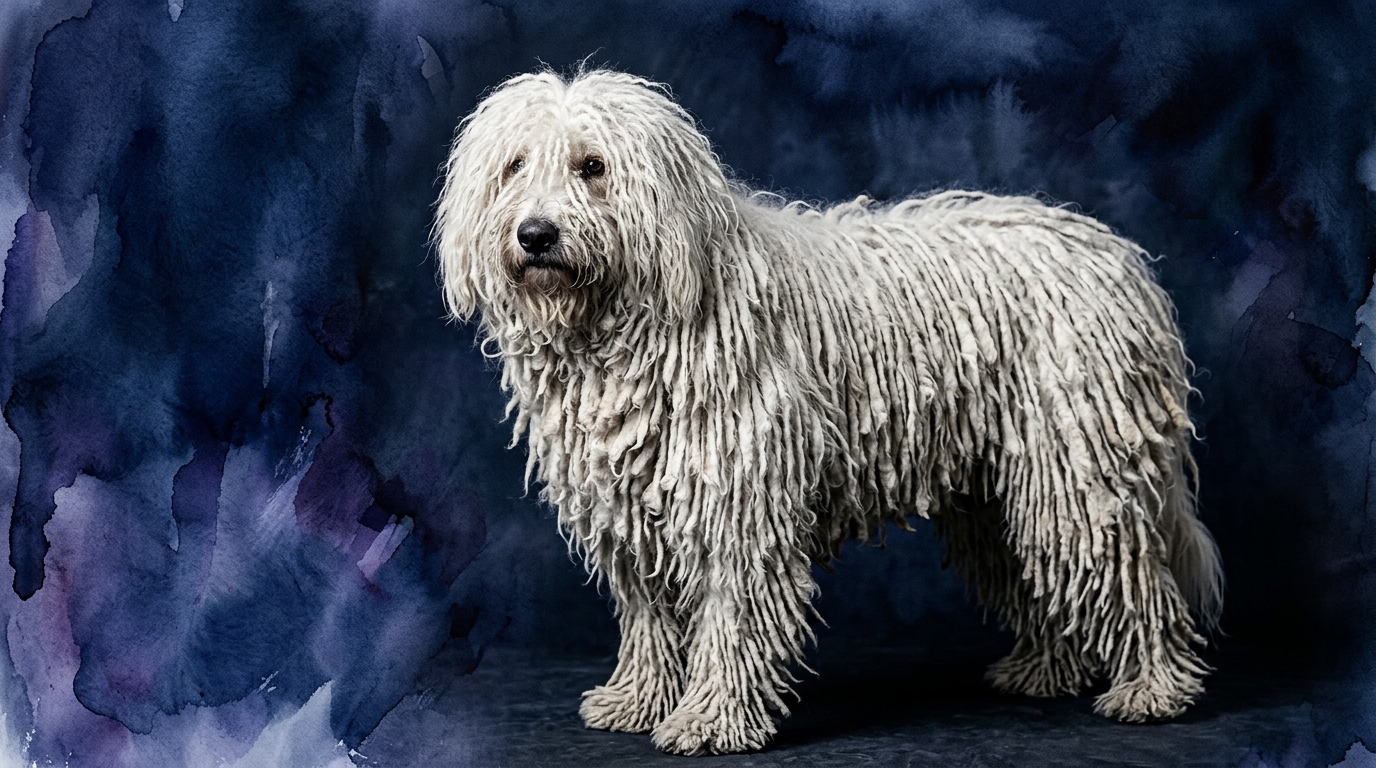
In contrast, the Komondor, a Working breed with a Coren rank of #67, exhibits a cognitive makeup optimized for independent vigilance and protection. Its Problem Solving, Training Speed, Social Intelligence, Instinctive Drive, and Memory all register 3/5. This consistent scoring across dimensions doesn't imply a lack of capability, but rather a different prioritization of cognitive resources. For a Komondor, problem-solving often involves assessing threats rather than manipulating objects, and its training speed reflects a deliberate, self-reliant approach to learning, deeply rooted in its ancient role as a livestock guardian.
Where the Puli's Cognition Shines
The Puli's cognitive advantage lies significantly in its Problem Solving (4/5) and Training Speed (4/5). This breed's herding heritage demands a dog that can think on its feet, making split-second decisions to guide a flock, anticipate movements, or re-route stray animals without constant human direction. This manifests as a dog that readily engages with mental puzzles and thrives on challenges requiring strategic thought, such as navigating agility courses or learning complex scent work, demonstrating a clear aptitude for independent cognitive work within a directed task.
Furthermore, the Puli’s superior Memory (4/5) complements its rapid training acquisition, enabling it to build an extensive repertoire of commands and routines. This cognitive trait is invaluable for a working dog required to remember specific signals, respond to environmental cues, and execute multi-step tasks reliably. Its capacity for retaining detailed information contributes directly to its adaptability and its ability to excel in diverse dog sports and advanced obedience, reflecting its position among breeds that readily process and apply new information.
Komondor's Unique Cognitive Strengths
While its scores may appear numerically lower, the Komondor's cognitive profile is perfectly attuned to its role as an independent guardian. Its Instinctive Drive (3/5) is not about chasing or herding, but about a deep-seated vigilance and territorial protection. This breed's problem-solving (3/5) often manifests as a measured assessment of its environment, discerning true threats from harmless stimuli, and deciding on an appropriate, often subtle, response rather than a rapid physical maneuver. This deliberate approach allows it to be a steadfast, rather than reactive, presence.
The Komondor's Social Intelligence (3/5) is specifically geared towards its primary function: distinguishing family and accepted individuals from potential intruders within its domain. This isn't about eager interaction with all strangers but about a discerning ability to categorize and react. Its Memory (3/5) is sufficient for recognizing its territory, family members, and established routines, allowing it to maintain its protective duties consistently without needing to recall complex sequences. The Komondor's cognitive design prioritizes self-reliance and unwavering commitment to its charge over dynamic, human-directed tasks.
Ease of Training: A Behavioral Comparison
The Puli's Training Speed (4/5) and Problem Solving (4/5) make it generally more amenable to formal training and the acquisition of new skills. Pulis typically possess an eagerness to engage with their handler, often finding satisfaction in learning and performing tasks. Their ability to quickly grasp concepts and remember sequences means that positive reinforcement methods yield rapid and lasting results, making them a rewarding breed for owners who enjoy teaching and participating in various canine activities. Their herding background often translates into a desire for purpose and direction.
The Komondor's Training Speed (3/5), coupled with its independent nature, means training requires a different approach. This breed was bred to make its own decisions in the field, not to constantly seek human instruction. Therefore, while capable of learning, the Komondor may appear more deliberate or even stubborn if its guardian instincts are not understood and respected. Consistent, patient training that respects its self-reliant mindset, focusing on clear communication and building trust, is essential for a Komondor, rather than expecting the eager, fast-paced responsiveness of a herding breed.
Matching Cognitive Profiles to Lifestyles
For active owners seeking a highly engaged and responsive companion, the Puli's cognitive profile is a strong match. Its drive for problem-solving and quick learning makes it an ideal partner for dog sports like agility, obedience, or even urban herding clubs. Owners who enjoy investing time in mental enrichment activities, teaching advanced tricks, or providing varied intellectual challenges will find the Puli's cognitive agility deeply rewarding, as it thrives on consistent mental stimulation and purposeful interaction.
Conversely, the Komondor's cognitive strengths make it suitable for owners who value an independent, steadfast guardian, particularly those with property or livestock to protect. While not a low-maintenance dog, its mental demands are different; it doesn't crave constant interactive games in the same way a Puli does. Instead, it finds fulfillment in patrolling its domain, observing, and making its own judgments. Owners who appreciate a dog that thinks for itself within a protective role and are prepared for its slower, more deliberate training style will find a loyal and dedicated companion in the Komondor.
The Verdict
Choose the Puli if you seek a quick-learning, adaptable companion eager for mental challenges and active participation in varied canine activities.
Opt for the Komondor if your lifestyle demands an independent, steadfast guardian, and you appreciate a dog whose cognitive strengths lie in self-reliant protection and deliberate judgment.
🧠 Find Your Pet's IQ Score
Our Pet IQ Lab assessment covers 25+ tests across 5 cognitive dimensions — personalized to your breed.
Take the Full IQ Test →Frequently Asked Questions
Does the Puli's high problem-solving score make it difficult to manage?
On the contrary, the Puli's problem-solving aptitude often makes it adaptable and receptive to training, though it does require consistent mental engagement to prevent boredom and channel its cognitive energy constructively.
Does the Komondor's lower Coren rank indicate a lack of intelligence?
No, the Komondor's Coren rank reflects its cognitive design for independent guardian work, prioritizing self-reliance and measured judgment over rapid human-directed obedience, which is a different, yet equally valid, form of capability.
Do both breeds require similar socialization efforts?
While both benefit from early and broad socialization, a Puli's social intelligence makes it generally more outgoing, whereas a Komondor requires careful, consistent exposure to accept new people and situations within its established domain, reinforcing its protective boundaries.