Side-by-Side Cognitive Profiles: Puli vs. Lhasa Apso
At The Cosmic Pet Pet IQ Lab, we delve into five key dimensions of canine cognition to understand what makes each breed's mind unique. Here’s how the Puli and Lhasa Apso stack up:
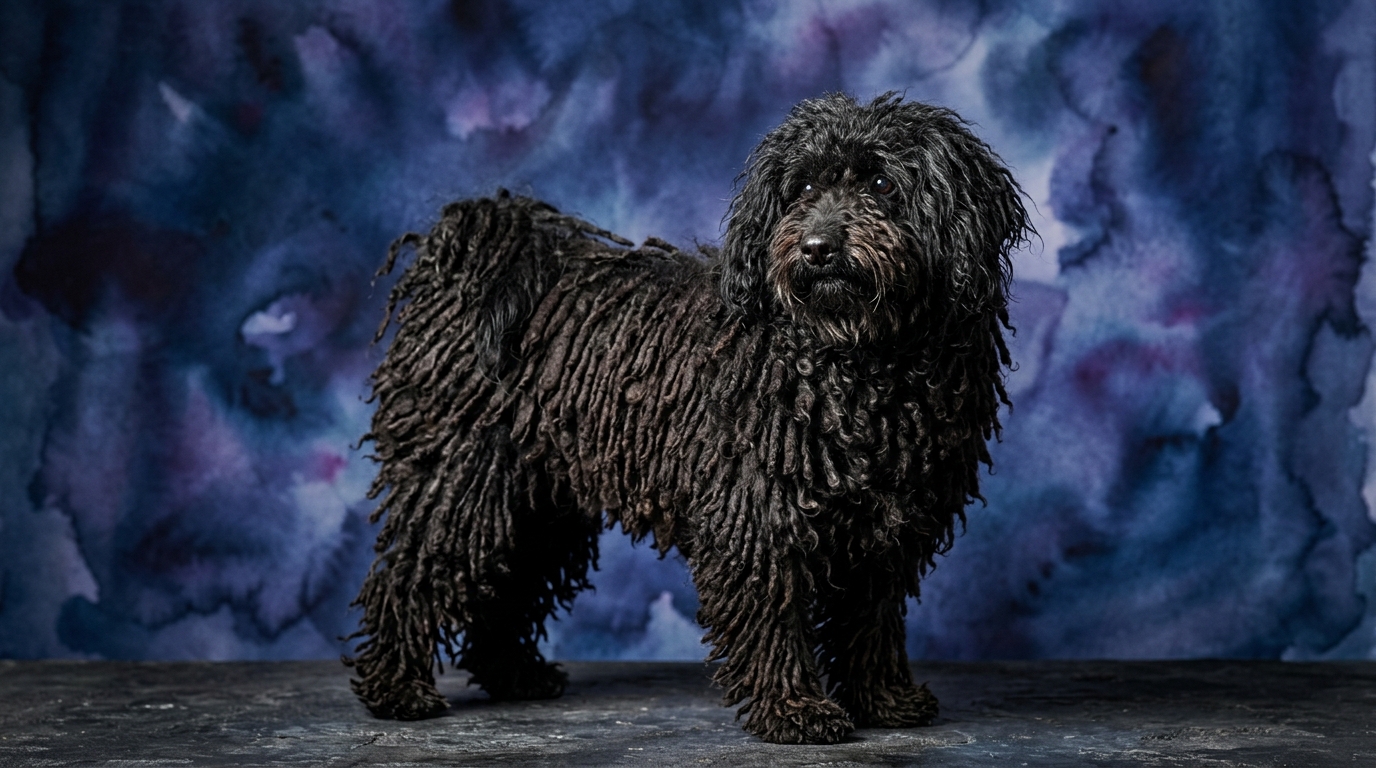
**Puli Cognitive Profile:** The Puli, originating from the Herding Group, demonstrates a mind built for independent work and rapid adaptation. Their **Problem Solving (4/5)** is robust, allowing them to devise creative solutions to obstacles, a trait vital for managing livestock without constant human oversight. **Training Speed (4/5)** is impressive, as they quickly grasp new commands and routines, eager to engage in learning. While their **Social Intelligence (3/5)** is focused, they form deep family bonds but can be reserved with outsiders, preferring observation. Their **Instinctive Drive (3/5)** centers on a moderate herding impulse, which can be channeled into appropriate activities. Finally, their **Memory (4/5)** is excellent, ensuring they retain complex sequences of commands and past experiences effectively.
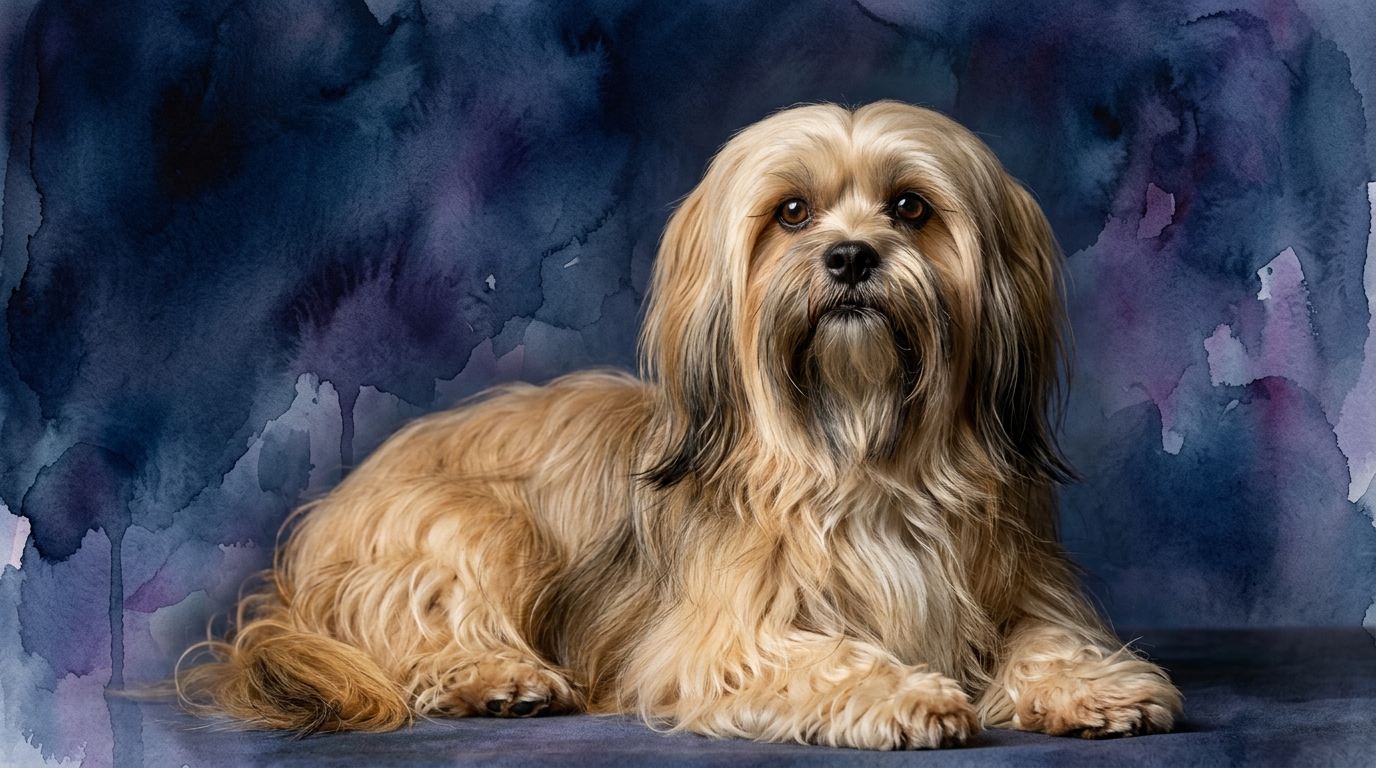
**Lhasa Apso Cognitive Profile:** The Lhasa Apso, from the Non-Sporting Group, possesses a cognitive makeup tailored for watchful companionship and discernment. Their **Problem Solving (3/5)** is practical, often applied to achieving personal comfort or desired outcomes within their familiar environment, rather than abstract challenges. **Training Speed (3/5)** is steady; they learn well with patience and positive reinforcement, though their independent streak can require more consistency. Their **Social Intelligence (3/5)** is discerning, fostering deep loyalty to their family while maintaining a dignified aloofness towards strangers. The Lhasa Apso's **Instinctive Drive (3/5)** is primarily geared towards guarding and alerting, rooted in their historical role as temple sentinels. Their **Memory (3/5)** is solid, allowing them to recall routines, people, and learned commands adequately for daily life.
Where the Puli's Mind Shines Cognitively
The Puli's cognitive edge shines brightest in tasks demanding independent decision-making and rapid learning, particularly those with a practical application. Their superior problem-solving (4/5) means they are more adept at figuring out novel solutions to environmental challenges, such as bypassing an obstacle to reach a goal or understanding multi-step commands without constant prompting. This contrasts with the Lhasa Apso's more self-serving problem-solving, which often focuses on personal comfort rather than abstract tasks. Furthermore, the Puli's quicker training speed (4/5) allows them to master new skills and complex sequences of commands more efficiently, making them faster at acquiring and retaining a broad repertoire of behaviors. Their robust memory (4/5) underpins this, ensuring that once a lesson is learned, it is not easily forgotten, which is a clear step above the Lhasa Apso's solid but less remarkable recall.
Where the Lhasa Apso's Cognition Excels
While the Puli excels in active problem-solving and rapid training, the Lhasa Apso's cognitive strengths are nuanced and rooted in their historical role as discerning guardians. Their moderate social intelligence (3/5), while numerically equal to the Puli's, manifests differently, focusing on a keen ability to differentiate between welcomed family members and potential intruders. This discerning social filter, combined with their instinctive drive (3/5) for vigilance, gives them an advantage in tasks requiring selective observation and protective instinct within a confined, familiar territory. They demonstrate a particular cleverness in subtle forms of communication and manipulation within their immediate family unit, often using their charming independence to get their way, a skill that requires a nuanced understanding of social dynamics within their small, trusted circle. Their problem-solving (3/5), though not as broad as the Puli's, is highly effective for self-preservation and securing comfort.
Trainability: Puli vs. Lhasa Apso
The Puli is generally easier to train due to its higher scores in both training speed (4/5) and problem-solving (4/5), coupled with excellent memory (4/5). Pulis possess an inherent drive to work alongside their human companions, a remnant of their herding past, which translates into a willingness to engage in structured learning. They grasp new concepts quickly and are eager to please, making them responsive to positive reinforcement and consistent methods. For instance, a Puli is more likely to quickly understand and execute a complex agility course or a sequence of commands, remembering each step with precision.
In contrast, the Lhasa Apso, with its training speed (3/5) and problem-solving (3/5) scores, often exhibits a more independent and sometimes stubborn streak. Their motivation for learning frequently stems from what benefits *them* directly, rather than a strong desire to comply for compliance's sake. Training a Lhasa Apso requires more patience, creativity, and a consistent approach to overcome their self-willed nature and ensure commands are truly solidified, as they might test boundaries more frequently and require more repetitions to internalize lessons.
Matching Minds to Lifestyles: Active vs. Relaxed Owners
The Puli is undoubtedly a better match for active owners who relish engaging their dog's mind and body. Their background as working herding dogs means they thrive on purpose and activity. Owners who enjoy dog sports like agility, obedience, or herding trials will find the Puli's problem-solving and training speed ratings make them enthusiastic and capable partners. They require regular physical exercise to channel their instinctive drive and mental stimulation to prevent boredom, making them unsuitable for a purely sedentary lifestyle.
Conversely, the Lhasa Apso is a more fitting companion for relaxed owners seeking a devoted, albeit independent, indoor companion. While they appreciate daily walks and playtime, their lower instinctive drive and more moderate energy levels mean they are content with a less rigorous activity schedule. Their discerning social intelligence and protective instincts make them excellent watchdogs and loyal lap companions, perfectly suited for a home where quiet companionship and occasional bursts of play are the norm.
The Verdict
If you're an active individual or family seeking a highly engaged, quick-witted canine partner for dog sports, complex training, or a working role, the Puli's superior problem-solving, training speed, and memory make it an excellent choice.
Opt for a Lhasa Apso if you desire a steadfast, discerning, and independent companion dog that excels at being a watchful housemate and loyal family member, content with a more relaxed lifestyle and less intensive training demands.
🧠 Find Your Pet's IQ Score
Our Pet IQ Lab assessment covers 25+ tests across 5 cognitive dimensions — personalized to your breed.
Take the Full IQ Test →Frequently Asked Questions
Do Pulis require more mental stimulation than Lhasa Apsos?
Yes, Pulis generally require more mental stimulation due to their higher problem-solving and memory scores, stemming from their herding background. They thrive on challenges and tasks that engage their quick minds, whereas Lhasa Apsos are more content with consistent routines and less complex mental exercises.
Are Lhasa Apsos difficult to socialize because of their social intelligence rating?
Lhasa Apsos are not necessarily difficult to socialize, but their social intelligence (3/5) means they are naturally more discerning and reserved with strangers. Early, consistent, and positive socialization is crucial to help them develop into well-adjusted adults who can comfortably navigate various social situations, while retaining their characteristic dignified aloofness.
Can a Puli be a good family dog, given its working background?
Absolutely, a Puli can be a wonderful family dog, forming strong bonds and often being protective of its human 'flock.' However, their instinctive drive and need for mental engagement mean they thrive in a family that can provide consistent training, plenty of activity, and clear boundaries, rather than a purely hands-off approach.