Side-by-Side IQ Profile: Puli vs. Parson Russell Terrier
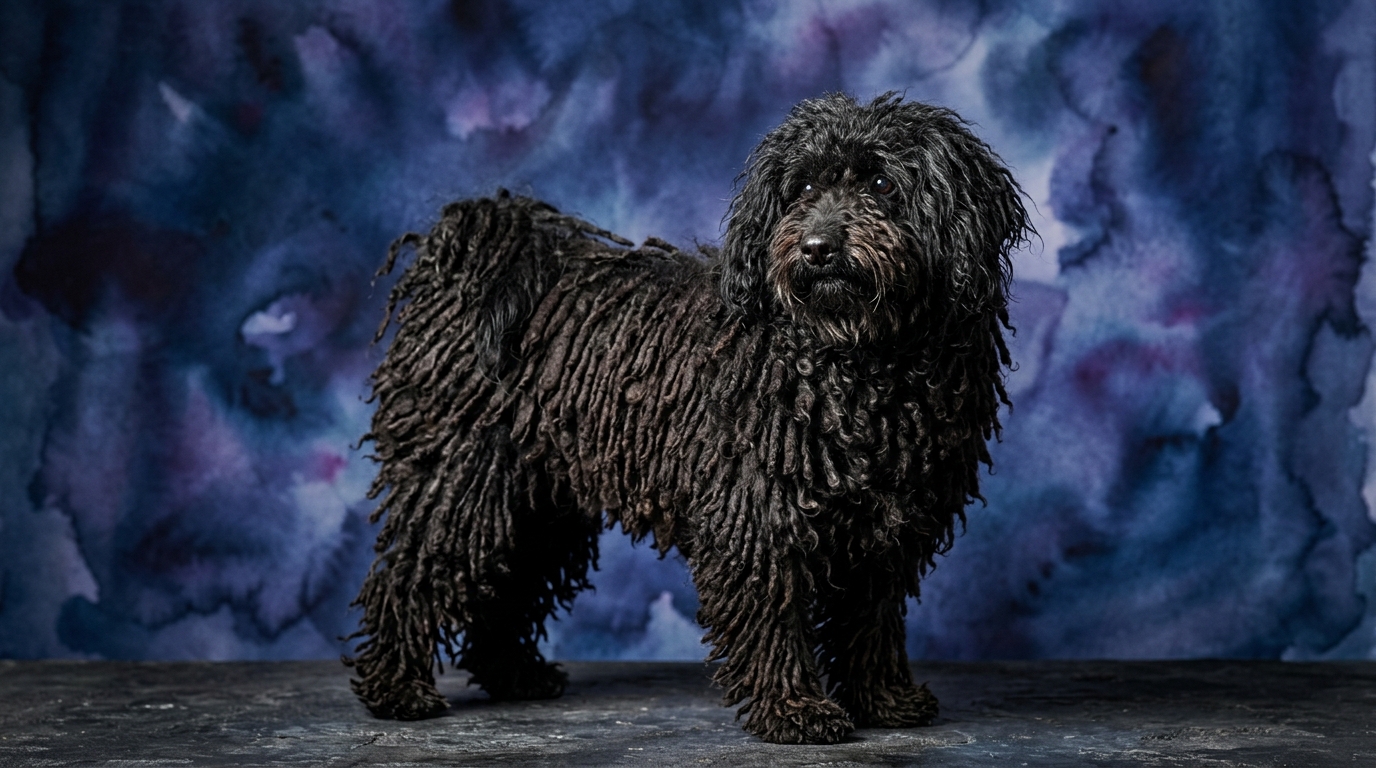
The Puli, a Herding group member, registers a Coren rank of #25, indicating a strong capacity for understanding new commands quickly and obeying them reliably. Its IQ profile scores it 4/5 in Problem Solving, reflecting a robust ability to navigate novel situations and devise solutions, often with an independent streak born from its herding origins. Training Speed for the Puli is also rated 4/5, signifying a keenness to learn and a rapid grasp of new commands, making them generally responsive students. Social Intelligence stands at 3/5, suggesting a moderate ability to interpret human cues and adapt to social dynamics, though they can be reserved with strangers. Instinctive Drive, at 3/5, points to a functional but not overwhelming innate urge to perform breed-specific tasks, which for the Puli often involves tending and gathering. Finally, Memory for the Puli scores 4/5, indicating an excellent capacity to recall past experiences, learned commands, and established routines over extended periods.
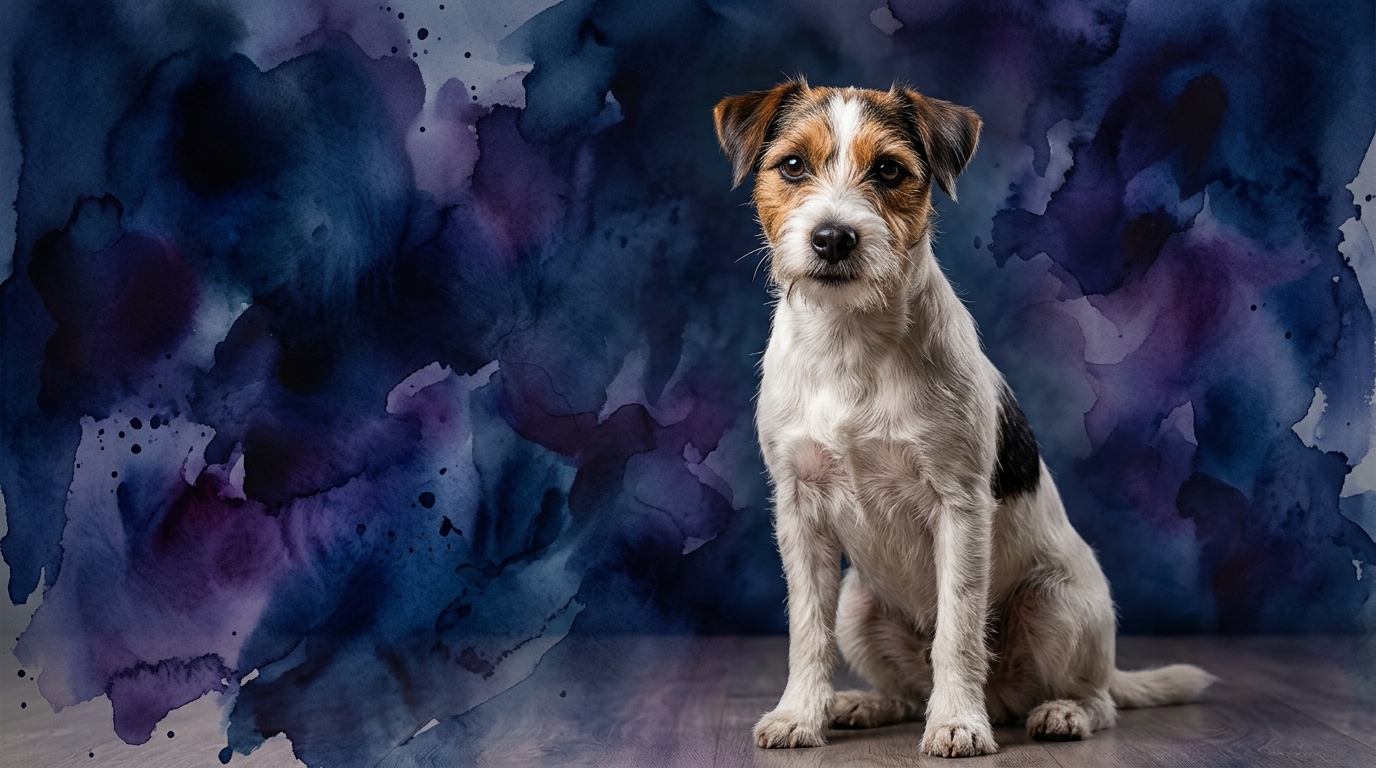
In contrast, the Parson Russell Terrier, belonging to the Terrier group, does not hold a specific Coren rank, yet its cognitive profile provides valuable insights into its working intelligence. Its Problem Solving ability is rated 3/5, indicating a practical, often tenacious approach to overcoming obstacles, particularly those related to its hunting heritage, rather than abstract conceptualization. Training Speed for the Parson Russell Terrier also scores 3/5, meaning they are capable of learning but may require more repetition or creative motivation compared to breeds with higher scores, often due to their independent nature. Social Intelligence is 3/5, suggesting they are generally adept at understanding their immediate human family but can exhibit typical terrier aloofness or spirited reactions to unfamiliar people or animals. Instinctive Drive is likewise 3/5, reflecting a pronounced, focused drive for tasks like digging, chasing, and vermin control, characteristic of their breed purpose. Memory for the Parson Russell Terrier is rated 3/5, indicating a solid ability to remember commands and experiences, though perhaps not with the same breadth or detail as breeds with higher scores.
Where the Puli Wins Cognitively
The Puli exhibits clear cognitive advantages in areas demanding abstract thought, rapid learning, and sustained recall. Its 4/5 Problem Solving score suggests a greater propensity for analyzing complex situations and formulating effective strategies, a trait invaluable in its traditional role of managing livestock across varied terrains. This mental agility translates into an aptitude for dog sports requiring intricate sequences or novel challenges, where the Puli can often outmaneuver the Parson Russell Terrier.
With a Training Speed of 4/5, the Puli typically absorbs new commands and behaviors more quickly than the Parson Russell Terrier. This efficiency in learning stems from a combination of attentiveness and a desire to work cooperatively with its handler, making it a more fluid and less repetitive training experience for both dog and owner. The Puli's strong memory, also rated 4/5, further enhances its training success, allowing it to retain a vast repertoire of commands and routines over time, enabling complex training progressions and long-term skill retention.
The Puli's slightly higher overall cognitive flexibility, as evidenced by its Coren rank, allows it to adapt to a wider array of learning environments and tasks. While both breeds are capable, the Puli demonstrates a broader intellectual curiosity and a more adaptable approach to learning, making it proficient in diverse disciplines from obedience to advanced trick training, often achieving mastery with fewer repetitions and greater consistency.
Where the Parson Russell Terrier Wins Cognitively
While the Puli often demonstrates a broader cognitive toolkit, the Parson Russell Terrier's specific blend of traits excels in situations demanding single-minded focus and robust physical problem-solving, particularly within its working domain. Its 3/5 Problem Solving, though numerically lower, is applied with an unparalleled tenacity and resourcefulness when faced with physical obstacles or the pursuit of a goal, such as navigating a complex den system or locating hidden objects.
The Parson Russell Terrier's 3/5 Instinctive Drive, while not the highest score, is characterized by an intense, unwavering focus on its primary objective, whether it's tracking a scent or engaging in a digging project. This drive, combined with its boundless energy and courage, means that once a Parson Russell Terrier is engaged in a task that aligns with its natural instincts, it will exhibit a relentless cognitive persistence that can surpass breeds with more generalized drives. This translates to exceptional performance in activities like earthdog trials or agility courses that demand quick, decisive action and unflagging determination.
Its solid 3/5 Memory and Training Speed, though not as high as the Puli's, are perfectly adequate for mastering the specific skills required for its traditional work. The Parson Russell Terrier learns what it needs to learn with sufficient repetition and motivation, and its memory ensures those learned behaviors, especially those critical for its job, are retained and executed with precision when the situation demands it. The Parson Russell Terrier's cognitive strengths lie in its specialized application of intelligence, driven by its profound terrier spirit.
Which is Easier to Train and Why?
Based on their respective IQ profiles, the Puli, with its 4/5 Training Speed, is generally considered easier to train than the Parson Russell Terrier, which scores 3/5. This difference stems from their inherent behavioral inclinations and historical roles. The Puli's herding background instilled a strong desire to cooperate with a human handler, making it naturally attentive and eager to please, reducing the need for extensive repetition.
A Puli typically grasps new commands quickly and is more inclined to maintain focus during training sessions, often responding well to positive reinforcement and clear directives. Their high problem-solving ability also means they can generalize learned behaviors to new contexts more readily, making training feel more progressive and less like constant retraining.
Conversely, the Parson Russell Terrier's terrier heritage emphasizes independence and a strong prey drive, which can translate into a more headstrong and self-directed approach to learning. While capable of learning, their attention can be easily diverted by environmental stimuli, and they may require more engaging, varied, and consistent training methods to maintain interest and compliance. Their independent spirit means training often involves convincing them that cooperation is more rewarding than pursuing their own agenda, requiring patience and creativity from the owner.
Which Suits Active Owners vs. Relaxed Owners?
Neither the Puli nor the Parson Russell Terrier are suited for truly 'relaxed' owners in the sense of minimal daily engagement; both are active breeds requiring substantial physical and mental stimulation. However, the *type* of activity they thrive on differs, making them suitable for different kinds of active lifestyles.
The Puli, while energetic, often thrives on activities that engage its intellect and mimic its herding instincts. This includes dog sports like agility, obedience, and herding trials, as well as complex puzzle toys and extensive training sessions. Owners who enjoy structured activities, mental challenges, and a strong partnership in training will find the Puli a rewarding companion. They need regular, vigorous exercise, but their mental needs are equally paramount.
The Parson Russell Terrier demands a more physically robust and often spontaneous outlet for its boundless energy and instinctive drives. They excel in activities like long hikes, running, digging, and earthdog trials, where their stamina and prey drive can be channeled appropriately. Owners who lead a very active outdoor lifestyle, enjoy off-leash adventures in secure areas, and can provide outlets for their terrier's inherent hunting behaviors will appreciate the Parson Russell Terrier's zest for life. Their independent nature also means they might be content with more self-directed play once their exercise needs are met, though structured activity is still vital.
The Verdict
Choose the Puli if you seek a highly trainable, intelligent partner for complex dog sports and enjoy engaging in deep, cooperative mental stimulation and structured activities.
Opt for the Parson Russell Terrier if you lead a very active outdoor life and appreciate a tenacious, independent companion with a focused drive for physical pursuits and adventurous exploration.
🧠 Find Your Pet's IQ Score
Our Pet IQ Lab assessment covers 25+ tests across 5 cognitive dimensions — personalized to your breed.
Take the Full IQ Test →Frequently Asked Questions
What does the Puli's Coren rank of #25 signify?
The Puli's Coren rank of #25 places it in the 'Excellent Working Dogs' category, meaning they typically understand new commands in 15-25 repetitions and obey the first command 70% of the time or better. This indicates a high level of working intelligence and trainability compared to many other breeds.
How does the Parson Russell Terrier's problem-solving compare to the Puli's, despite the lower score?
While the Parson Russell Terrier's problem-solving score of 3/5 is lower than the Puli's 4/5, it signifies a practical, tenacious intelligence geared towards overcoming physical obstacles rather than abstract puzzles. Their problem-solving is often applied with relentless determination in scenarios related to their hunting heritage, such as navigating tight spaces or outsmarting prey, a different kind of cognitive strength.
Are there significant differences in social intelligence between the two breeds?
Both breeds score 3/5 in social intelligence, suggesting they are generally adept at understanding their immediate human family's cues. However, the Puli might be more reserved with strangers due to its protective herding instincts, while the Parson Russell Terrier's social interactions can be more spirited and independent, reflecting its terrier personality, though both require proper socialization to thrive.