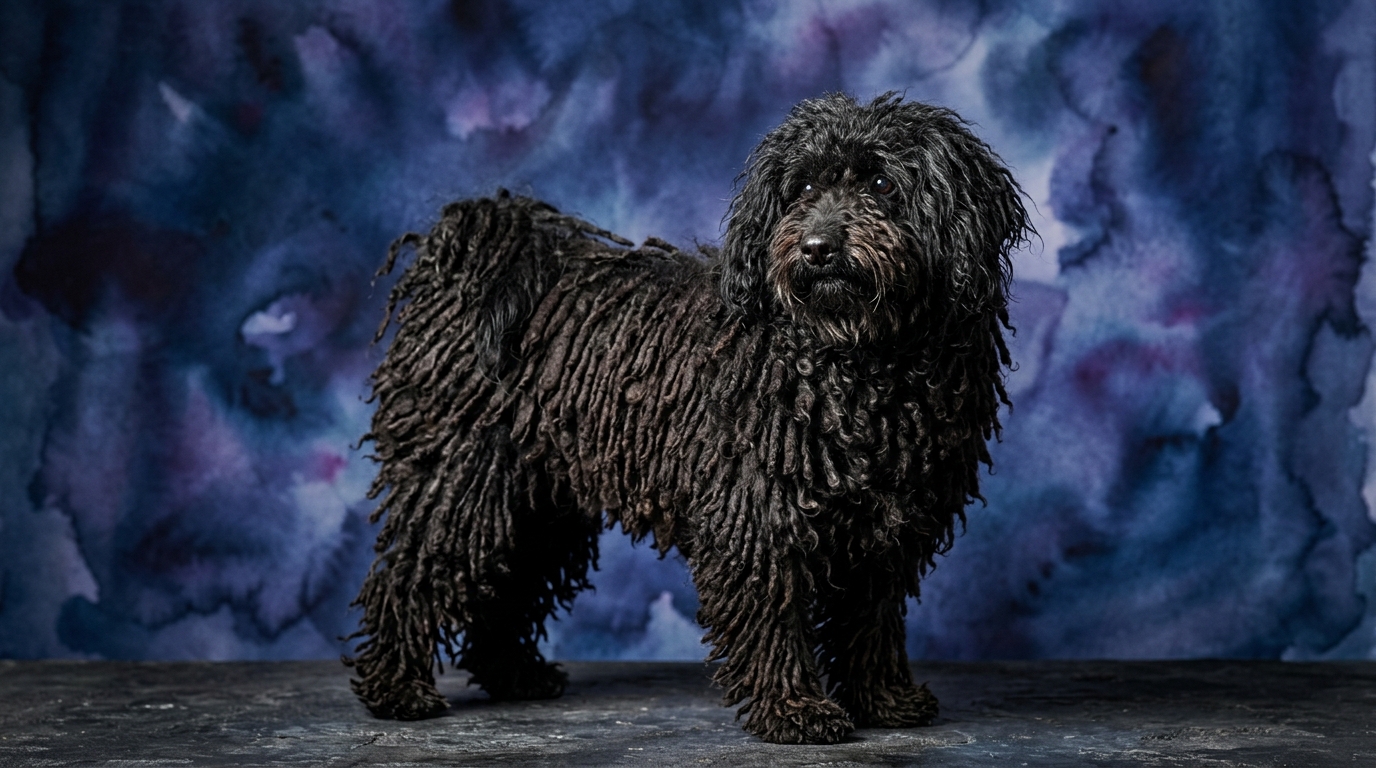
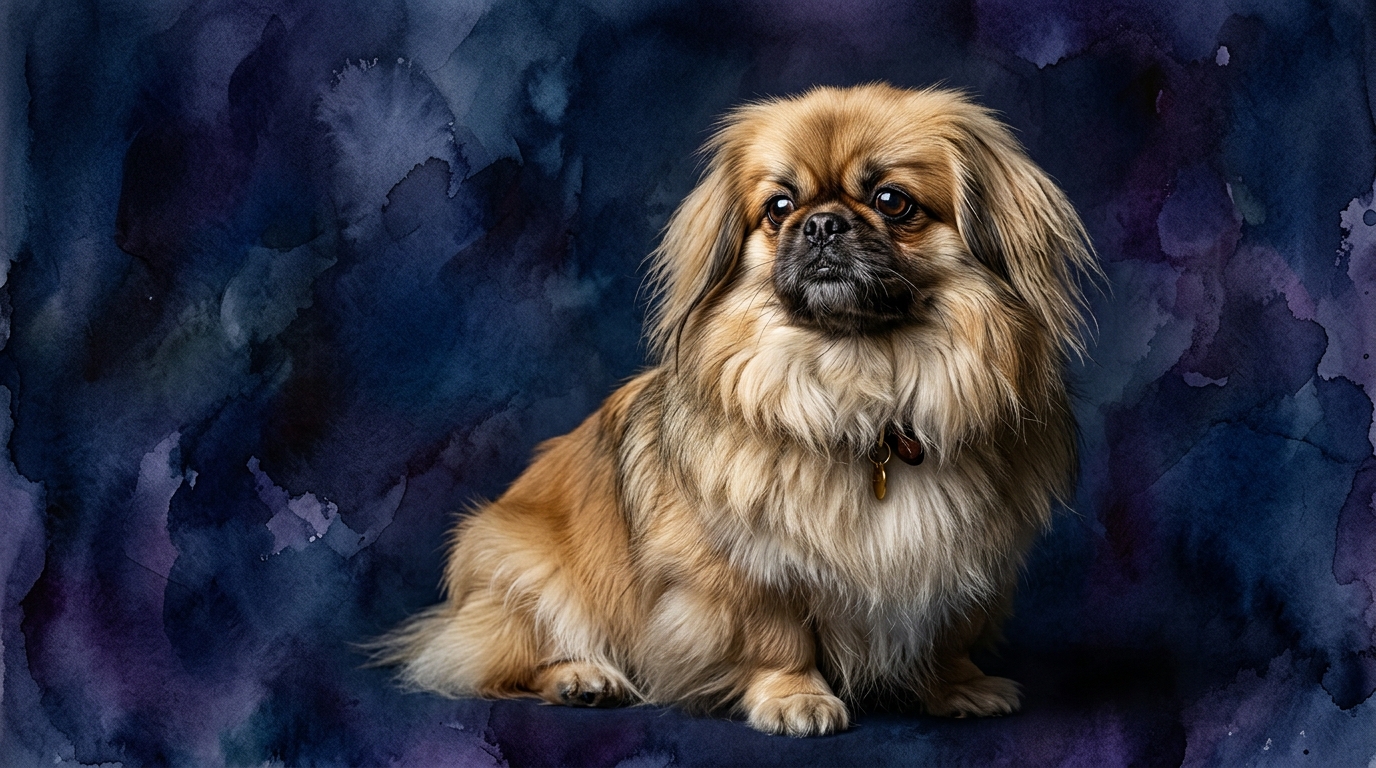
Side-by-Side Cognitive Profiles: Puli vs. Pekingese
At The Cosmic Pet Pet IQ Lab, we evaluate canine cognition across five key dimensions, providing a granular view of each breed's mental landscape. For the Puli, a Herding breed, their profile reflects a heritage of active engagement and independent decision-making in the field. They rank #25 on the Coren scale, a testament to their overall cognitive abilities.
The Puli exhibits a Problem Solving score of 4/5, indicating a strong capacity for independent thought and strategic thinking, often necessary for managing livestock. Their Training Speed also stands at an impressive 4/5, suggesting a quick grasp of new commands and routines, eager to collaborate. Social Intelligence, at 3/5, shows they understand human cues sufficiently, but their focus might lean more towards tasks than constant overt interaction. Instinctive Drive, rated 3/5, points to a moderate expression of their herding tendencies, manageable within a family setting. Finally, their Memory at 4/5 underscores an excellent ability to recall learned behaviors and spatial details over time, which is crucial for complex tasks.
In contrast, the Pekingese, a Toy breed, presents a cognitive profile more aligned with its historical role as a cherished companion. Ranked #77 on the Coren scale, their intelligence is geared towards a different kind of interaction and problem-solving, focused on their immediate environment and human family. Every dimension for the Pekingese scores a consistent 3/5.
Their Problem Solving at 3/5 suggests competence in navigating daily life and achieving comfort, but perhaps less inclination for complex, multi-step puzzles. Training Speed, also 3/5, means they learn at a moderate pace, requiring consistent and patient guidance. Social Intelligence, at 3/5, indicates they are attuned to their human companions' moods and needs, fostering a deep, personal bond. Instinctive Drive, rated 3/5, reflects a moderate expression of behaviors related to their companion role, such as seeking comfort or guarding their space. Lastly, their Memory at 3/5 is perfectly adequate for retaining routines, family faces, and the comforting patterns of their home life.
Where the Puli's Cognition Shines Brighter
The Puli's cognitive strengths distinctly emerge in areas demanding active mental engagement and rapid learning. Their superior Problem Solving score of 4/5, compared to the Pekingese's 3/5, means a Puli is more likely to independently strategize solutions to novel challenges, whether it's figuring out how to open a childproof gate or mastering a complex agility course. This aptitude for independent thought allows them to adapt quickly to new situations and learn through observation and experimentation, a hallmark of their herding lineage.
Furthermore, the Puli's Training Speed, also at 4/5, indicates a markedly quicker assimilation of new commands and behaviors. This efficiency translates to fewer repetitions needed during training sessions and a more enthusiastic participation in structured learning activities. Their strong desire to work alongside their human, ingrained from generations of herding, makes them particularly receptive to instruction. Coupled with their 4/5 Memory score, a Puli retains learned skills with remarkable tenacity, making long-term training goals more achievable and reinforcing their reliability in various tasks.
Where the Pekingese's Cognitive Profile Excels for its Role
While the Pekingese doesn't boast higher numerical scores in any dimension, its consistent 3/5 across the board represents a perfectly calibrated cognitive profile for its designated role as a devoted companion. This moderate cognitive demand means a Pekingese is often content with a simpler, more predictable routine, offering a distinct advantage for owners seeking a less 'busy' canine mind. Their problem-solving abilities, while not geared towards complex environmental manipulation, are acutely focused on achieving comfort and maintaining proximity to their chosen human, which are highly adaptive traits for a companion animal.
The Pekingese's 3/5 Social Intelligence, combined with their historical role, often manifests as a deep, intimate bond with their immediate human family, requiring less broad social interaction than a herding breed might seek. They are adept at subtle communication, often conveying needs or desires through nuanced expressions rather than overt actions. Their moderate Instinctive Drive also means they are less prone to the restlessness or destructive behaviors that can arise from unfulfilled cognitive needs in breeds with higher innate drives, making them excellent candidates for a tranquil home environment. This balance ensures they are neither overly demanding nor disengaged, but rather a steadfast and emotionally perceptive presence.
Ease of Training: Puli's Eagerness vs. Pekingese's Deliberation
When it comes to ease of training, the Puli generally presents a more straightforward path for owners, primarily due to their higher Training Speed (4/5) and Problem Solving (4/5). Their herding background has instilled a strong work ethic and an eagerness to collaborate with humans, viewing training as a fulfilling activity. A Puli often picks up new commands with enthusiasm and fewer repetitions, and their robust memory ensures these lessons are retained effectively over time. They thrive on consistent, positive reinforcement and respond well to varied training methods, enjoying the mental stimulation that comes with learning new skills or commands.
The Pekingese, with its 3/5 Training Speed, requires a different approach. While capable of learning all essential commands, they may take more time and repetition to master new skills. Their motivation often stems from comfort or the desire for human attention rather than an innate drive to perform tasks. This means owners need to be patient, consistent, and creative in making training sessions enjoyable and rewarding for a Pekingese. Their independent streak, a legacy of their imperial past, can sometimes be interpreted as stubbornness, but it's more accurately a preference for doing things on their own terms, making high-value treats and playful engagement crucial for success. Their memory, while sufficient for daily routines, might require more frequent refreshers for less common commands compared to a Puli.
Ideal Lifestyles: Active Engagement vs. Serene Companionship
The distinct cognitive profiles of the Puli and Pekingese naturally align them with different owner lifestyles. The Puli, with its higher scores in Problem Solving, Training Speed, and Memory, thrives with active owners who can provide consistent mental and physical challenges. This breed excels in activities like obedience, agility, herding trials, or even complex puzzle toys that engage their agile minds. They require daily exercise beyond a simple walk and benefit immensely from structured training sessions that give them a 'job' to do. An owner who enjoys outdoor adventures, dog sports, or simply dedicating time to advanced training will find a Puli to be an incredibly rewarding and engaged partner, preventing boredom-induced behaviors.
Conversely, the Pekingese is an ideal match for more relaxed owners. Their consistent 3/5 scores across all cognitive dimensions indicate a dog that is content with a calmer, more predictable environment and less intense demands for mental stimulation. While they still enjoy short walks and playtime, their primary joy often comes from being close to their human companions, whether lounging on the sofa or observing the household from a comfortable perch. They do not require constant 'work' or complex problem-solving tasks to feel fulfilled. Owners who appreciate a devoted, affectionate presence and are happy with a more leisurely pace of life will find the Pekingese to be a perfectly suited and deeply satisfying companion, whose moderate cognitive needs are easily met within a comfortable home.
The Verdict
Choose a Puli if you are an active individual or family seeking a mentally agile companion eager for training, dog sports, or a working role; their quick learning and problem-solving will be a rewarding match for your dynamic lifestyle.
Choose a Pekingese if you prefer a devoted, calm companion content with a predictable routine and less demanding in terms of constant mental challenges; they offer a steadfast, affectionate presence in a serene home environment.
🧠 Find Your Pet's IQ Score
Our Pet IQ Lab assessment covers 25+ tests across 5 cognitive dimensions — personalized to your breed.
Take the Full IQ Test →Frequently Asked Questions
Do Pulis require a lot of mental stimulation?
Yes, Pulis benefit significantly from consistent mental engagement. Their high Problem Solving (4/5) and Training Speed (4/5) mean they thrive on learning new commands, playing puzzle games, and participating in dog sports, which helps prevent boredom and channel their cognitive energy constructively.
Is a Pekingese difficult to train due to its lower IQ scores?
Not necessarily difficult, but a Pekingese may require more patience and consistency in training. Their 3/5 Training Speed means they learn at a moderate pace, and their motivation often comes from comfort and companionship rather than an inherent drive to perform tasks, so positive reinforcement and high-value rewards are key to success.
Which breed is better for first-time dog owners?
For first-time dog owners, the Pekingese might be a more manageable choice due to its moderate cognitive demands and less intense exercise requirements, fitting well into a relaxed household. A Puli's need for significant mental engagement and dedicated training might be more challenging for someone new to dog ownership, requiring a greater commitment to structured activities.