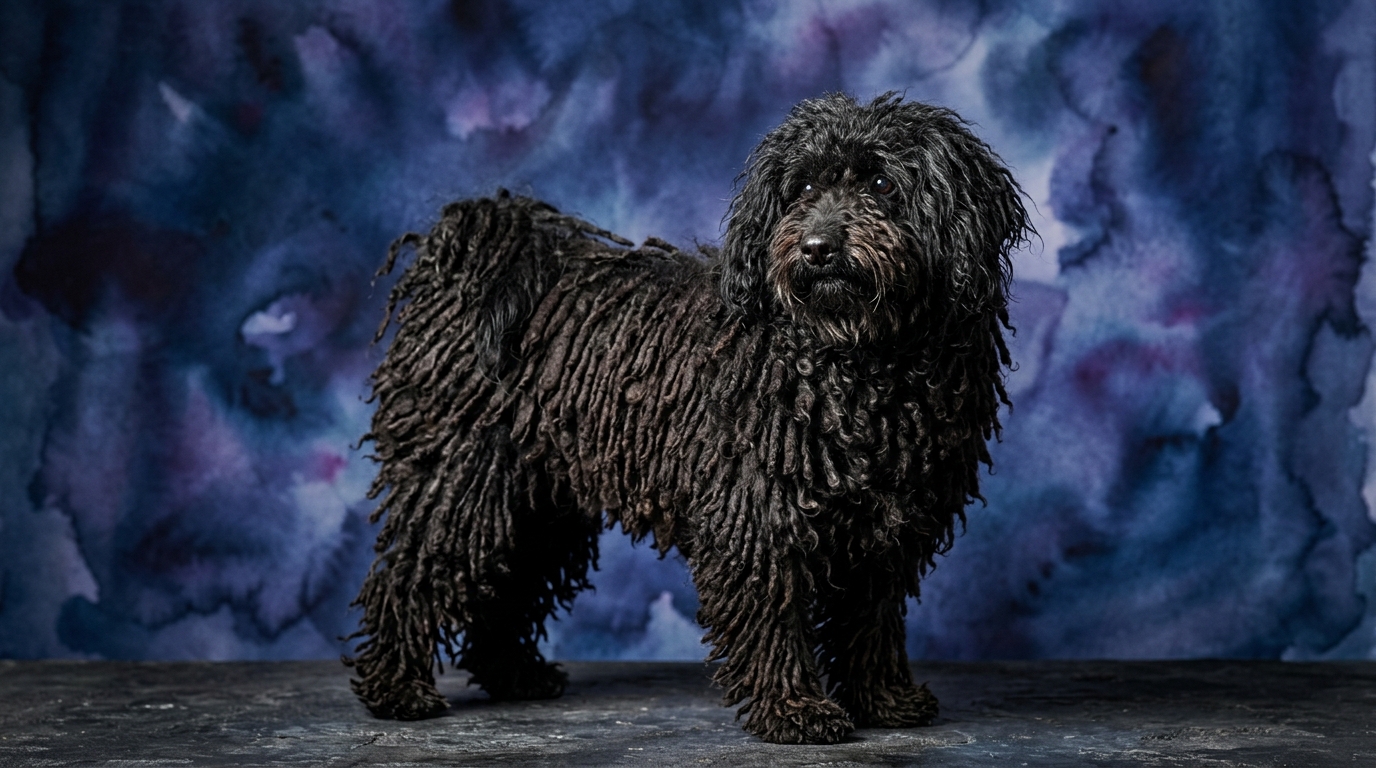
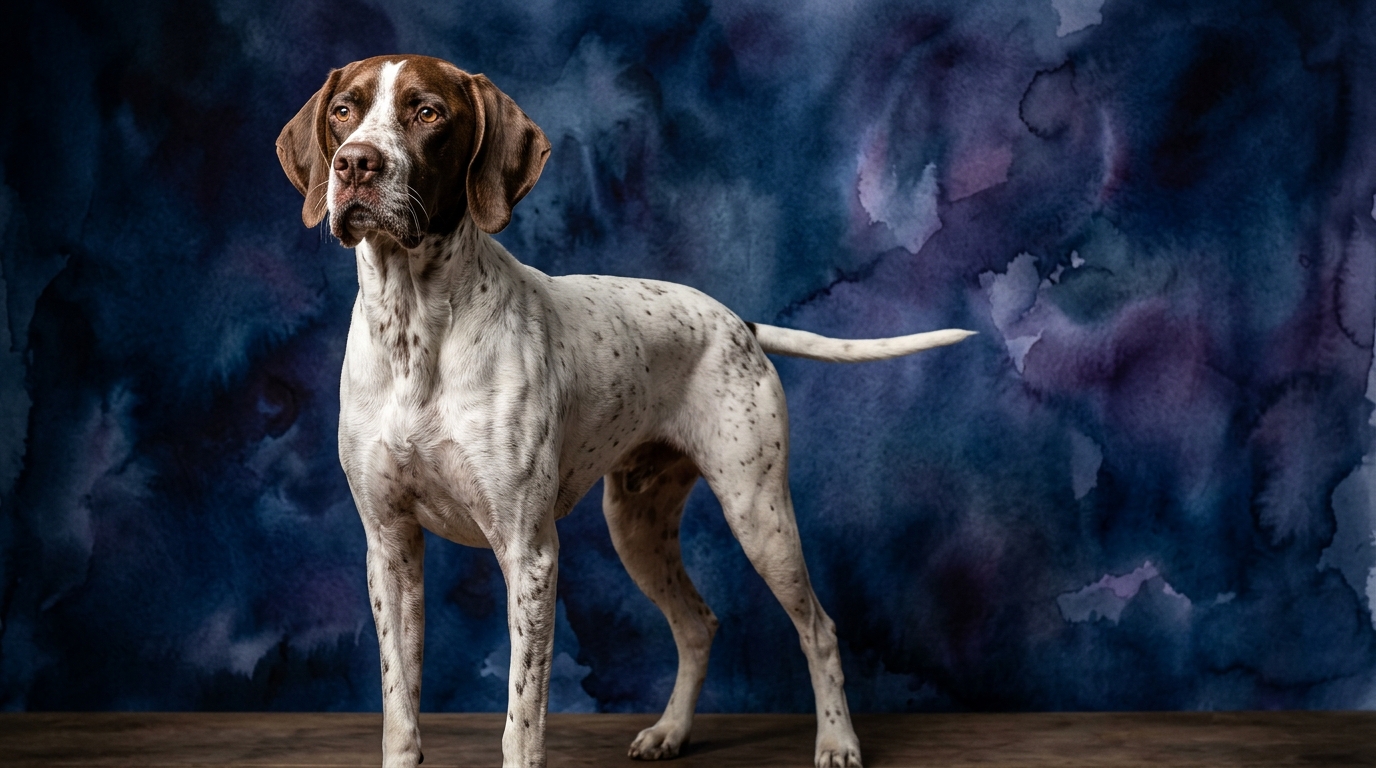
Side-by-Side Cognitive Profile: Puli vs. Pointer
The Puli, ranking #25 on the Coren scale for working intelligence, is a herding dog whose historical role demanded independent thought and strategic action. Its cognitive profile reflects a breed adept at complex tasks:
Problem Solving (4/5): Pulis exhibit a robust capacity for independent thought, often devising creative solutions to environmental challenges. Their herding heritage demanded quick decisions and strategic maneuvering of livestock, fostering a mind that doesn't just follow but actively figures things out.
Training Speed (4/5): These dogs typically grasp new commands and routines with remarkable alacrity. Their eagerness to engage and their ability to connect actions with outcomes make them quick studies, though their independent streak means they need stimulating and consistent methods.
Social Intelligence (3/5): Pulis possess a moderate level of social nuance, capable of forming strong bonds and interpreting human cues within their established pack. While not overly eager to please strangers, they are attentive to their family's emotional states and intentions.
Instinctive Drive (3/5): Their primary drive revolves around herding, displaying a natural inclination to gather and control. This manifests as a desire to keep their “flock” (family members, other pets) together, sometimes with a gentle nudge or watchful eye, rather than a strong prey drive.
Memory (4/5): A Puli’s memory is notably strong, allowing them to recall complex sequences of commands, routines, and even past interactions with precision. This cognitive trait is essential for their herding role, where remembering flock patterns and terrain is paramount.
The Pointer, a Sporting breed not specifically ranked on the Coren scale, developed cognitive strengths geared towards its specific hunting functions. Its profile showcases a different set of mental aptitudes:
Problem Solving (3/5): Pointers demonstrate adequate problem-solving skills, particularly when tasks relate to their natural hunting behaviors. They excel at figuring out how to navigate terrain to find scent, but might be less inclined towards abstract puzzles unrelated to their core drives.
Training Speed (3/5): These dogs learn at a steady pace, capable of mastering a range of commands with patience and positive reinforcement. While not as rapid as some working breeds, their focus and desire to cooperate in tasks make them reliable learners over time.
Social Intelligence (3/5): Pointers are generally amiable and possess a good understanding of social dynamics within their family unit. They are often eager to interact and bond, displaying an awareness of their human companions' moods and responding with affection.
Instinctive Drive (3/5): Their defining instinct is the hunt, specifically finding and “pointing” game. This drive is powerful and focused, manifesting as an intense concentration on scent trails and a statuesque stance when prey is located, rather than a general desire to control.
Memory (3/5): Pointers exhibit a functional memory for learned commands and established routines, particularly those associated with their hunting work. They remember where they’ve found scent before and recall training sequences, though perhaps without the same intricate detail as a Puli.
Where the Puli’s Cognition Excels
The Puli’s cognitive edge truly shines in areas demanding independent strategic thinking and adaptive learning. Their problem-solving score of 4/5 reflects a breed that thrives on intellectual challenges, often experimenting with different approaches to overcome obstacles, a trait honed by managing unpredictable livestock. This contrasts with the Pointer's more task-specific problem-solving.
Furthermore, the Puli's training speed of 4/5 indicates a quicker acquisition of new behaviors and concepts, suggesting they can process and integrate novel information more rapidly into their existing cognitive framework. Their superior memory (4/5) also allows for the retention of more complex sequences and a deeper understanding of cause-and-effect relationships, making them adept at intricate obedience or agility courses that require chaining multiple commands.
Where the Pointer’s Cognition Excels
While the Puli excels in abstract problem-solving, the Pointer demonstrates a distinct cognitive strength in sustained, focused attention driven by instinct. Their 3/5 instinctive drive, while numerically similar, is channeled with singular intensity towards scent work and location of game. This manifests as an unwavering focus during a hunt, requiring immense concentration and the ability to filter out distractions.
Cognitively, this means superior sensory processing for olfactory input and the capacity for prolonged, goal-directed behavior, which is a different kind of problem-solving than that of a herder. Pointers possess a remarkable ability to 'tune in' to their environment for specific cues, making them exceptional at tasks requiring sustained vigilance and a keen sense of observation for their primary purpose, often outperforming breeds that might be more easily distracted by novel stimuli.
Trainability: Puli's Wit vs. Pointer's Willingness
Evaluating ease of training requires understanding both a breed's learning capacity and its inherent motivations. The Puli, with a training speed of 4/5 and problem-solving at 4/5, often grasps new commands quickly. They enjoy the mental engagement of learning and are capable of complex sequences. However, their independent nature, a legacy of making on-the-spot decisions with livestock, means they might question commands or seek to do things their own way if they perceive it as more efficient. Training a Puli requires consistency, fairness, and making the process feel like a collaborative problem-solving game.
In contrast, the Pointer, rated 3/5 for training speed and problem-solving, may take more repetitions to master new skills. However, their deep desire to work cooperatively with their human partner, particularly when it involves their natural drives like scent work, can make them very compliant. A Pointer's focus, once engaged, is profound, and they are generally less inclined to challenge authority than a Puli. Therefore, for an owner seeking a dog that follows directions without much deviation, even if it takes a bit longer to teach, the Pointer might feel 'easier' due to their willingness to please and directability, especially in field-related tasks. For an owner who enjoys the challenge of a quick-witted, independent thinker and can provide varied mental stimulation, the Puli's training experience can be incredibly rewarding.
Matching Breeds to Lifestyles: Active Engagement Defined
Both the Puli and the Pointer are breeds that thrive with active engagement, albeit in different forms. The Puli, originating from a demanding herding background, requires significant mental and physical exertion. Their 3/5 instinctive drive, coupled with high problem-solving and memory, means they need outlets for their strategic thinking and physical energy. Owners who enjoy dog sports like agility, obedience, or even herding trials, or those who can provide complex puzzle toys and consistent training, will find a Puli a fulfilling companion. They are not suited for truly relaxed owners who cannot commit to daily mental stimulation and regular vigorous exercise, as boredom can lead to undesirable behaviors.
The Pointer, with its 3/5 instinctive drive centered on hunting, also demands considerable physical activity. Their endurance and focus make them ideal partners for long runs, hikes, or field work. They require owners who can channel their strong prey drive and desire to range into appropriate activities. While Pointers can be calm indoors after sufficient exercise, their need for expansive outdoor activity is non-negotiable. Neither breed is a good fit for genuinely relaxed, sedentary owners; both require an active lifestyle, but the Puli benefits more from mental challenges alongside physical, while the Pointer's activity needs are often more purely physical and scent-driven.
The Verdict
The Puli offers a partnership with a quick-witted, independent thinker who thrives on complex mental tasks and consistent, varied training.
The Pointer provides a loyal, focused companion whose joy comes from cooperative outdoor activity, particularly those involving scent and tracking, and who will work diligently alongside their human partner.
🧠 Find Your Pet's IQ Score
Our Pet IQ Lab assessment covers 25+ tests across 5 cognitive dimensions — personalized to your breed.
Take the Full IQ Test →Frequently Asked Questions
Do Pulis require extensive grooming due to their corded coats?
Yes, Pulis typically require a significant grooming commitment to maintain their distinctive corded coats, which can take several years to fully develop and require regular separation to prevent matting. While their intelligence might make them compliant during grooming, this physical aspect is a major consideration for potential owners.
Are Pointers generally good family dogs, given their hunting instincts?
Pointers are often gentle, affectionate, and good-natured dogs that can integrate well into active families, especially if their exercise and mental stimulation needs are met. Their social intelligence of 3/5 indicates they form strong bonds, though early socialization is always beneficial to ensure they are comfortable with various people and situations.
Can a Puli be a good choice for a first-time dog owner?
A Puli can be a rewarding choice for a first-time owner who is prepared for a cognitively demanding and independent breed, willing to invest significant time in consistent training and mental stimulation. Their 4/5 problem-solving and training speed mean they learn quickly, but their strong will requires an owner who can be a firm, fair, and engaging leader.