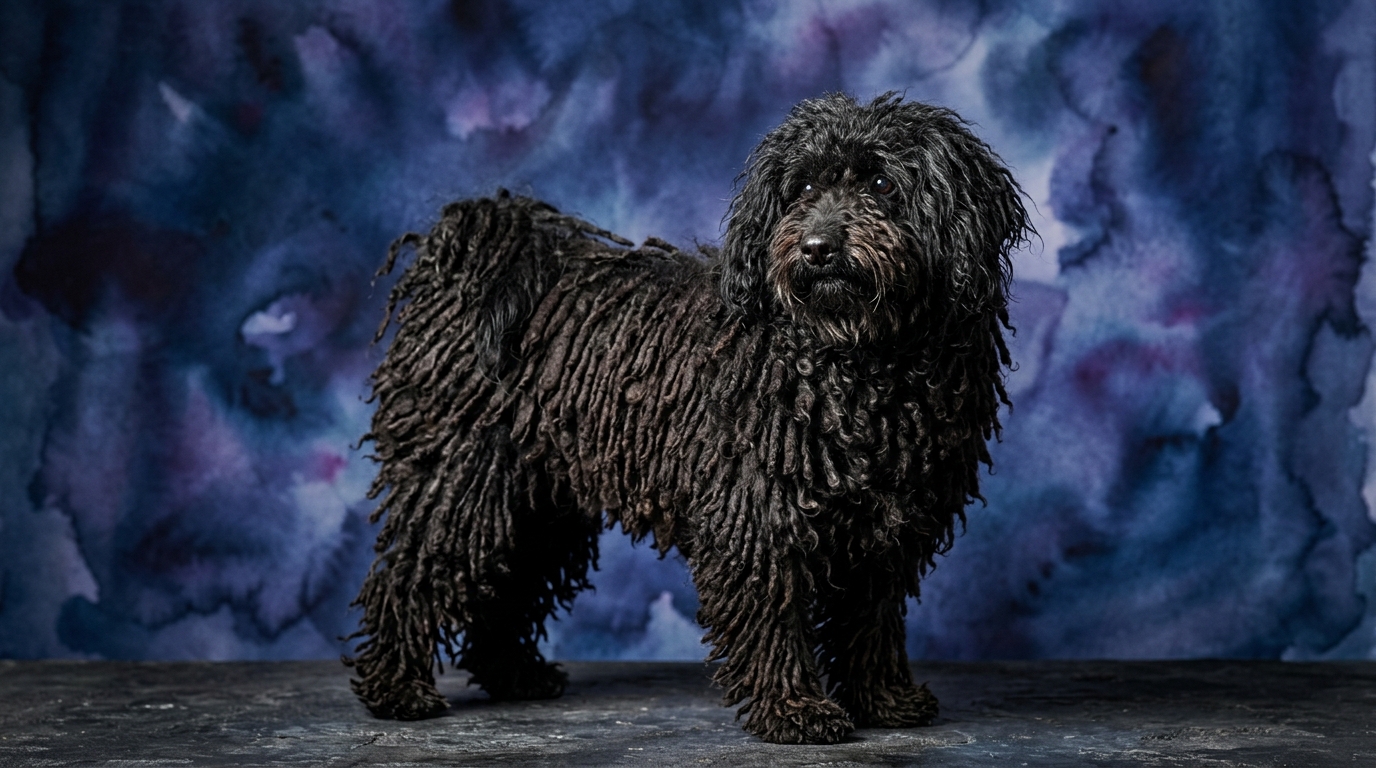
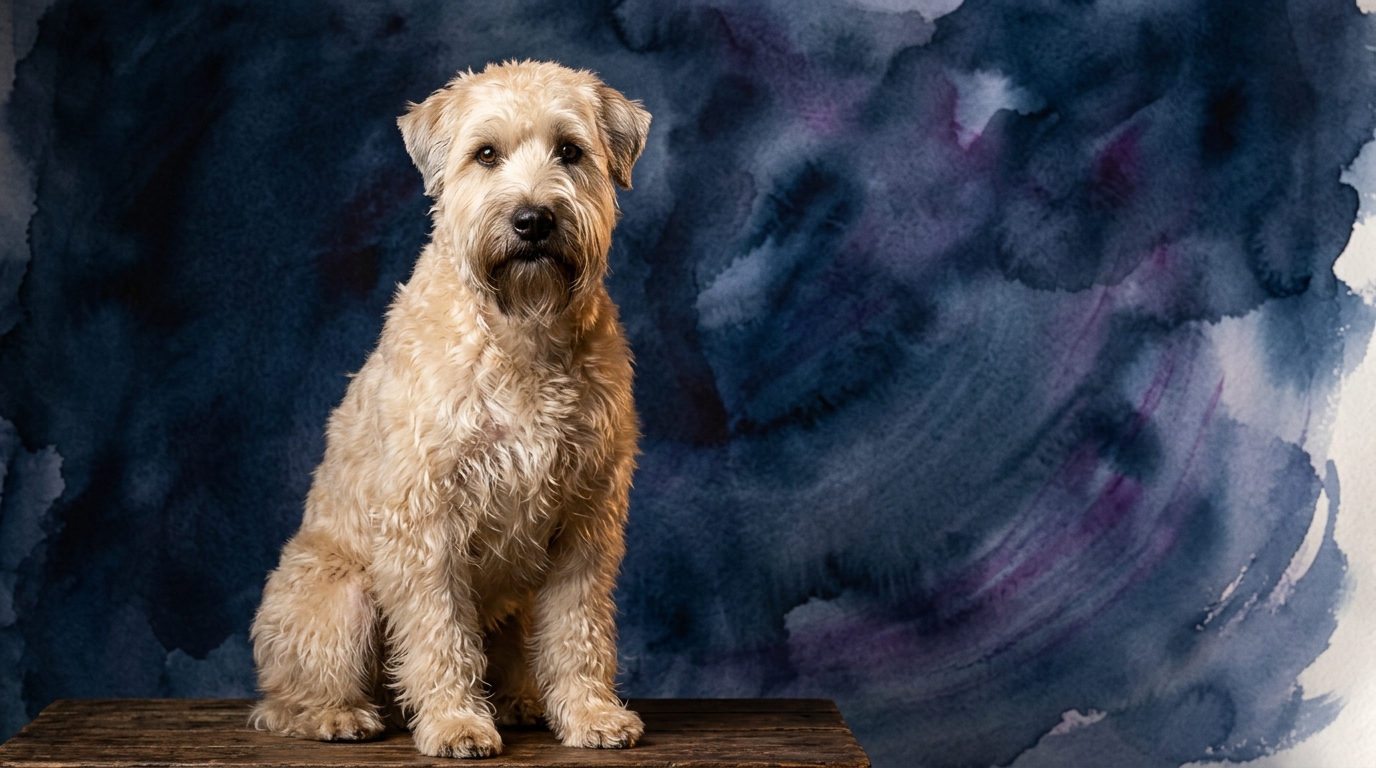
Side-by-side IQ profile
The Cosmic Pet Pet IQ Lab provides a nuanced look into canine cognition across five key dimensions. For the Puli, a Herding breed ranked #25 by Coren, and the Soft Coated Wheaten Terrier, a charming member of the Terrier group, these scores illuminate their unique mental architectures.
**Puli IQ Profile:**
**Problem Solving (4/5):** The Puli exhibits a robust capacity for independent thought and figuring out solutions. This score suggests they can grasp multi-step commands, navigate novel environments, and even devise strategies to achieve goals, like retrieving a hidden toy or opening a gate. Their herding background requires quick, adaptive thinking, which translates into a cognitive flexibility that allows them to process new information and apply learned concepts to unfamiliar situations with relative ease.
**Training Speed (4/5):** With a strong aptitude for rapid learning, the Puli tends to pick up new commands and routines quickly. This doesn't mean they're always compliant, but their ability to connect actions with consequences and retain instructions is pronounced. Owners often find they need fewer repetitions for the Puli to master a new skill, making early training sessions productive and rewarding.
**Social Intelligence (3/5):** The Puli possesses a balanced level of social acumen. They can read human cues and understand social hierarchies within their family unit, but they might not be as overtly people-focused or universally friendly as some other breeds. Their social interactions are typically discerning, forming strong bonds with their primary caregivers while often maintaining a watchful, reserved demeanor around strangers.
**Instinctive Drive (3/5):** Reflecting their heritage, the Puli's instinctive drive is present but generally manageable. Their herding instincts can manifest as a desire to gather or direct family members or other pets, but it's not overwhelmingly intense. This drive can be channeled into constructive activities like herding games or agility, providing an outlet for their natural inclinations without dominating their behavior.
**Memory (4/5):** A Puli’s memory serves them well, allowing them to recall learned commands, routines, and experiences over extended periods. This strong memory contributes significantly to their training speed and problem-solving abilities, enabling them to build upon past successes and remember both positive and negative associations, which can be a double-edged sword in habit formation.
**Soft Coated Wheaten Terrier IQ Profile:**
**Problem Solving (3/5):** The Soft Coated Wheaten Terrier demonstrates a moderate ability to solve problems. They can learn to navigate puzzles and execute learned sequences, but they might require more guidance or trial-and-error compared to breeds with higher scores. Their approach is often characterized by persistence and enthusiasm, even if the initial cognitive leap isn't as immediate.
**Training Speed (3/5):** Wheatens learn at a steady pace, capable of mastering a range of commands and behaviors. While not as rapid as some working breeds, they are certainly trainable, albeit sometimes requiring more patience and consistent repetition. Their terrier nature means they can have moments of independent thought that might momentarily override a command, but they are receptive to positive reinforcement.
**Social Intelligence (3/5):** Wheatens share a similar social intelligence score with the Puli, indicating a good capacity for understanding human emotions and social dynamics. They are typically affable and enjoy being part of the family, often displaying a 'wheaten greeting' with enthusiastic jumps and licks. They are generally friendly, though their exuberance might need gentle management in social settings.
**Instinctive Drive (3/5):** The Wheaten's instinctive drive, typical of the Terrier group, is moderate and often expressed as a zest for life. This can include a propensity for digging, chasing small animals, or exploring independently. While not as focused as a herding drive, it provides motivation for play and exploration, needing appropriate outlets to prevent boredom or destructive behaviors.
**Memory (3/5):** Wheatens possess a functional memory that allows them to retain commands and routines, contributing to their trainability. They remember learned behaviors and familiar faces, though perhaps not with the same depth or long-term recall as breeds scoring higher. Consistency in training and daily routines helps reinforce their memory.
Where Puli wins cognitively
The Puli's cognitive profile distinctly outperforms the Soft Coated Wheaten Terrier in several key areas. Its superior Problem Solving (4/5) means a Puli can often independently analyze novel situations and devise effective solutions, such as figuring out how to open a child-proof gate or navigating a complex agility course with minimal prior exposure. This contrasts with the Wheaten's more moderate 3/5, which might require more handler intervention or trial-and-error. Furthermore, the Puli’s higher Training Speed (4/5) translates into quicker acquisition of new commands and behaviors, needing fewer repetitions to solidify learning compared to the Wheaten's 3/5. This makes complex obedience or specialized task training potentially more efficient with a Puli. Lastly, the Puli’s stronger Memory (4/5) ensures that learned lessons and commands are retained over longer periods, building a robust foundation of knowledge that the Wheaten, with its 3/5 memory, might need more frequent refreshers to maintain.
Where Soft Coated Wheaten Terrier wins cognitively
While the numerical scores might not show a direct 'win' for the Soft Coated Wheaten Terrier in a head-to-head cognitive contest against the Puli, its distinct cognitive makeup offers unique advantages in certain contexts. The Wheaten's balanced 3/5 in Social Intelligence often manifests as a more overtly outgoing and universally friendly demeanor compared to the Puli's more reserved approach, making them potentially quicker to warm to new people and situations. Their moderate Problem Solving (3/5) and Training Speed (3/5), while not top-tier, are coupled with a tenacious Terrier spirit. This means a Wheaten, despite potentially taking longer to grasp a concept, will often apply themselves with enthusiastic persistence, showing a 'never give up' attitude towards tasks they find engaging. This inherent drive, tied to their 3/5 Instinctive Drive, allows them to excel in activities requiring sustained effort and an independent streak, like earthdog trials or scent work, where a bit of self-directed determination can be a valuable cognitive asset.
Which is easier to train and why
Based on their respective IQ profiles, the Puli generally presents as an easier breed to train compared to the Soft Coated Wheaten Terrier. The Puli's Training Speed score of 4/5 indicates a quicker uptake of commands and routines, meaning fewer repetitions are needed for them to grasp and internalize new behaviors. This efficiency is further bolstered by their 4/5 in Problem Solving, allowing them to understand the *why* behind a task and adapt their learning to different scenarios more readily. For example, a Puli might learn 'stay' in one location and intuitively apply it in a new environment, while a Wheaten (3/5 Training Speed, 3/5 Problem Solving) might need more specific reinforcement for the same command in a novel setting. The Puli's strong Memory (4/5) also contributes significantly, ensuring that once a lesson is learned, it is retained for a long time, reducing the need for constant refreshers. In contrast, the Wheaten's terrier independence, while charming, can sometimes translate into a 'what's in it for me?' attitude, requiring more varied motivation and consistent reinforcement to maintain focus during training sessions. Their moderate scores mean they are certainly trainable, but owners should anticipate a more gradual process and potentially more creative approaches to keep them engaged.
Which suits active owners vs relaxed owners
Both the Puli and the Soft Coated Wheaten Terrier are generally better suited for active owners rather than those seeking a highly relaxed companion, though their activity needs differ in nuance. The Puli, with its herding background and robust Problem Solving (4/5) and Memory (4/5), requires significant mental engagement alongside physical exercise. Owners who enjoy dog sports like agility, obedience, or even advanced trick training will find the Puli thrives on challenges that stimulate its cognitive abilities. Its 3/5 Instinctive Drive suggests it needs outlets for its herding tendencies, meaning structured activities that involve direction and problem-solving are ideal. A relaxed owner might find a Puli becoming bored and inventing its own, potentially undesirable, mental games.
The Soft Coated Wheaten Terrier, while also requiring activity, often leans into more spontaneous and physically exuberant play, reflecting its Terrier lineage and 3/5 Instinctive Drive. They enjoy romping, chasing, and exploring. Owners who enjoy long walks, hikes, or vigorous games of fetch will find a willing participant in the Wheaten. While they can participate in dog sports, their problem-solving and training speed scores (both 3/5) suggest they might enjoy the physical aspect more than the intricate mental challenge. A relaxed owner might struggle with a Wheaten's persistent energy levels and desire for engagement, which, if not met, can lead to boisterous indoor behavior or attempts to entertain themselves through digging or chewing. Neither breed is content to be a couch potato, but the Puli often seeks intellectual stimulation, while the Wheaten often seeks playful physical engagement.
The Verdict
Opt for a Puli if you are an owner who enjoys engaging a dog's mind with complex training, puzzle toys, and dog sports, appreciating a quicker learning curve and strong memory. This breed thrives with consistent mental challenges and a handler who can channel its herding problem-solving abilities.
Select a Soft Coated Wheaten Terrier if you appreciate an exuberantly friendly companion who enjoys vigorous physical play and persistent exploration, and you are prepared for a training journey that values patience, consistency, and positive reinforcement for their tenacious spirit.
🧠 Find Your Pet's IQ Score
Our Pet IQ Lab assessment covers 25+ tests across 5 cognitive dimensions — personalized to your breed.
Take the Full IQ Test →Frequently Asked Questions
Are Pulis good at learning tricks quickly?
Yes, Pulis generally pick up tricks quickly due to their 4/5 Training Speed and 4/5 Memory. They enjoy the mental engagement and can retain complex sequences, often surprising owners with their ability to learn new behaviors with minimal repetition.
Do Soft Coated Wheaten Terriers have a strong prey drive?
Soft Coated Wheaten Terriers have a moderate instinctive drive (3/5) typical of terriers, which can include a propensity for chasing small animals. While not as intense as some hunting breeds, consistent training and leash management are important to manage this natural inclination.
Which breed is more independent in their problem-solving approach?
The Puli, with its 4/5 Problem Solving score, tends to be more independent in figuring out solutions. They often prefer to analyze situations and act on their own initiative, whereas the Soft Coated Wheaten Terrier (3/5) might rely more on handler guidance or trial-and-error to solve new problems.