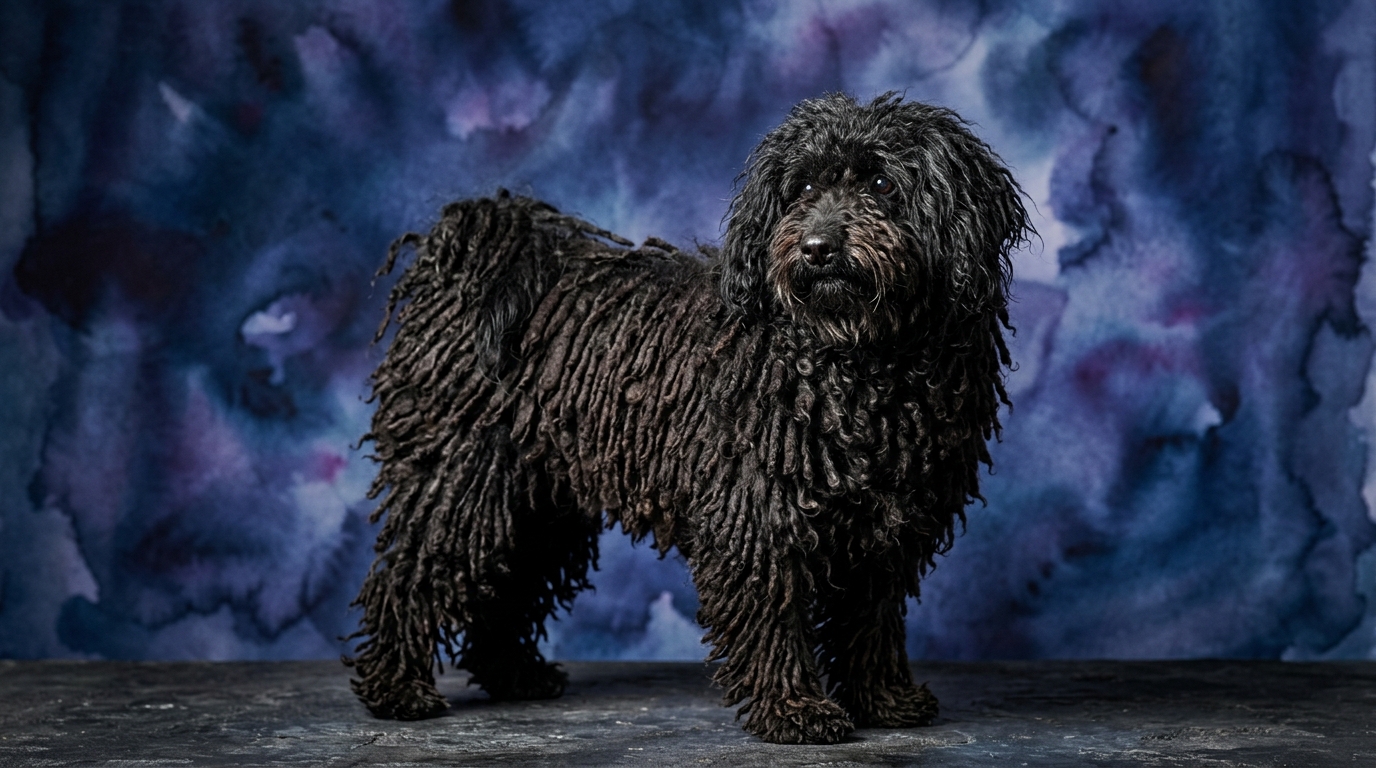
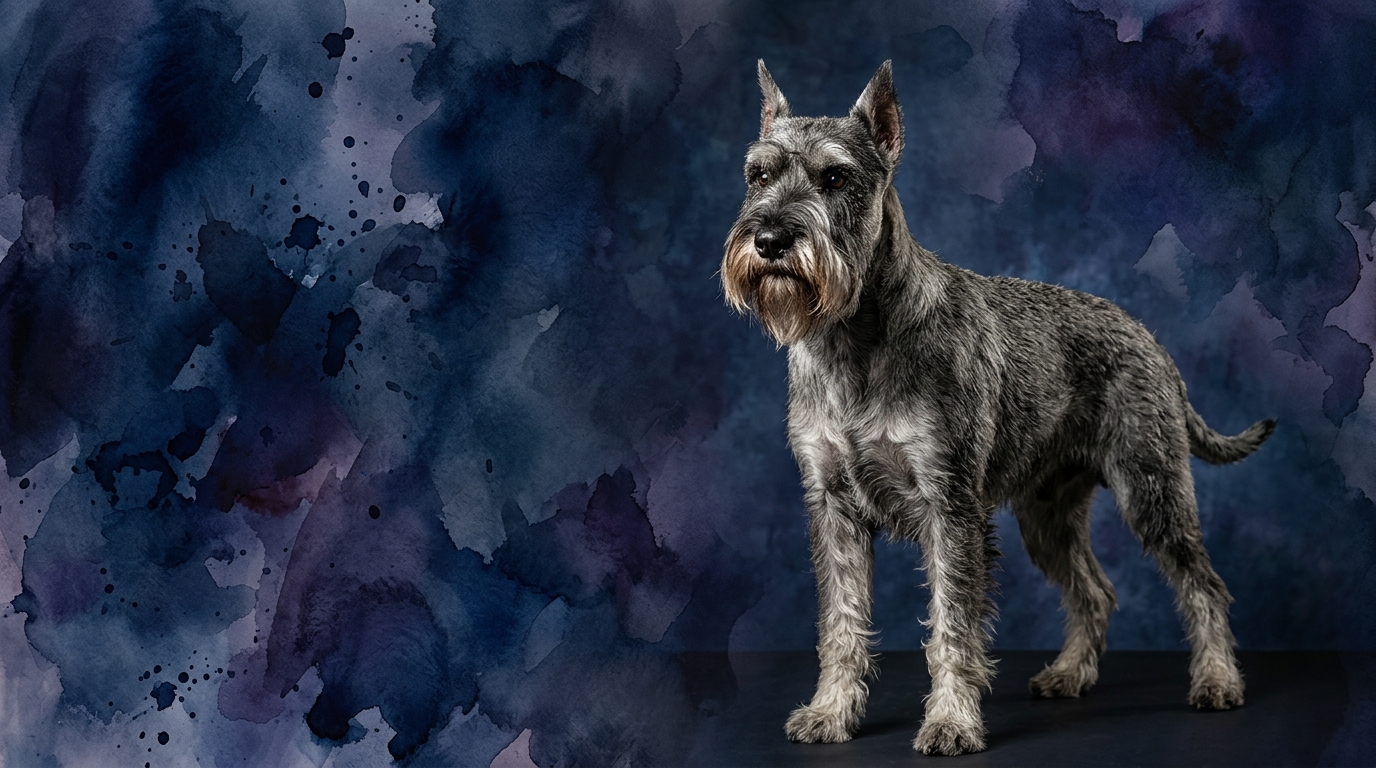
Side-by-Side IQ Profile: Herding Wit vs. Working Acumen
The Cosmic Pet Pet IQ Lab assigns both the Puli and the Standard Schnauzer remarkably similar cognitive profiles across five key dimensions. Both breeds achieve a problem Solving score of 4/5, indicating a strong capacity for independent thought and navigating complex situations. Their training Speed also stands at an impressive 4/5, suggesting a readiness to grasp and execute new commands efficiently.
Furthermore, both breeds share a social Intelligence rating of 3/5, demonstrating an awareness of their environment and the dynamics within their social groups. Their instinctive Drive is equally matched at 3/5, reflecting ingrained behavioral patterns stemming from their historical purposes. Finally, both the Puli and Standard Schnauzer possess a memory score of 4/5, highlighting their ability to retain information, routines, and experiences over time. The Puli, ranked #25 by Coren, and the Standard Schnauzer, ranked #22, suggest a high but closely matched capacity for obedience and adaptive learning within their respective groups.
Where the Puli Wins Cognitively: Agile Herding Intellect
While their raw scores align, the Puli's cognitive strengths often shine in dynamic, fluid environments, a direct legacy of their herding origins. Their problem-solving ability, rated 4/5, is particularly adept at assessing and managing ever-changing variables, such as a scattering flock or shifting terrain. This isn't just about following commands; it's about making split-second decisions to outmaneuver livestock and maintain control, often at a distance from their handler. Their memory (4/5) is finely tuned to recall complex patterns of movement and the individual behaviors of animals or people within their charge, allowing them to anticipate and react proactively.
The Puli’s social intelligence (3/5) is uniquely geared towards reading the subtle cues of animals and understanding the unspoken communication within a working unit. This manifests as an intuitive grasp of hierarchy and a capacity for independent judgment, even when it means deviating from a direct instruction to achieve the overall goal of containing a flock. Their instinctive drive (3/5) is heavily weighted towards gathering and controlling, endowing them with a persistent focus on organizing and managing, making them exceptionally responsive to tasks that involve spatial reasoning and strategic positioning.
Where the Standard Schnauzer Wins Cognitively: Steadfast Working Resolve
The Standard Schnauzer, with its working dog heritage, demonstrates its 4/5 problem-solving capacity through a more methodical and persistent approach. Their cognitive strength lies in their ability to analyze a situation, often relating to protection, guarding, or pest control, and then systematically execute a solution. This might involve discerning threats, patrolling boundaries, or meticulously hunting vermin. Their memory (4/5) is exceptional for retaining detailed sequences of commands and understanding complex routines, making them reliable partners in tasks requiring precision and consistency.
The Standard Schnauzer’s social intelligence (3/5) is often expressed through a deep understanding of their human family's needs and boundaries, coupled with a discerning watchfulness towards strangers. This allows them to effectively fulfill guarding roles by accurately interpreting social cues and reacting appropriately. Their instinctive drive (3/5) is powerfully channeled into protective behaviors, territorial defense, and an unwavering commitment to their assigned duties. This drive fuels their determination and focus on tasks that require sustained attention and a robust sense of purpose, distinguishing their application of intelligence from the Puli's more fluid approach.
Which is Easier to Train and Why: Independence vs. Partnership
Despite both breeds scoring 4/5 in training speed, the 'ease' of training can differ significantly due to their behavioral predispositions. The Puli, with its independent herding mindset, learns quickly but often processes commands through the lens of its own judgment. They might question the necessity of a command or find a more 'efficient' Puli-specific way to achieve the desired outcome, which can sometimes be interpreted as stubbornness. Training a Puli requires patience, consistency, and a deep understanding of their desire to work *with* you, rather than simply *for* you. Positive reinforcement techniques that appeal to their problem-solving nature and allow for some autonomy tend to yield the best results.
The Standard Schnauzer, on the other hand, typically embraces training with a strong desire to partner and please their handler, a characteristic rooted in their working dog history. Their 4/5 training speed is coupled with an eagerness for structure and purpose, making them generally receptive to learning and excelling in obedience. While they possess a strong will and can be determined, their focus is often on understanding and executing tasks assigned by their trusted human. Consistency, clear expectations, and engaging methods that tap into their innate drive for activity and companionship will find the Standard Schnauzer a highly responsive and gratifying pupil.
Cognitive Fit: Active Owners vs. Relaxed Owners
For active owners, both breeds offer substantial engagement, but their ideal activities diverge based on their core cognitive strengths. An active owner who thrives on intricate problem-solving, agility, and dynamic outdoor activities would find the Puli an exceptional match. Their cognitive need for mental stimulation often translates into a requirement for tasks that challenge their herding instincts, like advanced obedience, herding trials, or even complex puzzle games that simulate managing variables. A Puli thrives when given a 'job' that allows them to utilize their independent decision-making and agile intellect, making them less suitable for owners seeking a purely passive companion.
The Standard Schnauzer also demands an active owner, but one who appreciates a more structured and purposeful engagement. Their cognitive profile benefits immensely from consistent training, structured routines, and activities that tap into their working drive, such as advanced obedience, agility, protection sports, or even therapy work. They excel when given clear tasks and responsibilities, finding satisfaction in mastering skills and working alongside their human. For a relaxed owner, the inherent drives and cognitive needs of both breeds would likely lead to frustration, as their sharp minds and energetic bodies require consistent mental and physical outlets to prevent boredom and potential behavioral issues.
The Verdict: When to Choose Each
The Verdict
Choose the Puli if you are an experienced, active owner who values an independent thinker, enjoys dynamic problem-solving, and is prepared to channel a strong herding drive into engaging activities like agility or complex training.
Opt for the Standard Schnauzer if you are an active owner seeking a loyal, purposeful partner eager for structured training, who appreciates a vigilant protector, and can provide consistent mental and physical challenges for their working intellect.
🧠 Find Your Pet's IQ Score
Our Pet IQ Lab assessment covers 25+ tests across 5 cognitive dimensions — personalized to your breed.
Take the Full IQ Test →Frequently Asked Questions
Do Pulis and Standard Schnauzers require the same amount of mental stimulation?
Yes, both breeds require significant mental stimulation due to their high cognitive scores. However, the *type* of stimulation differs; Pulis thrive on independent problem-solving in dynamic situations, while Standard Schnauzers prefer structured tasks and purposeful work.
Can a Puli be a good family dog, given its herding instincts?
A Puli can be an excellent family dog, forming strong bonds, but their herding instincts mean they might try to 'herd' children or other pets. Early socialization and consistent training are crucial to direct this drive appropriately and ensure harmonious family life.
Are Standard Schnauzers prone to being overly protective due to their working background?
Standard Schnauzers possess a natural protective instinct, stemming from their history as guard dogs. While this makes them excellent watchdogs, proper socialization and training are essential to ensure their protectiveness is well-managed and doesn't become excessive or inappropriate.