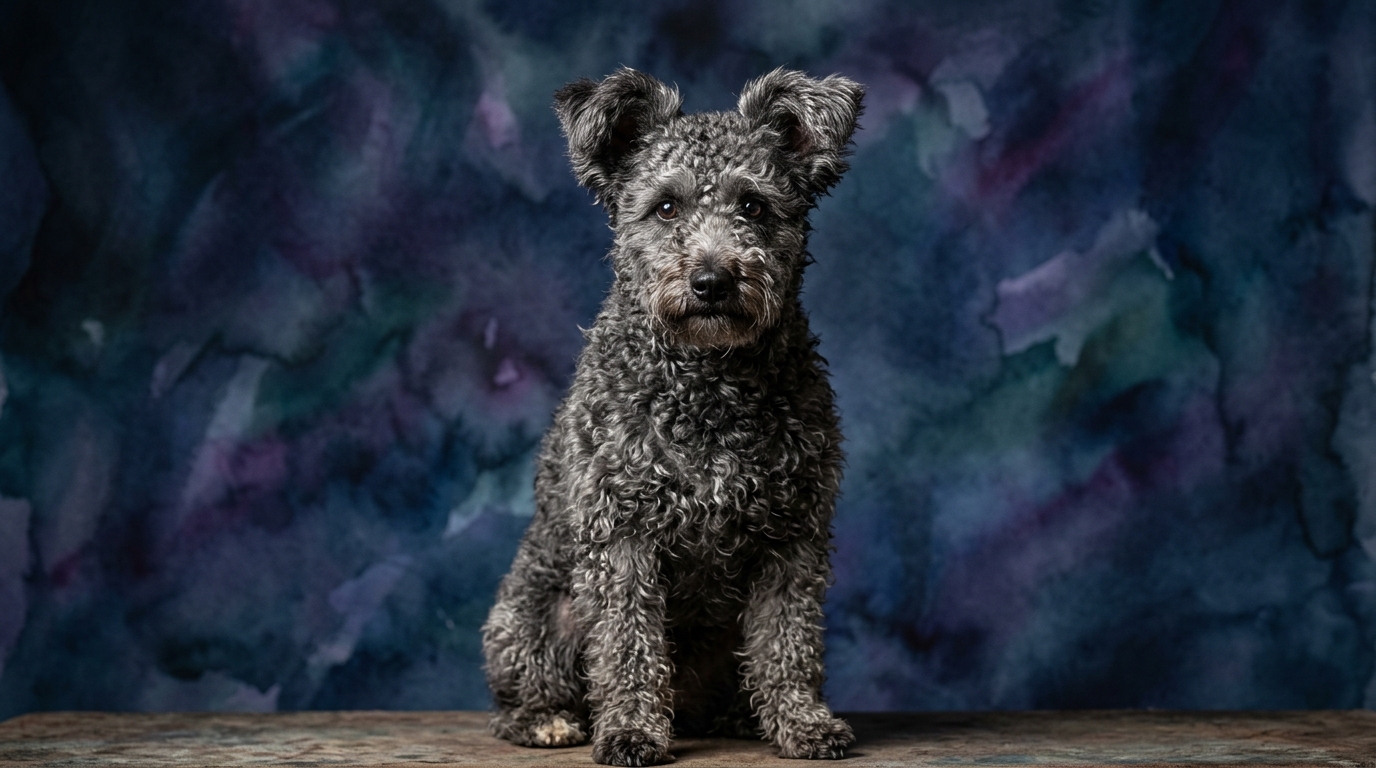

Side-by-Side IQ Profile: Pumi vs. Anatolian Shepherd Dog
The Cosmic Pet Pet IQ Lab assesses canine intelligence across five critical dimensions: Problem Solving, Training Speed, Social Intelligence, Instinctive Drive, and Memory. Both the Pumi, a Hungarian herding dog, and the Anatolian Shepherd Dog, a formidable livestock guardian, register a 3 out of 5 in every category. This parity suggests neither breed holds a numerical advantage in raw cognitive capacity, but rather that their cognitive strengths are channeled differently, reflecting their distinct working purposes.
For Problem Solving (3/5), the Pumi demonstrates a quick, adaptable mind crucial for navigating the dynamic environment of a moving flock. This involves rapidly assessing changing livestock patterns, anticipating their movements, and finding efficient ways to gather or drive them, often requiring immediate, on-the-spot decisions. The Anatolian Shepherd Dog's problem-solving, while also rated 3/5, manifests as a more deliberate, strategic assessment of its environment. Its intellect is geared towards identifying and mitigating threats to its flock, which might involve subtle observation of potential predators, finding weaknesses in defenses, or determining the most effective patrol routes. Their problem-solving isn't about rapid redirection but about independent, long-term protective strategy.
Training Speed (3/5) for the Pumi reflects its inherent desire to work collaboratively with a handler. They grasp new commands and routines effectively when engaged, eager to participate in complex tasks. Their herding background means they are receptive to learning intricate sequences. The Anatolian Shepherd Dog also learns at a 3/5 pace, meaning it is capable of acquiring commands and understanding expectations. However, this learning is often filtered through its independent, guardian mindset. While it learns, its compliance can be contingent on its own assessment of the command's relevance to its protective duties, making the *application* of training feel slower to a handler accustomed to more biddable breeds.
Social Intelligence (3/5) in the Pumi involves a keen ability to read human cues and interact effectively with livestock, maintaining control while minimizing stress. They understand the social dynamics of their working group and can be attuned to the emotions and intentions of their handler. Their social intelligence also extends to their careful assessment of strangers, often exhibiting initial reserve. The Anatolian Shepherd Dog's 3/5 social intelligence is centered on its primary role: protecting its charges. It excels at observing the subtle behaviors of its flock, discerning normal activity from potential distress, and assessing the intentions of unfamiliar humans or animals entering its territory. Its social understanding is deeply rooted in its guardian responsibilities, forming profound bonds with its family and livestock while maintaining a watchful, often aloof, posture towards outsiders.
Instinctive Drive (3/5) is a powerful aspect for both breeds. The Pumi possesses a robust herding instinct, manifesting as an energetic desire to gather, drive, and control livestock, often accompanied by characteristic vocalizations. This drive provides the motivation for its work and shapes much of its natural behavior. The Anatolian Shepherd Dog's 3/5 instinctive drive is overwhelmingly protective. It is driven to guard and defend its territory and charges, exhibiting natural behaviors like patrolling, marking boundaries, and issuing warning barks or deterrent postures to perceived threats. This drive is the core of its being, compelling it to act as a vigilant sentinel.
Finally, Memory (3/5) for the Pumi means it retains complex sequences of commands, remembers the layout of its working environment, and recalls the specific needs of its flock. This allows for efficiency and consistency in its herding tasks. The Anatolian Shepherd Dog's 3/5 memory is crucial for its guardian role; it remembers specific threats, safe zones, the individual characteristics of its flock members, and the intricacies of its patrol routes. Its memory supports its long-term vigilance and the accumulation of knowledge necessary for effective protection.
Where the Pumi Excels Cognitively
Despite identical scores, the Pumi’s cognitive strengths shine in areas demanding dynamic responsiveness and collaborative problem-solving. Its 3/5 Problem Solving and Training Speed are uniquely geared towards intricate, fast-paced tasks requiring constant feedback from a handler. A Pumi excels at rapidly processing new information and adjusting its strategy on the fly, whether it's redirecting a stubborn sheep or navigating an agility course. Its intelligence is highly interactive; it thrives on a partnership where it can anticipate and execute commands with precision and enthusiasm. This makes its 3/5 cognitive capacity feel more agile and adaptable in real-time, particularly when working in tandem with a human partner. Their Herding Group classification underscores this ability to think and react quickly in a fluid environment, making split-second decisions to manage livestock effectively.
Where the Anatolian Shepherd Dog Excels Cognitively
The Anatolian Shepherd Dog's cognitive strengths, while numerically equivalent, manifest as a profound capacity for independent decision-making and long-term strategic vigilance. Its 3/5 Problem Solving is not about quick, handler-directed maneuvers but about autonomous assessment and resolution of potential threats. This breed can observe its territory for extended periods, identify subtle changes, and determine the most effective, often non-confrontational, method of deterrence. Its 3/5 Social Intelligence is deeply rooted in its ability to understand and protect its charges, forming intense bonds with them and discerning their individual needs. The Anatolian's intellect allows it to act as a self-sufficient guardian, making reasoned judgments about safety and security without constant human instruction. Its Working Group heritage emphasizes this self-reliance and the cerebral fortitude required for sustained, independent protection, often involving subtle, preventative measures rather than reactive interventions.
Which is Easier to Train and Why
When considering ease of training, the Pumi generally presents a more straightforward experience for most owners, despite both breeds sharing a 3/5 Training Speed score. The Pumi's herding background instills a strong desire to work *with* a human and respond to direction. They are typically eager to please and find satisfaction in engaging in complex tasks with their handler, making them receptive to positive reinforcement training. Their high energy and vocal nature require consistent guidance to channel their enthusiasm, but their biddability for interactive learning is a significant advantage. A Pumi's problem-solving often involves figuring out how to best execute a handler's request, making them more pliable in structured training environments.
The Anatolian Shepherd Dog, while equally capable of learning (3/5 Training Speed), often presents a greater challenge due to its inherent independence and guardian mindset. An Anatolian learns commands and routines, but its deep-seated instinct to make its own decisions regarding protection means it may choose to comply only if it perceives the command as logical or beneficial within its guarding framework. They are not primarily motivated by a desire to please, but by their understanding of their role. Training an Anatolian requires immense patience, consistency, and a profound respect for its independent nature. Owners must build trust and demonstrate consistent leadership for the dog to accept guidance, rather than expecting immediate, eager obedience. This difference in motivation, rather than a lack of cognitive ability, makes the Anatolian feel harder to train for many.
Which Suits Active Owners vs. Relaxed Owners
The Pumi is an ideal match for active owners who relish daily engagement and mental stimulation for their canine companion. Their 3/5 Instinctive Drive for herding translates into a need for consistent physical exercise, such as long walks, runs, or dog sports like agility, flyball, or obedience. Beyond physical activity, Pumis thrive on having a 'job' to do, requiring owners who are prepared to dedicate time to advanced training, puzzle toys, or even actual herding work. A Pumi is not suited for a relaxed owner seeking a low-maintenance companion; they will invent their own (potentially destructive) entertainment if not adequately challenged.
The Anatolian Shepherd Dog, conversely, is better suited for owners who understand and appreciate independence, and who can provide a secure, spacious environment. While they need regular, moderate exercise—often preferring patrolling their territory to intense bursts of play—their physical activity is often tied to their guarding instincts. They are not typically a breed for casual park visits or constant interactive games. Owners must be prepared for a dog that is vigilant and reserved, requiring consistent, calm leadership rather than constant active engagement. A truly 'relaxed' owner might find the Anatolian's strong protective instincts and independent decision-making overwhelming, but an owner who appreciates a self-sufficient, watchful presence will find a loyal and devoted companion.
The Verdict: When to Choose Each
The Verdict
Choose the Pumi if you are an active, engaged owner seeking a dynamic partner for dog sports, advanced training, or a working role, and you appreciate a vocal, highly interactive companion.
Opt for the Anatolian Shepherd Dog if you are an experienced owner who values independence, requires a vigilant protector for property or livestock, and can provide a secure environment with calm, consistent leadership.
🧠 Find Your Pet's IQ Score
Our Pet IQ Lab assessment covers 25+ tests across 5 cognitive dimensions — personalized to your breed.
Take the Full IQ Test →Frequently Asked Questions
Do Pumis typically bark a lot?
Yes, Pumis are known for their vocal nature, which is a natural extension of their herding instinct. They use barking to gather and control livestock, and this trait often carries over into their daily lives, requiring consistent training to manage.
Are Anatolian Shepherd Dogs suitable for families with young children?
Anatolian Shepherd Dogs can be very protective of 'their' children and family members, but their sheer size and strong guarding instincts mean careful socialization, training, and constant supervision are essential, especially with young children.
How much exercise does an Anatolian Shepherd Dog truly need?
Anatolian Shepherd Dogs require moderate, consistent exercise, often preferring to patrol and observe their territory rather than engaging in high-intensity activities. Daily walks or opportunities to roam a securely fenced yard are usually sufficient to keep them content.