
The Cognitive Landscape: Pumi vs. Gordon Setter IQ Profiles
At The Cosmic Pet Pet IQ Lab, we dissect canine intelligence into five distinct dimensions, offering a granular view beyond a single 'smartness' score. For the Pumi, a Hungarian herding dog, its profile paints a picture of balanced, functional intellect: Problem Solving at 3/5, Training Speed at 3/5, Social Intelligence at 3/5, Instinctive Drive at 3/5, and Memory also at 3/5. This consistent scoring suggests a dog whose cognitive functions are well-integrated and applied cohesively within its traditional role.
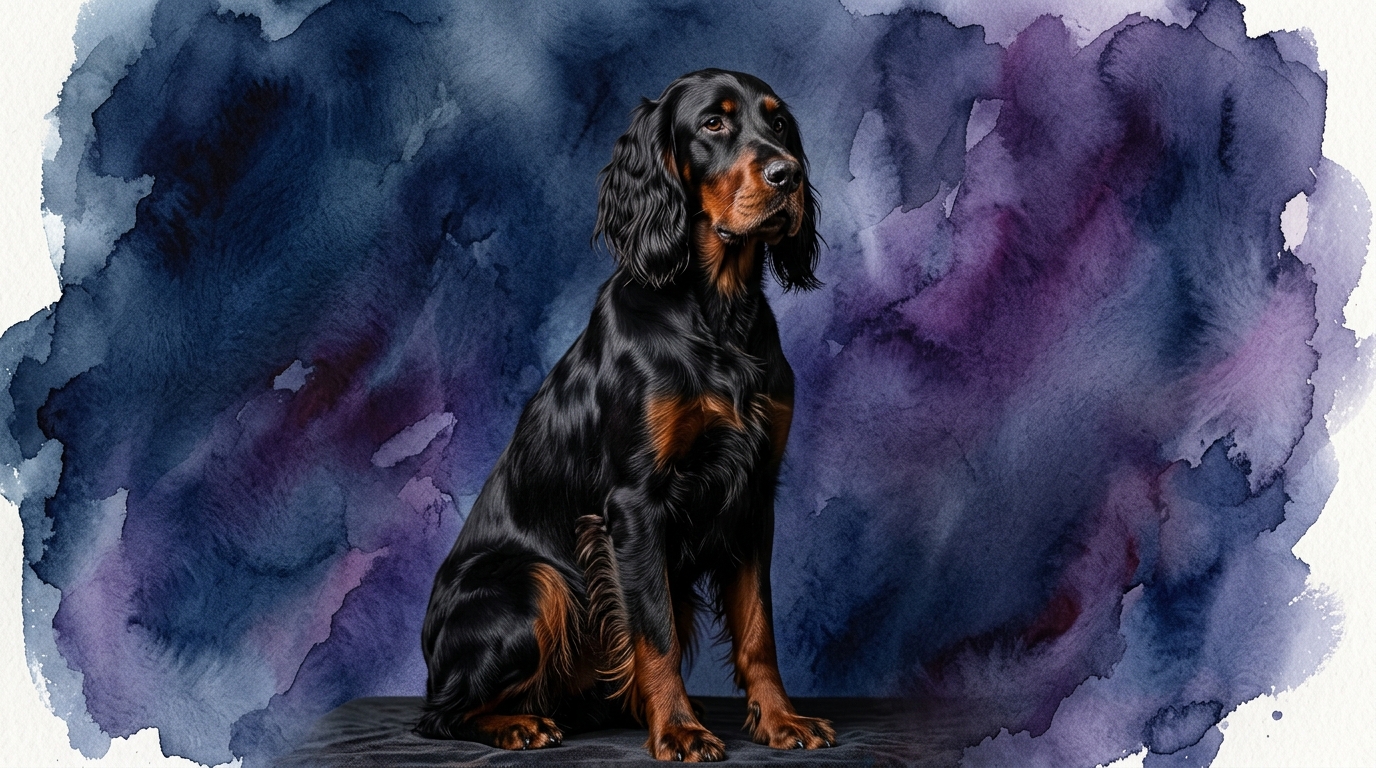
In contrast, the Gordon Setter, a Scottish sporting dog with a Coren ranking of #39, demonstrates a profile with notable peaks: Problem Solving at 4/5, Training Speed at 4/5, Social Intelligence at 3/5, Instinctive Drive at 3/5, and Memory at 4/5. These higher marks in specific areas hint at a breed whose cognitive strengths are optimized for complex tasks, particularly those involving cooperation and recall within a working partnership.
Let's unpack each dimension, starting with the Pumi. Its Problem Solving at 3/5 reflects an agile mind adept at navigating dynamic, real-time situations inherent to herding livestock. This isn't about solving abstract puzzles, but rather quickly assessing a flock's movement, anticipating changes, and making instantaneous decisions to guide them. Their Training Speed, also 3/5, indicates they are capable learners, but their independent nature, a hallmark of many herding breeds, means they often require consistent, engaging methods to maintain focus and channel their inherent drives. Social Intelligence at 3/5 suggests they are attuned to their family unit, capable of discerning moods and intentions within their established 'pack', though they may be more reserved with strangers. Their Instinctive Drive, 3/5, is largely centered around their herding impulse – the desire to gather and control movement – which, if unchanneled, can manifest as chasing or circling. Finally, Memory at 3/5 means they retain learned behaviors and routines effectively, but perhaps not with the same detailed recall for lengthy, complex sequences as breeds scoring higher in this dimension.
Now, turning to the Gordon Setter. Their Problem Solving at 4/5 points to a dog capable of more strategic thinking, essential for a gundog navigating varied terrain to locate game, understanding wind patterns, and executing multi-step hunting commands. This higher score suggests an ability to adapt strategies and plan actions. Training Speed at 4/5 indicates a generally eager-to-please nature and a quicker grasp of new commands, especially when training taps into their natural retrieving or pointing instincts. This biddability makes them highly receptive to instruction. Social Intelligence, matching the Pumi at 3/5, shows they are affectionate and responsive to their human companions, reading intentions well, but their primary focus during work is often on the handler or the hunting task itself. Their Instinctive Drive, also 3/5, is strongly focused on scent work, pointing, and retrieving, a powerful but specific motivation that defines their working purpose. The Gordon Setter's Memory at 4/5 is a significant asset, allowing for excellent recall of learned commands, complex routes, and scent trails, which is crucial for effective and reliable performance in the field.
Where the Pumi's Cognition Shines
While the Gordon Setter boasts higher scores in several key areas, the Pumi's cognitive strengths are uniquely tailored for specific scenarios. The Pumi's Problem Solving at 3/5, coupled with its Instinctive Drive at 3/5, creates a dog perfectly equipped for dynamic, autonomous herding tasks. Unlike a gundog often working in close concert with a human, a Pumi might be expected to make independent, split-second decisions to manage a flock, reacting to a stray lamb or a shift in the herd's direction without direct human command. This type of 'on-the-fly' problem-solving, prioritizing quick adaptation over strategic planning, is where the Pumi truly excels.
Furthermore, the Pumi's balanced cognitive profile, with all dimensions at 3/5, makes it a remarkably versatile partner for owners seeking a working dog that isn't overly specialized. This means their social intelligence (3/5) is sufficient for family life, their training speed (3/5) allows for good foundational learning, and their memory (3/5) supports consistent routine. For an owner who values a dog capable of independent thought and quick, practical responses in varied, less structured environments, the Pumi's particular blend of cognitive attributes represents a distinct advantage.
Where the Gordon Setter's Cognition Takes the Lead
The Gordon Setter’s cognitive profile clearly indicates strengths that make it a standout in structured, cooperative working environments. Its Problem Solving at 4/5 means this breed is adept at figuring out more complex, multi-stage tasks, such as navigating intricate scent trails or executing a series of commands in a specific order during a hunt. This isn't just about reaction; it's about strategic application of knowledge to achieve a goal.
Perhaps the most significant cognitive advantage for the Gordon Setter lies in its combined 4/5 scores for Training Speed and Memory. This pairing translates into a dog that not only grasps new concepts quickly but also retains them with exceptional reliability. For activities requiring a broad repertoire of commands, intricate sequences, or consistent performance over time – think competitive obedience, advanced field trials, or even complex service dog work – the Gordon Setter’s capacity to learn rapidly and remember accurately provides a substantial edge. Their biddability and focus on the handler during training further amplify these strengths, making them highly efficient learners of human-devised tasks.
Training Dynamics: Pumi's Independence vs. Gordon Setter's Biddability
When considering ease of training, the Gordon Setter generally presents a more straightforward path for most owners, largely due to its 4/5 score in Training Speed and Memory. Gordon Setters typically exhibit a strong desire to please their handler and possess a focused attention span, especially when training incorporates their natural instincts for scent work or retrieving. They are often highly responsive to positive reinforcement, quickly associating commands with desired actions and retaining those associations over time, making them excellent candidates for obedience, rally, and field competitions.
The Pumi, with its 3/5 Training Speed and Memory, can certainly be trained to a high standard, but the process may require a different approach. Their herding background fosters a degree of independent thinking and decision-making, meaning they might not always offer the same eager compliance as a Gordon Setter. A Pumi might question a command or attempt to find a more 'efficient' way to complete a task, reflecting their innate problem-solving for livestock management. Owners need to be creative, consistent, and patient, making training feel like a collaborative game rather than a series of directives to maintain the Pumi's engagement and channel its lively intellect effectively. This isn't about lack of capacity, but a difference in motivational drivers and how they process instruction.
Lifestyle Match: Active Engagement vs. Structured Partnership
Both the Pumi and the Gordon Setter are active breeds that require substantial mental and physical engagement, making neither suitable for truly 'relaxed' owners in the sense of minimal daily interaction. However, their cognitive profiles suggest different types of activity that align with their inherent drives and problem-solving styles.
The Pumi, with its balanced 3/5 scores, thrives with owners who can provide varied, dynamic mental challenges that tap into its quick thinking and independent herding instincts. This means activities like agility, flyball, or even urban herding games that allow them to make rapid decisions and work autonomously. An owner who enjoys teaching new tricks, exploring different dog sports, and engaging in frequent, stimulating play sessions will find the Pumi to be an exhilarating partner. Their energy needs to be channeled creatively to prevent them from 'herding' household members or finding their own, potentially destructive, forms of entertainment.
The Gordon Setter, with its higher scores in Problem Solving, Training Speed, and Memory, is an excellent match for owners who appreciate a more structured, cooperative working relationship. They excel in activities like advanced obedience, field trials, hunting, or tracking, where precise execution of commands, strategic thinking, and reliable recall are paramount. These dogs thrive on having a 'job' that involves close partnership with their human, applying their biddability and memory to master complex tasks. While they also need ample physical exercise, their cognitive satisfaction often comes from mastering a skill set and working purposefully alongside their owner, rather than constantly inventing their own solutions.
The Verdict
Choose the Pumi if you seek a quick-thinking, adaptable partner for dynamic tasks, appreciating an independent problem-solver that thrives on mental agility and moderate, varied physical challenges.
Opt for the Gordon Setter if you desire a biddable, focused companion eager to learn complex commands, excelling in structured training and field work where excellent memory and strategic thinking are paramount.
🧠 Find Your Pet's IQ Score
Our Pet IQ Lab assessment covers 25+ tests across 5 cognitive dimensions — personalized to your breed.
Take the Full IQ Test →Frequently Asked Questions
Is a Pumi hard to train?
Not 'hard,' but their independent herding mindset (Training Speed 3/5) means they respond best to engaging, consistent methods that channel their natural drives rather than simply demanding compliance. Owners need to make training a stimulating, collaborative experience.
Do Gordon Setters have good memory?
Yes, with a Memory score of 4/5, Gordon Setters demonstrate excellent recall for commands, routines, and scent trails, making them highly effective in field work and complex training scenarios. They retain information reliably over time.
Which breed is better for dog sports?
Both can excel, but their strengths differ. The Gordon Setter's 4/5 in Problem Solving, Training Speed, and Memory gives it an edge in sports requiring complex sequences and high biddability like obedience or competitive retrieving. The Pumi's agility and independent thinking make it shine in fast-paced, dynamic activities like agility or flyball.