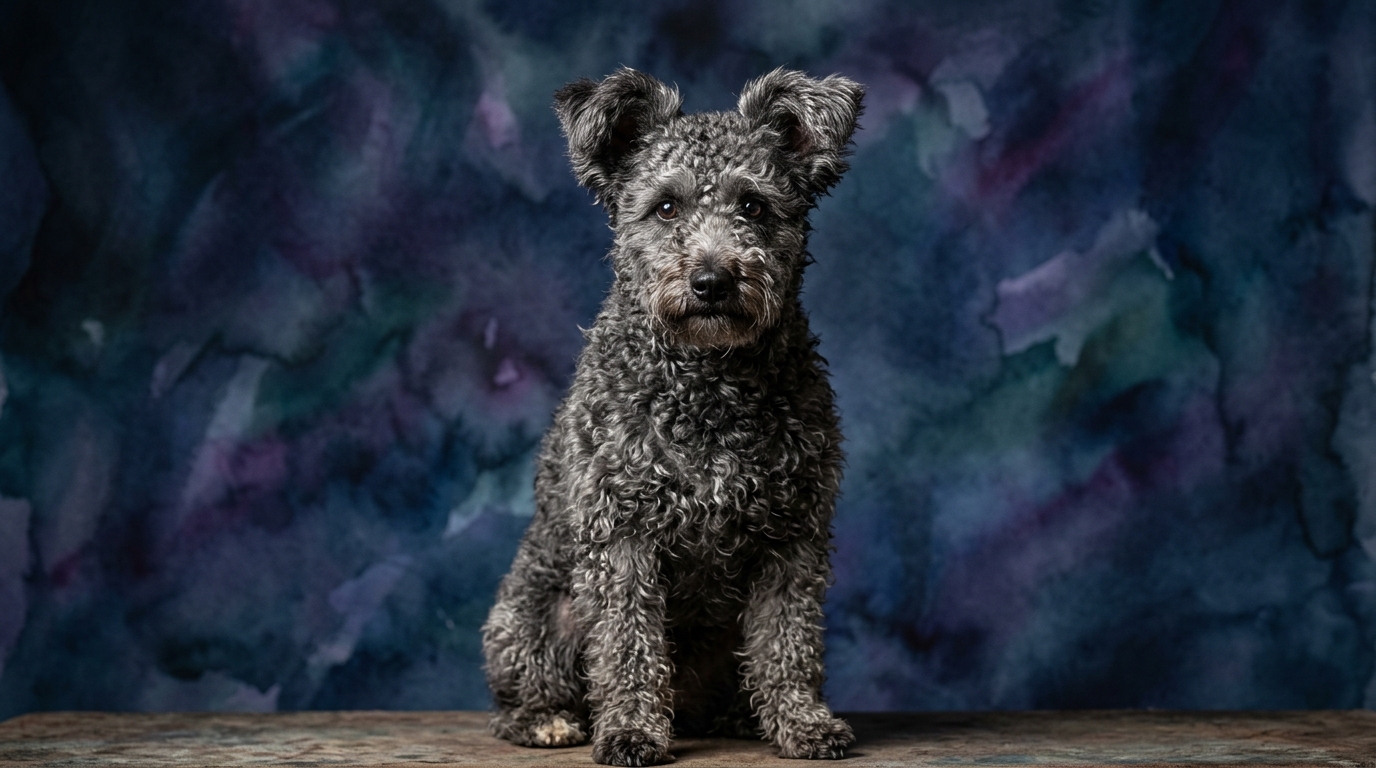

Side-by-Side IQ Profile: Interpreting Identical Scores
On paper, The Cosmic Pet Pet IQ Lab assigns both the Pumi and the Mastiff a consistent 3/5 rating across all five cognitive dimensions: Problem Solving, Training Speed, Social Intelligence, Instinctive Drive, and Memory. However, these identical scores belie distinct expressions of intelligence rooted in their breed histories and intended functions. A Pumi's 3/5 in problem-solving, for instance, reflects its ability to rapidly assess and react to unpredictable livestock movements, finding efficient ways to gather and direct a flock across varied terrains. This mental agility allows it to make quick, independent decisions when separated from its handler, adapting strategies on the fly to fulfill its herding duties. Its 3/5 training speed indicates a moderate learning curve, but one that thrives on engaging, varied tasks, as its active mind can quickly become bored with rote repetition. Social intelligence at 3/5 means the Pumi is adept at reading its handler's subtle cues and understanding flock dynamics, often exhibiting a keen awareness of its environment and the intentions of those within it, though it can be initially reserved with strangers. Its instinctive drive at 3/5 is a powerful herding impulse, a constant internal motor that needs channeling, manifesting as a persistent desire to control movement. Finally, a 3/5 memory ensures it reliably retains complex herding patterns, commands, and learns from past experiences, making it a consistent worker.
The Mastiff, while sharing the same 3/5 ratings, applies these cognitive strengths to a vastly different purpose: guardianship. Its 3/5 problem-solving capability manifests as a steady, discerning assessment of situations, understanding territory boundaries, and making judicious decisions regarding potential threats without unnecessary aggression. This isn't about rapid-fire reactions but rather a thoughtful, deliberate approach to protection. A 3/5 training speed for a Mastiff means it learns commands with consistency and patience, often requiring clear motivation and a strong bond with its handler, as its independent nature means it won't rush into compliance without understanding the 'why.' Its social intelligence, also 3/5, speaks to a deep attunement to its family's emotional states and intentions, coupled with a discerning, often reserved, approach to strangers. This isn't a breed seeking broad social engagement but rather a profound connection with its inner circle. The Mastiff's 3/5 instinctive drive is primarily a protective one, a deep-seated urge to safeguard its home and loved ones, which typically remains latent until a perceived threat arises, rather than a constant need for activity. Its memory at 3/5 ensures it consistently remembers people, established household routines, and boundaries, contributing to its reliable and steadfast nature as a family companion and guardian.
Where the Pumi Wins Cognitively
The Pumi’s cognitive strengths shine brightest in dynamic, fast-paced environments where quick processing and physical agility are paramount. Its herding heritage has honed a specific type of problem-solving: the ability to rapidly analyze a fluid situation – a scattering flock, changing terrain, or an unexpected obstacle – and execute immediate, effective solutions. This involves a unique blend of spatial reasoning, predictive analysis of animal movement, and swift decision-making, often without direct instruction. While its training speed is rated 3/5, the Pumi’s eagerness for mentally stimulating work means it can quickly grasp complex sequences of commands and apply them in varied contexts, making it highly adaptable in competitive dog sports or advanced herding tasks. Its instinctive drive, while needing careful management, provides an internal motivation for engagement that can translate into an impressive work ethic, making it exceptionally responsive to challenges that tap into its innate desire to control and organize. This breed excels when presented with a continuous stream of novel, engaging mental puzzles that require both brainpower and physical execution.
Where the Mastiff Wins Cognitively
The Mastiff’s cognitive advantages are best observed in its deliberate, watchful nature and its profound social attunement within its family unit. Its 3/5 problem-solving manifests as a calm, considered assessment of its environment, allowing it to discern genuine threats from harmless occurrences with impressive judgment. This isn't about speed, but rather accuracy and steadiness, making it a reliable guardian who rarely overreacts. The Mastiff's social intelligence, while not outwardly effusive, is deeply empathetic, enabling it to pick up on subtle emotional cues from its human family members. This allows for a profound bond and a quiet understanding that contributes significantly to its role as a companion. Its 3/5 memory is particularly strong for routines, people, and established boundaries, fostering a sense of predictable security within the home. This consistency in recall means once a rule or a person is established as safe, the Mastiff rarely forgets. Its instinctive drive, focused on protection, allows it to remain calm and composed for extended periods, yet be ready to act decisively if its family or territory is genuinely threatened, demonstrating a powerful, controlled cognitive response to its primary purpose.
Training Ease: Pumi's Zest vs. Mastiff's Steadfastness
When considering ease of training, the Pumi and Mastiff present distinct profiles, despite both receiving a 3/5 for training speed. The Pumi's inherent zest for activity and mental engagement can make it appear to learn more quickly, particularly when tasks are varied and challenging. Its herding instinct means it is naturally inclined to respond to direction and control, often showing a keen desire to work alongside its handler. However, this same high drive and quick mind can lead to boredom and mischievousness if training isn't consistently stimulating and engaging, potentially making it 'harder' to train for owners who prefer repetitive drills. They thrive on positive reinforcement and clever, puzzle-like training sessions that channel their boundless energy and problem-solving inclinations. Conversely, the Mastiff's training speed, while also 3/5, is characterized by a more deliberate pace. They are not prone to frantic energy or a constant need for mental gymnastics. They learn steadily and reliably, but often require more patience and consistency, as they may take a 'wait and see' approach before fully committing to a command. Their desire to please their family is a strong motivator, but they are less likely to respond to high-energy, fast-paced commands and prefer a calm, reassuring approach. Stubbornness can arise if a Mastiff doesn't see the point of a command or if training lacks clear, consistent leadership, highlighting the importance of building trust and respect through fair and clear communication rather than pure repetition.
Best Fit: Active vs. Relaxed Owners
The choice between a Pumi and a Mastiff largely hinges on an owner's lifestyle and their capacity to meet specific cognitive and physical needs. The Pumi is an ideal companion for active owners who relish daily engagement, both physically and mentally. This breed thrives with individuals or families who are prepared for regular, vigorous exercise – think long hikes, agility training, or even herding lessons – alongside consistent mental stimulation through training, puzzles, and interactive play. Their inherent drive and problem-solving skills mean they require an outlet for their energy and intelligence, making them a perfect match for those who enjoy dog sports or an 'on-the-go' lifestyle. Owners who are less active or unable to provide consistent mental challenges may find a Pumi's energy and quick mind overwhelming, potentially leading to undesirable behaviors born of boredom. In contrast, the Mastiff is generally better suited for more relaxed owners who appreciate a steadfast, calm presence in their home. While they still require regular, moderate exercise to maintain their health and prevent boredom, their needs are less intense than the Pumi's. They are content with daily walks and a comfortable spot to observe their family. What they demand most is consistent, patient training, early socialization, and a deep, empathetic bond with their owners. They thrive in homes where they are integral family members, valued for their quiet companionship and protective nature, rather than their athletic prowess. Owners who prefer a less demanding exercise routine but are committed to providing a stable, loving environment will find a loyal and devoted companion in the Mastiff.
The Verdict
Choose the Pumi if you're an active owner seeking a highly engaged, quick-thinking companion for sports or a dynamic lifestyle, prepared to channel its intense drive and mental agility daily. Its zest for problem-solving in motion makes it an exhilarating partner for those who love to move and think together.
Opt for the Mastiff if you desire a calm, devoted guardian who offers profound companionship and a steady presence, and you are prepared for consistent, patient training and a relaxed, yet attentive, home environment. Its discerning intelligence and deep familial bonds provide a quiet, reassuring loyalty.
🧠 Find Your Pet's IQ Score
Our Pet IQ Lab assessment covers 25+ tests across 5 cognitive dimensions — personalized to your breed.
Take the Full IQ Test →Frequently Asked Questions
Do Pumis bark a lot due to their herding instincts?
Pumis do tend to be vocal, using barks to communicate and direct livestock as part of their herding role. This trait can carry over into a home environment, requiring consistent training to manage their propensity for barking at novel sights or sounds.
Are Mastiffs good with children and other pets?
Mastiffs can be excellent with children and other pets, often displaying a gentle and patient demeanor, especially when raised with them from a young age. Early socialization and supervision are crucial to ensure their protective instincts are well-managed and they learn appropriate interactions.
Which breed requires more grooming?
The Pumi's unique curly coat requires regular brushing, typically several times a week, to prevent matting and occasional professional grooming. The Mastiff, with its short, dense coat, is much lower maintenance, requiring only weekly brushing to remove loose hair and maintain coat health.