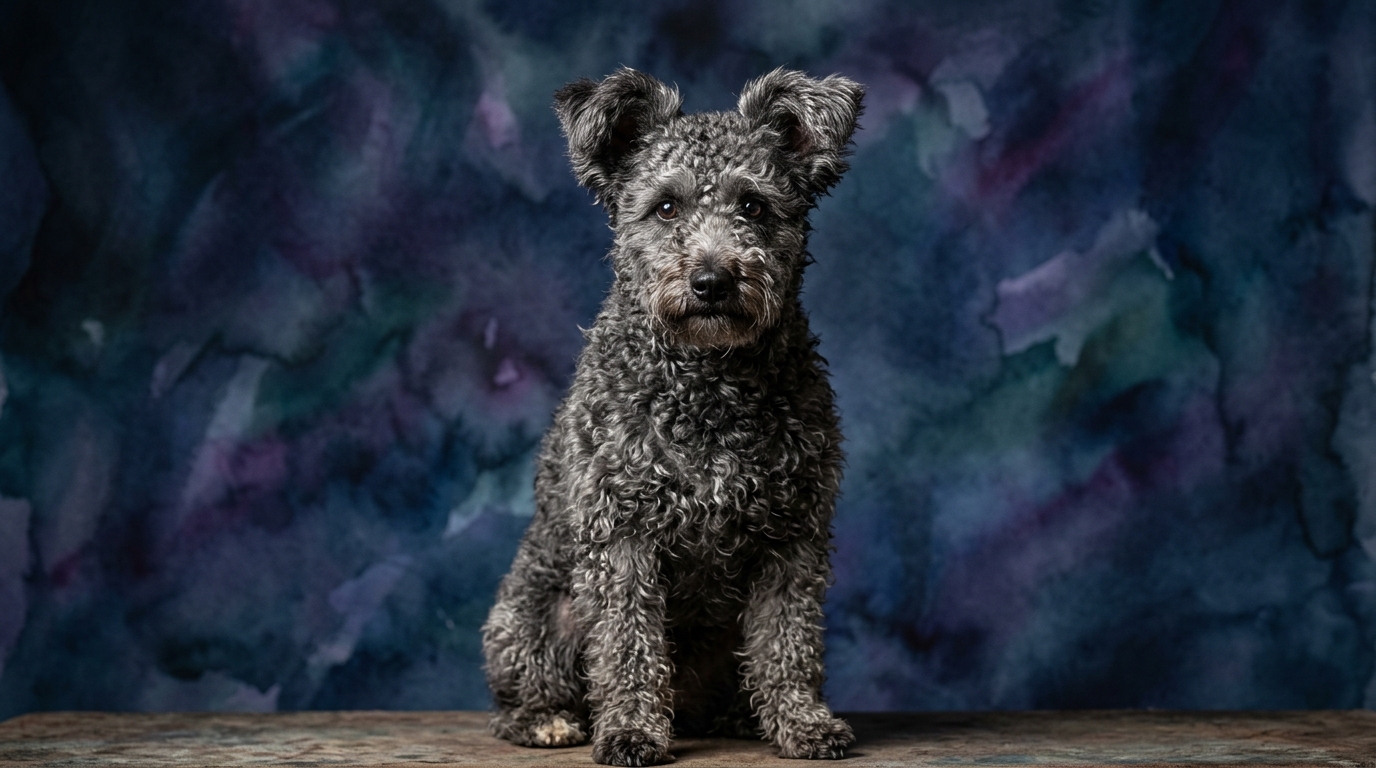
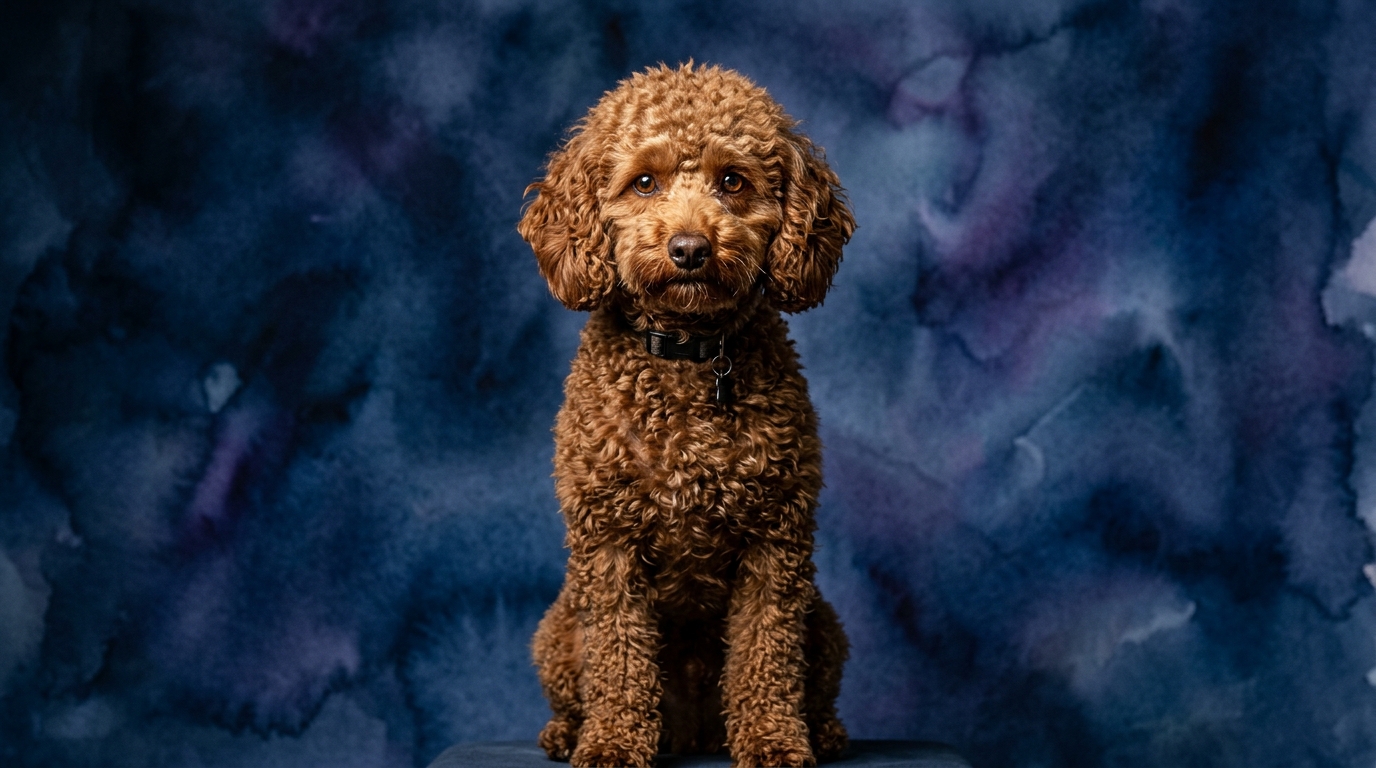
Side-by-Side Cognitive Profiles
The Cosmic Pet Pet IQ Lab employs a five-dimensional framework to assess canine intelligence, moving beyond simplistic labels to offer a granular view of how breeds process information and interact with their world. Let's dissect the profiles of the Pumi and the Miniature Poodle.
The Pumi, a Hungarian herding dog, presents a remarkably balanced cognitive profile, scoring 3 out of 5 across all five dimensions. Its Problem Solving (3/5) indicates a practical aptitude for navigating real-world challenges, often relying on learned patterns or methodical trial-and-error. This isn't about abstract puzzles, but rather effective, on-the-ground solutions. Training Speed (3/5) suggests it learns new commands and routines effectively with clear, consistent instruction, solidifying behaviors over a moderate number of repetitions. Social Intelligence (3/5) reflects a solid understanding of human cues and pack dynamics, allowing it to form strong bonds and adapt to its family environment. Its Instinctive Drive (3/5) is moderately present, rooted in its herding heritage and manifesting as an inclination to chase, gather, and organize, which can be channeled effectively. Finally, Memory (3/5) demonstrates a reliable capacity to recall learned commands, routines, and experiences, contributing to its overall predictability.
In stark contrast, the Miniature Poodle, a breed often associated with elegance, reveals a cognitive profile marked by exceptional strengths in specific areas, alongside a balanced social and instinctive nature. Its Problem Solving (5/5) is outstanding; these dogs don't just learn solutions, they often devise novel strategies for complex obstacles, demonstrating quick discernment and adaptive thinking. Training Speed (5/5) is equally impressive, allowing them to grasp new commands and complex sequences with astonishing few repetitions, making them highly responsive to advanced training. Like the Pumi, their Social Intelligence (3/5) is robust, enabling them to pick up on human emotions and intentions, forming deep, perceptive bonds. Their Instinctive Drive (3/5) is moderate, often expressed as a keen retrieval instinct or a desire for mentally stimulating games, reflecting their historical use. Crucially, their Memory (5/5) is superior, enabling them to retain a vast repertoire of commands, experiences, and social interactions over extended periods, significantly bolstering their training prowess.
Where the Pumi's Cognition Shines
While the Miniature Poodle boasts higher scores in several dimensions, the Pumi's balanced 3/5 across the board signifies a robust, well-rounded, and adaptable intellect, rather than specialized brilliance. This means no single cognitive weakness significantly hinders its overall functioning. Its problem-solving, while not top-tier, is inherently practical, honed by centuries of independent decision-making in herding scenarios. This involves assessing dynamic situations, making swift judgment calls about livestock movement, and adapting tactics on the fly—a different kind of cognitive agility than abstract puzzle-solving.
The Pumi's instinctive drive, while rated 3/5, is specifically geared towards purposeful work. This provides a clear, inherent framework for engagement, allowing owners to tap into a natural inclination for tasks rather than having to invent novel mental exercises. This breed excels when given a job that utilizes its natural herding intelligence, offering a tangible outlet for its mental energies that can be profoundly satisfying for both dog and owner. Its balanced memory and training speed ensure that once these purposeful tasks are learned, they are retained and performed reliably.
Where the Miniature Poodle Excels Cognitively
The Miniature Poodle's cognitive strengths are pronounced and impactful, particularly in areas that facilitate rapid learning and complex task execution. Their 5/5 rating in problem-solving means they are not merely capable of learning solutions, but are often innovators, dissecting new challenges and formulating effective strategies independently. This manifests as an ability to quickly understand intricate sequences, manipulate objects for desired outcomes, or even anticipate human actions based on subtle cues.
Their training speed, also a perfect 5/5, allows them to absorb new commands and multi-step routines with remarkable efficiency, often seeming to anticipate what is expected of them with astonishing few repetitions. This makes them exceptionally responsive and adaptable to advanced obedience, agility, or trick training. Furthermore, their 5/5 memory ensures that these learned behaviors and solutions are retained over long periods, minimizing the need for constant review and cementing their capacity for consistent, precise performance in a wide array of activities.
Training Dynamics: Pumi vs. Miniature Poodle
When it comes to ease of training, the Miniature Poodle generally presents a smoother experience due to its superior training speed and memory. A Miniature Poodle can often grasp a new command in just a few repetitions, internalizing the lesson quickly and reliably recalling it later. This makes progression through basic and advanced obedience remarkably swift. Their capacity for intricate problem-solving also means they can readily understand the 'why' behind a command or a sequence of actions, leading to more willing and precise execution.
In contrast, the Pumi, with a training speed and memory score of 3/5, requires more consistent repetition and patience. While certainly capable of learning, the process is less immediate, demanding a more structured and perhaps lengthier approach to solidify behaviors. The Pumi’s inherent herding drive, while manageable, can also present a training nuance; they might be inclined to 'manage' their environment or herd moving objects, occasionally requiring redirection from these natural impulses towards desired behaviors. Both breeds benefit immensely from positive reinforcement, but the Poodle’s cognitive profile lends itself to a faster, often more fluid training progression.
Matching Canine Intellect to Owner Lifestyle
The Pumi, with its 3/5 instinctive drive rooted in herding, thrives with active owners who can channel its natural inclinations into purposeful activities. This breed benefits immensely from regular opportunities to engage its body and mind in structured tasks, whether it's canine sports like agility or herding, long hikes, or complex puzzle toys. Owners who enjoy an active outdoor lifestyle and are prepared to provide consistent mental and physical challenges will find the Pumi a fulfilling companion. Its practical problem-solving shines when given a job to do.
The Miniature Poodle, while not driven by the same herding impulse, also demands an active mind. Its 5/5 problem-solving and memory mean it requires constant mental engagement to prevent boredom or the development of unwanted behaviors. Owners who enjoy teaching new tricks, engaging in advanced obedience, or participating in dog sports like rally or flyball will find the Miniature Poodle an eager and capable partner, appreciating its rapid learning and retention. For truly relaxed owners seeking a low-maintenance canine companion, neither breed is an ideal fit. Both thrive on interaction, learning, and mental stimulation, though the *type* of activity might differ. The Pumi often prefers more physically demanding, task-oriented engagement, while the Miniature Poodle can excel in highly intricate, mentally challenging games and learning scenarios.
The Verdict
Choose the Pumi if you appreciate a balanced, practical intellect and a dog with a clear, manageable working drive that enjoys physical tasks and problem-solving rooted in real-world scenarios.
Opt for the Miniature Poodle if you seek a dog with exceptional learning speed, superior memory, and a remarkable capacity for abstract problem-solving, ideal for advanced training, complex tasks, and intense mental stimulation.
🧠 Find Your Pet's IQ Score
Our Pet IQ Lab assessment covers 25+ tests across 5 cognitive dimensions — personalized to your breed.
Take the Full IQ Test →Frequently Asked Questions
Is the Pumi difficult to train?
The Pumi is not difficult to train, but it requires consistent, clear methods and patience. With a training speed of 3/5, it learns effectively but benefits from more repetition than some breeds to solidify commands. Its herding instincts mean it thrives on engaging tasks.
Do Miniature Poodles need a lot of exercise?
Miniature Poodles need regular physical exercise, but their primary requirement is mental stimulation due to their 5/5 problem-solving and memory. Daily walks are essential, but puzzle toys, training sessions, and engaging games are crucial to satisfy their active minds.
How do their social intelligence scores impact living with them?
Both breeds score 3/5 in social intelligence, meaning they possess a solid understanding of human cues and can adapt well to family dynamics. They are sensitive to their owner's moods and form strong bonds, making them perceptive and responsive companions in a home environment.