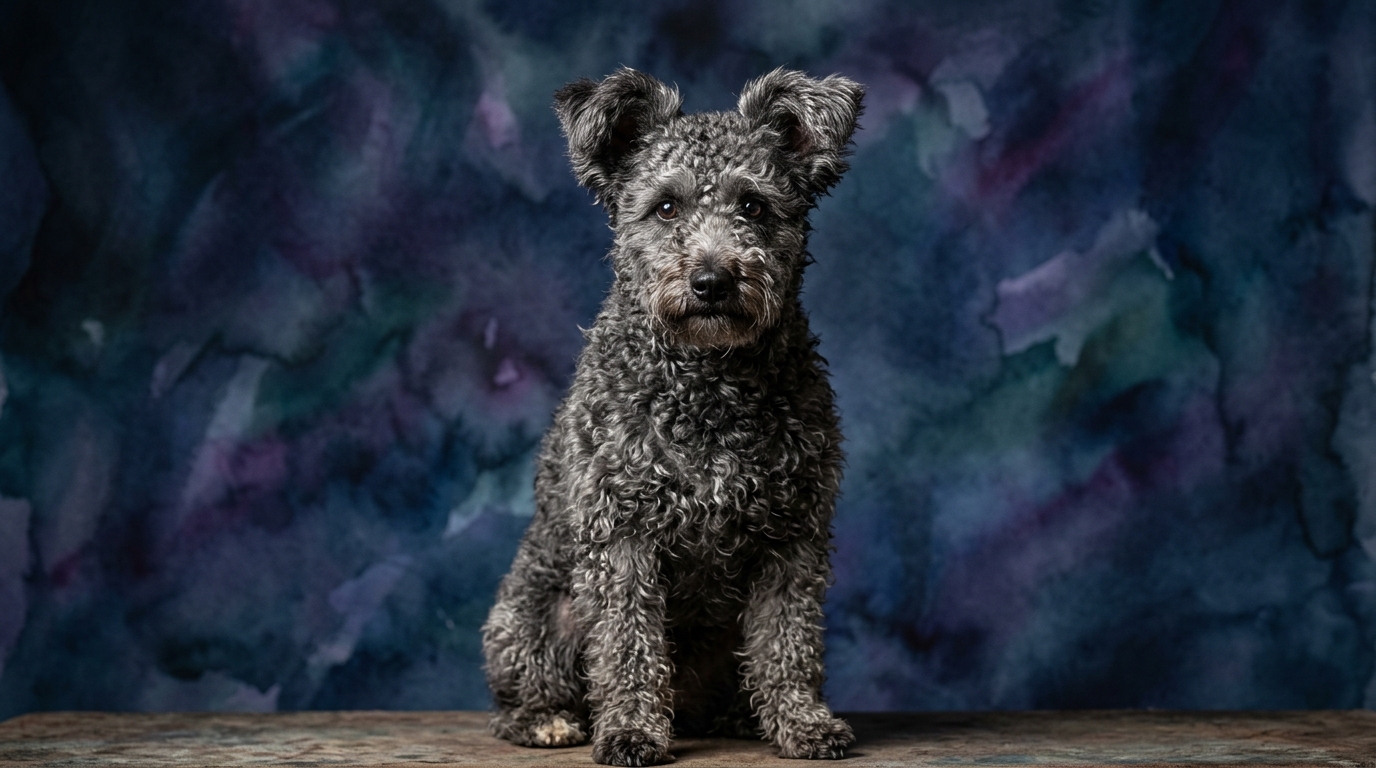
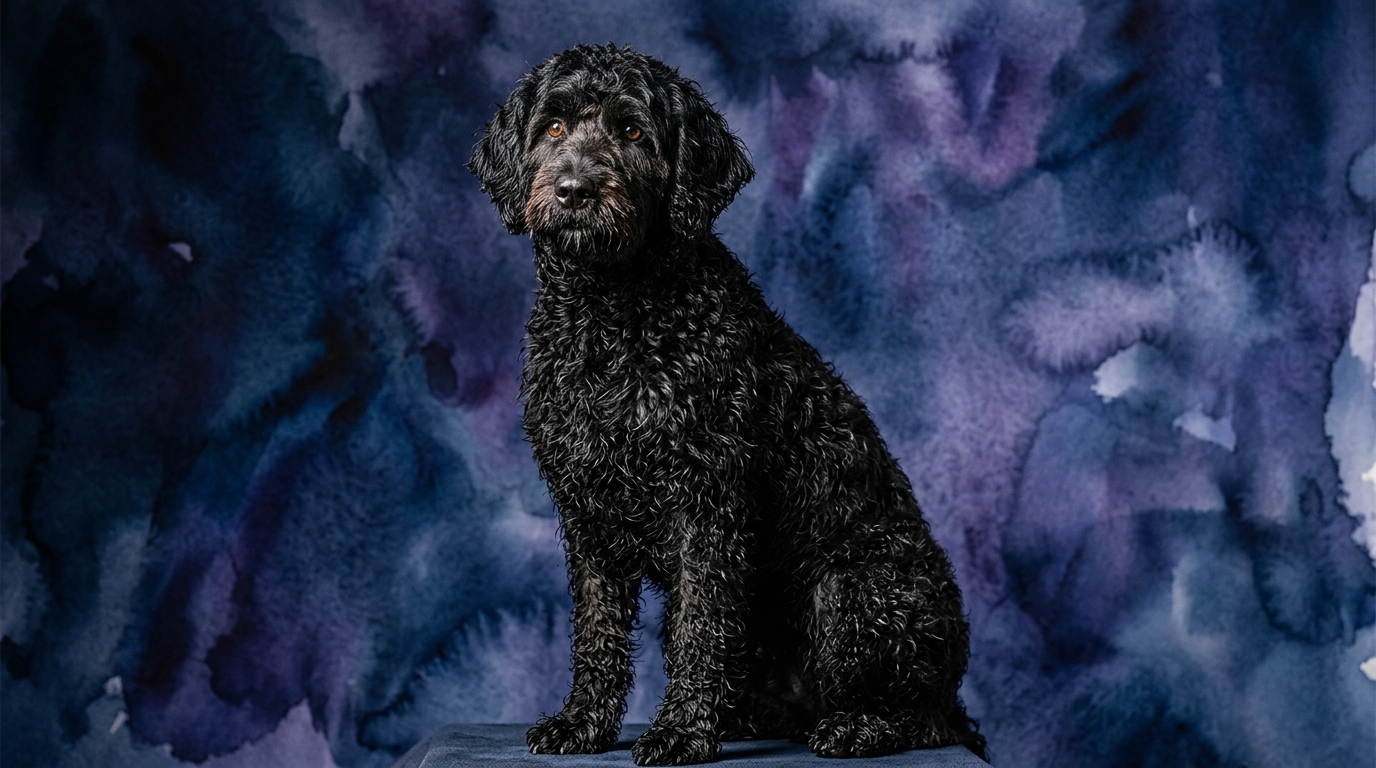
Side-by-Side Cognitive Profiles: Pumi vs. Portuguese Water Dog
While both the Pumi and the Portuguese Water Dog (PWD) register a consistent 3/5 across all five intelligence dimensions in The Cosmic Pet Pet IQ Lab, the manifestation of these scores is deeply rooted in their breed-specific histories and inherent drives. This means that while their overall cognitive capacity ranks similarly, the *way* they apply their intellect differs significantly, shaped by centuries of selective breeding for distinct purposes.
**Pumi - Problem Solving (3/5):** The Pumi exhibits a solid capacity for practical problem-solving, often applying their herding acumen to novel situations. This is not about abstract puzzles, but dynamic, real-world challenges, such as navigating complex agility courses or strategizing how to gather scattered toys. Their solutions are typically swift and efficient, reflecting a need for rapid decision-making in a working environment. This breed tends to use its vocalizations as part of its problem-solving toolkit, alerting owners to perceived issues or attempting to 'herd' them towards a desired outcome.
**Pumi - Training Speed (3/5):** Pumis demonstrate a good pace in acquiring new commands and routines. They grasp concepts readily, particularly when training is engaging and consistent, mirroring the precision required for herding tasks. However, their independent spirit and high energy mean that maintaining focus requires a handler who can keep lessons fresh and stimulating, preventing boredom or the tendency to 'herd' the trainer instead.
**Pumi - Social Intelligence (3/5):** This breed displays a competent understanding of social cues, both human and canine. They are perceptive to their owner's moods and intentions, often forming strong, almost intuitive bonds. While they can be reserved with strangers, their social intelligence allows them to assess new interactions carefully, deciding when to engage and when to maintain distance, a trait beneficial for a vigilant herding dog.
**Pumi - Instinctive Drive (3/5):** The Pumi possesses a robust instinctive drive, primarily centered around herding. This manifests as a strong desire to gather, control, and protect, often directed at family members, other pets, or even inanimate objects. Their vocal nature is a key part of this drive, used for signaling and directing. This inherent motivation makes them highly responsive to activities that satisfy these instincts, such as herding trials or structured play.
**Pumi - Memory (3/5):** Pumis exhibit reliable memory for commands, routines, and the layout of their environment. They recall training sequences with consistency and remember the 'rules' of their household. This memory capacity contributes to their ability to perform complex herding patterns and to anticipate daily events, making them predictable partners once trained.
**Portuguese Water Dog - Problem Solving (3/5):** Portuguese Water Dogs show a strong aptitude for solving physical and environmental challenges, particularly those involving water or retrieval. They can figure out how to access desired objects, manipulate latches, or navigate tricky aquatic situations. Their problem-solving often involves a persistent, trial-and-error approach, driven by their desire to complete a task, such as finding a hidden toy or retrieving an item from a difficult spot.
**Portuguese Water Dog - Training Speed (3/5):** PWDs learn at a steady pace, often picking up new commands with enthusiasm. Their eagerness to please and work alongside their human companions makes them receptive to training. However, their independent streak and occasional stubbornness mean that effective training requires patience, positive reinforcement, and a variety of methods to keep them engaged and prevent monotony. They thrive on clear structure but also appreciate novelty.
**Portuguese Water Dog - Social Intelligence (3/5):** The PWD is socially adept, understanding and responding well to human interactions. They are often outgoing and boisterous, readily engaging with their family and generally friendly towards strangers once properly introduced. Their social intelligence helps them integrate well into family dynamics, often seeking to be involved in all household activities, demonstrating an understanding of their place within the 'pack'.
**Portuguese Water Dog - Instinctive Drive (3/5):** The instinctive drive of the Portuguese Water Dog is pronounced, primarily focused on water work, retrieving, and companionship. They possess a natural inclination to swim, fetch, and 'work' alongside their owners. This drive fuels their energy levels and their desire for purposeful activity, making them excellent partners for active pursuits. Their strong attachment to their family also reflects a deep-seated desire for connection.
**Portuguese Water Dog - Memory (3/5):** PWDs possess a sound memory, retaining commands, learned behaviors, and the identities of people and places. They remember complex sequences of actions and can recall past experiences. This strong memory contributes to their consistent performance in training and their ability to adapt to various environments, making them reliable companions in diverse settings.
Where the Pumi Excels Cognitively
While both breeds share identical IQ scores, the Pumi’s cognitive strengths often lean towards precision, agility, and a nuanced responsiveness to environmental changes, reflecting its herding heritage. A Pumi frequently demonstrates superior quickness in processing dynamic visual information, crucial for managing a moving flock, translating into impressive performance in dog sports like agility where rapid course navigation and immediate handler feedback are paramount. Their problem-solving, though rated 3/5, often involves a more intricate, multi-step thought process when it comes to spatial reasoning and anticipating movement, allowing them to 'read' a situation and react with remarkable alacrity. This breed also exhibits a distinct vigilance, processing subtle shifts in their surroundings and often providing vocal alerts, indicating a specific type of environmental awareness that sets them apart.
Where the Portuguese Water Dog Excels Cognitively
The Portuguese Water Dog, despite sharing the same cognitive scores, tends to excel in areas requiring persistence, physical strength, and independent initiative, particularly in challenging physical environments. Their 3/5 problem-solving often manifests as a determined, focused approach to tasks, especially those involving retrieving or navigating water. A PWD will typically exhibit a greater tolerance for repetitive tasks if they lead to a desired outcome, demonstrating a sustained drive to complete a job once engaged. Their instinctive drive, also 3/5, translates into a remarkable capability for sustained physical effort and an innate understanding of water dynamics, making them unparalleled partners for aquatic activities and tasks requiring robust endurance. This breed's social intelligence, while rated the same, often involves a more overtly interactive and playful engagement, valuing partnership in active pursuits.
Training Dynamics: Pumi vs. Portuguese Water Dog
Assessing which breed is 'easier' to train is less about raw learning speed and more about aligning with their inherent behavioral patterns. The Pumi, with its 3/5 training speed, can pick up commands quickly, but its herding background means it thrives on structured, purposeful work. They respond best to clear, consistent, and engaging training that channels their boundless energy and desire to 'manage' their environment. Without adequate mental stimulation and a 'job,' a Pumi might invent its own, potentially undesirable, activities like excessive barking or attempting to herd children. Their sensitivity means harsh corrections are counterproductive, often leading to withdrawal or resistance; they require a patient, positive approach that respects their independent spirit and vocal nature. Managing their vocalizations is often a significant training component.
The Portuguese Water Dog, also with a 3/5 training speed, is equally capable of learning but often presents a different set of challenges. Their strong independent streak and exuberant nature mean that training must be varied and highly reinforcing to maintain their attention. A PWD can become bored easily, and a bored PWD might become a destructive or boisterous PWD. Their physical strength and enthusiasm require early and consistent training in manners, leash etiquette, and impulse control to prevent them from inadvertently overwhelming their surroundings. While they are eager to please and love to work alongside their owners, their occasional stubbornness necessitates a creative trainer who can make learning feel like a game and harness their powerful retrieving and water drives as motivators. Both breeds require dedicated owners, but the Pumi demands precision and channels for its herding instincts, while the PWD requires consistent engagement and robust activities to satisfy its energetic and working drive.
Matching Lifestyles: Active vs. Relaxed Owners
Neither the Pumi nor the Portuguese Water Dog are suitable companions for relaxed or sedentary owners; both require significant daily engagement. The Pumi, with its background as an active herding dog, absolutely requires an owner who can commit to rigorous daily exercise and consistent mental stimulation. This breed thrives when given a 'job,' whether it's participating in agility, herding trials, flyball, or advanced obedience. An owner who enjoys structured dog sports and can provide consistent, varied mental challenges will find the Pumi an incredibly rewarding and responsive partner. Their need for activity is not just physical; their cognitive faculties demand regular application to prevent boredom and potential behavioral issues.
Similarly, the Portuguese Water Dog is built for endurance and robust activity, making them ideal for exceptionally active owners. They excel in high-energy pursuits like swimming, dock diving, hiking, running, and even surfing. Their strong retrieving drive and love for water mean they are happiest when involved in family activities that leverage these natural inclinations. An owner who leads an outdoor-centric lifestyle and desires a boisterous, playful, and physically enduring companion will find a PWD to be an excellent match. They require consistent physical exertion to manage their energy levels and prevent them from becoming restless indoors. While both breeds demand active lifestyles, the Pumi's activity often leans towards precision and mental strategy, while the PWD's leans towards sustained physical output and water-based fun.
The Verdict: When to Choose Each Breed
The Verdict
Choose a Pumi if you seek an agile, responsive partner for precision-based dog sports and appreciate a vigilant, vocal companion who thrives on structured mental engagement and a clear 'job'.
Opt for a Portuguese Water Dog if you lead an extremely active, outdoor-oriented lifestyle, particularly enjoying water sports, and desire a robust, playful, and enduring companion for adventurous pursuits.
🧠 Find Your Pet's IQ Score
Our Pet IQ Lab assessment covers 25+ tests across 5 cognitive dimensions — personalized to your breed.
Take the Full IQ Test →Frequently Asked Questions
Do Pumis and Portuguese Water Dogs bark a lot?
Pumis are known for being quite vocal, using their barks as a communication tool in their herding work and to alert their owners. Portuguese Water Dogs can also be vocal, particularly when excited or alerting to new arrivals, though their barking frequency can vary more individually.
Are Pumis good with children?
Pumis can be good with children, especially if raised with them and properly socialized. However, their strong herding instinct may lead them to 'herd' children, so supervision and teaching appropriate interactions are important to ensure positive experiences for everyone.
What is the grooming requirement for a Portuguese Water Dog?
The Portuguese Water Dog has a single coat that requires regular grooming to prevent matting. This typically involves brushing several times a week and professional clipping every 6-8 weeks, as their hair continuously grows and does not shed like double-coated breeds.