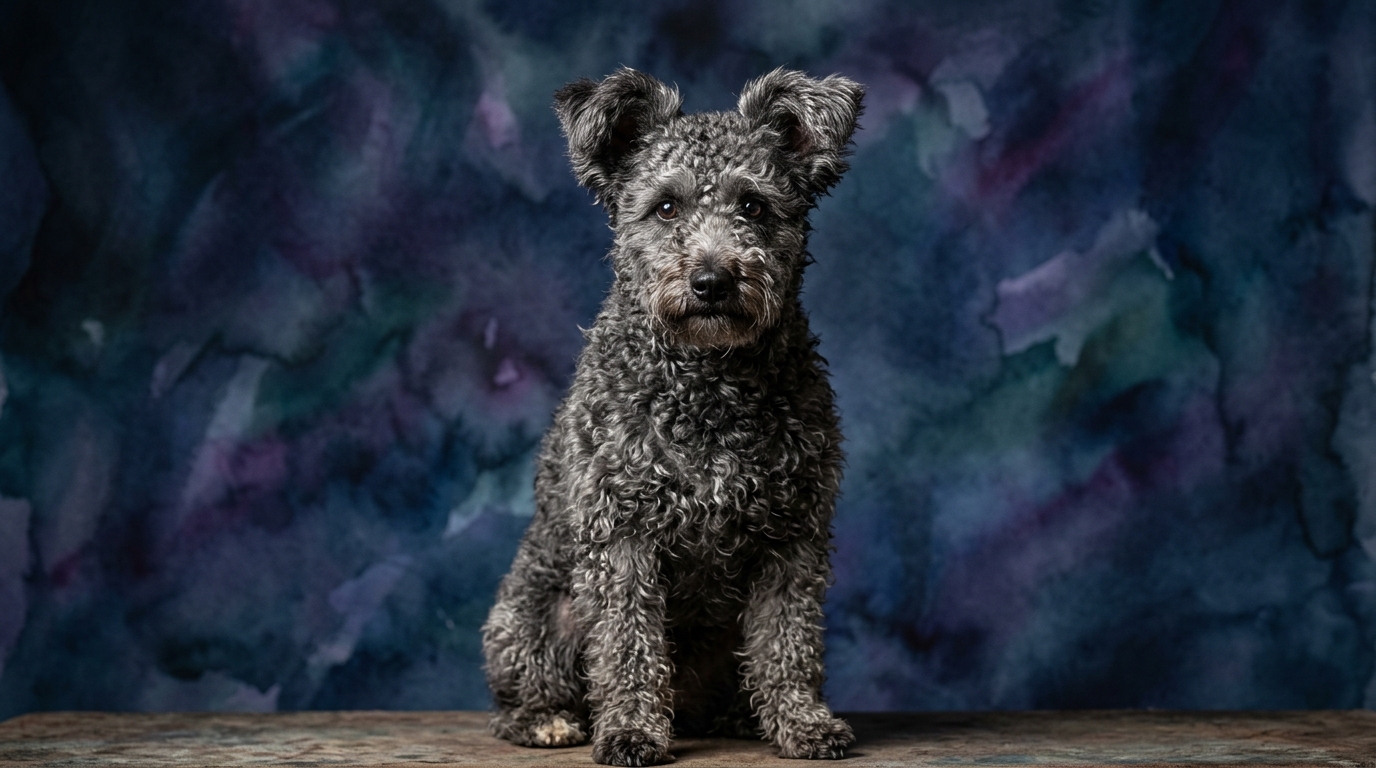
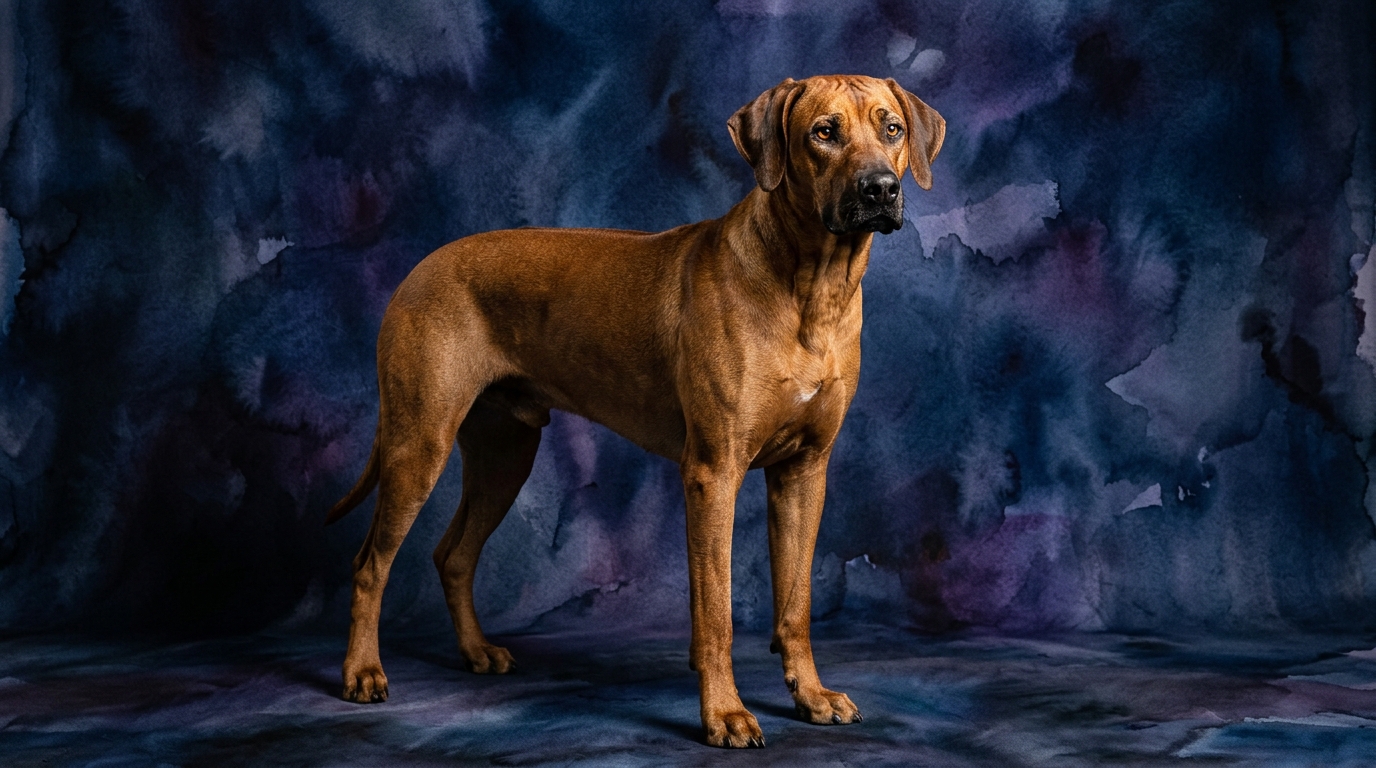
Side-by-Side IQ Profile: Pumi vs. Rhodesian Ridgeback
The Cosmic Pet Pet IQ Lab assesses five crucial cognitive dimensions, and both the Pumi and Rhodesian Ridgeback register a consistent 3/5 across the board. For the Pumi, a vibrant Hungarian herding dog, a Problem Solving score of 3/5 reflects their resourcefulness in managing dynamic livestock situations, requiring quick, adaptive decisions to maintain order. Their Training Speed at 3/5 indicates a capable learner, eager to engage in tasks, yet possessing an independent streak characteristic of herding breeds that need to make decisions autonomously in the field. Social Intelligence at 3/5 manifests in their ability to read subtle cues from their handler and livestock, forming strong bonds within their family unit, though they can be reserved with strangers. An Instinctive Drive of 3/5 highlights their pronounced herding impulse and inherent vigilance, always keen to observe and act. Finally, their Memory at 3/5 supports their capacity to recall complex commands, routes, and the social dynamics of their environment.
The Rhodesian Ridgeback, a dignified African hound, also scores 3/5 in all cognitive areas, but these scores are interpreted through the lens of their unique heritage. Their Problem Solving at 3/5 speaks to their ability to independently track and corner dangerous game, navigating vast terrains and making strategic decisions without direct handler input. A Training Speed of 3/5 signifies they are intelligent and capable of learning, yet their strong independent nature, typical of a hound following a scent, means they often require more motivation and can be selective in their obedience. Social Intelligence at 3/5 reflects their deep loyalty to their chosen family and their discernment with outsiders, often observing before interacting. Their Instinctive Drive, also 3/5, is powerfully expressed through their high prey drive, territorial instincts, and protective nature. Memory at 3/5 allows them to recall intricate scent trails, specific locations, and established routines with precision.
Where the Pumi Excels Cognitively
The Pumi’s cognitive strengths shine in environments demanding rapid, agile responses and continuous mental engagement. Their herding background has honed their ability to process multiple stimuli simultaneously and make swift, on-the-spot decisions. While both breeds score 3/5 in Problem Solving, the Pumi’s manifests as a quick-thinking, adaptable intelligence, particularly in scenarios requiring dynamic manipulation of their environment or subjects. They excel at anticipating movement and adjusting their strategy instantly, a trait invaluable in dog sports like agility or flyball where split-second decisions dictate success. This quick cognitive turnover means they are often a step ahead, predicting outcomes and reacting with impressive speed. Their instinctive drive, combined with their problem-solving capacity, makes them natural strategists in dynamic situations, always looking for the most efficient way to achieve a goal, whether it's gathering sheep or navigating an obstacle course.
Where the Rhodesian Ridgeback Excels Cognitively
The Rhodesian Ridgeback’s cognitive prowess is best observed in situations requiring sustained focus, independent thought, and a calm, resolute demeanor under pressure. While their Problem Solving also scores 3/5, it is characterized by a deliberate, methodical approach, especially in tracking or guarding scenarios. They are adept at long-term strategic thinking, capable of maintaining concentration on a single objective, like a scent trail, for extended periods, filtering out distractions that might derail a less focused breed. Their social intelligence, though rated 3/5, is marked by a profound discernment; they quickly assess new people and situations, exhibiting a quiet confidence rather than immediate exuberance. This allows them to make considered judgments, an essential trait for a breed originally tasked with protecting their human companions against formidable threats. Their memory, also 3/5, is particularly impressive in its ability to retain complex spatial information and scent profiles over time, crucial for their hunting heritage.
Training Dynamics: Pumi vs. Rhodesian Ridgeback
Despite both breeds registering a 3/5 in Training Speed, their practical trainability presents distinct challenges. The Pumi, with its eager-to-please nature and high energy, often picks up new commands quickly and enjoys the mental stimulation of learning. However, their strong herding drive means they can be easily distracted by movement or sounds, potentially redirecting their focus from the lesson to their environment. This requires consistent, engaging training sessions that channel their intense focus and prevent boredom from leading to inventive, sometimes undesirable, behaviors like herding children or nipping at heels. Owners need to be prepared for a dog that thrives on continuous mental work and a clear purpose.
The Rhodesian Ridgeback, while equally capable of learning, often requires a different training approach due to their independent hound mentality. Their 3/5 Training Speed indicates they can learn, but their decision-making process is often rooted in 'what’s in it for me' and a strong inclination to follow their nose. This can manifest as stubbornness or selective hearing when a compelling scent or interesting sight takes precedence over a command. Training a Ridgeback demands immense patience, positive reinforcement, and a deep understanding of their innate drives. They respond best to fair, consistent leadership and clear boundaries. Their loyalty is earned, not given, and once earned, they are devoted companions, but their independent streak means they are not as naturally inclined to automatic obedience as some other breeds.
Lifestyle Suitability: Active vs. Relaxed Owners
When considering lifestyle, the differences between these two 3/5 IQ breeds become particularly pronounced. The Pumi is unequivocally suited for highly active owners who can provide not just physical exercise, but significant mental engagement. Their herding background means they possess an almost insatiable need for a 'job' or regular stimulating activities like agility, obedience trials, or even advanced trick training. A Pumi without sufficient mental and physical outlets can become bored, leading to destructive behaviors or excessive barking. They are not content to be couch potatoes, even after a long walk; their minds require constant stimulation, making them ideal for owners who enjoy an active, dynamic partnership.
The Rhodesian Ridgeback, while requiring substantial daily exercise, offers a different kind of active companionship. They need vigorous walks, runs, or hikes to burn off their energy, but once adequately exercised, they are often content to relax quietly indoors with their family. Their independence means they might enjoy a long, solitary sniffari as much as a structured play session. They suit owners who appreciate a strong, resilient companion and are prepared to manage their powerful prey drive and protective instincts. While they are not for truly relaxed owners who prefer minimal activity, they can transition from an energetic outdoor companion to a calm indoor presence more readily than a Pumi, provided their needs for exercise and mental stimulation are met on a daily basis.
The Verdict
Choose the Pumi if you seek an agile, quick-witted partner for dog sports or active work, and are prepared to provide consistent, intense mental and physical challenges for a busy, dynamic companion.
Opt for the Rhodesian Ridgeback if you appreciate an independent, resilient companion capable of sustained focus, and are willing to invest in patient, consistent training to manage their strong drives and provide ample, structured exercise.
🧠 Find Your Pet's IQ Score
Our Pet IQ Lab assessment covers 25+ tests across 5 cognitive dimensions — personalized to your breed.
Take the Full IQ Test →Frequently Asked Questions
Do their identical IQ scores mean they are equally easy to live with?
No, their matching scores indicate similar cognitive potential, but their breed-specific drives and temperaments dictate how that intelligence manifests. This leads to vastly different daily experiences and management requirements, despite the numerical similarity.
Which breed is better for a first-time dog owner?
Neither breed is typically recommended for first-time owners due to their strong personalities and specific needs. The Pumi requires intense mental engagement, while the Ridgeback demands patient handling of its independent nature and prey drive.
How does a Herding breed's intelligence differ from a Hound's, even with similar scores?
A Herding breed's intelligence often manifests in quick reactions and dynamic problem-solving for livestock management, while a Hound's focuses on sustained independent tracking and strategic decision-making over long distances. Their application of cognitive skills is specialized to their original roles.