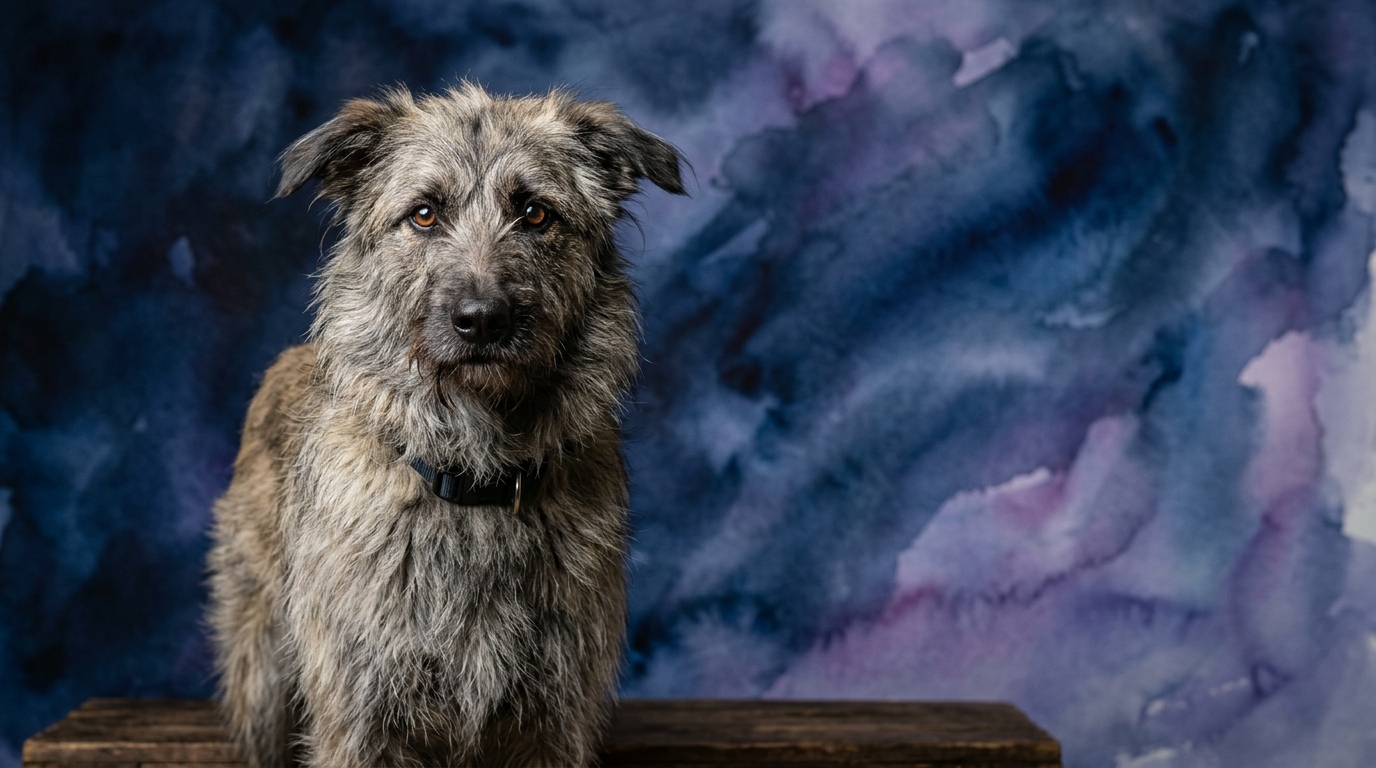
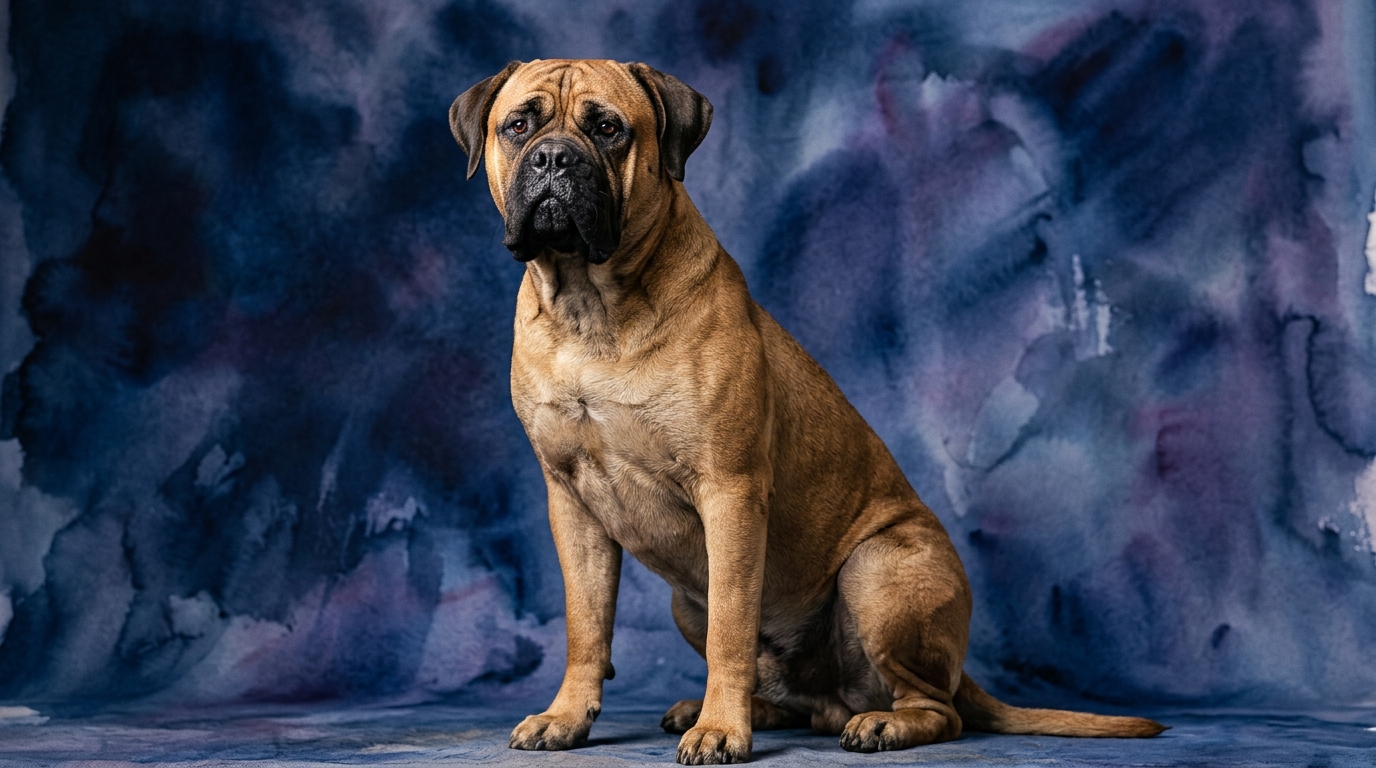
Side-by-Side IQ Profile: Herding Agility vs. Working Resolve
The Cosmic Pet Pet IQ Lab provides a framework for understanding canine intelligence across five crucial dimensions. For both the Pyrenean Shepherd (Herding group) and the Bullmastiff (Working group, Coren rank #69), these scores are consistently rated at 3/5. However, a deeper dive into what these scores signify within each breed's context reveals unique applications of their cognitive abilities.
The Pyrenean Shepherd, a breed originating from the rugged Pyrenees mountains, showcases its Problem Solving (3/5) through an innate resourcefulness in managing livestock across challenging terrains, swiftly adapting to changing flock dynamics or environmental obstacles. Its Training Speed (3/5) is reflected in a good capacity for learning new commands and routines, particularly those essential for precise herding tasks, often driven by a strong desire to collaborate with its handler. Social Intelligence (3/5) is finely tuned for reading the subtle cues of both livestock and human partners, ensuring appropriate responses in dynamic working situations. An Instinctive Drive (3/5) is channeled into controlled, purposeful herding actions, demonstrating persistent energy and focus. Finally, its Memory (3/5) allows for the retention of complex command sequences, individual flock member recognition, and the recall of past experiences to inform future herding strategies.
In contrast, the Bullmastiff, developed as a gamekeeper's night dog, applies its Problem Solving (3/5) to a thoughtful assessment of potential threats, often evaluating situations before acting, especially in guarding scenarios. Its Training Speed (3/5) indicates a capability for learning commands and complex protective tasks, though its independent nature may necessitate consistent, purpose-driven motivation. Social Intelligence (3/5) enables it to observe human behavior and family dynamics with discernment, distinguishing between welcomed individuals and potential intruders with a calm, watchful demeanor. A powerful Instinctive Drive (3/5) for protection and territoriality is expressed through vigilant guardianship and a readiness to defend its home and family. The Bullmastiff’s Memory (3/5) is strong in retaining knowledge of its environment, recognizing familiar faces, and recalling established routines and boundaries, contributing to its reliable protective nature.
Where the Pyrenean Shepherd Wins Cognitively
Despite identical numerical scores, the Pyrenean Shepherd's cognitive strengths are finely tuned for dynamic, high-stakes environments. Its problem-solving at 3/5 shines in its ability to spontaneously adapt herding strategies, such as finding the optimal route to move a stubborn sheep or anticipating a flock's next move across varied terrain, requiring quick, on-the-spot assessments. Its social intelligence (3/5) is particularly nuanced in reading animal behavior, a skill less critical for a Bullmastiff. This allows for subtle communication with livestock, guiding them with minimal force and maximum efficiency. The Pyrenean Shepherd's instinctive drive (3/5) is channeled into persistent, agile pursuit and control, demanding rapid cognitive processing to manage multiple moving targets simultaneously, a distinct application compared to the Bullmastiff's more stationary vigilance. Its memory (3/5) is particularly adept at recalling the intricacies of large, changing flocks and diverse commands for specific herding scenarios, facilitating complex multi-step tasks without constant handler input once trained.
Where the Bullmastiff Wins Cognitively
The Bullmastiff's cognitive profile, while numerically similar, excels in areas demanding calm judgment and physical presence. Its problem-solving at 3/5 manifests as a deliberate, analytical assessment of potential threats, often choosing deterrence over confrontation. This involves discerning genuine danger from normal activity, a complex cognitive task requiring significant processing power to filter environmental stimuli. The Bullmastiff's social intelligence (3/5) is geared towards understanding human intentions and family dynamics, allowing it to integrate seamlessly into a household as a watchful guardian. Its instinctive drive (3/5) for protection is expressed through a powerful sense of territoriality and a readiness to act when necessary, requiring cognitive control to differentiate between playful roughhousing and a true threat. The Bullmastiff's memory (3/5) is particularly strong in retaining knowledge of boundaries, recognizing familiar faces, and remembering specific cues from its family, contributing to its reliable protective nature. Its training speed (3/5), though not exceptionally fast, results in deeply ingrained obedience and protective behaviors once learned, prioritizing reliability and consistency for its demanding working role.
Which is Easier to Train and Why
Assessing ease of training between these breeds requires understanding their intrinsic motivations and behavioral tendencies. The Pyrenean Shepherd, with its herding background, generally exhibits a strong desire to work alongside its handler and a high degree of biddability. Its "training speed" score of 3/5 is bolstered by an inherent eagerness to engage in tasks and a quick responsiveness to direction, which makes it relatively straightforward to teach new commands and routines, especially when framed as a collaborative activity. They thrive on mental stimulation and purpose, readily absorbing complex sequences needed for herding. In contrast, the Bullmastiff, also scoring 3/5 in "training speed," possesses a more independent and sometimes stubborn temperament, characteristic of many guarding breeds. While capable of learning, its motivation often stems from a clear understanding of "what's in it for me" or a strong bond with its owner, rather than an innate drive to please. Training a Bullmastiff requires consistent, patient, and firm guidance, often with positive reinforcement tailored to its food or play drives. They learn reliably but may take longer to master new concepts and require more repetition to ensure compliance, especially in distracting environments. The Pyrenean Shepherd's natural desire for activity and direction often translates to a more fluid training experience for owners who can provide consistent engagement, whereas the Bullmastiff demands an owner prepared for a more deliberate, patient approach to harness its considerable power and protective instincts.
Which Suits Active Owners vs. Relaxed Owners
The cognitive and physical demands of these breeds lead to clear distinctions in owner suitability. The Pyrenean Shepherd, a breed built for sustained activity and mental engagement, demands an active owner. Its instinctive drive (3/5) for herding, combined with its problem-solving (3/5) and memory (3/5) applied to dynamic tasks, means it requires daily outlets for both physical exercise and mental stimulation. Owners who enjoy hiking, running, dog sports like agility or flyball, or who can provide "job-like" activities will find this breed thrives. A relaxed owner who cannot meet these needs may find a Pyrenean Shepherd becomes bored, potentially leading to undesirable behaviors as it seeks its own mental and physical challenges. Conversely, the Bullmastiff, while large and powerful, is generally better suited for a more relaxed owner, provided they are committed to consistent training and socialization. Its problem-solving (3/5) and social intelligence (3/5) are applied in a more watchful, less physically demanding manner. While it needs regular, moderate exercise to maintain health, its intense bursts of activity are typically short-lived. Its guarding instincts (3/5) mean it's content to survey its domain from a calm vantage point, rather than constantly seeking active engagement. An owner who appreciates a loyal, protective companion that enjoys quiet companionship after its daily walks and training sessions would find the Bullmastiff an excellent fit.
The Verdict
When seeking a companion that thrives on dynamic activity, quick cognitive challenges, and a close working partnership, the Pyrenean Shepherd is an ideal choice.
If your lifestyle leans towards a calm, watchful guardian who excels at discerning threats and offers steadfast loyalty, the Bullmastiff will be a profoundly rewarding addition to your home.
🧠 Find Your Pet's IQ Score
Our Pet IQ Lab assessment covers 25+ tests across 5 cognitive dimensions — personalized to your breed.
Take the Full IQ Test →Frequently Asked Questions
Do Pyrenean Shepherds bark a lot?
Yes, Pyrenean Shepherds are known for their vocal nature, often using barking as a communication tool in their herding work or to alert their owners. This behavior stems from their instinctive drive and can be managed with consistent training and redirection from a young age.
Are Bullmastiffs good with children?
Bullmastiffs can be excellent family dogs and are generally tolerant and protective of children within their family, provided they are well-socialized and properly trained. Their social intelligence allows them to understand family dynamics, but supervision is always recommended due to their sheer size and strength.
How much exercise does a Bullmastiff need daily?
Bullmastiffs require moderate daily exercise, typically consisting of a couple of brisk walks totaling 30-60 minutes, along with some playtime in a secure yard. While not as high-energy as some breeds, consistent activity is important for their physical health and mental well-being.