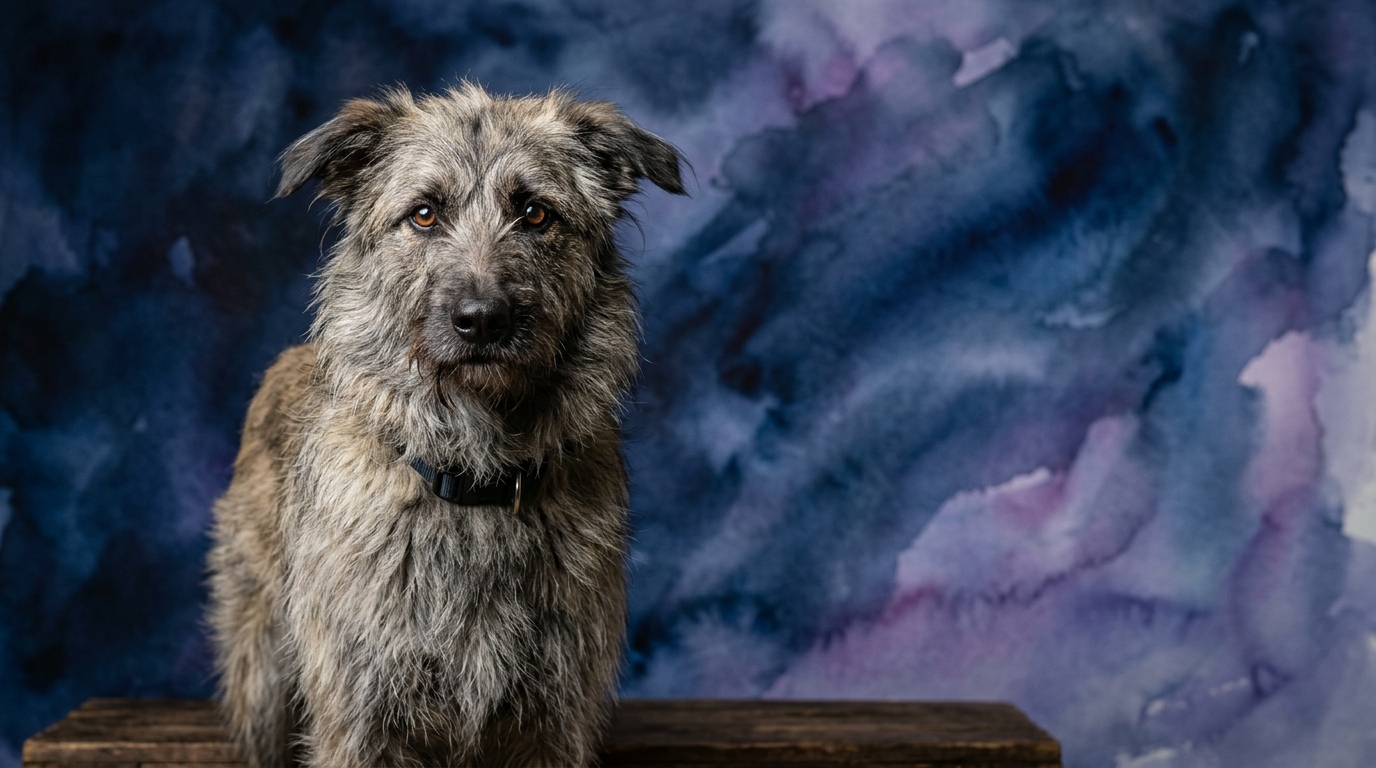
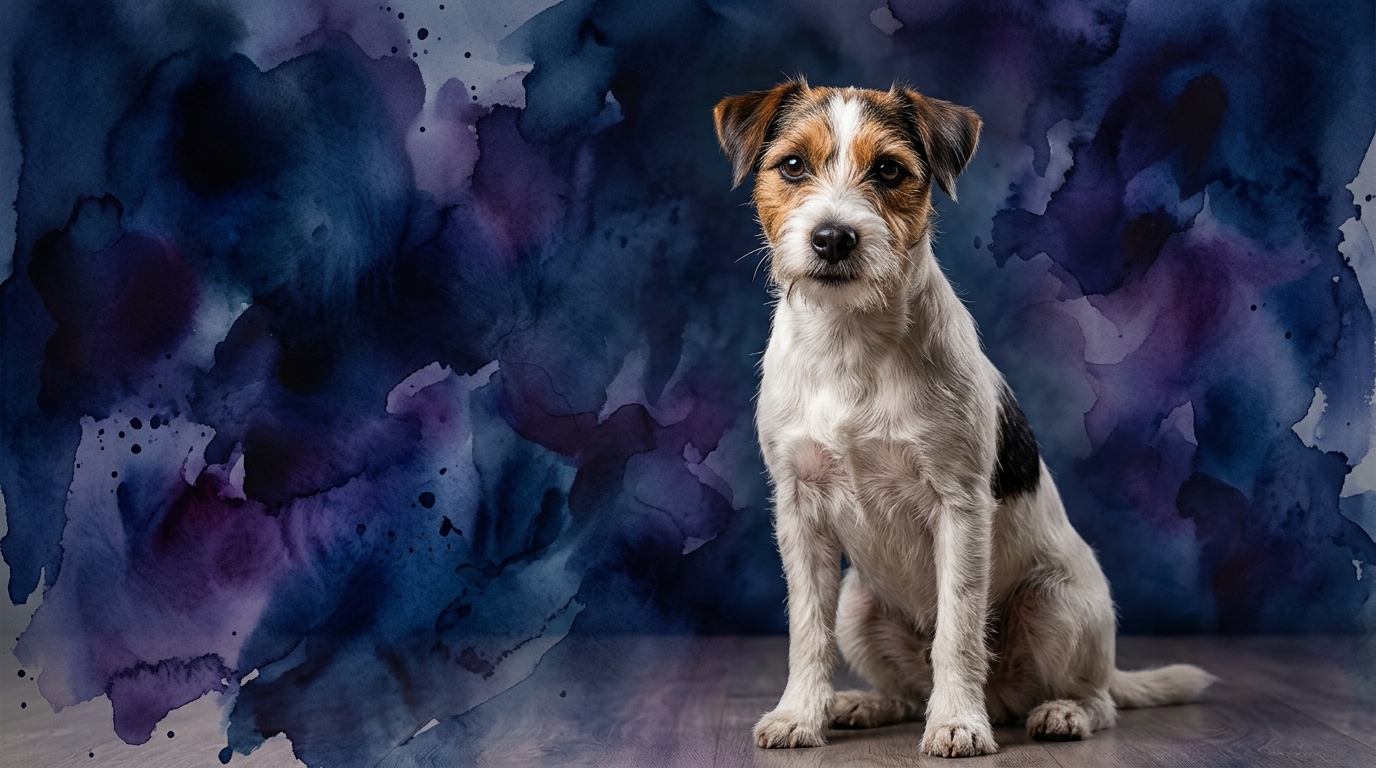
Side-by-Side IQ Profile: Herder vs. Terrier Minds
When examining the Pyrenean Shepherd and Parson Russell Terrier through the lens of The Cosmic Pet Pet IQ Lab, we find both breeds consistently scoring 3/5 across all five cognitive dimensions. This identical numerical assessment, however, belies a rich tapestry of qualitative differences in how these abilities manifest, shaped profoundly by their distinct historical roles.
Problem Solving (3/5): For the Pyrenean Shepherd, a 3/5 in problem-solving means an innate talent for navigating dynamic, open environments, anticipating the movements of a flock, and strategically positioning themselves to guide livestock. Their solutions are often about subtle influence and foresight in a constantly shifting landscape. In contrast, the Parson Russell Terrier's 3/5 problem-solving ability is geared towards persistent, independent efforts to locate and extract quarry from confined spaces. Their cognitive strengths lie in spatial reasoning for tight tunnels and relentless determination to overcome physical barriers.
Training Speed (3/5): The Pyrenean Shepherd demonstrates a 3/5 training speed, indicating a moderate pace of learning new commands and routines, particularly when these tasks align with their cooperative, working nature. They respond well to clear, consistent instruction and thrive on tasks that give them a sense of purpose. The Parson Russell Terrier also scores 3/5 in training speed, but their learning is often characterized by bursts of quick comprehension mixed with a strong independent streak. They learn rapidly when motivated by engaging, varied challenges that tap into their prey drive, yet their tenacity can sometimes manifest as selective hearing.
Social Intelligence (3/5): A 3/5 in social intelligence for the Pyrenean Shepherd means they are adept at reading human cues within a working partnership, understanding the dynamics of a flock, and forming discerning, loyal bonds with their trusted handlers. They are attuned to the subtle signals required for effective collaboration. The Parson Russell Terrier's 3/5 social intelligence allows them to understand social hierarchies and communicate their desires with assertive clarity within their family unit. They are often perceptive of human moods but may also be quite direct in their attempts to influence interactions.
Instinctive Drive (3/5): The Pyrenean Shepherd's 3/5 instinctive drive is powerfully expressed as a herding impulse, a deep-seated need to gather, move, and control. This drive makes them highly motivated by tasks that simulate herding and gives them a focused, purposeful energy. For the Parson Russell Terrier, a 3/5 instinctive drive translates into an intense prey drive, characterized by a relentless pursuit of scent, an urge to chase, and an inherent desire to dig. This powerful instinct fuels their boundless energy and investigative curiosity.
Memory (3/5): Both breeds exhibit a 3/5 memory, allowing them to retain commands, routines, and environmental layouts effectively. The Pyrenean Shepherd's memory is robust for recalling complex herding patterns, territorial boundaries, and learned pathways necessary for their work. The Parson Russell Terrier's memory is sharp for remembering the locations of interesting scents, successful 'hunting' routes, and the details of past explorations, helping them to navigate their world with purpose and recall.
Where the Pyrenean Shepherd Excels Cognitively
While their numerical scores align, the Pyrenean Shepherd's cognitive strengths shine particularly in scenarios demanding nuanced environmental awareness and strategic group management. Their problem-solving, rated 3/5, is geared towards anticipating complex dynamics, such as predicting livestock movements or optimizing a path across varied terrain, rather than brute force. This sophisticated spatial and predictive intelligence allows them to excel in tasks requiring subtle influence and foresight.
Their social intelligence, also 3/5, is finely tuned for cooperative partnership with a human handler, interpreting subtle cues and adjusting their behavior accordingly to achieve a shared goal. This makes them highly effective in roles where precise, silent communication and coordinated effort are paramount. The Pyrenean Shepherd's memory, at 3/5, underpins this by allowing them to recall intricate patterns, specific commands tied to varying situations, and the learned behaviors of individuals within a group, ensuring consistent performance in their herding duties.
Where the Parson Russell Terrier Excels Cognitively
The Parson Russell Terrier, with its identical 3/5 scores, demonstrates a distinct cognitive prowess rooted in independent problem-solving and relentless pursuit. Their problem-solving is less about managing a large, fluid group and more about ingenious, often physical, methods of overcoming obstacles to reach a specific target. This manifests as figuring out how to navigate tight, underground spaces or outsmarting small quarry with cunning and tenacity.
Their 3/5 instinctive drive is a powerful engine for their investigative nature, making them highly motivated by scent, sound, and movement. This drive fuels their ability to focus intensely on a task, even in distracting environments, making them superb at tasks requiring sustained concentration on a singular objective. The Parson Russell Terrier's memory (3/5) is particularly strong for recalling specific locations, scent trails, and successful strategies for past 'hunts,' contributing to their persistent effectiveness in their original working role.
Training Dynamics: Cooperation vs. Tenacity
When it comes to training speed (3/5 for both), the practical experience diverges. The Pyrenean Shepherd, while sensitive, generally learns well through positive reinforcement and clear, consistent guidance. They possess a strong desire to work *with* their handler and often derive satisfaction from a job well done in partnership. Their herding instinct, if channeled appropriately into activities like obedience or agility, makes them eager and focused learners, though their independent spirit means they aren't always looking for explicit permission.
The Parson Russell Terrier, also with a 3/5 training speed, presents a different challenge. They grasp concepts quickly but are notoriously independent and possess a strong will. Their tenacious nature means they will test boundaries repeatedly, and training success hinges on making lessons highly engaging, fun, and varied to prevent boredom. Owners must be creative in leveraging their prey drive and natural curiosity, ensuring training feels like a rewarding game rather than a chore, as their focus can easily shift if not adequately stimulated.
Therefore, while both breeds learn at a moderate pace, the Pyrenean Shepherd often seeks to cooperate and understand the 'why' behind a command, fostering a partnership. The Parson Russell Terrier, conversely, learns through sheer mental engagement and personal motivation, requiring a handler who can consistently outwit and inspire them.
Suitability for Active vs. Relaxed Owners
Neither the Pyrenean Shepherd nor the Parson Russell Terrier is suited for a truly 'relaxed' owner, as both possess significant energy and cognitive needs. A Pyrenean Shepherd demands an owner committed to daily, engaging physical activity, such as long hikes, runs, or participation in dog sports like agility, herding, or advanced obedience. They thrive when given a 'job' that utilizes their problem-solving and social intelligence, requiring consistent mental and physical outlets to prevent boredom and unwanted behaviors. They suit owners who appreciate a discerning, active companion eager to partner in outdoor adventures.
The Parson Russell Terrier is equally energetic, but their activity often manifests in bursts of intense exploration, digging, and chasing. They require secure environments where they can safely express their instinctive drives, and benefit immensely from activities like earthdog trials, scent work, or agility that tap into their relentless drive and independent problem-solving. They are ideal for owners who enjoy vigorous, interactive play, can provide consistent mental challenges, and are prepared for a dog with an unyielding zest for life and discovery. Both breeds will become destructive or anxious if their cognitive and physical needs are not met.
The Verdict
Choose the Pyrenean Shepherd if you seek a discerning, cooperative partner for active outdoor pursuits, valuing subtle communication and a desire to work alongside you on complex tasks.
Opt for the Parson Russell Terrier if you admire tenacious, independent spirits, are prepared for a dog with an unyielding drive for exploration, and can provide structured outlets for high energy and a keen investigative mind.
🧠 Find Your Pet's IQ Score
Our Pet IQ Lab assessment covers 25+ tests across 5 cognitive dimensions — personalized to your breed.
Take the Full IQ Test →Frequently Asked Questions
Do Pyrenean Shepherds bark a lot?
Their herding nature means Pyrenean Shepherds use their voice to manage flocks and alert to perceived threats, so they can be vocal, especially if bored or feeling a need to 'control' their environment. Consistent training and sufficient mental stimulation help manage this tendency.
Are Parson Russell Terriers good with other pets?
Their strong prey drive means careful introductions and constant supervision are crucial, especially with smaller pets like cats or rodents. While they can coexist with other dogs, their instinct to chase and hunt is powerful and needs dedicated management and training.
What kind of mental stimulation do these breeds need?
Both require significant mental engagement. Pyrenean Shepherds benefit from problem-solving games related to spatial awareness, 'herding' tasks, and advanced obedience, while Parson Russell Terriers thrive on scent work, puzzle toys, and games that simulate 'hunting' or discovery.