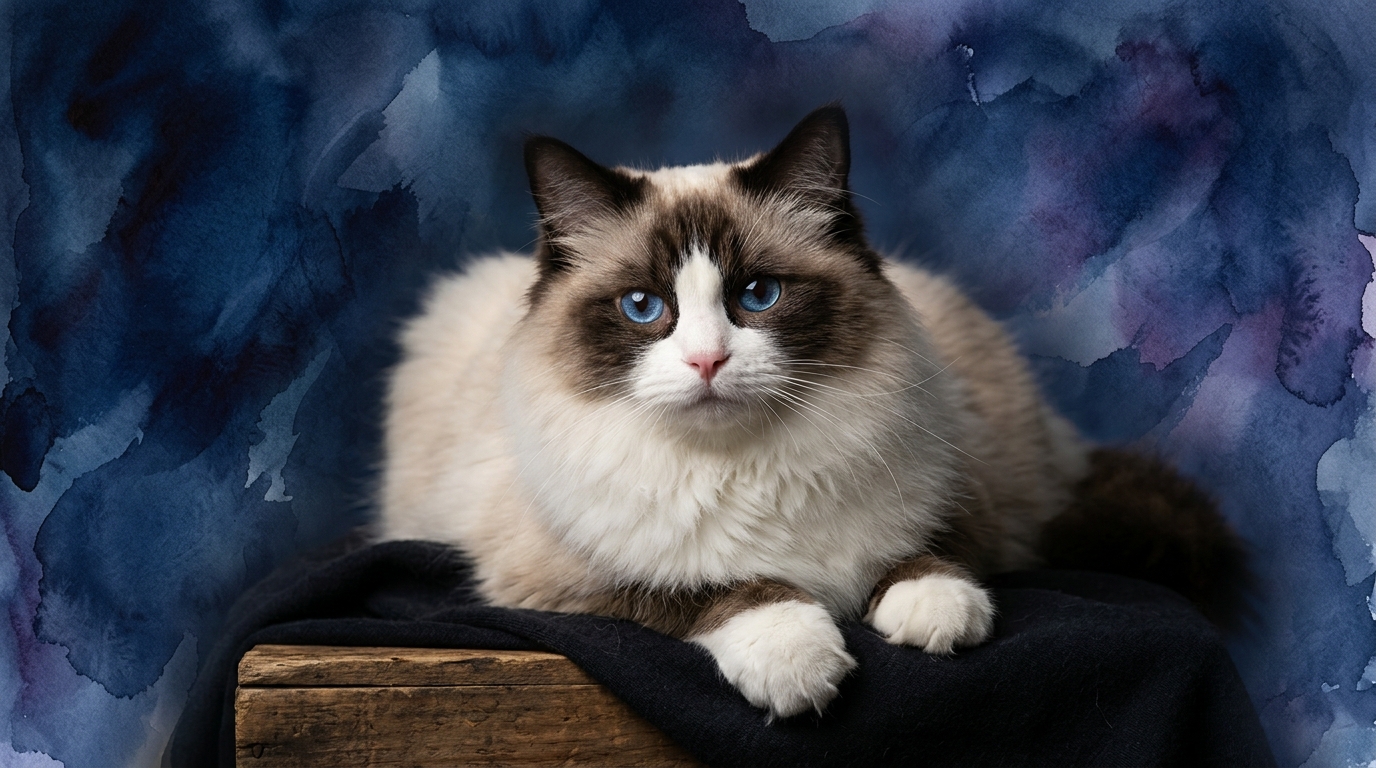
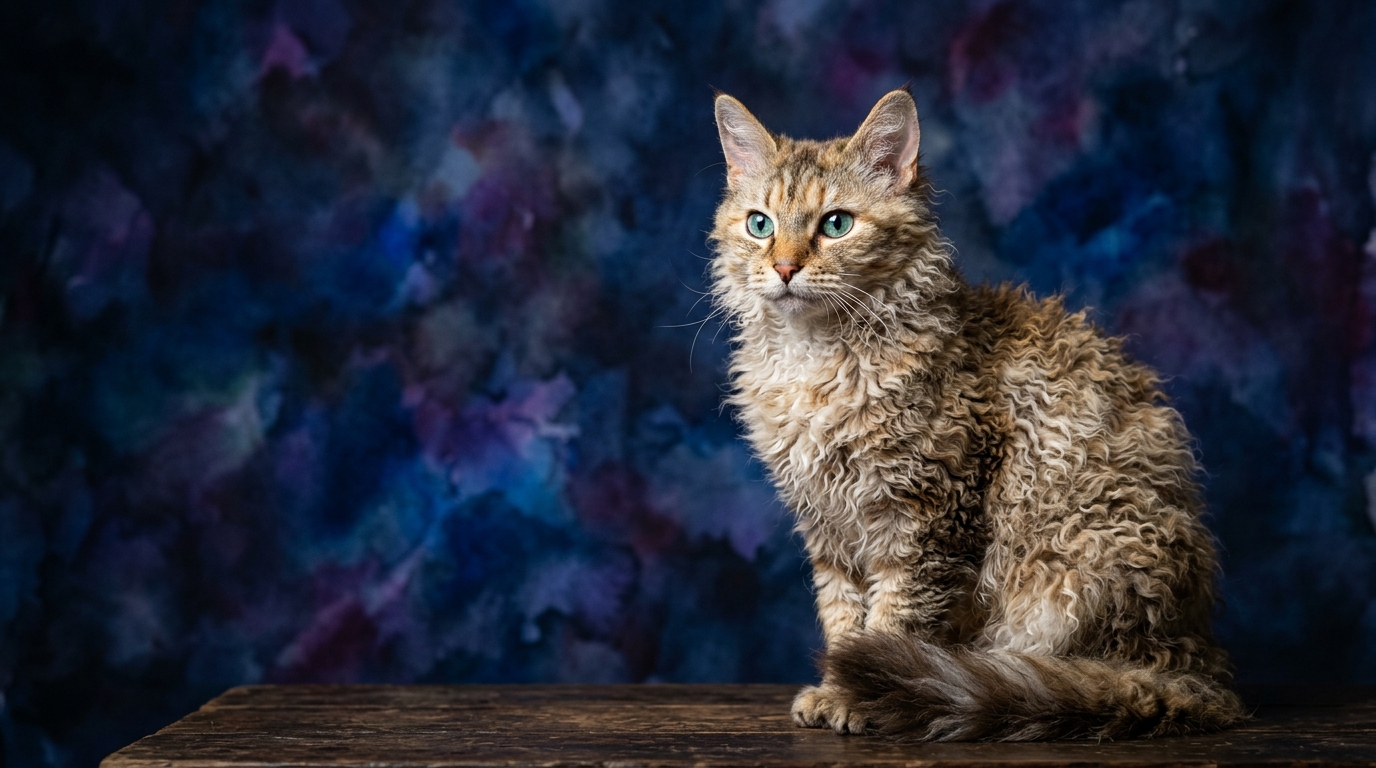
Side-by-Side Cognitive Profiles: Ragdoll vs. LaPerm
The Cosmic Pet Pet IQ Lab employs a five-dimensional framework to assess feline intelligence, offering a granular view of each breed's cognitive strengths. For the Ragdoll, we observe a distinct profile: Problem Solving at 3/5, Training Speed at 3/5, Social Intelligence at an impressive 5/5, Instinctive Drive at 2/5, and Memory at 3/5. This suggests a cat whose cognitive prowess is heavily weighted towards interpersonal connection and understanding.
In contrast, the LaPerm presents a more balanced, albeit slightly different, cognitive blueprint: Problem Solving also scores 3/5, as does Training Speed at 3/5. Their Social Intelligence is rated 3/5, their Instinctive Drive is 3/5, and their Memory stands at 3/5. This profile indicates a cat with a solid, all-around cognitive capacity, without the extreme highs or lows seen in some other breeds, and a slightly more pronounced independent streak compared to the Ragdoll.
Breaking down these scores, Ragdolls' 3/5 in Problem Solving indicates they can navigate moderately complex tasks, like figuring out how to open a treat puzzle or finding a hidden toy after a few attempts. Their 3/5 in Training Speed means they can pick up new commands or routines with consistent, positive reinforcement, typically requiring a moderate number of repetitions. The standout 5/5 in Social Intelligence signifies an exceptional ability to interpret human moods, respond to social cues, and form deep, emotionally resonant bonds. Their 2/5 in Instinctive Drive suggests a less intense prey drive or territoriality, often leading to a more docile demeanor indoors. A 3/5 in Memory means they retain learned information and routines well, remembering where their favorite napping spots are or the sound of the treat bag.
For the LaPerm, their 3/5 in Problem Solving aligns with the Ragdoll, indicating a similar capacity for tackling moderate mental challenges, perhaps by experimenting with different approaches to a novel situation. Their 3/5 in Training Speed also mirrors the Ragdoll, implying they learn at a comparable pace when engaged through reward-based methods. The 3/5 in Social Intelligence suggests they are amiable companions who appreciate interaction, but perhaps with a slightly more independent streak than the intensely people-oriented Ragdoll. LaPerms' 3/5 in Instinctive Drive points to a healthy, moderate level of curiosity and hunting behavior, manifesting in playful pouncing or exploration. Finally, their 3/5 in Memory means they are equally capable of remembering routines, people, and past experiences, contributing to their adaptability.
Where the Ragdoll's Cognitive Strengths Shine
The Ragdoll truly excels in the realm of Social Intelligence, boasting a perfect 5/5 score. This isn't merely about enjoying human company; it reflects a profound capacity to understand and respond to human emotional states and intentions. A Ragdoll often seems to anticipate their owner's needs, offering comfort during distress or initiating gentle play when sensing a relaxed mood. They are adept at reading body language and vocal tones, adjusting their behavior accordingly. This high social acumen means they integrate seamlessly into family life, often following their humans from room to room, seeking gentle interaction rather than demanding attention. Their social brilliance makes them exceptionally empathetic companions, capable of forming deep, almost dog-like attachments, and often preferring to be involved in household activities rather than observing from a distance. This cognitive strength makes them particularly responsive to human-initiated interaction and incredibly tolerant in social settings, even with children or other pets, due to their innate understanding of social dynamics and their desire for harmony within their 'pride'.
Where the LaPerm's Cognitive Strengths Prevail
While the Ragdoll's social intelligence is unparalleled, the LaPerm demonstrates a distinct cognitive edge in their Instinctive Drive, rated at 3/5 compared to the Ragdoll's 2/5. This higher drive translates into a more pronounced curiosity and a greater inclination towards exploration and independent play. A LaPerm is often more motivated by the thrill of the chase or the challenge of a new environment. They are more likely to engage in self-directed play, batting at toys, climbing structures, or investigating novel scents and objects with a keen, inquisitive mind. This isn't to say they are unsocial, but their cognitive drive pushes them towards understanding their physical surroundings and engaging with it actively. They might exhibit a stronger interest in 'hunting' small toys or solving puzzles that involve manipulating objects. This makes them adept at entertaining themselves and more resilient in adapting to changes in their environment, as their innate drive to explore and understand fuels their adaptability. Their cognitive strength here means they often find satisfaction in independent discovery and interaction with their environment, rather than solely relying on human interaction for stimulation.
Training Dynamics: Who Learns Faster and Why?
Both Ragdolls and LaPerms share a Training Speed score of 3/5, suggesting they both learn at a moderate pace with consistent effort. However, the *motivation* and *approach* to training will differ due to their other cognitive profiles. A Ragdoll's superior Social Intelligence (5/5) means they are highly motivated by praise, affection, and the desire to please their human companions. Training a Ragdoll often feels like a cooperative effort, where the cat is eager to engage because it strengthens their bond with their owner. They might quickly pick up tricks like 'sit' or 'come' when the reward is a gentle stroke or a reassuring word, in addition to treats. Their low Instinctive Drive (2/5) means they are less likely to be distracted by external stimuli during training sessions, focusing intently on their human.
Conversely, the LaPerm, with its 3/5 Social Intelligence and 3/5 Instinctive Drive, might respond best to training that incorporates elements of play and mental stimulation. While they appreciate positive reinforcement from their owner, they might be equally, if not more, motivated by the challenge of the task itself or the 'prey' reward (like a toy or a puzzle treat). Training a LaPerm could involve more dynamic games that tap into their curiosity and exploratory instincts, such as agility courses or advanced puzzle feeders. Their slightly higher instinctive drive means they might be more prone to wander or investigate during a session, requiring a trainer who can keep the activity engaging and novel. Therefore, while both learn effectively, the Ragdoll's training success often hinges on social connection, while the LaPerm's thrives on engaging its inherent curiosity and drive for discovery.
Matching Cats to Lifestyles: Active vs. Relaxed Owners
The distinct cognitive profiles of the Ragdoll and LaPerm make them suitable for different owner lifestyles. For relaxed owners seeking a devoted, low-key companion, the Ragdoll is an ideal choice. Their exceptionally high Social Intelligence (5/5) means they thrive on human presence and gentle interaction. They are content to lounge nearby, offer silent companionship, and engage in calm play sessions. Their low Instinctive Drive (2/5) means they are less prone to destructive behaviors driven by boredom or an unmet need for 'hunting,' preferring comfort and proximity. They adapt well to quieter homes and individuals who enjoy a cat that is truly part of the family fabric, often seeking to be physically close or involved in daily routines without demanding constant strenuous activity.
Active owners, or those who enjoy engaging their pets in more dynamic ways, might find a better match in the LaPerm. With a moderate Social Intelligence (3/5) and a higher Instinctive Drive (3/5), LaPerms appreciate interaction but also possess a robust inner life and desire for exploration. They benefit from owners who provide stimulating environments, interactive toys, and opportunities for playful 'hunting' sessions. Their curiosity makes them excellent candidates for learning more complex tricks or enjoying puzzle feeders that challenge their problem-solving skills. While affectionate, they are less likely to be 'velcro cats' than Ragdolls, offering a balance of companionship and independent activity. Owners who enjoy proactive engagement and mental enrichment with their feline will find the LaPerm's cognitive makeup highly rewarding, as they can direct their natural drives into positive outlets.
The Verdict
Choose a Ragdoll if you seek a profoundly social, empathetic companion who thrives on close human interaction and offers a calm, devoted presence in your home.
Opt for a LaPerm if you appreciate a balanced, curious cat with a healthy independent streak, who enjoys interactive play and benefits from an owner who provides engaging mental and physical stimulation.
🧠 Find Your Pet's IQ Score
Our Pet IQ Lab assessment covers 25+ tests across 5 cognitive dimensions — personalized to your breed.
Take the Full IQ Test →Frequently Asked Questions
Are Ragdolls good with children and other pets?
Yes, Ragdolls' exceptional Social Intelligence (5/5) makes them remarkably tolerant and adaptable to family environments. They tend to be gentle and understanding, often forming amiable relationships with children and other animals, provided proper introductions are made.
Do LaPerms require a lot of grooming due to their curly coat?
Despite their unique curly coat, LaPerms are surprisingly low-maintenance in terms of grooming. Their curls resist matting, and a weekly brush is usually sufficient to keep their coat healthy and prevent tangles, making them relatively easy to care for.
How do their problem-solving abilities compare in practical terms?
Both breeds score 3/5 in Problem Solving, meaning they are equally capable of moderate mental challenges. A Ragdoll might solve a puzzle feeder to get a treat and affirmation from their owner, while a LaPerm might tackle the same puzzle out of pure curiosity and the reward of the treat itself, demonstrating similar cognitive ability but different motivational drivers.