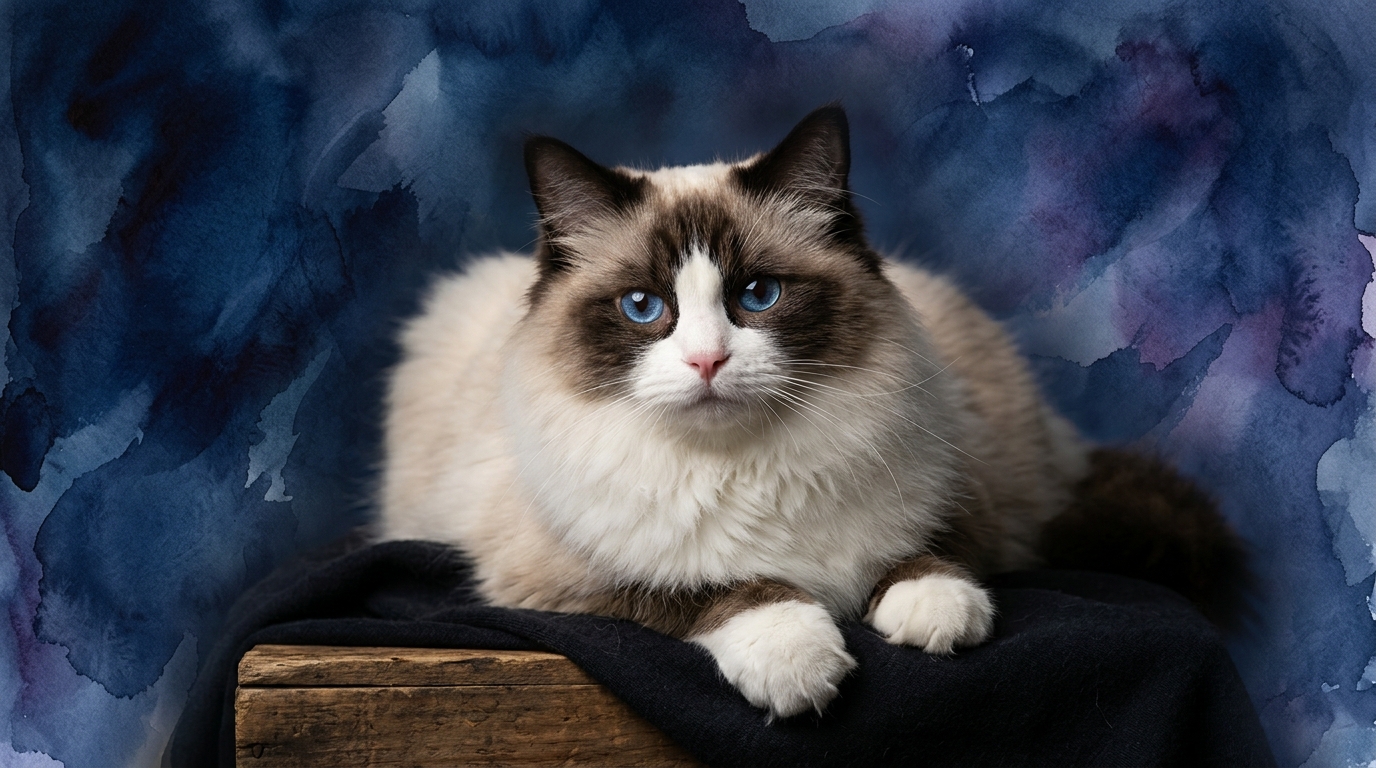
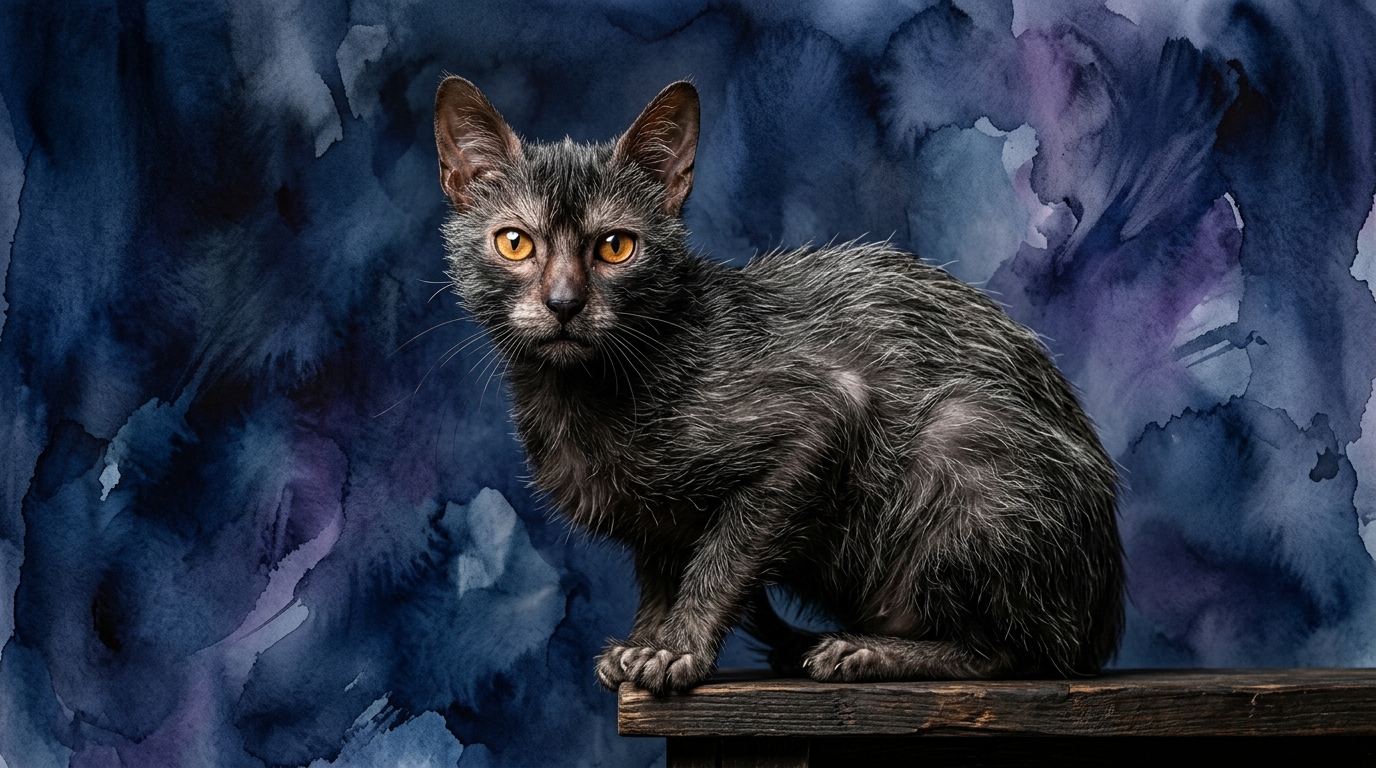
A Side-by-Side Look at Ragdoll and Lykoi IQ Profiles
At The Cosmic Pet Pet IQ Lab, we analyze feline intelligence across five key dimensions, providing a nuanced understanding of each breed's cognitive make-up. While both the Ragdoll and Lykoi share some common ground, their individual profiles highlight areas where their minds diverge.
For the Ragdoll, our assessment reveals a Problem Solving score of 3/5. This indicates a moderate capacity for navigating novel situations or figuring out how to access desired objects, often through observation and gentle manipulation rather than brute force. Their Training Speed is also rated 3/5, suggesting they absorb new commands and routines at a steady pace, particularly when motivated by positive reinforcement and social interaction. A standout feature for the Ragdoll is their exceptional Social Intelligence, scoring a perfect 5/5. These cats excel at reading human emotions, understanding subtle cues, and forming profound, empathetic bonds with their caregivers. Their Instinctive Drive, however, is on the lower end at 2/5, meaning their predatory urges are less pronounced, leading to a generally calm and less hunt-focused demeanor. Finally, their Memory is rated 3/5, allowing them to recall familiar faces, routines, and preferred interactions with consistency.
The Lykoi, often described as a 'werewolf cat' due to its unique coat, presents a slightly different cognitive blueprint. Their Problem Solving ability matches the Ragdoll at 3/5, indicating a similar capacity for tackling environmental challenges or understanding cause-and-effect relationships within their surroundings. Their Training Speed also stands at 3/5, suggesting they are capable learners, responding to consistent training methods. Where the Lykoi differs significantly from the Ragdoll is in its Social Intelligence, scoring 3/5. While they are certainly capable of forming bonds and engaging with their human families, their social interactions might be more independent or less overtly empathetic compared to the intensely people-focused Ragdoll. Their Instinctive Drive, however, is higher at 3/5. This reflects a more pronounced curiosity, a keen interest in hunting-like play, and a greater propensity for exploring and interacting with their environment in a predatory manner. Their Memory, like the Ragdoll's, is rated 3/5, enabling them to remember important routines, the location of favored toys, and the people in their lives.
Where the Ragdoll's Cognition Shines Brightest
The Ragdoll's defining cognitive strength lies unequivocally in its Social Intelligence, earning a perfect 5/5. This isn't just about being friendly; it signifies a deep, innate capacity to understand, interpret, and respond to human emotions and social cues. A Ragdoll often seems to anticipate its owner's mood, offering comfort during distress or joining in joyful moments with gentle head nudges or purrs. This superior social acumen allows them to integrate seamlessly into family life, adapting their behavior to the household's rhythm and showing a remarkable patience with children or other pets. They are adept at communicating their needs and desires through subtle vocalizations and body language, making them exceptionally responsive and easy to live with for owners who value a deeply connected companion. Their social drive means they are often found shadowing their owners, seeking physical closeness, and actively participating in family activities, not just observing from a distance.
The Lykoi's Unique Cognitive Edge
Conversely, the Lykoi's cognitive advantage is rooted in its Instinctive Drive, rated 3/5, which is notably higher than the Ragdoll's 2/5. This manifests as a heightened sense of curiosity, a more pronounced predatory instinct, and an impressive resourcefulness in exploring and interacting with their environment. While not necessarily 'smarter' in a broad sense, their cognitive profile makes them exceptionally adept at engaging with their surroundings, often exhibiting cunning in pursuit of toys or in navigating complex spaces. This breed's mind is wired for discovery and engagement, often leading them to investigate every nook and cranny, solve object puzzles, or engage in elaborate play scenarios that mimic hunting. Their focused attention on moving objects or intriguing sounds demonstrates a keen observational capacity tied directly to their ancestral hunting behaviors, allowing them to quickly assess and react to environmental stimuli. This drive fuels a more independent and exploratory approach to life, making them engaging partners for interactive play.
Training Ease: A Tale of Two Motivations
When considering trainability, both breeds share a Training Speed score of 3/5, suggesting they are equally capable of learning new behaviors. However, the *ease* of training can differ significantly due to their other cognitive dimensions. The Ragdoll, with its exemplary Social Intelligence (5/5) and lower Instinctive Drive (2/5), often appears easier to train for compliance and cooperative behaviors. They are highly motivated by social rewards—praise, petting, and the desire to please their beloved humans. This makes them receptive to leash training, coming when called, or learning gentle manners, as their primary goal is often to maintain harmony and closeness with their owners. Distractions stemming from environmental stimuli are less likely to derail a Ragdoll's focus during a training session because their internal drive to hunt or explore is relatively low.
The Lykoi, despite the same Training Speed, might present a different training experience due to its higher Instinctive Drive (3/5) and slightly lower Social Intelligence (3/5). While intelligent, their minds are more attuned to external stimuli that mimic prey, making them prone to distraction by rustling sounds, moving shadows, or interactive toys during training. Their motivation might lean more towards satisfying their curiosity or engaging their predatory instincts rather than solely pleasing their human. Training a Lykoi often benefits from incorporating puzzle feeders, scent work, or 'hunt' games to channel their natural drives productively. While they can certainly learn commands, an owner might need to be more creative and persistent in capturing their attention against the backdrop of their internal exploratory urges, ensuring training is highly engaging and rewarding on their terms.
Matching Feline Minds to Lifestyles: Active vs. Relaxed Owners
The distinct cognitive profiles of the Ragdoll and Lykoi lend themselves to very different owner lifestyles. For individuals who prefer a relaxed, serene home environment and crave a deeply affectionate, low-maintenance companion, the Ragdoll is an ideal choice. Their low Instinctive Drive (2/5) means they are content with indoor life, gentle play sessions, and extended periods of cuddling. Their high Social Intelligence (5/5) means they thrive on consistent human interaction and often initiate affectionate exchanges, making them perfect for owners who appreciate a constant, gentle presence. They are less likely to seek out trouble or demand intense mental stimulation, preferring instead to be a calm, comforting shadow.
Conversely, the Lykoi is better suited for active owners who relish engaging with a curious, playful, and somewhat independent feline. Their higher Instinctive Drive (3/5) means they require more mental and physical enrichment to prevent boredom and channel their natural exploratory and predatory urges constructively. Owners who enjoy interactive play with wand toys, puzzle feeders, or even teaching tricks will find the Lykoi a responsive and enthusiastic participant. They thrive in environments where their intelligence is challenged and their senses are stimulated, making them excellent companions for individuals who are willing to dedicate time to structured play and environmental enrichment, fostering their natural 'hunt' behaviors in appropriate ways.
The Verdict
Choose a Ragdoll if you seek a profoundly social, calm, and empathetic companion who thrives on deep human connection and a tranquil home environment, valuing affection above all.
Opt for a Lykoi if you appreciate an independent, curious, and playful cat with a strong drive for exploration and interactive engagement, willing to provide ample mental and physical stimulation.
🧠 Find Your Pet's IQ Score
Our Pet IQ Lab assessment covers 25+ tests across 5 cognitive dimensions — personalized to your breed.
Take the Full IQ Test →Frequently Asked Questions
Are Ragdolls good at learning tricks?
With a Training Speed of 3/5 and exceptional Social Intelligence, Ragdolls can certainly learn tricks, especially those involving cooperation or interaction with their owner. Their motivation often comes from pleasing their human and receiving affectionate praise, making them receptive to consistent positive reinforcement.
Do Lykois need a lot of playtime?
Yes, Lykois benefit significantly from regular, interactive playtime due to their higher Instinctive Drive (3/5). Engaging them with toys that mimic prey, puzzle feeders, and opportunities for exploration helps channel their natural curiosity and predatory instincts in a healthy way, preventing boredom and promoting well-being.
Which breed is more independent, Ragdoll or Lykoi?
Based on their cognitive profiles, the Lykoi tends to be more independent, driven by its higher Instinctive Drive and slightly lower Social Intelligence. Ragdolls, with their 5/5 Social Intelligence, are typically much more people-dependent and seek constant interaction and closeness with their human companions.