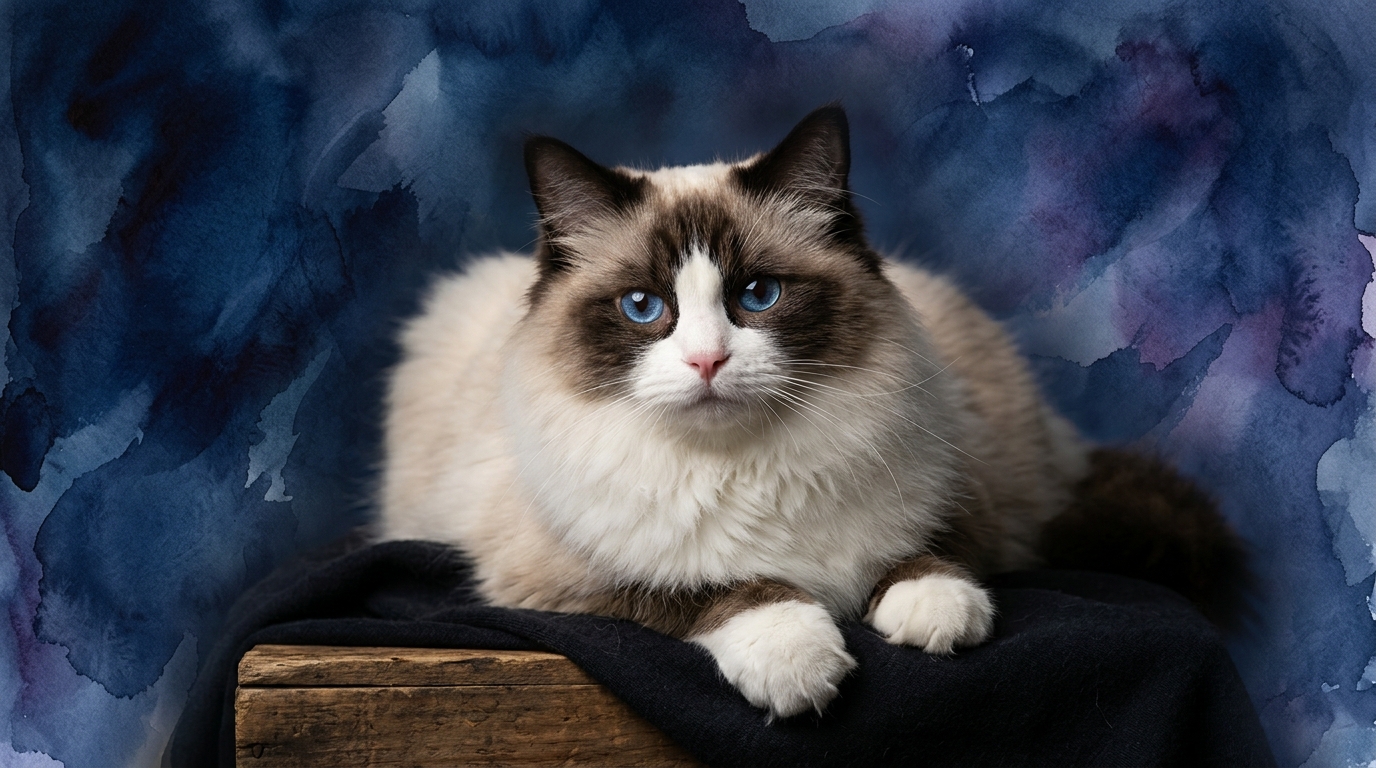
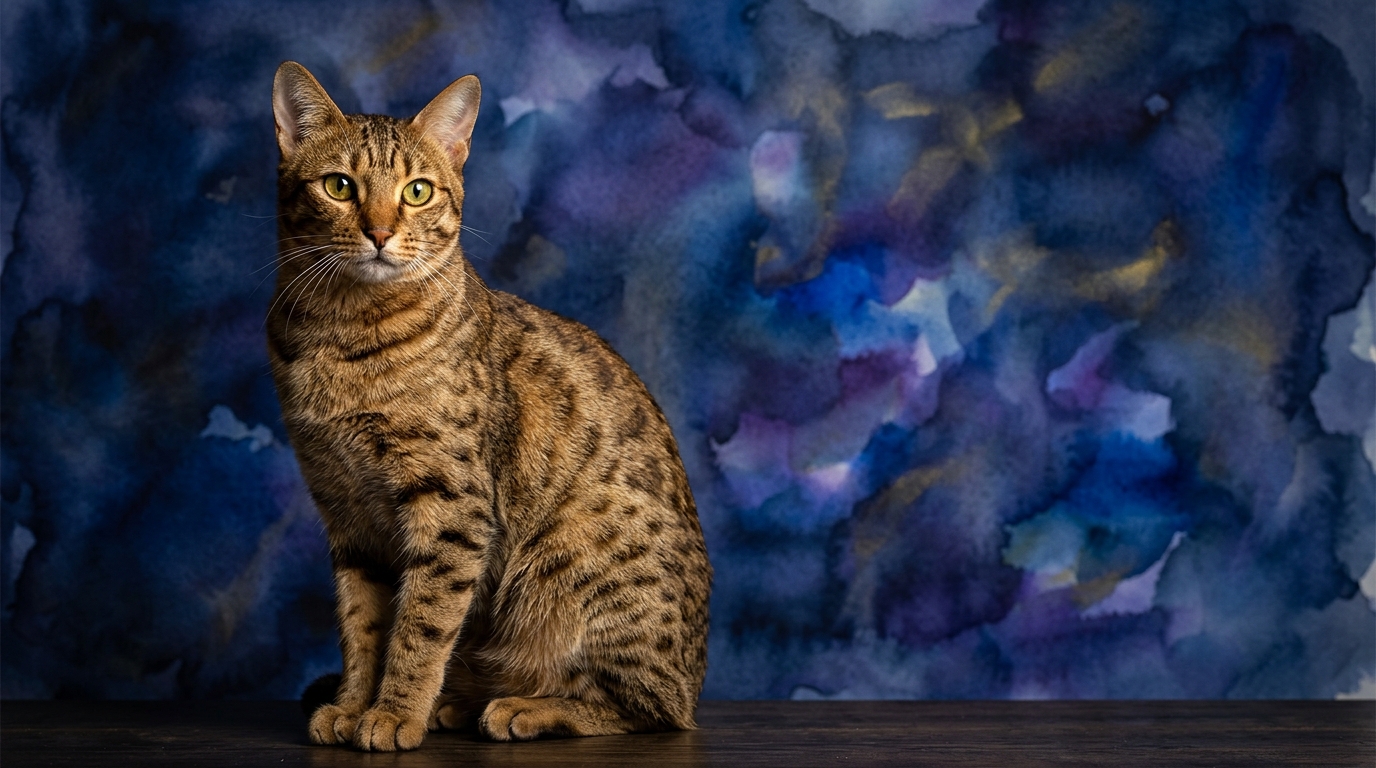
Side-by-Side Cognitive Profiles: Ragdoll vs. Ocicat
The Cosmic Pet Pet IQ Lab employs a five-dimensional framework to assess feline intelligence, offering a nuanced view beyond mere anecdotal observations. For the Ragdoll, we observe a distinct blend of affectionate responsiveness and a more measured approach to novel challenges.
**Ragdoll IQ Profile:** Problem Solving: 3/5, Training Speed: 3/5, Social Intelligence: 5/5, Instinctive Drive: 2/5, Memory: 3/5. This profile suggests a cat that excels in emotional connection and understanding social cues, while approaching new tasks or learning with deliberate consideration rather than immediate enthusiasm. Their lower instinctive drive means they are generally less inclined towards intense hunting or exploration.
The Ocicat, on the other hand, presents a profile indicating a more active, mentally agile feline with a pronounced zest for engagement. Their scores reflect a breed that thrives on mental and physical stimulation, demonstrating a strong aptitude for learning and interaction.
**Ocicat IQ Profile:** Problem Solving: 4/5, Training Speed: 5/5, Social Intelligence: 4/5, Instinctive Drive: 4/5, Memory: 4/5. This cat exhibits a clear capacity for figuring out novel situations and absorbing new information rapidly. Their social intelligence is robust, though perhaps less overtly empathetic than the Ragdoll, and their higher instinctive drive fuels a keen interest in their environment and play.
Where the Ragdoll Excels Cognitively
The Ragdoll's standout cognitive strength lies unequivocally in its Social Intelligence, scoring a perfect 5/5. This isn't merely about enjoying human company; it signifies an exceptional capacity to read and respond to human emotions, intentions, and routines. A Ragdoll often displays an uncanny ability to sense a shift in their owner's mood, offering quiet companionship during moments of sadness or engaging in gentle play when spirits are high. They form profound, almost symbiotic bonds, often following their chosen human from room to room, not out of separation anxiety, but from a deeply ingrained social connection and desire for proximity.
This elevated social intelligence also means Ragdolls are highly attuned to social cues, making them remarkably cooperative companions. They often respond well to gentle verbal commands and body language, understanding what is expected of them in a household context without extensive, formal training. Their compliance often stems from a desire to maintain harmony within their social unit, rather than a drive to master a specific task. This makes them particularly adept at integrating seamlessly into family life, often becoming the emotional anchor of a home, providing comfort and a sense of calm through their empathetic presence.
Where the Ocicat Excels Cognitively
The Ocicat shines in multiple cognitive dimensions, reflecting its dynamic and curious nature. With a Problem Solving score of 4/5, Ocicats exhibit a notable ability to navigate complex situations and figure out how to achieve desired outcomes. This might manifest as opening cabinets, learning to operate simple latches, or devising creative ways to access toys or treats stored out of reach. They aren't easily deterred by obstacles and will often persist, employing trial and error, until they find a solution.
Their Training Speed, a remarkable 5/5, indicates an exceptional aptitude for learning new commands, tricks, and routines with minimal repetition. Ocicats typically pick up cues rapidly, often seeming to enjoy the mental challenge of a training session. This makes them excellent candidates for clicker training, leash walking, and even agility courses, where their quick comprehension and eagerness to engage are distinct advantages. They connect cause and effect swiftly, making the process of teaching them new behaviors highly rewarding.
Furthermore, an Instinctive Drive of 4/5 means Ocicats possess a strong natural curiosity and a pronounced predatory instinct, which translates into enthusiastic play and exploration. This isn't just about chasing toys; it's about engaging with their environment in an active, investigative manner. They are driven to stalk, pounce, and "hunt" their toys, often mimicking the behaviors of their wild ancestors. This drive, coupled with their cognitive agility, ensures they are always seeking out new stimuli and challenges, making them highly interactive and engaging pets. Their Memory, at 4/5, further supports these traits, allowing them to recall previously learned solutions to problems, remember training commands over long periods, and retain complex routines, contributing to their overall adaptability and responsiveness.
Training Dynamics: Ragdoll vs. Ocicat
When it comes to trainability, the Ocicat holds a clear advantage, largely due to its superior Training Speed (5/5) and higher Instinctive Drive (4/5). An Ocicat often approaches training as an enjoyable mental game, quickly grasping concepts like 'sit,' 'stay,' or fetching specific toys. Their strong prey drive can be harnessed as a powerful motivator, making reward-based training highly effective. They thrive on consistent engagement and the mental stimulation that training provides, often becoming quite proficient in a variety of commands and tricks in a relatively short period.
The Ragdoll, with a Training Speed of 3/5, is certainly trainable, but their approach differs significantly. They may require more patience and repetition to solidify new behaviors. Their primary motivation often stems from their strong Social Intelligence (5/5) and desire for positive human interaction, rather than an inherent drive to master complex tasks. While they can learn to walk on a leash or come when called, the process might be slower, and their compliance is often a reflection of their bond with their owner. They are less likely to seek out training sessions for the sheer mental challenge and more likely to participate as a way to engage affectionately with their human.
Lifestyle Suitability: Active vs. Relaxed Owners
The distinct cognitive profiles of the Ragdoll and Ocicat lead to clear preferences in owner lifestyles. The Ragdoll, characterized by its high Social Intelligence and lower Instinctive Drive, is an ideal companion for relaxed owners or those seeking a calm, affectionate presence. Their contentment often comes from close proximity to their human, gentle play, and a stable, predictable environment. They are less demanding of vigorous exercise or constant mental puzzles, preferring to observe and participate in the quiet rhythms of home life. Owners who appreciate a cat that is deeply connected and offers a soothing, empathetic presence will find a Ragdoll to be an unparalleled match.
Conversely, the Ocicat, with its strong Problem Solving, rapid Training Speed, and pronounced Instinctive Drive, is perfectly suited for active owners who relish engaging with their pets. These cats thrive in environments where they receive ample mental and physical stimulation, whether through interactive puzzle toys, regular play sessions that mimic hunting, or even learning new tricks and commands. Owners who enjoy teaching, playing, and providing a dynamic, enriching environment will find the Ocicat's intelligence and energy a rewarding challenge. They require owners who are prepared to dedicate time to channeling their cognitive and physical prowess, preventing boredom and ensuring their well-being.
The Verdict: When to Choose Each Breed
Choosing between a Ragdoll and an Ocicat ultimately depends on your lifestyle and what you seek in a feline companion. Both breeds offer unique joys, but their cognitive strengths dictate very different daily interactions.
If your home is a sanctuary of calm, and you desire a deeply affectionate, empathetic companion who offers comfort and a gentle presence, the Ragdoll's exceptional social intelligence and relaxed demeanor make it an ideal choice. If you're an active individual or family looking for a mentally agile, highly trainable, and engaging cat that thrives on interaction, games, and exploration, the Ocicat's problem-solving prowess and energetic drive will perfectly complement your lifestyle.
The Verdict
Choose a Ragdoll if you seek a deeply empathetic, calm, and affectionate companion who excels at social interaction and thrives in a relaxed home environment.
Choose an Ocicat if you are an active owner prepared to provide significant mental and physical stimulation for a highly trainable, problem-solving, and energetic feline.
🧠 Find Your Pet's IQ Score
Our Pet IQ Lab assessment covers 25+ tests across 5 cognitive dimensions — personalized to your breed.
Take the Full IQ Test →Frequently Asked Questions
Are Ragdolls difficult to train for basic commands?
Ragdolls are certainly trainable for basic commands, but their Training Speed of 3/5 suggests they may require more patience and repetition than some other breeds. Their motivation often stems from their bond with their owner, making positive reinforcement and affection highly effective.
Do Ocicats get along well with other pets due to their social intelligence?
With a Social Intelligence score of 4/5, Ocicats generally adapt well to other pets, forming bonds and enjoying interaction. Their adaptable nature and curiosity often make them good candidates for multi-pet households, especially if properly introduced.
Which breed is better for an owner who is often away from home for long periods?
Neither breed thrives on prolonged solitude, but the Ragdoll's high social intelligence and deep bonding might make extended absences more challenging for them emotionally. The Ocicat's higher instinctive drive means it would require significant environmental enrichment to prevent boredom during an owner's absence, making neither ideal for truly solitary living.