The Cosmic Pet IQ Lab Profiles: Ragdoll vs. Selkirk Rex
At The Cosmic Pet Pet IQ Lab, we dissect feline cognition across five crucial dimensions: Problem Solving, Training Speed, Social Intelligence, Instinctive Drive, and Memory. These metrics provide a nuanced understanding of how a breed processes information, interacts with its environment, and forms bonds, moving beyond superficial observations to reveal their inherent cognitive leanings.
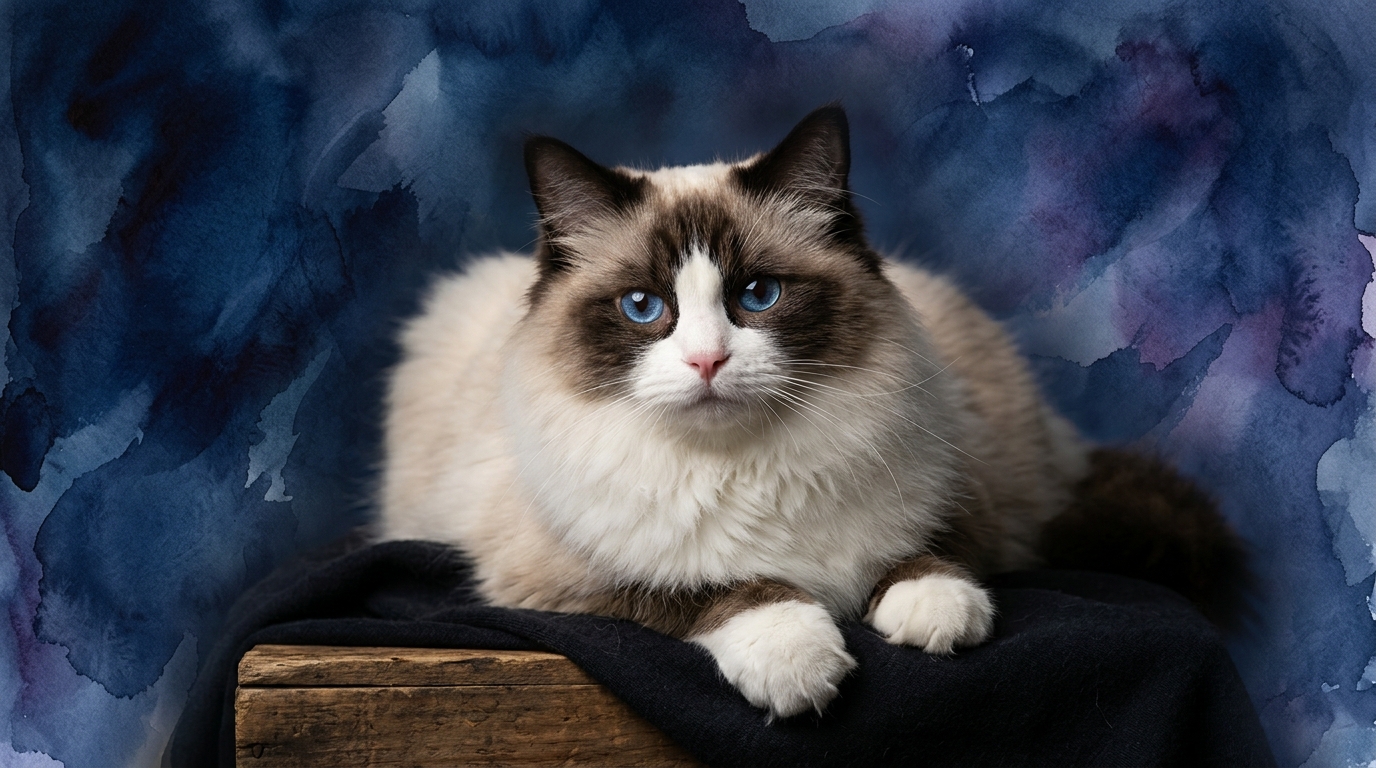
The Ragdoll presents a profile characterized by a balanced Problem Solving (3/5) and Training Speed (3/5), indicating a moderate capacity for navigating challenges and acquiring new behaviors. Its most striking feature is an exceptional Social Intelligence (5/5), reflecting a profound ability to understand and engage with human companions. This is paired with a relatively low Instinctive Drive (2/5), suggesting less reliance on solitary hunting or exploration, and a steady Memory (3/5) for recalling experiences and learned associations.
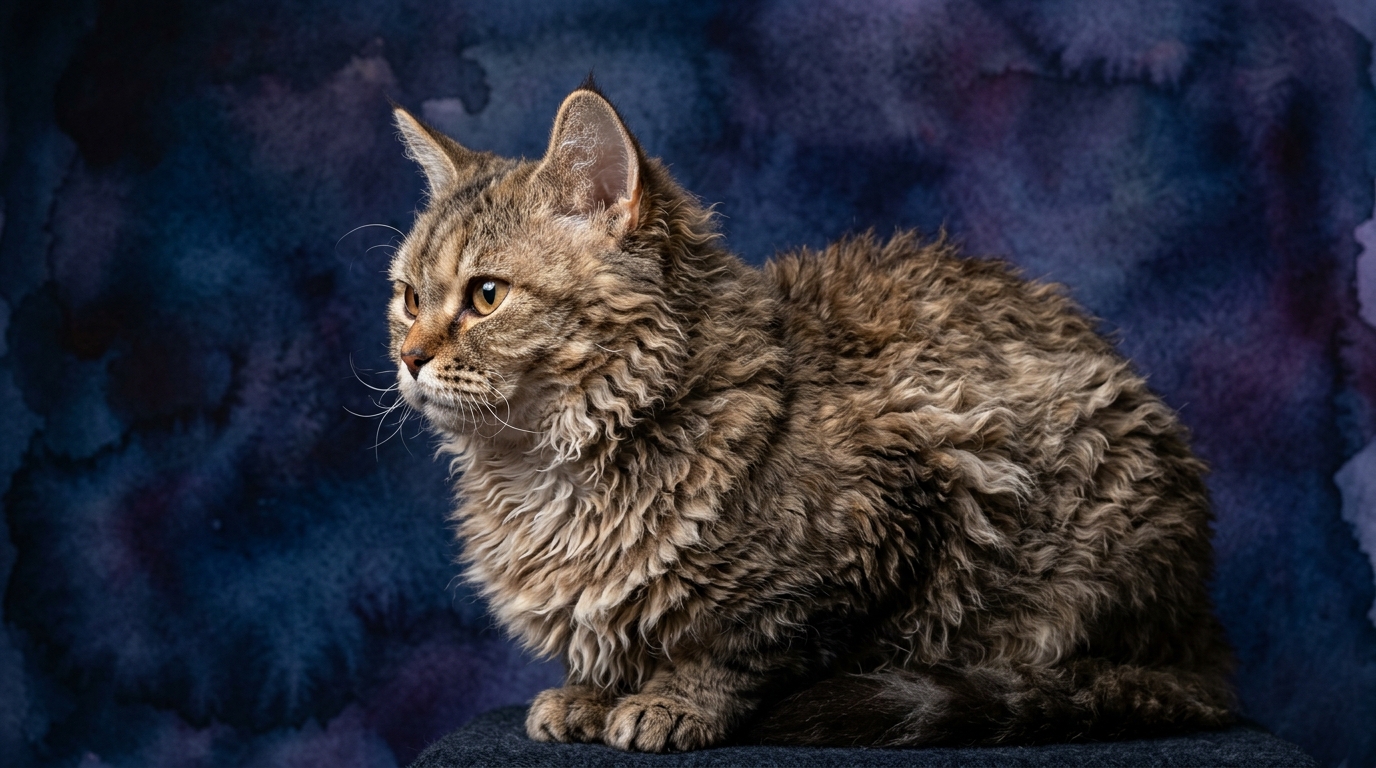
Conversely, the Selkirk Rex shares the same foundational Problem Solving (3/5), Training Speed (3/5), and Memory (3/5) scores as the Ragdoll, suggesting similar core learning aptitudes. However, its Social Intelligence (3/5) is more moderate, indicating a friendly but less intensely human-focused disposition. The Selkirk Rex also exhibits a slightly higher Instinctive Drive (3/5), pointing towards a more pronounced natural curiosity and engagement with its environment through exploratory behaviors.
Where the Ragdoll's Cognition Shines
The Ragdoll's primary cognitive advantage lies in its unparalleled Social Intelligence (5/5). This isn't merely about being friendly; it signifies a deep, intuitive understanding of human emotions and social cues. A Ragdoll often acts as a true companion, frequently seeking proximity, following their owners from room to room, and even displaying empathy towards human moods. This profound social engagement means they are often highly attuned to their family's routines and desires, making them remarkably integrated members of a household.
Furthermore, the Ragdoll's lower Instinctive Drive (2/5) contributes positively to its role as a home companion. This isn't a lack of intelligence, but rather a cognitive preference for human interaction over solitary hunting or extensive exploration. This lower drive means they are generally less prone to destructive scratching, climbing to extreme heights, or intense predatory play with small objects, contributing to a more placid and predictable presence in the home environment. Their contentment often stems from shared space and affection rather than constant environmental stimulation.
Unpacking the Selkirk Rex's Cognitive Strengths
The Selkirk Rex's cognitive profile highlights a well-rounded and curious intellect, particularly evident in its Instinctive Drive (3/5). While not excessively high, this score indicates a healthy natural inclination towards exploration, investigation, and engaging with its surroundings. A Selkirk Rex is more likely to be found investigating new smells, exploring hidden corners, or batting at toys with a genuine predatory interest. This drive fuels a more active engagement with its environment, offering a dynamic and playful presence.
Its balanced scores across Problem Solving (3/5) and Training Speed (3/5), combined with its moderate Instinctive Drive, suggest a cat that is adaptable and enjoys mental stimulation through play. While its social intelligence is not as pronounced as the Ragdoll's, the Selkirk Rex's cognitive make-up allows it to independently entertain itself and engage with puzzle toys or environmental enrichment with genuine enthusiasm. This breed offers a blend of companionability and self-sufficiency that many owners find appealing, valuing their independent spirit alongside their affectionate moments.
Training Dynamics: Who Learns Faster and Why?
When comparing training ease, both the Ragdoll and Selkirk Rex score identically in Problem Solving (3/5) and Training Speed (3/5). This means their fundamental capacity to grasp new concepts or execute learned behaviors is quite similar. The key difference lies not in their innate learning ability, but in their *motivation* and *social drivers* for engagement, which significantly impact how readily they participate in training sessions and what types of training they excel at.
The Ragdoll, with its exceptional Social Intelligence (5/5), is often perceived as 'easier' to train for social behaviors and tricks. They are deeply motivated by human approval, praise, and the opportunity for interaction. A Ragdoll might quickly learn to come when called, play fetch, or perform simple tricks because it strengthens their bond with their owner and provides desired attention. Their lower Instinctive Drive (2/5) also means fewer distractions from external stimuli, allowing for more focused training on human-directed tasks.
The Selkirk Rex, while equally capable of learning (3/5 Training Speed), may require a different approach. Their moderate Social Intelligence (3/5) means they are affectionate but less driven solely by human approval. Their higher Instinctive Drive (3/5) suggests they respond well to training that incorporates play, puzzle-solving, or engages their natural curiosity. Owners might find success with clicker training for agility courses or teaching them to interact with complex toys, where the reward is intrinsic to the activity or a tangible treat, rather than solely social validation. They might learn to open cabinets out of curiosity, demonstrating their problem-solving in a self-motivated context.
Matching Cognitive Profiles to Lifestyles: Active vs. Relaxed Owners
Understanding these cognitive nuances is crucial for matching a cat to an owner's lifestyle. For relaxed owners seeking a constant, gentle presence, the Ragdoll's cognitive profile aligns perfectly. Their high Social Intelligence and low Instinctive Drive mean they are most content being near their human companions, engaging in quiet affection, and adapting readily to a calm home environment. They thrive on consistent human interaction and often prefer lap time over vigorous play, making them ideal for individuals or families who appreciate a devoted, emotionally responsive cat.
Conversely, owners with a more active approach to pet parenting might find the Selkirk Rex's cognitive blend more engaging. Its moderate Instinctive Drive (3/5) means it genuinely enjoys interactive play, exploring new environments, and engaging with puzzle feeders or stimulating toys. While still affectionate, a Selkirk Rex appreciates owners who provide opportunities for mental and physical engagement, whether through regular play sessions, varied enrichment, or even teaching them new skills. They offer a dynamic companionship that blends affectionate moments with periods of independent, curious exploration.
The Verdict
Choose a Ragdoll if your primary desire is a deeply affectionate, emotionally attuned companion who thrives on human presence and offers consistent, gentle interaction.
Opt for a Selkirk Rex if you appreciate a cat with a curious, independent streak that enjoys exploratory play and problem-solving, offering a more dynamic, yet still loving, companionship.
🧠 Find Your Pet's IQ Score
Our Pet IQ Lab assessment covers 25+ tests across 5 cognitive dimensions — personalized to your breed.
Take the Full IQ Test →Frequently Asked Questions
Are Ragdolls 'smarter' than Selkirk Rex cats?
Based on our Pet IQ Lab metrics, both breeds demonstrate similar capacities for problem-solving and training speed, scoring 3/5 in both. The perceived 'intelligence' often stems from their differing social motivations and instinctive drives, not a fundamental cognitive gap.
Can a Selkirk Rex learn tricks like a Ragdoll?
Absolutely. While a Selkirk Rex's motivation might be more play-driven or curiosity-based, their 3/5 training speed indicates a good capacity for learning. Owners might find success using interactive toys or food puzzles as rewards, rather than relying solely on social praise.
How does 'instinctive drive' impact a cat's daily behavior?
Instinctive drive reflects a cat's natural urge to hunt, explore, and be independent. A Ragdoll's lower drive (2/5) means less impulse for solitary hunting games, leading to more human-focused activity, while a Selkirk Rex's moderate drive (3/5) suggests a healthy balance of independent exploration and social interaction.