
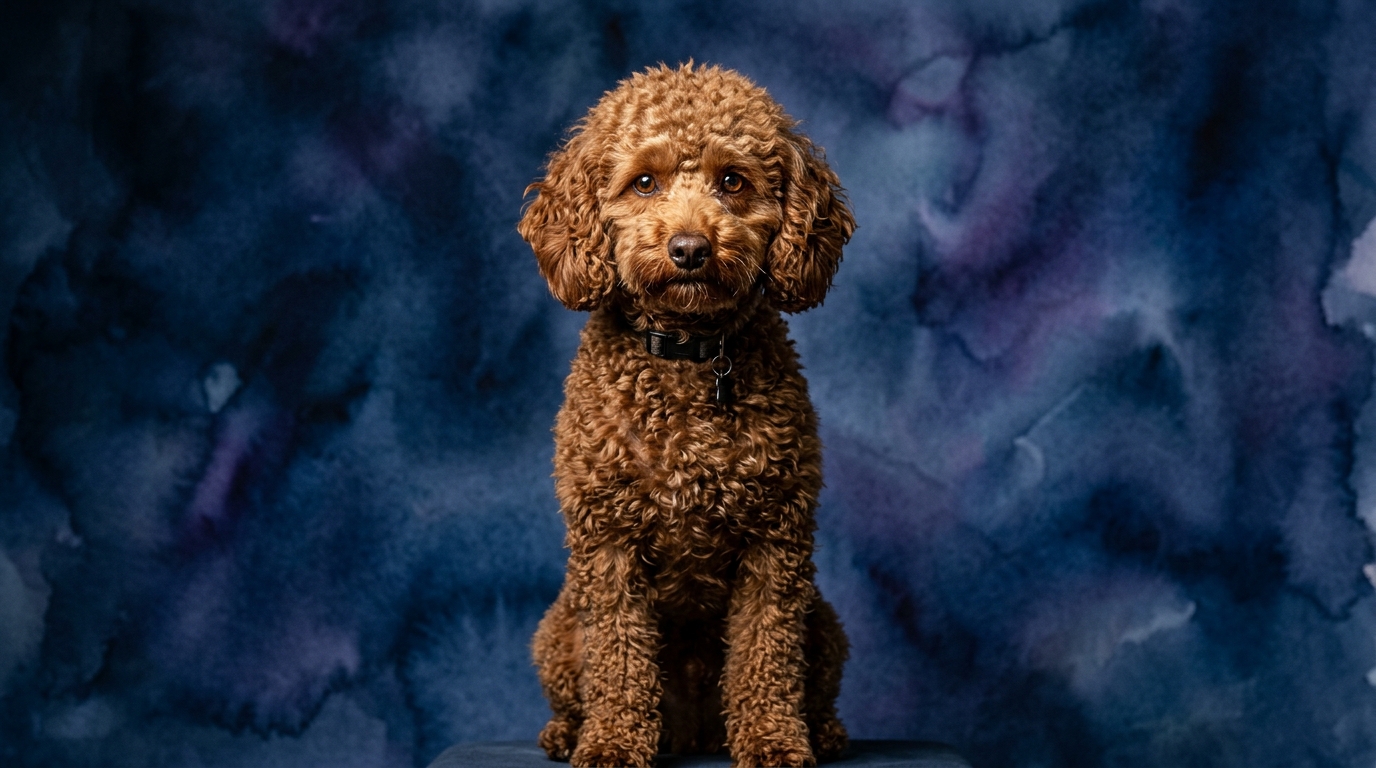
Side-by-Side IQ Profile: Rat Terrier vs. Miniature Poodle
The Cosmic Pet Pet IQ Lab employs a multi-dimensional framework to assess canine intelligence, moving beyond simple obedience to encompass problem-solving, training speed, social intelligence, instinctive drive, and memory. This comprehensive approach allows for a nuanced understanding of each breed's cognitive strengths and inclinations. When comparing the Rat Terrier and the Miniature Poodle, we observe two distinct cognitive landscapes, further highlighted by the Poodle's prominent placement at Coren rank #2, a position the Rat Terrier does not share.
The Rat Terrier's cognitive profile paints a picture of a resourceful and tenacious companion. Their Problem Solving is rated 3/5, indicating an ability to navigate challenges with practical, often independent, solutions, rather than always seeking complex, multi-step answers. Training Speed, also 3/5, suggests they learn new commands and routines effectively, but may require consistent, engaging methods to maintain focus and enthusiasm, reflecting their independent spirit. Social Intelligence, at 3/5, means they are aware of human cues and can form strong bonds, yet often retain a focus on their environment and tasks. Their Instinctive Drive, a balanced 3/5, points to a moderate prey drive and natural alertness, making them attentive watchdogs without being overwhelmingly driven. Finally, their Memory, rated 3/5, allows them to retain learned behaviors and routines, though they might not generalize new concepts with the same swiftness as some other breeds.
In contrast, the Miniature Poodle presents a cognitive profile characterized by exceptional mental agility and a strong desire for cooperative learning. Their Problem Solving scores a remarkable 5/5, indicating an outstanding capacity to analyze situations, devise intricate solutions, and adapt readily to novel challenges. This breed’s Training Speed is also 5/5, signifying their rapid assimilation of new commands and complex sequences, often displaying an eagerness to please and a quick understanding of human expectations. Their Social Intelligence, matching the Rat Terrier at 3/5, implies a responsiveness to human interaction and a capacity for deep connection, though they can also exhibit sensitivity or discernment with strangers. The Miniature Poodle’s Instinctive Drive, like the Rat Terrier, stands at 3/5, suggesting a manageable prey drive that is often channeled into structured play, retrieving games, or canine sports. Crucially, their Memory is an impressive 5/5, enabling them to recall intricate routines, remember past experiences with clarity, and build upon previous learning with remarkable consistency.
Where the Rat Terrier Wins Cognitively
While the Miniature Poodle excels in traditional measures of canine intellect, the Rat Terrier showcases cognitive strengths that are equally valuable, particularly in contexts requiring self-reliance and independent action. Their 3/5 Problem Solving, paired with their terrier heritage, translates into a pragmatic resourcefulness; they are adept at finding their own solutions to immediate environmental challenges, often without direct human guidance. This manifests as a tenacious persistence in tasks they deem worthwhile, whether it's outsmarting a rodent or finding a dropped toy under furniture. Their balanced 3/5 Instinctive Drive, while not as pronounced as some working breeds, equips them with an alert vigilance and a keen awareness of their surroundings, making them effective, self-motivated guardians who process environmental stimuli with a discerning eye. This cognitive independence means they can entertain themselves and make decisions autonomously, a trait that can be a distinct advantage for owners who appreciate a dog with strong self-direction.
Where the Miniature Poodle Wins Cognitively
The Miniature Poodle's cognitive advantages are evident in their superior capacity for learning, complex problem-solving, and retention. Their 5/5 Problem Solving allows them to grasp abstract concepts, understand cause-and-effect relationships, and navigate intricate puzzle toys with apparent ease, often surprising owners with their inventive solutions. This mental prowess extends to their 5/5 Training Speed, where they absorb new commands and multi-step routines with remarkable rapidity, often requiring fewer repetitions than many other breeds. This quick uptake is supported by their exceptional 5/5 Memory, enabling them to retain vast repertoires of commands, tricks, and social cues over long periods. This combination of attributes makes them exceptionally adaptable to various dog sports, complex obedience trials, and service roles, where precision, consistent recall, and the ability to learn new tasks on the fly are paramount. Their cognitive strength lies in their ability to process information quickly and apply learned knowledge flexibly.
Which Is Easier to Train and Why
Based on their respective IQ profiles, the Miniature Poodle is generally easier to train due to their 5/5 Training Speed and 5/5 Memory. They exhibit a strong desire to engage with their human companions in cooperative learning, quickly grasping what is expected of them and retaining that knowledge with minimal reinforcement. This translates into a dog that often learns basic obedience commands in just a few sessions and can progress to advanced tasks with relative ease, making them a joy for owners who relish the training process. Conversely, the Rat Terrier, with a 3/5 Training Speed and 3/5 Memory, requires a more patient and creative approach. While capable of learning, their independent terrier nature means they might be less inclined to follow commands if they perceive a more interesting environmental stimulus. Training a Rat Terrier often involves making sessions fun, varied, and highly rewarding to overcome potential stubbornness and keep their keen mind engaged, rather than relying solely on repetition.
Which Suits Active Owners vs. Relaxed Owners
The cognitive profiles of these breeds also inform their suitability for different owner lifestyles. The Miniature Poodle, with its high problem-solving capacity and rapid learning, thrives with active owners who enjoy providing consistent mental stimulation through training, dog sports, or engaging puzzle games. They flourish when given structured activities that challenge their intellect and allow them to work cooperatively with their human, making them an excellent choice for individuals passionate about canine education and activity. While they also need physical exercise, their mental needs are paramount. The Rat Terrier, conversely, suits active owners who appreciate a dog with a strong independent streak and a curious, self-directed approach to exploration. Their moderate instinctive drive and practical problem-solving mean they enjoy varied outdoor adventures, exploring new scents, and engaging in activities that allow them some autonomy. They are well-suited for owners who can provide ample physical outlets and appreciate a dog that can entertain itself mentally, rather than constantly seeking human-directed tasks. They can adapt to more relaxed households if given sufficient outlets for their natural curiosity and energy, but thrive with opportunities for independent mental engagement.
The Verdict
Choose a Rat Terrier if you value an independent, resourceful companion with a pragmatic approach to problem-solving, and you appreciate a dog that can entertain itself and thrive with varied, self-directed mental and physical activities.
Opt for a Miniature Poodle if you seek a highly trainable, cognitively agile partner eager for cooperative learning, excelling in complex tasks, and thriving on consistent mental challenges and structured engagement with their human.
🧠 Find Your Pet's IQ Score
Our Pet IQ Lab assessment covers 25+ tests across 5 cognitive dimensions — personalized to your breed.
Take the Full IQ Test →Frequently Asked Questions
Are Rat Terriers difficult to train compared to Miniature Poodles?
Rat Terriers, with a 3/5 training speed, can be more challenging than Miniature Poodles, which score 5/5. Rat Terriers require more patience, consistency, and engaging methods due to their independent nature, whereas Poodles learn commands rapidly and are often eager to please.
Which breed is better at solving complex puzzles?
The Miniature Poodle, with a 5/5 problem-solving score, is generally superior at solving complex puzzles. Their ability to understand abstract concepts and adapt to new challenges makes them adept at intricate mental games, while Rat Terriers (3/5) tend to prefer more practical, immediate solutions.
Do both breeds have similar social intelligence?
Yes, both the Rat Terrier and the Miniature Poodle score 3/5 in social intelligence. This suggests both breeds are capable of forming strong bonds and understanding human cues, though they might exhibit different expressions of this intelligence, such as the Poodle's potential sensitivity or the Rat Terrier's independent focus.