
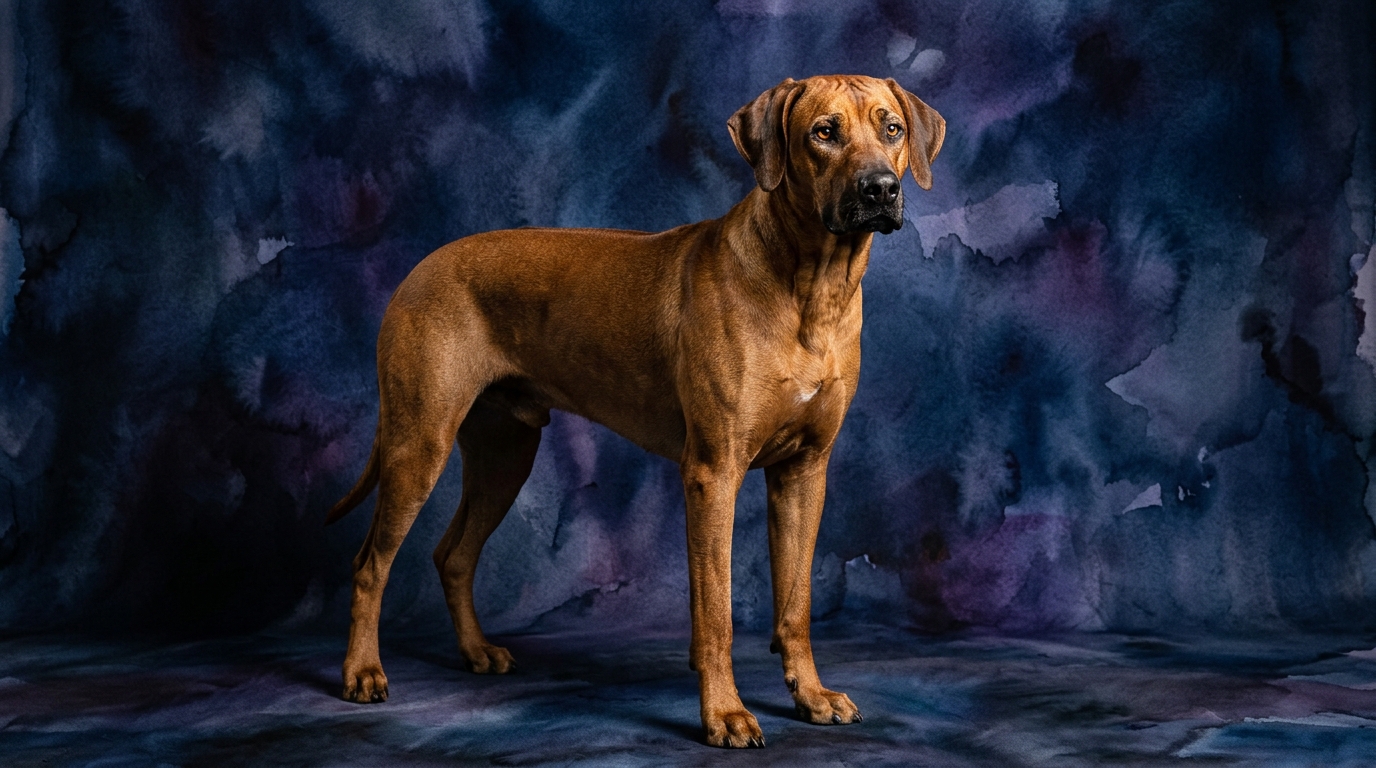
Side-by-Side Cognitive Profiles
The Cosmic Pet Pet IQ Lab assesses canine intelligence across five key dimensions: Problem Solving, Training Speed, Social Intelligence, Instinctive Drive, and Memory. Intriguingly, both the Rat Terrier and the Rhodesian Ridgeback register a consistent 3 out of 5 across all these metrics. However, interpreting these scores requires understanding the unique ways each breed manifests these cognitive abilities, shaped by their distinct histories and temperaments.
For the **Rat Terrier**, a breed traditionally developed for pest control and farm work, their 3/5 in **Problem Solving** often manifests as quick, agile thinking focused on immediate environmental challenges. This might involve figuring out how to access a tight space to pursue a perceived quarry or manipulating objects to achieve a desired outcome, often with a tenacious and independent streak. Their **Training Speed** (3/5) indicates a capacity to grasp new commands with reasonable repetition, though their energetic and sometimes distractible nature means engagement must be consistent and rewarding. **Social Intelligence** (3/5) in a Rat Terrier often involves a keen awareness of their immediate human companions, capable of forming deep bonds and understanding subtle cues, while often maintaining a reserved or wary stance towards strangers. Their **Instinctive Drive** (3/5) is undeniably potent, primarily expressed through a strong prey drive for small animals, a propensity for digging, and an alert vocalization, all remnants of their working heritage. Finally, their **Memory** (3/5) is robust for routines, learned commands, and particularly for recalling locations of past 'targets' or rewarding experiences.
The **Rhodesian Ridgeback**, originally bred for tracking and holding large game in rugged African terrain, approaches these same cognitive dimensions from a different perspective. Their **Problem Solving** (3/5) tends to be more deliberate and strategic, often involving assessing complex situations, navigating challenging environments, or making independent decisions in the field. This isn't about quick, reactive bursts but thoughtful evaluation. Their **Training Speed** (3/5) reflects an ability to learn, but it's often paired with an independent streak; they need to understand the 'why' behind a command rather than offering blind obedience, making effective training a partnership. **Social Intelligence** (3/5) for a Ridgeback is characterized by a profound loyalty to their family and an acute awareness of their social structure, often expressed through subtle communication and a protective instinct, though they can be aloof or discerning with unfamiliar individuals. Their **Instinctive Drive** (3/5) is powerful, encompassing a formidable prey drive for larger game, a strong territorial instinct, and an impressive endurance for sustained tasks, honed by their hunting lineage. Their **Memory** (3/5) is notable for retaining complex routes, past interactions, and the intricacies of their social environment, allowing them to recall nuanced experiences over time.
Where the Rat Terrier Excels Cognitively
Despite sharing identical numerical scores, the Rat Terrier often demonstrates a distinct cognitive advantage in scenarios demanding agility of thought and rapid adaptation to changing, small-scale environmental stimuli. Their terrier heritage imbues them with a remarkable capacity for focused, persistent problem-solving when it involves a specific, tangible 'target' or a puzzle requiring nimble paws and quick reactions. For instance, a Rat Terrier might exhibit superior cognitive processing in quickly identifying the most efficient route through an agility course, or in persistently engaging with a complex puzzle toy until a treat is released, driven by an unwavering curiosity and a high reward threshold for success. Their ability to switch between tasks quickly, yet maintain intense focus on a singular goal when motivated, is a particular cognitive strength that reflects their historical role in vermin control.
Where the Rhodesian Ridgeback Excels Cognitively
The Rhodesian Ridgeback, in contrast, often showcases cognitive strengths in areas requiring sustained focus, independent judgment, and a more strategic, big-picture approach. Their heritage as a hunter of formidable game means they developed a capacity for assessing complex, dynamic situations and making thoughtful decisions without constant human direction. A Ridgeback might demonstrate a greater cognitive aptitude for understanding subtle changes in their environment that signal a potential threat, or for navigating vast, varied terrains with a clear memory of the path and purpose. Their social intelligence, while also a 3/5, often manifests as a deeper, more nuanced understanding of family dynamics and protection, making them astute observers of human behavior and subtle emotional shifts. This breed's cognitive 'win' lies in their measured, discerning application of their intellect, particularly in scenarios demanding self-reliance and an overarching understanding of their role within a larger system.
Training: Navigating Different Behavioral Landscapes
When it comes to training, the identical 3/5 'Training Speed' score for both breeds belies significant differences in their approach and the handler's experience. The Rat Terrier's training journey is often characterized by energetic bursts and a need for constant engagement to prevent boredom or distraction. Their strong prey drive and independent terrier spirit mean that while they grasp commands quickly, their compliance can be selective if something more interesting, like a rustling leaf or an unseen critter, captures their attention. Successful training with a Rat Terrier requires consistency, positive reinforcement, and a handler who can channel their boundless enthusiasm and curiosity into productive learning, often benefiting from varied activities like agility or scent work.
The Rhodesian Ridgeback, while equally capable of learning, presents a different set of training considerations. Their independent, discerning nature means they are less inclined to perform tasks purely for the sake of pleasing their owner. They often need to understand the 'why' behind a command and thrive on clear, fair, and consistent leadership, not harsh correction. Their sensitivity means that positive reinforcement and building a strong, trusting relationship are paramount. While they may not have the Rat Terrier's frantic energy, their capacity for stubbornness if unconvinced or bored can make training a thoughtful, patient process. Their strong instinctive drives, particularly their prey drive, also require careful management and early socialization to ensure reliable recall and appropriate social interactions.
Active Owners vs. Relaxed Owners: A Lifestyle Match
Choosing between a Rat Terrier and a Rhodesian Ridgeback often comes down to matching a dog's inherent energy and cognitive needs with an owner's lifestyle. For **active owners**, both breeds can be excellent companions, but in different ways. The Rat Terrier, with its compact size and endless zest, is an ideal partner for urban adventurers, hikers, and those who enjoy fast-paced activities like dog sports (agility, flyball). They require regular mental stimulation and physical outlets to prevent boredom and destructive behaviors, thriving on consistent engagement and varied experiences. Their busy minds are always seeking the next challenge, making them unsuitable for owners who prefer a truly sedentary lifestyle.
The Rhodesian Ridgeback also requires a substantial amount of activity, particularly long walks, runs, or hikes, to satisfy their powerful physique and endurance. However, once their exercise needs are met, they often transform into calm, dignified house companions who are content to observe their surroundings from a comfortable spot. This makes them potentially suitable for **relaxed owners** who are committed to providing structured, vigorous daily exercise, but then appreciate a more serene presence indoors. They are not 'busy' in the same way a terrier is, but their need for mental engagement through training, puzzle toys, and consistent interaction remains. A truly 'relaxed' owner who cannot meet their significant exercise requirements would find a Ridgeback challenging, as their pent-up energy can manifest as destructive behaviors or restlessness.
The Verdict
Choose the Rat Terrier if you're an active, engaging owner who appreciates a quick-witted, tenacious companion for varied activities and can channel their high-energy, focused curiosity.
Opt for the Rhodesian Ridgeback if you seek a loyal, discerning companion, are committed to substantial daily exercise, and value a dog with a thoughtful, independent nature that thrives on partnership-based training.
🧠 Find Your Pet's IQ Score
Our Pet IQ Lab assessment covers 25+ tests across 5 cognitive dimensions — personalized to your breed.
Take the Full IQ Test →Frequently Asked Questions
Do Rat Terriers and Rhodesian Ridgebacks have similar energy levels?
While both breeds are active, their energy manifests differently. Rat Terriers tend to have a more constant, 'busy' energy throughout the day, always seeking engagement. Rhodesian Ridgebacks have bursts of high energy requiring vigorous exercise, but are typically calmer indoors once their needs are met.
Are these breeds suitable for first-time dog owners?
Both breeds can be challenging for first-time owners due to their independent streaks and strong drives. Rat Terriers require consistent training to manage their exuberance, while Rhodesian Ridgebacks need patient, firm, and positive leadership to navigate their discerning nature and protectiveness.
How do their social intelligence scores (3/5) differ in practical terms?
A Rat Terrier's social intelligence often means they are highly attuned to their immediate family and can be quite expressive, but may be wary of strangers. A Rhodesian Ridgeback's 3/5 often translates to a profound loyalty and protective instinct towards their family, coupled with a more reserved, observational demeanor towards outsiders, and a nuanced understanding of social cues within their pack.