
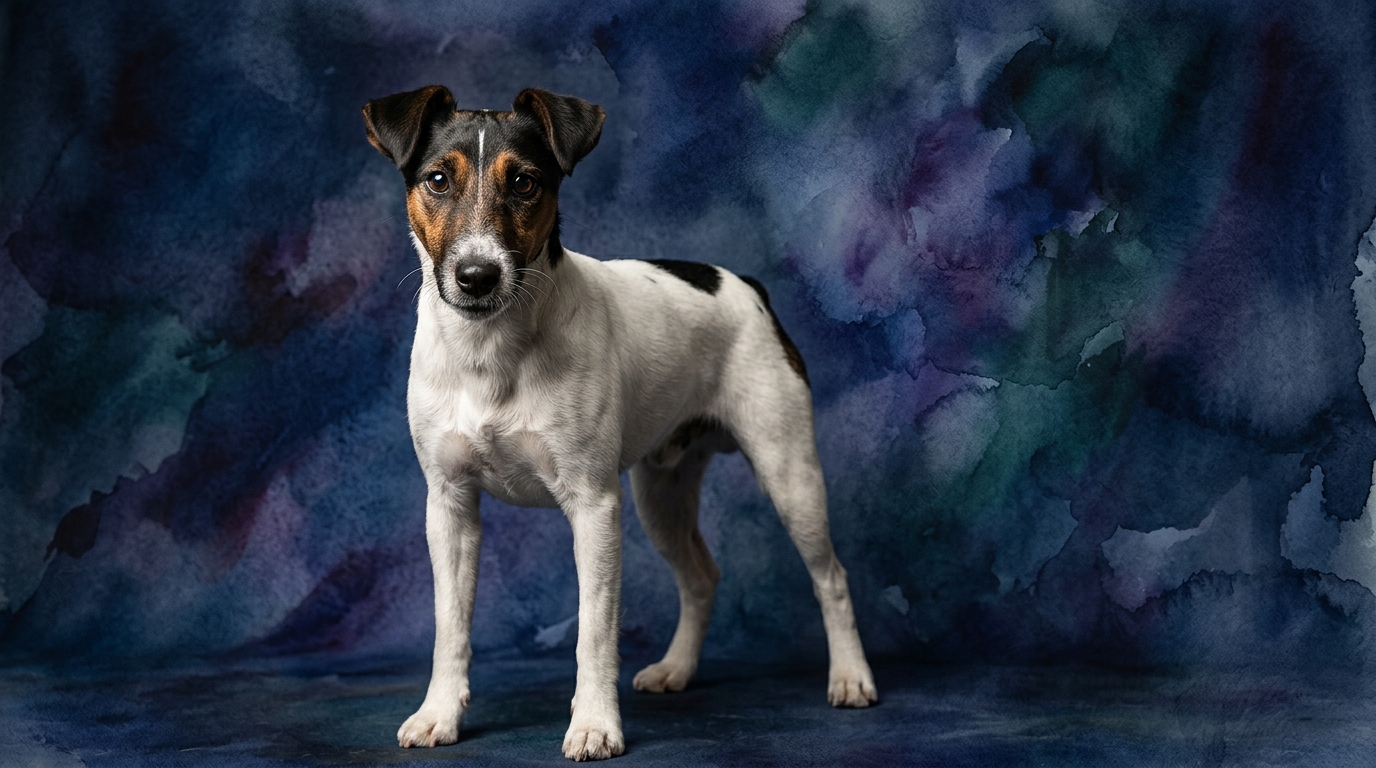
Side-by-Side IQ Profile: Unpacking the 3/5
At The Cosmic Pet Pet IQ Lab, we delve beyond surface scores to understand the unique cognitive landscapes of each breed. For both the Rat Terrier and the Smooth Fox Terrier, their identical 3/5 ratings across all five intelligence dimensions suggest a foundational level of canine acumen, yet their specific expressions of these traits diverge subtly. Let's unpack what a 3/5 means for each breed in practice.
For Problem Solving (3/5), both terriers demonstrate an ability to navigate moderate challenges and learn from experience. The Rat Terrier often applies this to their immediate domestic environment, quickly figuring out how to access a favorite toy or optimizing home comfort. The Smooth Fox Terrier, conversely, might direct their 3/5 problem-solving acumen towards more outdoor-oriented or physical puzzles, like maneuvering through dense underbrush or 'outwitting' a squeaky toy with sustained effort and ingenuity.
Regarding Training Speed (3/5), both breeds are capable of learning new commands and routines at a moderate pace. A Rat Terrier, with their strong desire to interact and please their family, often responds well to positive reinforcement-based training emphasizing cooperation and praise, picking up basic obedience relatively smoothly. The Smooth Fox Terrier also learns effectively, but their inherent independence means training might require more consistent engagement and varied methods to maintain their interest, demanding stimulating and rewarding processes to capture their attention.
In Social Intelligence (3/5), both breeds are alert and responsive to their human companions and surroundings. The Rat Terrier often exhibits a keen sensitivity to the emotional states of their primary caregivers, picking up on subtle cues and adjusting their behavior empathetically. The Smooth Fox Terrier, while equally attentive, might express their 3/5 social intelligence through a more boisterous and interactive engagement style, quickly understanding intentions during play or cooperative tasks with a bright, curious demeanor.
Their Instinctive Drive (3/5) is a prominent feature for both terriers, reflecting their heritage. For the Rat Terrier, this 3/5 drive is often channeled into vigilant territory monitoring, reacting to unfamiliar sounds or sights, and a persistent interest in small, scurrying creatures. The Smooth Fox Terrier's 3/5 instinctive drive is typically expressed with a more pronounced and enduring intensity, particularly concerning scent and prey, leading to singular focus on tracking or persistent digging.
Finally, for Memory (3/5), both breeds demonstrate good retention of learned commands, routines, and experiences. A Rat Terrier's 3/5 memory allows them to quickly recall past training sessions, remember the daily schedule, and recognize familiar faces, contributing to their adaptability. The Smooth Fox Terrier's 3/5 memory is equally robust, enabling them to remember complex game sequences, specific hiding spots for toys, and interesting smells encountered on previous walks, supporting their adventurous spirit.
Where the Rat Terrier Wins Cognitively
While their core IQ scores are identical, the Rat Terrier often shines in cognitive areas related to domestic harmony and emotional attunement. Their 3/5 social intelligence frequently manifests as a deeper, more nuanced understanding of family dynamics, allowing them to anticipate needs or respond empathetically to a family member's mood. This makes them particularly adept at forming strong, communicative bonds within a household. Furthermore, their problem-solving (3/5) often leans towards practical, home-centric solutions, like manipulating objects or quickly learning complex household routines, demonstrating an adaptive intelligence geared towards integrating smoothly into human life.
Where the Smooth Fox Terrier Wins Cognitively
Conversely, the Smooth Fox Terrier's cognitive strengths often lie in their spirited independence and environmental engagement. Their 3/5 instinctive drive is a powerful asset, leading to exceptional focus and tenacity when presented with tasks engaging their natural terrier instincts, such as tracking or agility. This drive fuels their problem-solving (3/5) in outdoor or structured 'work' scenarios, where they exhibit ingenuity in overcoming physical obstacles or figuring out complex routes. While their training speed is also 3/5, their cognitive advantage often comes from sheer enthusiasm and resilience, thriving on varied and stimulating training that caters to their adventurous spirit.
Which is Easier to Train and Why
Determining which breed is 'easier' to train, given their identical 3/5 training speed, requires looking at underlying motivations and personality traits. The Rat Terrier, with strong social intelligence (3/5) and a desire to be part of the family unit, often appears more amenable to training for a novice owner. They are highly motivated by praise and the opportunity for close interaction, responding well to positive reinforcement for basic obedience and house manners, driven by a wish to please and maintain harmony.
The Smooth Fox Terrier, while equally capable of learning, presents a different training dynamic. Their robust instinctive drive (3/5) and independent streak mean training must be consistently engaging, varied, and often more rigorous to capture and hold their attention. They learn quickly but can be prone to boredom or distraction if the training isn't stimulating enough. For intuitive, cooperative basic obedience, the Rat Terrier might be perceived as marginally 'easier,' whereas the Smooth Fox Terrier often thrives under a more experienced handler who enjoys working with a tenacious and clever terrier.
Which Suits Active vs. Relaxed Owners
Both the Rat Terrier and the Smooth Fox Terrier are active breeds, and neither is truly suited for genuinely 'relaxed' owners who prefer minimal engagement. However, the type of activity they thrive on differs considerably.
The Smooth Fox Terrier is an ideal match for highly active owners who are prepared for consistent, structured physical and mental engagement. Their potent 3/5 instinctive drive and problem-solving skills make them excel in dog sports like agility, earthdog trials, or competitive obedience. They thrive on long, adventurous hikes, vigorous games, and activities that allow them to explore and utilize their keen senses. Owners who dedicate significant time to training for specific tasks and provide robust daily outlets for their terrier's boundless energy will find a wonderful partner.
The Rat Terrier, while equally energetic, can be a better fit for active owners who also appreciate a strong family bond and adaptability. Their 3/5 social intelligence means they enjoy being central to family activities, whether it’s a brisk walk around the neighborhood, a game in the yard, or simply cuddling on the couch after exercise. They need daily physical activity, but their cognitive profile suggests they are often more content with varied daily routines that include quality time with their humans, rather than requiring a constant 'job' or competitive outlet. Owners who enjoy daily walks, interactive play, and a dog that settles indoors after appropriate exercise, offering a balanced blend of activity and companionship, will find the Rat Terrier a rewarding choice.
The Verdict
Select a Rat Terrier if you're seeking an adaptable, emotionally responsive companion who thrives on close family interaction and consistent, positive training within a home environment. They are excellent for owners who appreciate a dog that integrates smoothly into daily life, offering both energy for play and a desire for affectionate companionship.
Opt for a Smooth Fox Terrier if you are an experienced, highly active owner prepared to channel their spirited independence and strong instinctive drive into structured activities like dog sports, extensive outdoor exploration, and consistent, engaging training. They excel with handlers who can provide ample mental and physical challenges, embracing their tenacious and clever nature.
🧠 Find Your Pet's IQ Score
Our Pet IQ Lab assessment covers 25+ tests across 5 cognitive dimensions — personalized to your breed.
Take the Full IQ Test →Frequently Asked Questions
Do Rat Terriers and Smooth Fox Terriers differ in their adaptability to new environments?
While both breeds possess moderate problem-solving skills, Rat Terriers often display a slightly more adaptable nature, settling into new routines and surroundings with less initial stress due to their close family bonds. Smooth Fox Terriers, with their independent spirit, might take a bit longer to fully embrace new situations, preferring to explore and assess on their own terms.
How does their memory score of 3/5 impact their house-training or recall?
A 3/5 memory score indicates both breeds can reliably recall learned commands and routines. Rat Terriers might excel in remembering household boundaries and schedules, while Smooth Fox Terriers can retain complex sequences for games or training, provided the learning was engaging and consistent. Both benefit from positive reinforcement and clear communication to solidify memory.
Are these breeds suitable for apartment living given their instinctive drive?
Both breeds can adapt to apartment living if their significant exercise and mental stimulation needs are consistently met. Their 3/5 instinctive drive means they require outlets for their natural desires to chase and explore. Owners must commit to daily vigorous walks, playtime, and engaging activities to prevent boredom and potential destructive behaviors in smaller spaces.