
Side-by-Side Cognitive Profiles: The Nuance of a Shared Score
The Cosmic Pet Pet IQ Lab assesses canine intelligence across five critical dimensions: problem solving, training speed, social intelligence, instinctive drive, and memory. Intriguingly, both the Redbone Coonhound and the American Eskimo Dog register a consistent 3/5 across all categories. This numerical parity, however, belies the profound differences in how these cognitive abilities are expressed and applied by each breed, deeply influenced by their ancestral roles.
For the **Redbone Coonhound**, a 3/5 in problem solving isn't about solving complex logic puzzles indoors, but rather about their resourcefulness in the field—deciphering intricate scent trails, navigating challenging terrain, and bypassing obstacles to pursue quarry. Their training speed, also 3/5, indicates a capacity to learn, but this is often tempered by their powerful independent thought and scent-driven focus, requiring patient and consistent methods. A social intelligence score of 3/5 means they form strong bonds and can read familiar human cues, though their attention may frequently be diverted by environmental stimuli. Their 3/5 instinctive drive is a significant, guiding force, centered almost entirely on tracking and baying, which informs their actions and motivations. Lastly, a 3/5 memory reflects their excellent recall for scents, learned hunting techniques, and established routes.
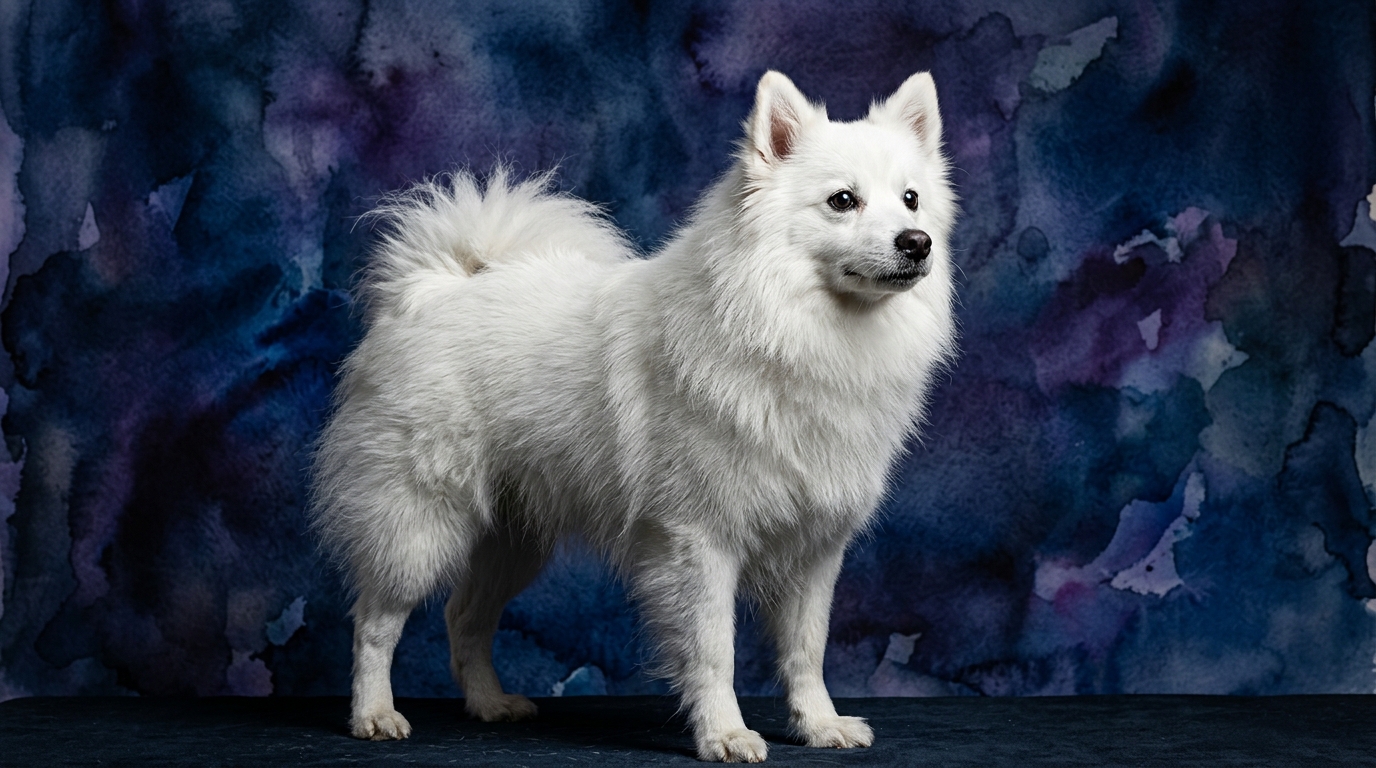
The **American Eskimo Dog**, also scoring 3/5 across the board, interprets these same cognitive dimensions through a very different lens. Their problem-solving aptitude (3/5) often shines in domestic settings, figuring out how to gain attention, manipulate interactive toys, or master new tricks for rewards. Training speed at 3/5 for an Eskie signifies their eagerness to learn and participate, often responding well to positive reinforcement and enjoying the mental stimulation of new commands. Their social intelligence (3/5) is highly attuned to human emotions and intentions, thriving on companionship and interaction, making them excellent communicators within their family unit. The 3/5 instinctive drive for an Eskie manifests as a strong desire for companionship, alertness, and performing, rather than primal hunting. Finally, their 3/5 memory is evident in their ability to recall routines, commands, and complex sequences of tricks or agility courses with precision.
Where the Redbone Coonhound Cognitively Excels
Despite sharing identical IQ scores, the Redbone Coonhound's cognitive strengths are uniquely tailored to its heritage. Its problem-solving ability, though rated 3/5, demonstrates a specific brilliance in scent-driven scenarios, such as meticulously following faint trails over varied and challenging landscapes, often for extended periods without direct human intervention. This sustained focus on a singular sensory input, coupled with their physical endurance, is a profound cognitive advantage where the Redbone truly shines.
Furthermore, their independent decision-making in the field, a manifestation of their instinctive drive and problem-solving, allows them to make autonomous choices in pursuit of a scent, a crucial trait for a working hound. This ability to interpret environmental cues and adapt their strategy on the fly, without constant human direction, is a highly specialized form of intelligence that distinguishes them.
Where the American Eskimo Dog Cognitively Excels
The American Eskimo Dog's identical 3/5 cognitive scores translate into a distinct set of strengths, particularly within a domestic and interactive context. Their social intelligence, also rated 3/5, is geared towards understanding and responding to human companions, making them exceptionally attuned to subtle cues and desires. This responsiveness makes them highly adaptable to varied domestic tasks, excelling in activities like obedience, agility, and trick training, which require a keen understanding of human direction and a desire to engage.
Their problem-solving aptitude, while numerically equivalent to the Redbone's, is applied to navigating social situations or manipulating objects to achieve desired outcomes, such as getting attention or accessing a favorite toy. Additionally, their often-expressive vocal communication, using barks and 'talk' to convey needs and wants, highlights a strong social-cognitive link, making them engaging and communicative companions.
Training Dynamics: Which Breed is Easier and Why
When considering ease of training, the identical 3/5 training speed scores for both breeds require a deeper look at their underlying motivations and other cognitive dimensions. The Redbone Coonhound, while capable of learning, often presents a unique challenge due to its powerful 3/5 instinctive drive for scent work. This strong drive means that when a compelling scent is present, their focus can become singular, making them less compliant and potentially 'deaf' to commands. Training a Redbone requires immense patience, consistency, and highly motivating rewards that can compete with the allure of a trail; recall, in particular, demands dedicated effort to overcome their natural inclination to follow their nose. Their problem-solving is often directed towards their own goals (the chase), not necessarily aligning with human directives.
Conversely, the American Eskimo Dog, with its 3/5 training speed, generally proves easier for most owners to train. Their 3/5 social intelligence and inherent desire for interaction make them more attentive to their handler and eager to please in a structured environment. Eskies often enjoy the mental stimulation that training provides, excelling in obedience and trick training where they can engage with their human companions and receive positive feedback. Their problem-solving skills are frequently applied to understanding what their human wants, making them highly responsive to clear communication and consistent reinforcement.
Matching Breeds to Lifestyles: Active vs. Relaxed Owners
The cognitive profiles of these two breeds dictate vastly different needs when it comes to owner lifestyles. The Redbone Coonhound is unequivocally suited for active owners. Their robust 3/5 instinctive drive, coupled with their problem-solving and memory skills honed for tracking, demands significant physical exercise and mental engagement focused on scent work. Owners must provide ample opportunities for long, explorative walks where their nose can lead, or participate in scent-specific activities like tracking trials. A more relaxed owner who cannot channel this profound physical and cognitive energy will likely find themselves with a frustrated and potentially destructive or vocal dog.
The American Eskimo Dog, while not requiring the same endurance-level activity as the Redbone, also needs an active, but perhaps more interactive, owner. Their 3/5 social intelligence and problem-solving abilities thrive on regular mental and physical stimulation that involves their human family. This includes daily walks, interactive play sessions, agility, or trick training. An Eskie will not be content to simply lounge; they need to be involved and engaged. Therefore, they suit moderately active owners who enjoy interactive engagement and family participation, rather than just long, solitary treks. A truly 'relaxed' owner who neglects their need for mental and social stimulation might find their Eskie becoming bored, leading to excessive barking or other undesirable behaviors.
The Verdict
Choose the Redbone Coonhound if you are an experienced owner seeking a dedicated, independent working partner for scent-driven activities, who appreciates a dog whose intellect is deeply rooted in the primal art of the chase.
Opt for the American Eskimo Dog if you desire a responsive, engaged companion who thrives on interactive learning and family involvement, and whose cognitive strengths shine in domestic settings and trick training.
🧠 Find Your Pet's IQ Score
Our Pet IQ Lab assessment covers 25+ tests across 5 cognitive dimensions — personalized to your breed.
Take the Full IQ Test →Frequently Asked Questions
Do identical IQ scores mean these breeds are equally easy to live with?
No, identical IQ scores of 3/5 for both breeds mean they possess similar baseline cognitive capabilities, but their application and motivation differ significantly. The Redbone Coonhound's intellect is heavily influenced by its strong scent drive, while the American Eskimo Dog's cognitive strengths are often directed towards human interaction and domestic problem-solving, leading to distinct ownership experiences.
Can a Redbone Coonhound be trained for agility like an American Eskimo Dog?
While a Redbone Coonhound can certainly learn agility, their primary motivation often lies in scent work, which might make sustained focus on agility courses more challenging than for an American Eskimo Dog. Eskies typically enjoy agility due to their social intelligence and desire for interactive engagement, aligning well with the sport's demands.
How does 'instinctive drive' at 3/5 differ between these two breeds?
For the Redbone Coonhound, a 3/5 instinctive drive signifies a powerful, almost singular focus on tracking and hunting, guiding much of its problem-solving and memory. For the American Eskimo Dog, a 3/5 drive manifests as a strong desire for companionship, alertness, and performing, shaping its social intelligence and responsiveness to human interaction rather than pursuit.