The Cosmic Pet Pet IQ Lab: Side-by-Side Cognitive Profiles
The Cosmic Pet Pet IQ Lab assesses canine intelligence across five critical dimensions: Problem Solving, Training Speed, Social Intelligence, Instinctive Drive, and Memory. For both the Redbone Coonhound and the Otterhound, our current evaluations place them at a consistent 3 out of 5 across all these categories. This identical numerical score, however, belies the intriguing differences in how these breeds manifest their cognitive abilities in real-world scenarios, deeply influenced by their historical roles and physical traits.
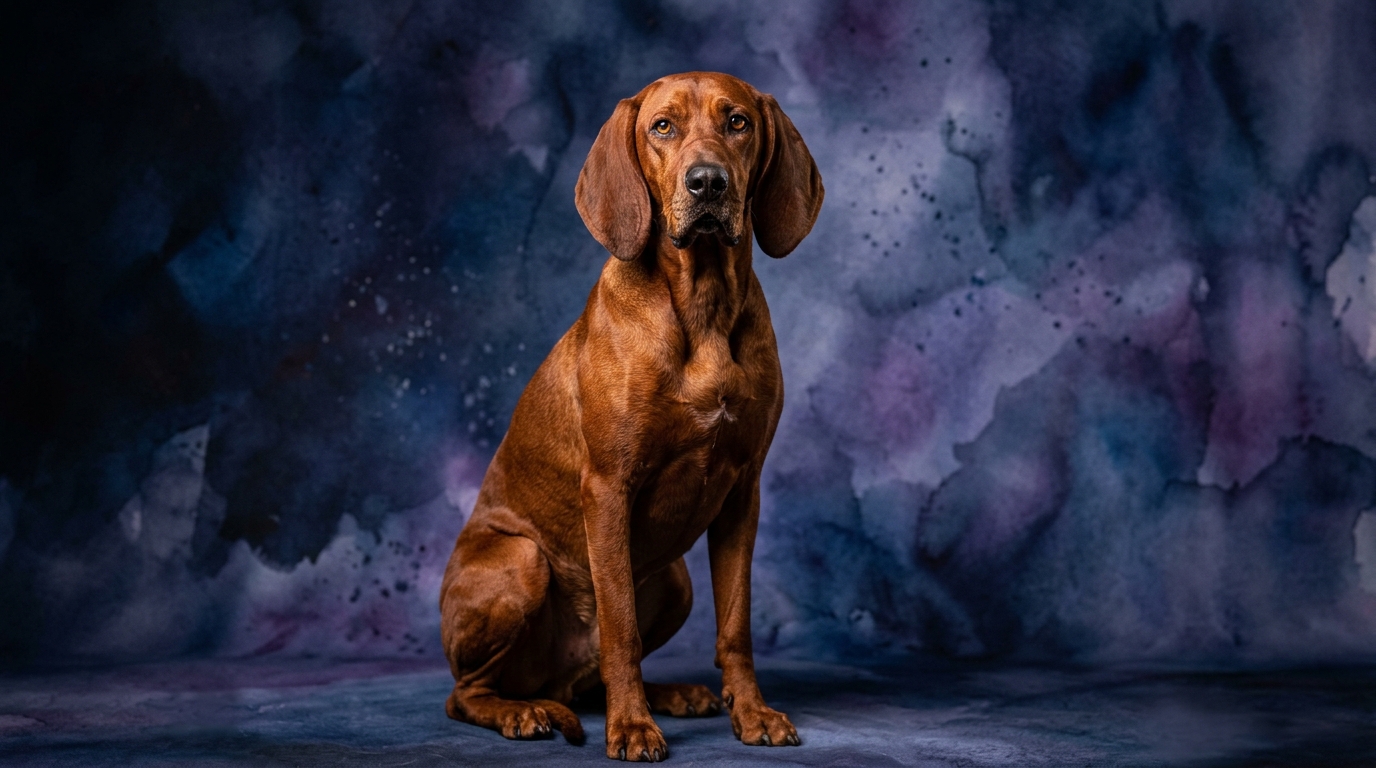
Redbone Coonhound: A Scent-Driven Strategist
The Redbone Coonhound, a breed celebrated for its prowess in trailing raccoons and other game, exhibits a Problem Solving score of 3/5 that is highly specialized. Their intelligence shines in sequential, outdoor challenges—deciphering complex scent trails, navigating varied terrain, and devising routes to locate quarry. This isn't abstract problem-solving with puzzle toys, but rather a practical, methodical approach to a sensory task. Their Training Speed, also at 3/5, reflects an ability to learn commands with consistent, positive reinforcement, though their powerful instinctive drive to track can make them appear selectively deaf when a compelling scent presents itself. Patience and understanding of their hound motivation are paramount.
Social Intelligence in the Redbone, rated 3/5, typically translates to an amiable, good-natured disposition within their human 'pack.' They are adept at forming strong bonds and can read human emotions, though their primary focus might shift to olfactory input in busy social settings. Their Instinctive Drive, a robust 3/5, is almost entirely dedicated to scent work, manifesting as an unwavering focus on a trail, accompanied by their characteristic baying. Finally, their Memory, also 3/5, is exceptional for retaining scent patterns, locations of past finds, and familiar routines, anchoring their recall to practical, sensory-rich experiences rather than abstract sequences.
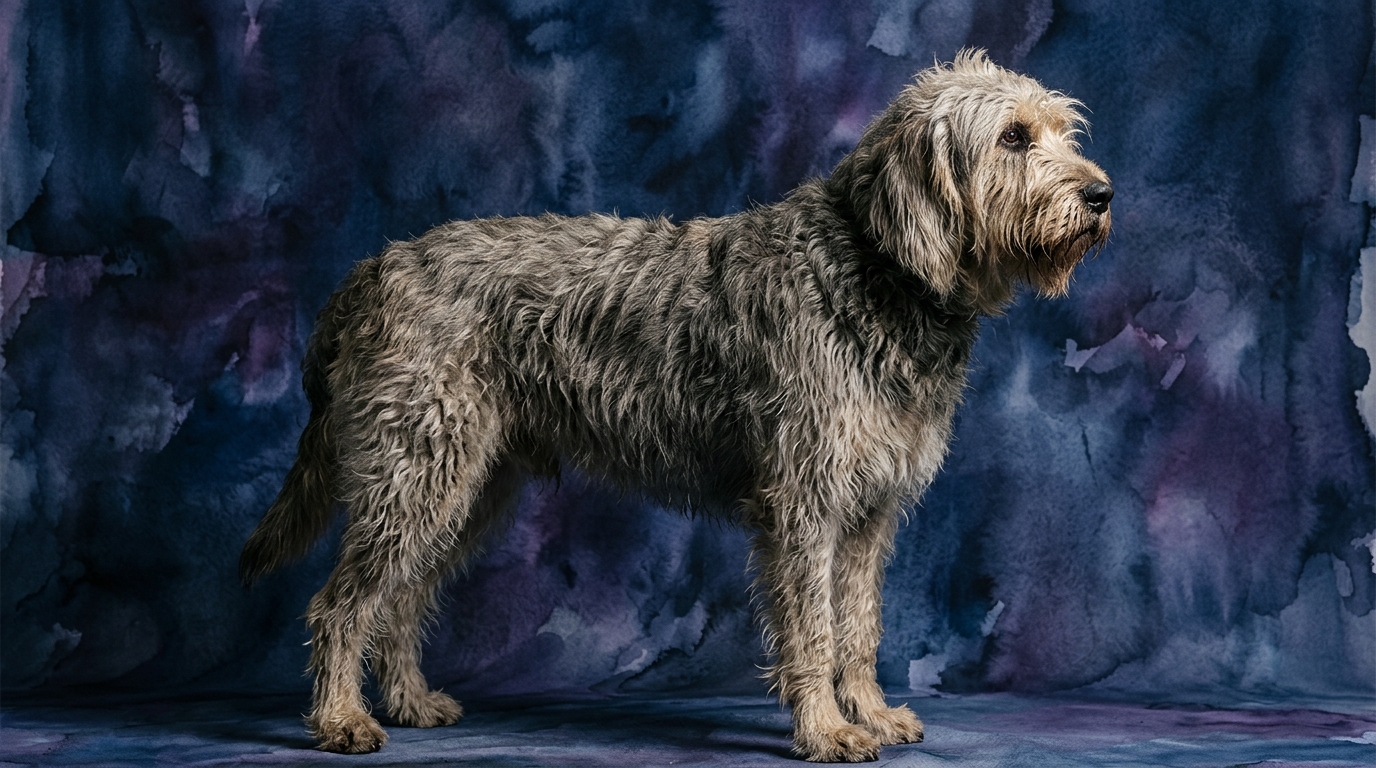
Otterhound: The Resilient Aquatic Explorer
The Otterhound, historically bred for hunting otter, demonstrates a Problem Solving score of 3/5 characterized by persistence and robust determination, especially in and around water. They excel at figuring out physical obstacles in their path to a scent or prey, such as navigating around dense undergrowth or finding the shallowest point to cross a stream. However, they may not be the quickest to grasp complex, multi-step commands that lack direct, tangible rewards. Their Training Speed, also 3/5, can be a test of patience. While capable of learning, their independent nature and strong nose often lead them to prioritize their own investigations over human directives, requiring consistent, engaging, and reward-based methods.
With a Social Intelligence score of 3/5, Otterhounds are generally boisterous, friendly, and outgoing, thriving on interaction with their family. They integrate well into a household and offer expressive affection, though their enthusiasm can sometimes make them oblivious to subtle social cues, particularly when engrossed in a stimulating scent or activity. Their Instinctive Drive, a powerful 3/5, is marked by an exceptional nose, a deep love for water, and webbed feet designed for aquatic pursuit. This drive is persistent and can lead to single-minded focus when on a trail. Their Memory, also 3/5, is strong for familiar people, places, and especially rewarding experiences like a successful swim or a particularly interesting scent. They recall routines and anticipate events effectively, with their memory often being context-dependent and practically oriented.
Where Redbone Coonhound's Cognition Shines
The Redbone Coonhound’s cognitive strengths are most apparent in their unwavering focus on a scent trail. Their 3/5 Problem Solving and Memory scores combine to create a highly effective tracking machine, capable of piecing together fragmented scent information over long distances and varied conditions. They possess a sequential reasoning ability tied directly to their olfactory senses, allowing them to 'read' a landscape through scent. This makes them particularly adept at tasks requiring sustained concentration on a singular, sensory-driven objective, outperforming the Otterhound in pure land-based tracking endurance.
Furthermore, their Training Speed, while not lightning-fast, benefits from their generally more biddable nature compared to the Otterhound. A Redbone, once motivated by the prospect of a 'job' or a reward, often displays a more direct willingness to engage in structured learning, provided the distractions of the outside world are managed. Their social intelligence often makes them eager to please their handler, which can be an advantage in early obedience training over the more independent Otterhound.
Where Otterhound's Cognition Excels
The Otterhound’s cognitive prowess lies in their tenacious problem-solving and adaptability, particularly in challenging environments involving water. Their 3/5 Problem Solving score translates into a robust, determined approach to overcoming physical obstacles, making them resilient in complex outdoor settings. They are less likely to be deterred by difficult terrain or water barriers, often finding creative, albeit sometimes stubborn, ways to achieve their objective. This makes them exceptional companions for rugged outdoor adventures where persistence is key.
Their Instinctive Drive, coupled with their physical attributes, gives them a unique edge in tasks requiring both scent work and aquatic navigation. While both breeds have strong drives, the Otterhound’s specialized aquatic drive means their memory and problem-solving are exceptionally tuned to water-based challenges. They remember water sources, successful crossings, and interesting aquatic scents with remarkable clarity, making them more suited to activities like scent work near rivers, lakes, or even robust dock diving than their Redbone counterparts.
Training: Biddability Versus Independence
When it comes to training, the subtle differences in their 3/5 Training Speed and Social Intelligence scores become apparent. The Redbone Coonhound, while still a hound with a strong nose, often exhibits a slightly higher degree of biddability. They tend to form strong bonds with their primary handler and, when motivated by praise, food, or the opportunity for a 'job,' can be quite responsive to consistent training. Their social intelligence helps them understand and want to please, making them generally easier to guide through basic obedience and scent work once their focus is secured.
The Otterhound, conversely, often presents a greater training challenge due to their pronounced independence and sometimes stubborn streak. Their 3/5 Training Speed requires immense patience and creativity. Their instinctive drive to follow a scent, coupled with their love for water, can easily override commands. A trainer must be prepared for selective deafness and employ highly engaging, reward-rich methods, often incorporating play and water activities to maintain their interest. While intelligent, their willfulness means consistency and finding their specific motivators are crucial to success.
Lifestyle Match: Active Explorers vs. Robust Adventurers
For owners seeking an active companion, both breeds deliver, but in different forms. The Redbone Coonhound is ideal for owners who enjoy long, sustained outdoor activities focused on scent work, hiking, or field trials. Their endurance and focus on a trail demand an owner who can provide consistent opportunities for their nose to engage. They thrive on having a 'purpose' related to tracking and benefit from owners who understand and can channel this innate drive into productive outlets.
The Otterhound suits owners who are robust adventurers, particularly those who love water activities. Their boundless energy and love for swimming make them perfect partners for exploring lakes, rivers, or even just robust play in a large, fenced yard with a pool. While they also enjoy scent work, their unique physical traits and stubbornness mean they need an owner who is patient, consistent, and willing to embrace their boisterous, independent nature, even if it means getting muddy or wet frequently. They are often less suited for a 'relaxed' owner purely because of their energy and self-directed curiosity.
The Verdict
Choose the Redbone Coonhound if you seek a dedicated, amiable scent hound for sustained land-based tracking, hiking, and a slightly more biddable training experience, provided you can satisfy their deep olfactory drive.
Opt for the Otterhound if you desire a boisterous, tenacious, and independent companion who thrives in and around water, enjoys rugged adventures, and you are prepared for a patient, creative training journey with a dog that follows its nose first.
🧠 Find Your Pet's IQ Score
Our Pet IQ Lab assessment covers 25+ tests across 5 cognitive dimensions — personalized to your breed.
Take the Full IQ Test →Frequently Asked Questions
Are Redbone Coonhounds and Otterhounds good with children?
Both breeds generally possess good social intelligence (3/5) and can be excellent family dogs. Redbones are typically gentle and patient, while Otterhounds are friendly and boisterous, often enjoying active play with children. Supervision is always recommended due to their size and enthusiasm.
Do these breeds require a lot of exercise?
Yes, both Redbone Coonhounds and Otterhounds have strong instinctive drives (3/5) and were bred for active work, so they require substantial daily exercise. Redbones need opportunities for long walks and scent work, while Otterhounds thrive on vigorous play, swimming, and exploring.
Which breed is better for apartment living?
Neither breed is ideally suited for apartment living due to their size, energy levels, and vocalizations (especially Redbones baying). Both thrive in homes with large, securely fenced yards where they can explore, play, and engage their strong instinctive drives.