
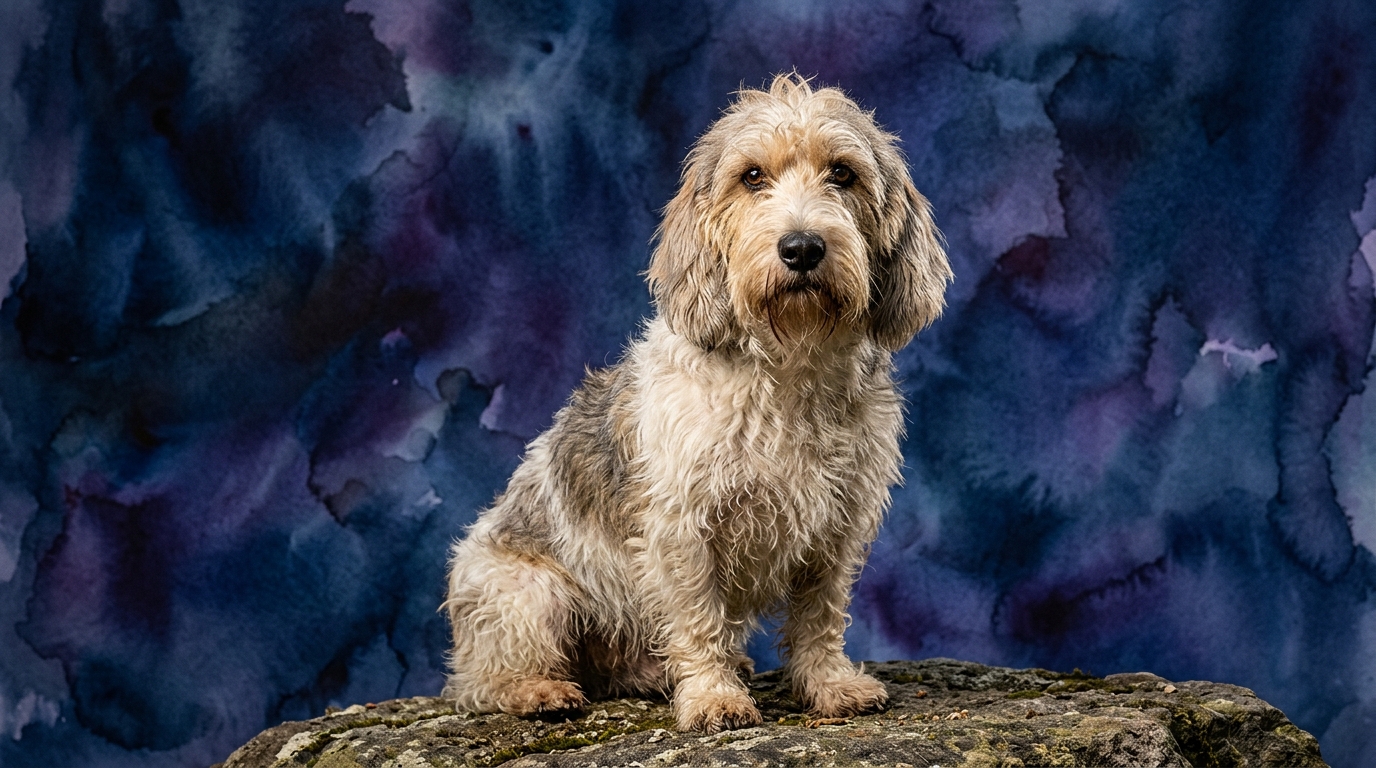
Side-by-Side IQ Profile: Hound Cognition Decoded
At The Cosmic Pet Pet IQ Lab, both the Redbone Coonhound and the Petit Basset Griffon Vendéen (PBGV) register a consistent 3/5 across all five cognitive dimensions. This shared score might suggest identical minds, but in reality, it highlights how their inherent breed traits uniquely manifest within each category. Let's unpack what a '3/5' truly signifies for each distinct hound.
For the Redbone Coonhound, Problem Solving (3/5) is expressed through their methodical, unwavering ability to track complex scent trails over varied terrain and extended periods, demonstrating a deep, practical deduction rather than abstract puzzle-solving. Their Training Speed (3/5) reflects their capacity to learn commands, but often with an independent streak where their nose can easily override immediate obedience, requiring persistent, engaging methods. Social Intelligence (3/5) means they understand pack dynamics and handler cues, displaying loyalty to their family, yet can become singularly focused on a task, appearing less attuned to subtle human emotions during work. Their Instinctive Drive (3/5) is profoundly high, centered on tracking and treeing, defining much of their cognitive energy. Finally, Memory (3/5) is robust for retaining intricate scent patterns, geographical routes, and learned commands, particularly those tied to their hunting purpose.
The Petit Basset Griffon Vendéen's Problem Solving (3/5) manifests as a resourceful agility in navigating dense undergrowth to flush small game, often requiring creative solutions to physical barriers rather than complex logical sequences. Their Training Speed (3/5) indicates they learn, but their cheerful independence and susceptibility to scent distractions mean training must be fun, varied, and patient to hold their attention. Social Intelligence (3/5) is a core strength, showing in their ability to engage effectively within a canine pack and with human families, often employing a charming, playful persistence to achieve their goals. Their Instinctive Drive (3/5) is strong, directed at small game, accompanied by their characteristic vocalizations. Their Memory (3/5) is good for retaining commands and routines, especially when associated with positive reinforcement and social interaction, and for remembering people and places.
Where the Redbone Coonhound Wins Cognitively
While both breeds share a 3/5 in problem-solving, the Redbone Coonhound's cognitive victories lie in its profound capacity for sustained, independent deductive reasoning over vast distances and durations. Their mental fortitude allows them to untangle complex, aged scent trails, often alone, requiring immense focus and an unwavering commitment to a single objective, a testament to their specialized hunting lineage. This isn't about quick solutions, but about relentless, cerebral persistence in a highly demanding, real-world scenario.
Furthermore, their memory, also rated 3/5, shines in retaining intricate scent patterns and geographical layouts across changing conditions, allowing them to retrace or predict movements with remarkable precision. This depth of practical, navigational memory for a specific, demanding task—the pursuit of quarry—is a distinct cognitive advantage, enabling them to operate effectively and autonomously in challenging environments where other breeds might falter.
Where the Petit Basset Griffon Vendéen Wins Cognitively
The PBGV's cognitive edge, despite identical scores, often manifests in its adaptability and social cleverness within a pack and family context. Their problem-solving, while also 3/5, leans towards resourceful agility in navigating dense, unpredictable undergrowth and flushing game collaboratively, demonstrating an ability to quickly assess and adapt to immediate environmental challenges. This involves a lively, tactical decision-making process in close quarters, distinct from the Redbone's long-haul deduction.
Their social intelligence, also a 3/5, is expressed through a nuanced ability to engage with both canine pack mates and human companions, often employing a charming, playful persistence to get their way or solicit attention. This social acumen, coupled with a memory for positive interactions and routines, allows them to integrate seamlessly into diverse home environments, making them adept at navigating complex social dynamics within a family unit more readily than a singularly task-focused hound.
Which is Easier to Train and Why?
Neither breed is inherently 'easy' in the conventional sense, both scoring a 3/5 in training speed, but their challenges stem from different aspects of their hound nature. The Redbone Coonhound's profound independence and powerful, singular focus on scent can make recall a formidable task if they're on a trail. Their training requires immense consistency, patience, and establishing clear leadership, ensuring commands are more compelling than the call of the wild. They learn, but their internal motivation often prioritizes their nose, meaning 'speed' of learning can be overshadowed by the strength of their instinctive drive.
Conversely, the Petit Basset Griffon Vendéen, while eager to please in bursts, is easily distracted by novel smells and possesses a charming, yet determined, stubborn streak. Their training benefits from short, engaging sessions, positive reinforcement, and a playful approach, as they can quickly lose interest in repetitive drills. The PBGV's social intelligence might make them more inclined to 'negotiate' rather than simply obey, demanding a trainer who understands their spirited nature and can make learning an exciting game, rather than a chore.
Which Suits Active Owners vs. Relaxed Owners?
For truly active owners, the Redbone Coonhound presents a compelling partner. Their innate endurance and drive demand extensive physical activity, ideally involving scent work, long hikes, or even running. They thrive when given a 'job' that engages their powerful nose and tireless body, making them a fantastic fit for individuals who enjoy wilderness exploration, canine sports like tracking, or extended outdoor adventures. Their cognitive and physical needs align with a lifestyle that embraces sustained, vigorous engagement.
Relaxed owners might find the Petit Basset Griffon Vendéen a more suitable companion, provided they still offer consistent daily exercise and mental enrichment. While energetic outdoors and requiring regular walks and opportunities for sniffing, the PBGV is generally more adaptable to indoor living and enjoys cozying up with their family after a good walk and sniffari. Their social nature means they appreciate companionship and can be content with less rigorous, though still essential, activity, fitting well into a home that offers a balance of play and relaxation.
The Verdict
Choose the Redbone Coonhound if you are an experienced, active owner seeking a dedicated, independent working partner for extensive outdoor adventures and scent-based challenges, appreciating their deep focus and endurance.
Opt for the Petit Basset Griffon Vendéen if you desire a spirited, charmingly stubborn companion who thrives on social interaction and varied activities, offering playful energy balanced with a love for family life.
🧠 Find Your Pet's IQ Score
Our Pet IQ Lab assessment covers 25+ tests across 5 cognitive dimensions — personalized to your breed.
Take the Full IQ Test →Frequently Asked Questions
Are Redbone Coonhounds good family pets?
Yes, Redbones are typically loyal and affectionate with their families, often gentle with children when properly socialized. However, their high energy and strong prey drive mean they require consistent training and supervision, especially around smaller pets.
Do PBGVs bark a lot?
Petit Basset Griffon Vendéens are known for their vocal nature, often using their distinct 'happy bark' or baying to express excitement or alert to new scents. While charming to some, this trait requires early training to manage, ensuring they don't become overly boisterous indoors.
How much exercise do these breeds need daily?
Redbone Coonhounds need substantial daily exercise, often an hour or more of vigorous activity like running or extensive walks, ideally with scent work. PBGVs also require daily activity, typically 45-60 minutes of brisk walking or playtime, benefiting from off-leash exploration in secure areas.