
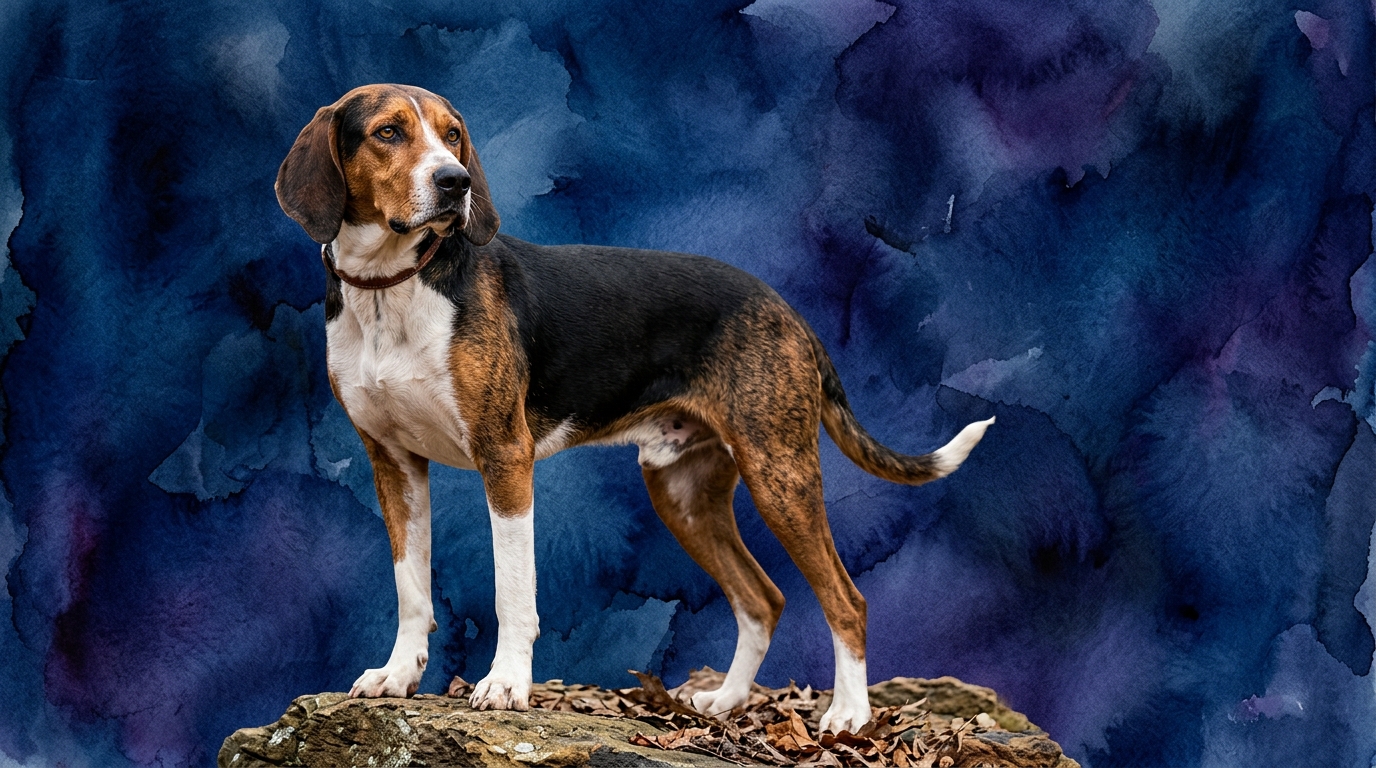
Side-by-Side IQ Profile: Unpacking the 3/5
Despite identical numerical scores across all five dimensions, the Redbone Coonhound and Treeing Walker Coonhound manifest these cognitive abilities in distinct ways, influenced by their breed-specific temperaments and historical roles.
For the Redbone Coonhound (problem Solving 3/5, training Speed 3/5, social Intelligence 3/5, instinctive Drive 3/5, memory 3/5):
Problem Solving (3/5): Redbones approach challenges with methodical persistence, systematically working through complex scent trails with unhurried investigation. This deliberate process to unravel environmental puzzles, particularly hunting-related, minimizes impulsive leaps and maximizes thoroughness.
Training Speed (3/5): Learning for a Redbone is a consistent, steady process, responding well to clear, patient instruction and routine. While not rapid, their acquisition of new skills is solid, with good retention once a concept is understood through repeated practice.
Social Intelligence (3/5): Redbones exhibit calm, attentive social awareness, forming deep bonds with their family. They read familiar human cues with quiet understanding, responding with a gentle demeanor, characterized by an even temperament in interactions.
Instinctive Drive (3/5): Their instinctive drive is profoundly rooted in scent work and game pursuit. This score indicates a strong, unwavering impulse to track and bay, a focused urge that dictates much of their outdoor behavior, capable of overriding other stimuli.
Memory (3/5): Redbones possess reliable memory for established routines, learned commands, and critically, scent patterns. They recall complex scent trails over time and remember locations, contributing significantly to their effectiveness as hunting companions.
For the Treeing Walker Coonhound (problem Solving 3/5, training Speed 3/5, social Intelligence 3/5, instinctive Drive 3/5, memory 3/5):
Problem Solving (3/5): Treeing Walkers tackle problems with energetic, adaptable approaches, involving quicker shifts in strategy for changing scent pictures or obstacles. They demonstrate ingenuity in finding efficient paths, combining speed with calculated adjustments.
Training Speed (3/5): These hounds can quickly grasp new concepts, especially if training is engaging and varied. While capable learners, their keen intelligence and active minds thrive on novelty, potentially becoming bored with excessive repetition, necessitating dynamic, rewarding sessions.
Social Intelligence (3/5): Treeing Walkers show social intelligence through enthusiastic, demonstrative interactions. Generally responsive to human emotions and eager to please, they read social cues with lively perceptiveness, making their family connections spirited and expressive.
Instinctive Drive (3/5): The Treeing Walker's instinctive drive is powerfully centered on the hunt and their hallmark 'treeing' behavior. This score reflects an intense, focused urge to pursue and corner game, often accompanied by distinctive vocalizations, fulfilling their deep-seated hunting purpose.
Memory (3/5): Treeing Walkers exhibit robust memory, particularly for successful hunting strategies, game locations, and effective scent trails. Their recall of past experiences, especially those leading to successful outcomes, is a significant asset in their working roles.
Where the Redbone Coonhound Wins Cognitively
Despite identical numerical scores, the Redbone Coonhound's cognitive strengths often manifest in areas requiring sustained, methodical application. Their problem-solving, while rated 3/5, leans towards a deliberate and unwavering focus, making them particularly adept at intricate, long-duration scent work where patience is paramount. This breed excels when a task demands persistent, systematic effort to unravel a complex sensory puzzle, rather than quick, impulsive decisions. For instance, in following a faint, broken trail, their mental approach encourages a thorough, unhurried investigation of every possible lead, minimizing the risk of overshooting or missing subtle cues. Their memory, also a 3/5, contributes to this by allowing them to meticulously reconstruct and hold a detailed map of a scent's progression over varied terrain and time. This cognitive tenacity means they are less likely to abandon a challenging task out of frustration, instead preferring to work through it with a quiet, determined resolve.
Where the Treeing Walker Coonhound Wins Cognitively
The Treeing Walker Coonhound, with its equally rated 3/5 cognitive dimensions, shines in scenarios demanding agility of thought and a rapid response to changing conditions. Their problem-solving, while numerically the same, often involves a quicker assessment of variables and a more dynamic adjustment to strategy. This makes them particularly effective in fast-paced hunting situations where game might change direction suddenly or terrain presents unexpected obstacles. Their ability to process new sensory input swiftly and make decisive choices allows them to maintain the pursuit with remarkable efficiency. For example, when a scent trail suddenly dissipates or crosses a difficult barrier, a Treeing Walker might quickly scout several options before committing, demonstrating a flexible and adaptive mental approach. Their social intelligence, also 3/5, often presents as a more animated and immediate responsiveness to human cues, allowing for quicker communication and adjustment during collaborative tasks. This breed's cognitive edge lies in its capacity for spirited engagement and its ability to rapidly adapt its mental framework to dynamic, evolving challenges, often displaying a spirited enthusiasm that translates into decisive action.
Training Dynamics: Redbone vs. Treeing Walker
When considering ease of training, both breeds score a 3/5 in training speed, implying they are capable learners but not necessarily instant prodigies. However, their underlying behavioral tendencies create distinct training experiences. The Redbone Coonhound generally brings a calmer, more even-tempered disposition to training sessions. They respond well to consistent, patient repetition and a predictable routine. Their methodical nature means they might take a bit longer to grasp a new concept initially, but once learned, it is deeply ingrained. A Redbone is often more amenable to sustained focus on a single task, making them suitable for a trainer who values steady progress and a calm training environment. Conversely, the Treeing Walker Coonhound, while equally capable of learning, often possesses a higher energy level and a more excitable temperament. They can pick up commands quickly, especially if the training is varied and incorporates their natural drives, but they can also become bored or distracted if sessions are too monotonous or lengthy. Trainers working with a Treeing Walker often find success by keeping sessions short, engaging, and highly rewarding, leveraging their enthusiasm and drive. Therefore, neither is 'easier' in an absolute sense; rather, the 'easier' experience depends heavily on the trainer's style and ability to match the dog's inherent behavioral characteristics.
Owner Suitability: Active vs. Relaxed Lifestyles
The Redbone Coonhound generally presents a more versatile fit for various owner lifestyles, often possessing an 'off switch' indoors after sufficient activity. While they require regular exercise to satisfy their 3/5 instinctive drive, their cognitive profile often allows them to transition into a more relaxed home companion. They can be content with a substantial daily walk, scent games, or a good run, followed by quiet time curled up by their owner. Their steady, calm demeanor, born from their methodical cognitive approach, makes them suitable for owners who appreciate a dog that can settle down and enjoy quiet evenings. In contrast, the Treeing Walker Coonhound typically demands a significantly more active lifestyle to match their spirited cognitive and physical energy. Their dynamic problem-solving and enthusiastic social intelligence translate into a dog that needs constant mental and physical engagement. Owners who are highly active, enjoy running, hiking, or participate in dog sports will find a fulfilling partnership with a Treeing Walker. A relaxed owner might struggle to meet the Treeing Walker's need for stimulation, potentially leading to boredom-driven behaviors. Therefore, active owners will find the Treeing Walker's relentless drive a perfect match, while owners seeking a balanced companion who can also appreciate downtime might lean towards the Redbone.
The Verdict
Choose the Redbone Coonhound if you value a companion with a methodical, persistent cognitive style, capable of calm downtime after adequate exercise, and if you appreciate a steady, patient approach to training.
Opt for the Treeing Walker Coonhound if you thrive on high energy, appreciate a dog with quick adaptability and spirited engagement, and are prepared to provide extensive mental and physical stimulation.
🧠 Find Your Pet's IQ Score
Our Pet IQ Lab assessment covers 25+ tests across 5 cognitive dimensions — personalized to your breed.
Take the Full IQ Test →Frequently Asked Questions
Do Redbone Coonhounds and Treeing Walker Coonhounds learn at the same pace?
While both breeds score 3/5 in training speed, their learning styles differ. Redbones often thrive on consistent, patient repetition, gradually internalizing commands. Treeing Walkers can grasp concepts quickly but require varied, engaging sessions to maintain their focus and prevent boredom.
Which breed is more independent in problem-solving?
Both possess independence in problem-solving due to their strong instinctive drives. Redbones tend to be methodically persistent, working through challenges systematically. Treeing Walkers often exhibit quicker, more adaptable problem-solving, making rapid adjustments to overcome obstacles.
How do their social intelligence scores manifest differently?
Both have a 3/5 social intelligence score, but Redbones typically display a calmer, more even-tempered social awareness, forming deep, quiet bonds. Treeing Walkers often show more enthusiastic and demonstrative social interactions, eagerly engaging with their human companions.