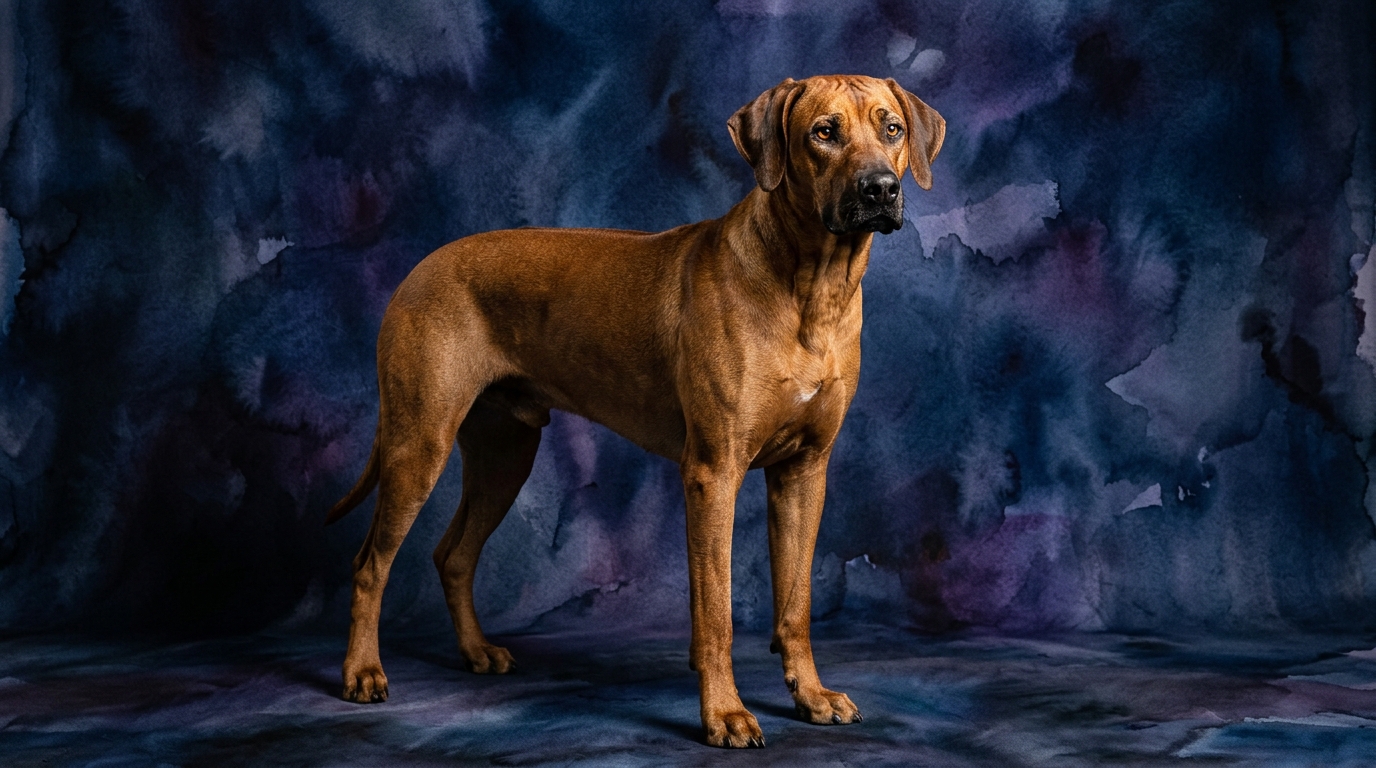
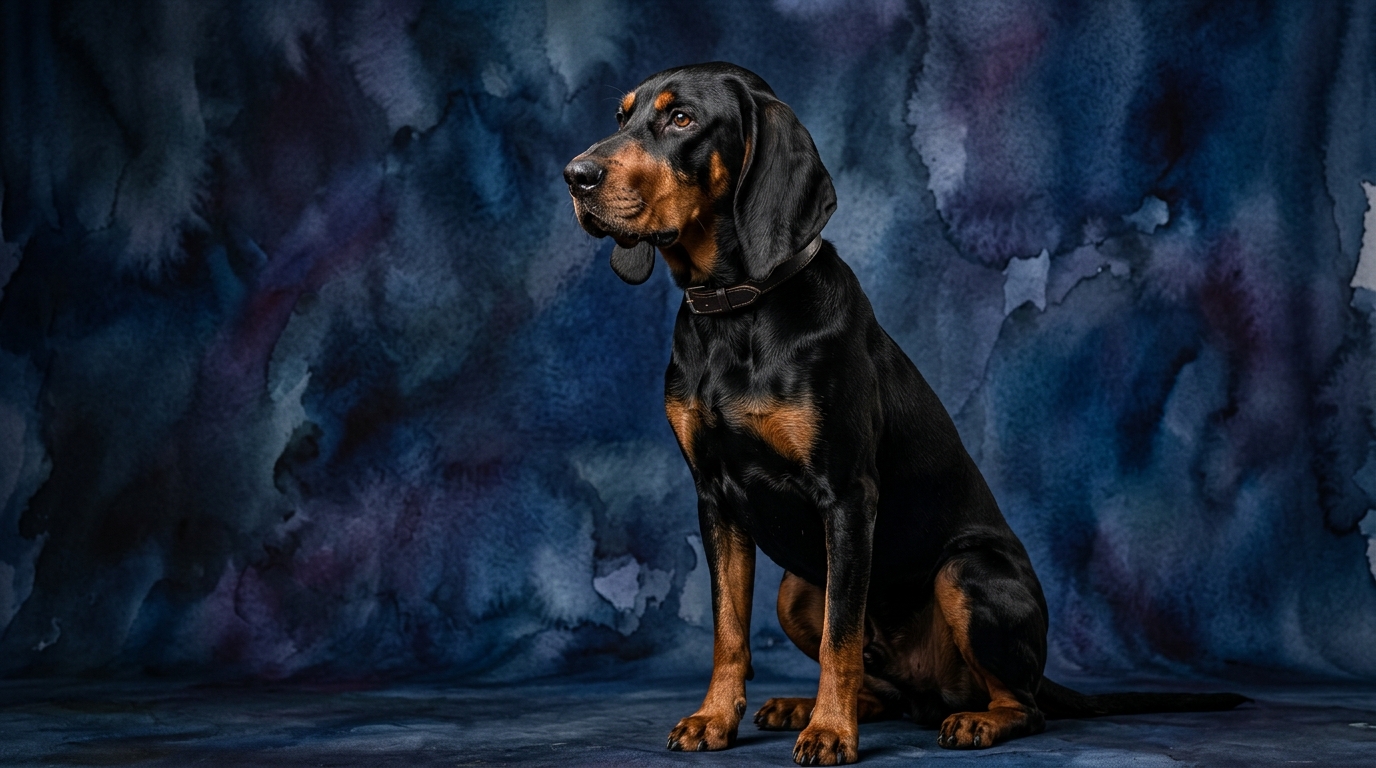
Side-by-Side IQ Profile: Ridgeback vs. Coonhound
The Cosmic Pet Pet IQ Lab assesses canine intelligence across five critical dimensions, providing a granular view of how breeds think and learn. For both the Rhodesian Ridgeback and the Black and Tan Coonhound, our analysis reveals identical scores across these dimensions, yet their application of these cognitive traits varies significantly due to their inherent breed characteristics and historical purposes.
Rhodesian Ridgeback IQ Profile:
Problem Solving (3/5): Demonstrates a moderate capacity for independent strategic thinking, particularly in self-reliant situations where assessing threats or navigating complex environments is key.
Training Speed (3/5): Absorbs new commands and routines at a steady pace, though their inherent independence means consistent, engaging methods are crucial to maintain focus and compliance.
Social Intelligence (3/5): Exhibits a balanced understanding of pack dynamics and human communication, capable of forming strong bonds while often maintaining a dignified reserve with strangers.
Instinctive Drive (3/5): Possesses a well-developed prey drive and protective instincts, stemming from their heritage of tracking and baying large, dangerous game, requiring appropriate outlets.
Memory (3/5): Retains learned behaviors and experiences with moderate recall, making early positive reinforcement effective for long-term habit formation and adherence to routines.
Black and Tan Coonhound IQ Profile:
Problem Solving (3/5): Displays a moderate ability to work through challenges, especially those related to intricate scent discrimination and trail following, where persistence is paramount.
Training Speed (3/5): Learns new tasks at a moderate rate, but their powerful olfactory focus can make distraction a significant factor, demanding patience and creative engagement from trainers.
Social Intelligence (3/5): Shows a moderate understanding of social cues, typically forming deep attachments with their human families and often displaying a more outgoing, amiable nature.
Instinctive Drive (3/5): Characterized by a strong, persistent scent drive, bred for trailing game over long distances, which dictates much of their decision-making and engagement with the environment.
Memory (3/5): Possesses a moderate memory for routes, scent patterns, and learned commands, though their instinct to follow a compelling scent can sometimes overshadow immediate recall for other tasks.
Where the Rhodesian Ridgeback Cognitively Excels
The Rhodesian Ridgeback, with its history of tracking and holding large, dangerous game, often demonstrates a nuanced application of its Problem Solving (3/5) and Instinctive Drive (3/5) in scenarios demanding independent judgment. Their cognitive strength lies in their capacity for self-reliance and strategic thinking when assessing situations and making decisions without constant human direction. This prowess is evident in their adaptability to diverse tasks, from guarding property to navigating complex terrain during a hunt. Their Social Intelligence (3/5) also manifests in a dignified wariness of strangers, a discerning approach that serves their historical role as a protector, clearly distinguishing between familiar and novel social inputs. This discerning nature, coupled with their moderate memory, allows them to build a reliable mental map of their territory and its inhabitants, enhancing their protective vigilance and situational awareness. The Ridgeback’s cognition is geared towards a more comprehensive assessment of their environment, prioritizing self-preservation and protection alongside their hunting drive.
Where the Black and Tan Coonhound Cognitively Excels
The Black and Tan Coonhound's cognitive strengths are deeply rooted in their specialized olfactory abilities and unwavering dedication to a task. Their Problem Solving (3/5) is uniquely channeled into intricate scent discrimination and trail following, where they excel at unraveling complex scent puzzles that would overwhelm many other breeds. This remarkable persistence, driven by an Instinctive Drive (3/5) that is almost singular in its focus on scent, allows them to maintain concentration over extended periods, demonstrating a cognitive stamina crucial for their historical role of trailing game over vast distances. While their Training Speed (3/5) might be influenced by this powerful scent drive, their memory for specific scent patterns and routes is formidable, enabling them to retrace steps or pick up lost trails with remarkable accuracy. Furthermore, their Social Intelligence (3/5) often presents as an open, amiable disposition towards their human family and familiar individuals, allowing them to form deep, trusting bonds that foster cooperation in a working partnership, even if their primary cognitive focus remains the next compelling scent.
Training Dynamics: Which Breed is 'Easier'?
When assessing which breed offers an 'easier' training experience, it's crucial to look beyond the identical Training Speed (3/5) score and consider their inherent behavioral predispositions. The Rhodesian Ridgeback, while capable of learning at a steady pace, often brings a strong independent streak to the training arena. Their Problem Solving (3/5) and Instinctive Drive (3/5) can sometimes translate into a 'what's in it for me?' attitude, requiring patient, consistent, and highly motivating methods. They are not dogs that blindly obey; they think, question, and sometimes challenge. This means an owner needs to be engaging, fair, and establish clear leadership, leveraging the Ridgeback's memory for routines. Distractions are manageable, but their self-assured nature means they won't always defer to commands if a more interesting alternative presents itself, necessitating strong recall training from a young age.
In contrast, the Black and Tan Coonhound's training experience is heavily influenced by their profound scent drive. While their Training Speed is also 3/5, their powerful Instinctive Drive (3/5) means that once a compelling scent is detected, their focus can become singularly devoted to following it. This isn't defiance; it's a deep-seated biological imperative. Therefore, training a Coonhound requires an owner to compete with the most potent distraction imaginable – a fresh trail. Recall must be ironclad and practiced in increasingly distracting environments, often requiring high-value rewards to break their scent-focused trance. While they are often eager to please their beloved family members (Social Intelligence 3/5), their cognitive priority often defaults to their nose. Therefore, for an owner seeking a more straightforward path to obedience in varied environments, the Ridgeback, despite its independence, might present fewer 'unstoppable force' moments than a Coonhound deeply engrossed in a scent. However, for scent-specific tasks, the Coonhound's natural inclination makes them inherently 'easier' to train for that particular purpose.
Matching Breeds to Lifestyles: Active vs. Relaxed Owners
Both the Rhodesian Ridgeback and the Black and Tan Coonhound require a significant commitment to physical and mental activity, making them generally unsuitable for truly 'relaxed' or sedentary owners. The Rhodesian Ridgeback, with its moderate Instinctive Drive (3/5) and Problem Solving (3/5), thrives on structured exercise that engages both body and mind. They need long walks, runs, or hikes daily, coupled with opportunities for independent exploration and mental challenges like puzzle toys or advanced obedience work. An active owner who enjoys outdoor adventures, has a secure yard, and is prepared to incorporate their dog into a dynamic lifestyle will find a loyal and capable companion. Their capacity for social intelligence (3/5) means they appreciate being an integral part of family activities, but their dignified nature allows for periods of calm once their needs are met.
For the Black and Tan Coonhound, activity is defined by their unparalleled scent drive. While they also enjoy physical exercise, their contentment is deeply tied to opportunities for 'nose work.' This means daily walks aren't just for physical exertion; they are vital scent-exploration missions. Owners who can provide regular, supervised off-leash time in secure areas where the Coonhound can indulge their trailing instincts, or engage in scent-specific sports like tracking or barn hunt, will see this breed flourish. Their persistence in following a scent means they can cover vast distances, so an owner must be prepared for long outings and potentially robust leash handling. A truly 'relaxed' owner who cannot meet these intrinsic needs for either breed risks developing behavioral challenges stemming from boredom and unfulfilled drives. However, an owner who is active but prefers predictable, structured activities might lean towards the Ridgeback, while an owner fascinated by the world of scent and willing to embrace a more meandering, instinct-driven exercise routine would find the Coonhound a perfect match.
The Verdict
The Rhodesian Ridgeback is a fitting choice for owners who appreciate a dog combining protective instincts with a capacity for independent thought and a dignified demeanor, thriving with consistent leadership, varied exercise, and mental stimulation beyond just hunting.
The Black and Tan Coonhound is ideal for those captivated by canine scent, prepared to embrace a dog whose cognitive landscape is dominated by its powerful nose, thriving with patient, active owners willing to channel their immense instinctive drive into scent-related pursuits.
🧠 Find Your Pet's IQ Score
Our Pet IQ Lab assessment covers 25+ tests across 5 cognitive dimensions — personalized to your breed.
Take the Full IQ Test →Frequently Asked Questions
Are Rhodesian Ridgebacks good family dogs?
Yes, with proper socialization and training, Rhodesian Ridgebacks can be devoted family members, forming strong bonds and acting as protective companions, though their independence means they appreciate respectful interaction and clear boundaries.
Do Black and Tan Coonhounds bark a lot?
Black and Tan Coonhounds do have a characteristic 'bay' or howl, which they use to communicate during tracking. While not excessive barkers in the traditional sense, their vocalizations can be loud and persistent, especially when following a scent or seeking attention.
What are the key differences in exercise needs between these two breeds?
Both require significant exercise, but the nature differs; Ridgebacks need structured physical activity like running and hiking, combined with mental challenges, while Coonhounds primarily need extensive opportunities for scent work and trailing, allowing their powerful noses to guide their exploration.