
Side-by-Side IQ Profile
The Rottweiler, a breed of substantial physical and mental presence, commands a Coren rank of #9, reflecting a capacity for understanding new commands quickly and obeying them reliably. Our Pet IQ Lab assessment scores their Problem Solving at a robust 5/5, indicating a strong aptitude for navigating novel situations and devising solutions. Their Training Speed is rated 4/5, suggesting a readiness to absorb and execute complex cues, while Social Intelligence, also 4/5, points to an ability to interpret human intentions and social cues effectively. With an Instinctive Drive of 5/5, their inherent purposefulness, whether in guarding, herding, or protection, is profound, underpinned by an exceptional Memory, also 5/5, allowing them to retain learned behaviors and experiences over long periods.
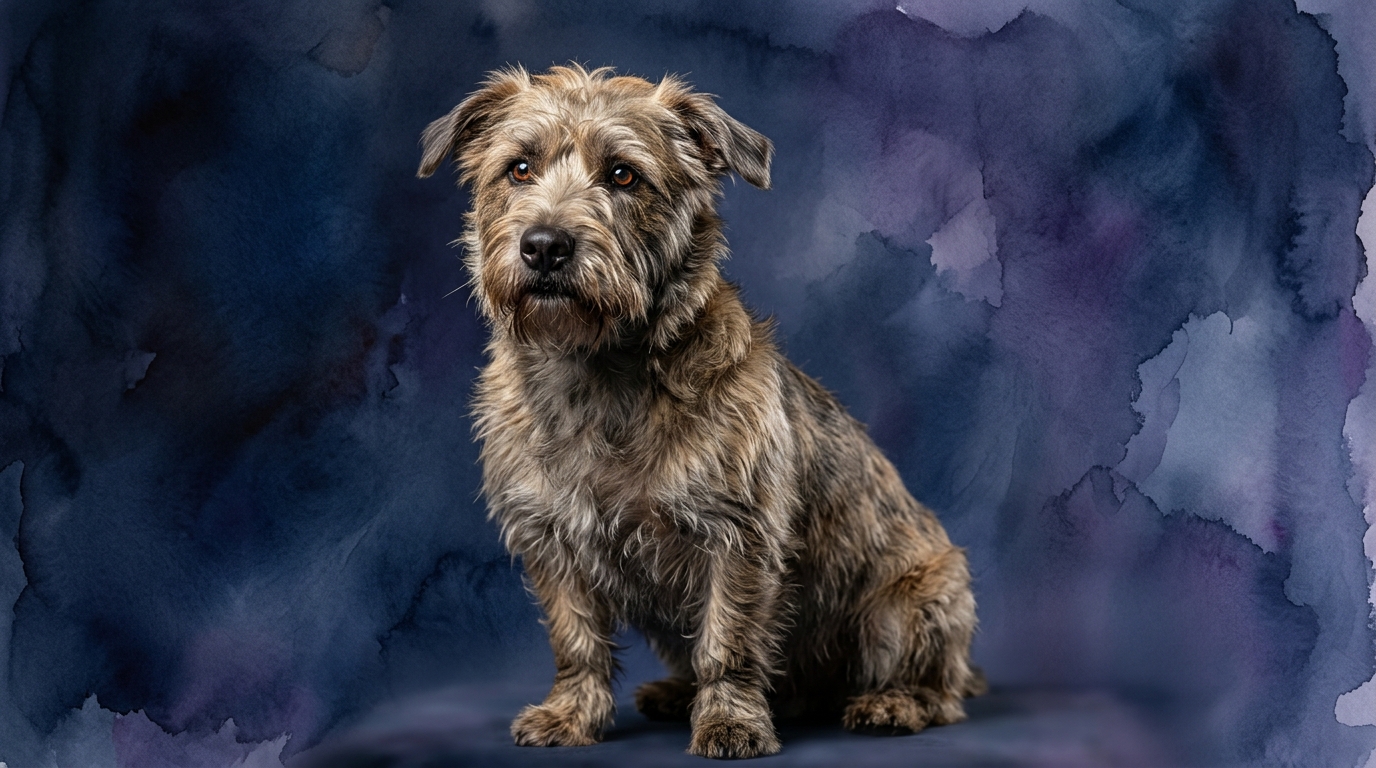
In contrast, the Glen of Imaal Terrier presents a different cognitive profile, reflecting its heritage as an independent vermin hunter in the rugged Irish countryside. This breed is not ranked on Coren's scale, and our Pet IQ Lab scores show a consistent 3/5 across all five dimensions: Problem Solving, Training Speed, Social Intelligence, Instinctive Drive, and Memory. This isn't a deficit in capability but rather an indicator of a distinct approach to cognition. Their problem-solving often manifests in tenacious, physical persistence rather than abstract reasoning, and their training speed is moderated by a strong, independent streak. Social intelligence is present but often filtered through their self-reliant nature, and their instinctive drive, while strong for digging and hunting, is less directed by human command than the Rottweiler's. Memory serves their specific tasks well, but perhaps without the same breadth.
Where Rottweiler Wins Cognitively
The Rottweiler's cognitive strengths distinctly outshine the Glen of Imaal Terrier in areas demanding complex reasoning and structured learning. With a 5/5 Problem Solving score, Rottweilers excel at tasks requiring logical deduction, pattern recognition, and adapting strategies to overcome obstacles, such as advanced obedience trials or intricate scent work. Their 5/5 Memory further enhances this, allowing them to build an extensive repertoire of learned behaviors, commands, and environmental associations, which is crucial for roles demanding consistency and reliability, like service work or protection. This capacity for retaining and applying information makes them exceptionally capable students in a wide array of disciplines.
Moreover, the Rottweiler's 4/5 Social Intelligence means they are generally more attuned to human communication, body language, and expectations, facilitating a deeper partnership in collaborative tasks. This social awareness, combined with a 4/5 Training Speed, allows them to grasp new concepts and commands with relative ease, translating into quicker mastery of skills. Their potent 5/5 Instinctive Drive, often directed towards protective or working tasks, provides a powerful internal motivation that, when channeled appropriately, makes them formidable and dedicated performers, eager to engage in purposeful activities alongside their human companions.
Where Glen of Imaal Terrier Wins Cognitively
While the Rottweiler excels in structured, collaborative intelligence, the Glen of Imaal Terrier's cognitive strengths lie in a different domain: independent, tenacious problem-solving rooted in their original function. Their 3/5 Problem Solving, though lower than the Rottweiler's, is characterized by a remarkable resilience and single-minded focus when faced with challenges related to their earthdog heritage. A Glen might not quickly decipher a complex puzzle toy, but it will relentlessly pursue a scent or dig through an obstacle with an unwavering determination that is a cognitive strength in itself, demonstrating a deep-seated, practical application of their mental faculties.
The Glen of Imaal's 3/5 Instinctive Drive is less about broad working roles and more about a highly specialized, persistent drive for hunting and digging. This focused tenacity, while sometimes challenging in training, means they possess an innate ability to operate autonomously, making decisions in the moment based on their primal instincts without constant human direction. Their memory (3/5) is adept at recalling locations of interesting scents or effective digging spots, and their social intelligence (3/5) allows them to form strong bonds while retaining a characteristic terrier independence. This blend makes them exceptional at tasks requiring self-reliance and grit, rather than intricate team coordination.
Which is Easier to Train and Why
Without question, the Rottweiler is generally easier to train for a broad spectrum of behaviors and complex tasks due to their cognitive profile. Their 4/5 Training Speed means they absorb new commands quickly, often with fewer repetitions compared to many breeds. This responsiveness is amplified by their 4/5 Social Intelligence, which makes them eager to please and highly receptive to human cues and feedback. Rottweilers thrive on having a job and engaging in purposeful activities, and their 5/5 Memory ensures that once a lesson is learned, it's retained, building a robust foundation for advanced training. Their strong instinctive drive, when properly channeled, provides an internal motivation for compliance and engagement.
The Glen of Imaal Terrier, with a 3/5 Training Speed and 3/5 Social Intelligence, presents a different training dynamic. Their independent terrier spirit means they are less inclined to automatically defer to human commands, often requiring more patience, consistency, and creative motivation. A Glen might understand a command but choose not to execute it if it perceives a more interesting independent pursuit, especially if it aligns with their strong digging or hunting instincts. Training a Glen effectively often means appealing to their self-interest and making the desired behavior more rewarding than their innate drive, rather than relying on their eagerness to please, which is not as pronounced as in the Rottweiler. Their memory, while functional, might not retain complex sequences with the same ease or reliability.
Which Suits Active Owners vs Relaxed Owners
For active owners seeking a canine partner for demanding activities and a structured lifestyle, the Rottweiler is often the more suitable choice. Their 5/5 Instinctive Drive and exceptional problem-solving capabilities mean they require consistent mental stimulation and physical exercise to thrive. These dogs excel in roles such as obedience, protection sports, tracking, and even therapy work, all of which demand an owner committed to providing purpose and intellectual challenges. An active owner for a Rottweiler is one who understands the need for leadership, consistent training, and ample opportunities for their dog to utilize its formidable cognitive and physical attributes, preventing boredom and potential behavioral issues.
The Glen of Imaal Terrier, while not a couch potato, can be a better fit for owners who appreciate an independent spirit and a more relaxed daily routine, provided their specific needs are met. While they possess a strong instinctive drive for digging and scent work, their overall exercise requirements are moderate compared to the Rottweiler. They enjoy walks, opportunities to explore, and a secure yard for digging, but they don't typically demand the same intensity of structured mental work or high-impact physical activity. A relaxed owner for a Glen of Imaal is someone who values their dog's self-sufficient nature, is patient with their independent streak, and can provide appropriate outlets for their terrier instincts without needing a constant collaborative partner in strenuous activities.
The Verdict
Choose the Rottweiler if you are an experienced, active owner seeking a highly trainable, purposeful companion for complex tasks, protection, or rigorous dog sports, and you are prepared to provide consistent mental and physical engagement.
Opt for the Glen of Imaal Terrier if you appreciate an independent, resilient companion with a moderate exercise need, are patient with a self-reliant training style, and can provide outlets for their innate digging and hunting instincts.
🧠 Find Your Pet's IQ Score
Our Pet IQ Lab assessment covers 25+ tests across 5 cognitive dimensions — personalized to your breed.
Take the Full IQ Test →Frequently Asked Questions
How do their problem-solving styles differ?
The Rottweiler's 5/5 problem-solving involves abstract reasoning and strategic planning for complex tasks, often seeking human direction. The Glen of Imaal Terrier's 3/5 problem-solving is more about tenacious, physical persistence and independent action, particularly related to their earthdog instincts, without necessarily relying on human input.
Can a Glen of Imaal Terrier be trained for advanced obedience?
While a Glen of Imaal Terrier can certainly learn obedience, their 3/5 Training Speed and independent nature mean it will require more patience, consistency, and creative motivation than with a Rottweiler. They are less inclined to perform purely for human approval, often needing tasks to align with their own interests.
Which breed is better for a first-time dog owner?
Neither breed is typically recommended for a completely inexperienced first-time owner without significant commitment to training and understanding breed-specific traits. However, the Rottweiler's robust cognitive needs and physical strength require a confident, experienced hand, while the Glen's independent nature can also be challenging for novices.