
Side-by-Side Cognitive Profiles: Rottweiler vs. Great Dane
The Cosmic Pet Pet IQ Lab provides a nuanced view of canine cognition, moving beyond general descriptors to specific dimensions. For the Rottweiler, ranked #9 by Coren, its profile speaks to a formidable intellect geared towards purpose and action. Their Problem Solving is rated 5/5, indicating an exceptional capacity to analyze situations and devise effective solutions independently. Training Speed, at 4/5, suggests they absorb and execute commands with impressive efficiency, often requiring fewer repetitions than many other breeds. Social Intelligence, also 4/5, highlights their keen awareness of human cues and pack dynamics, contributing to their loyal and protective nature. An Instinctive Drive of 5/5 underscores their powerful innate motivation for tasks, whether guarding, herding, or retrieving. Finally, a Memory score of 5/5 means they retain lessons, experiences, and associations over long periods, reinforcing their reliability and consistency.
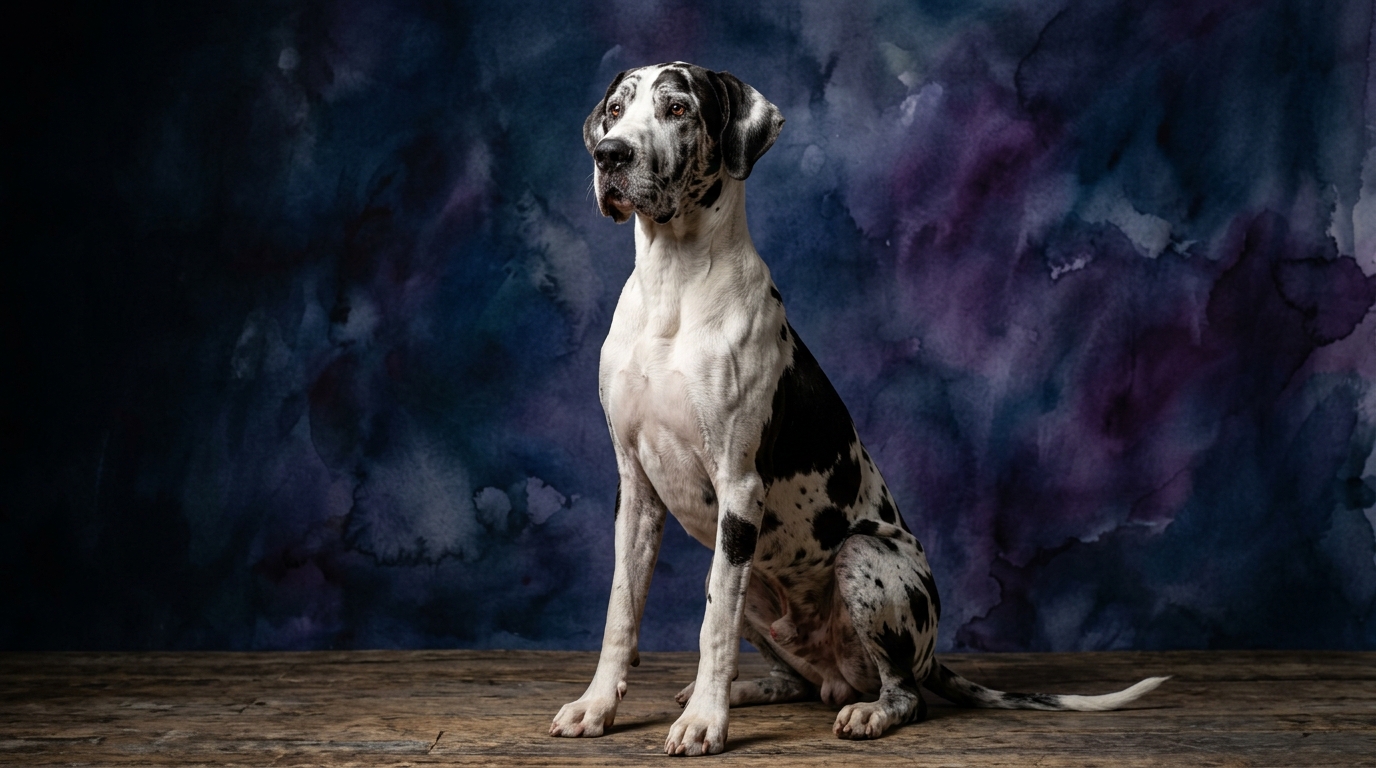
In contrast, the Great Dane, positioned at Coren rank #48, presents a different cognitive blueprint, reflecting its heritage as a gentle giant. Their Problem Solving capability is rated 3/5, suggesting they can navigate challenges but may require more guidance or be less inclined to independently seek complex solutions. Training Speed also stands at 3/5, indicating a moderate pace of learning where consistency and positive reinforcement are key for effective instruction. Their Social Intelligence matches the Rottweiler at 4/5, revealing a profound understanding of social interactions and a deep connection with their human companions. However, their Instinctive Drive is 3/5, meaning they possess a moderate intrinsic motivation for specific tasks, often preferring calm companionship over driven work. A Memory score of 3/5 implies they learn and remember, but perhaps not with the same immediate recall or long-term retention as their Rottweiler counterparts, necessitating regular reinforcement of learned behaviors.
Where the Rottweiler Excels Cognitively
The Rottweiler's cognitive strengths distinctly position them for roles requiring decisive action and independent thought. Their 5/5 Problem Solving and 5/5 Memory mean they are adept at navigating complex environments, understanding intricate commands, and recalling solutions to past challenges. This manifests in their ability to quickly adapt to new training scenarios, troubleshoot unexpected obstacles, and maintain a consistent performance even after long breaks. For instance, a Rottweiler tasked with a search and rescue operation will not only understand the objective but actively strategize and remember specific search patterns or scent trails without constant prompting. Their 5/5 Instinctive Drive further fuels this, providing the sustained motivation to see tasks through, making them exceptionally effective in protection, obedience trials, or any structured work where self-reliance and focus are paramount.
Where the Great Dane Offers Unique Cognitive Strengths
While the Great Dane's scores might appear lower in task-oriented dimensions, their 4/5 Social Intelligence is a significant cognitive asset, allowing them to excel in different, equally valuable ways. This high social acumen translates into an exceptional ability to read human emotions, understand subtle social cues, and integrate harmoniously into family life. They often display a profound empathy, responding sensitively to the moods of their owners and offering comfort or companionship with a gentle presence. Their moderate 3/5 Instinctive Drive, rather than being a deficit, can be a cognitive advantage in a home environment, meaning they are less likely to independently pursue activities that might conflict with household rules or human preferences. This allows for a calm, agreeable demeanor that prioritizes connection and emotional support over constant engagement or problem-solving, creating a uniquely understanding and supportive canine companion.
Training Dynamics: Which is Easier and Why?
Comparing the ease of training between these two breeds reveals distinct approaches shaped by their cognitive profiles. The Rottweiler, with its 4/5 Training Speed and 5/5 Problem Solving, tends to be easier to train in terms of acquiring new commands and understanding complex sequences. Their robust Memory (5/5) ensures lessons stick, and their potent Instinctive Drive (5/5) means they are often eager to work and please, especially when the training taps into their natural inclinations for structure and purpose. They thrive on clear direction and consistent expectations, quickly generalizing learned behaviors to new situations. This means a Rottweiler can master advanced obedience or specialized tasks with relative speed and reliability, though their strong will requires an experienced hand to channel their drive positively.
The Great Dane, with its 3/5 Training Speed and 3/5 Problem Solving, requires a more patient and consistent approach. While they are certainly capable of learning, they may take longer to grasp new concepts and might not generalize them as quickly without repeated practice in varied environments. Their moderate Instinctive Drive (3/5) means training needs to be highly engaging and positive, as they may lack the inherent drive of a Rottweiler to perform tasks without strong incentives. However, their excellent Social Intelligence (4/5) means they are highly attuned to their owner's emotions and respond well to gentle, encouraging methods. Training a Great Dane is less about speed and more about building a strong, trusting relationship where they feel secure and motivated to cooperate, making consistency and positive reinforcement absolutely crucial for success.
Matching Cognitive Profiles to Lifestyles: Active vs. Relaxed Owners
The cognitive makeup of each breed strongly dictates which type of owner they will thrive with. The Rottweiler, with its exceptional Problem Solving, Memory, and Instinctive Drive, is best suited for active owners who are prepared to provide significant mental and physical engagement. These dogs require structured activities like advanced obedience, protection sports, or consistent training for practical tasks to channel their considerable intellect and energy. An owner who enjoys daily training sessions, puzzle toys, and challenging their dog's mind will find the Rottweiler to be an incredibly rewarding and responsive partner. Their cognitive needs demand an owner who is proactive in providing purpose and stimulation, preventing boredom which can lead to undesirable behaviors.
Conversely, the Great Dane, with its moderate Problem Solving and Instinctive Drive, coupled with high Social Intelligence, often flourishes with more relaxed owners who prioritize companionship and a calm home environment. While their immense size necessitates regular, moderate exercise, their cognitive profile doesn't demand constant, high-intensity mental challenges in the same way a Rottweiler's does. They excel in environments where their social intelligence can be fully utilized, enjoying close family interaction and a predictable routine. An owner who values a gentle, emotionally responsive presence and is content with comfortable walks and ample cuddle time will find the Great Dane to be an incredibly affectionate and deeply connected companion, whose cognitive strengths lie in their capacity for peaceful coexistence and emotional attunement.
The Verdict
Choose a Rottweiler if you are an experienced owner seeking a highly capable, driven companion for structured training, protection, or demanding tasks, and are prepared to provide consistent mental and physical challenges.
Choose a Great Dane if you desire a gentle, socially astute giant who thrives on companionship and a calm home life, and you are committed to patient, consistent training with a focus on relationship building.
🧠 Find Your Pet's IQ Score
Our Pet IQ Lab assessment covers 25+ tests across 5 cognitive dimensions — personalized to your breed.
Take the Full IQ Test →Frequently Asked Questions
Is a Rottweiler naturally more protective than a Great Dane?
Yes, a Rottweiler's 5/5 Instinctive Drive and strong problem-solving capacity often translate into a more naturally protective demeanor, as they are intrinsically motivated to guard their family and territory. While Great Danes are loyal, their protection is usually more reactive and less instinctually driven than a Rottweiler's.
Do Great Danes require less mental stimulation than Rottweilers?
Generally, yes. A Great Dane's 3/5 Problem Solving and Instinctive Drive suggest they are content with moderate mental engagement, focusing more on social interaction. Rottweilers, with 5/5 Problem Solving and Instinctive Drive, require significant, consistent mental challenges to prevent boredom and destructive behaviors.
Which breed is better for first-time dog owners?
Neither breed is typically recommended for first-time owners without significant research and commitment, due to their size and specific needs. However, a Great Dane's generally calmer demeanor and lower instinctive drive might be marginally more manageable for a novice willing to invest in consistent, positive training, compared to a Rottweiler's intense drive and need for experienced guidance.