
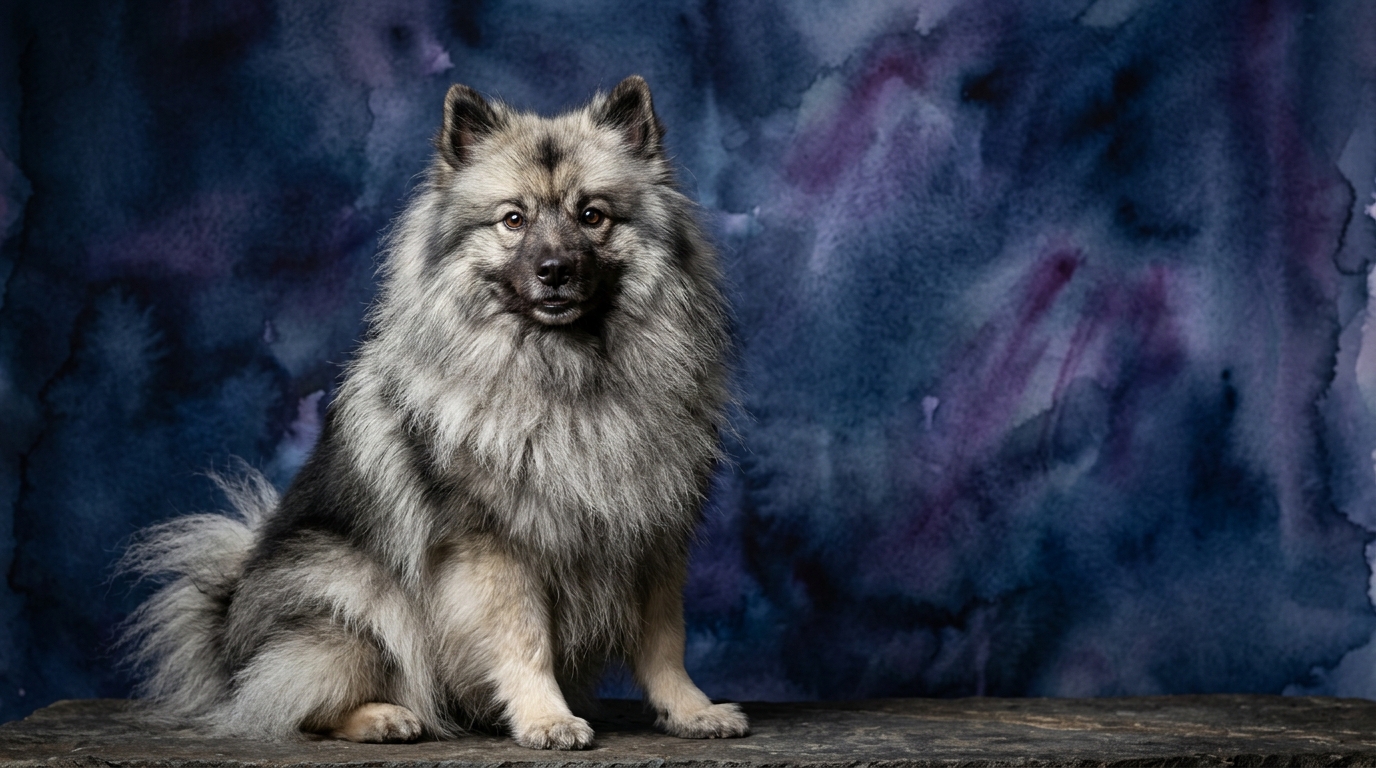
Side-by-Side IQ Profile: Rottweiler vs Keeshond
At The Cosmic Pet Pet IQ Lab, we delve into five key dimensions of canine intelligence to understand each breed's unique cognitive makeup. For the Rottweiler, ranked #9 by Coren, and the Keeshond, ranked #16, their profiles reveal fascinating differences.
The Rottweiler’s IQ profile is marked by exceptional Problem Solving (5/5), indicating an aptitude for analyzing complex situations, strategizing, and executing independent solutions. Their Training Speed (4/5) is efficient, absorbing new commands quickly when engaged. Social Intelligence (4/5) reflects a refined understanding of cues, adapting behavior to interpret human and canine interactions effectively. A dominant 5/5 Instinctive Drive fuels their dedication to tasks like guarding or protection, providing robust intrinsic motivation. Finally, their Memory (5/5) is remarkable, allowing for long-term retention of people, places, and learned sequences.
The Keeshond's IQ profile, while different, also shows significant strengths. Their Problem Solving (4/5) demonstrates a strong ability to resolve challenges, often relying on learned patterns or practical solutions. Training Speed (4/5) is commendable, as they learn new behaviors efficiently with a willingness to please. Social Intelligence (3/5) indicates a moderate understanding of social dynamics, reading basic cues but perhaps less nuanced in complex interactions. Instinctive Drive (3/5) is moderate, rooted in their historical role as companions and watchdogs, translating to a steady motivation for engagement. Their Memory (5/5) is exceptional, retaining environmental information, routines, and learned behaviors with impressive accuracy over time.
Where the Rottweiler Wins Cognitively
The Rottweiler's cognitive advantage is most evident in their superior Problem Solving and Instinctive Drive. A 5/5 in Problem Solving means Rottweilers actively process and strategize, not merely react. For instance, if a gate presents a novel latch, a Rottweiler is more likely to systematically test various mechanisms, pushing, pulling, or observing for clues, rather than simply pawing. This aptitude allows them to excel in complex obedience, protection work, or search and rescue, where adapting to unforeseen variables is crucial.
Their 5/5 Instinctive Drive fuels this problem-solving tenacity, providing the intrinsic motivation to persist through challenges that might deter a less driven breed. This drive is a cognitive engine, maintaining focus and commitment to tasks like tracking or mastering multi-step agility courses. Furthermore, their 4/5 Social Intelligence, compared to the Keeshond's 3/5, suggests a more sophisticated understanding of social hierarchies and intentions. This allows them to navigate complex group dynamics or read handler cues with greater precision, vital for roles requiring close partnership and nuanced responsiveness.
Where the Keeshond Wins Cognitively
While the Keeshond does not surpass the Rottweiler in raw scores for problem-solving or drive, their cognitive profile, particularly their 5/5 Memory combined with a moderate 3/5 Instinctive Drive, presents distinct advantages. Exceptional 5/5 Memory ensures learned routines are deeply ingrained and reliably recalled, often without the constant reinforcement a higher-drive dog might demand. This makes them remarkably consistent in established behaviors, excelling in environments where predictability and adherence to routine are valued. For example, a Keeshond might recall a specific household rule with unwavering consistency over years, simply because it was learned and retained, without a high drive occasionally overriding behavior in moments of excitement.
Their moderate 3/5 Social Intelligence, while scoring lower, can lead to a more straightforward and less manipulative cognitive approach to social interaction. They are generally less inclined to "test" boundaries or engage in complex social maneuvering, often preferring direct and honest communication. This simpler social processing can be a cognitive benefit for owners who appreciate a dog whose intentions are typically transparent and whose responses are predictable, making for a less cognitively demanding social partner in a home environment.
Training Ease: Rottweiler vs Keeshond
Both breeds share a commendable 4/5 Training Speed, indicating efficient information absorption. However, the ease of training diverges due to their differing Instinctive Drives and Social Intelligence. Rottweilers, with 5/5 Instinctive Drive, are often easier to train for task-oriented roles due to their powerful intrinsic motivation to work and fulfill a purpose. This drive means they are eager to engage in structured training, seeing it as an outlet for their innate energy and mental prowess. Their 4/5 Social Intelligence also makes them highly attuned to handler expectations and reactions, allowing for precise communication and a strong desire to please within clear structures.
Conversely, Keeshonds, with 3/5 Instinctive Drive, may require different motivational strategies. While they learn quickly, their motivation might stem more from a desire for companionship and positive reinforcement rather than intense job performance. Training a Keeshond often involves consistent positive reinforcement, making training feel like a collaborative game. Their 3/5 Social Intelligence suggests they might not be as finely tuned to subtle handler cues or as motivated by social hierarchy, meaning trainers need to be very clear and consistent, perhaps relying less on nuanced body language and more on verbal commands and rewards. Thus, while both learn fast, the Rottweiler's inherent drive and social attunement often make them easier to mold into complex working roles, whereas the Keeshond is easier to train into a well-mannered companion through consistent, positive, and engaging methods.
Lifestyle Suitability: Active vs Relaxed Owners
The cognitive profiles of the Rottweiler and Keeshond clearly delineate their suitability for different owner lifestyles. The Rottweiler, with its 5/5 Problem Solving and 5/5 Instinctive Drive, thrives with active owners prepared to provide consistent mental and physical challenges. These dogs require an owner who can channel their robust drive into structured activities like advanced obedience, protection sports, tracking, or demanding hikes. Their high cognitive demand means without sufficient engagement, their problem-solving prowess may lead to undesirable behaviors like destructive chewing or excessive vigilance. An owner who enjoys teaching complex tricks, participating in dog sports, or engaging in extensive outdoor adventures would find the Rottweiler a profoundly rewarding and capable partner.
In contrast, the Keeshond, with its 4/5 Problem Solving and 3/5 Instinctive Drive, is generally a better fit for more relaxed owners seeking a devoted companion without the same intensity of cognitive and physical demands. While they still enjoy activity and mental stimulation, their needs are more moderately paced. A Keeshond would be content with regular walks, interactive play sessions, and learning new tricks that reinforce their bond. They appreciate routine and thrive in a home environment where their memory and moderate drive can be satisfied through consistent interaction and a stable schedule, rather than constant, high-octane challenges. They are less likely to become restless or destructive if a day is spent quietly at home, provided they receive regular affection and engagement.
The Verdict
Opt for a Rottweiler if you are an experienced, active owner ready to commit to rigorous training, consistent mental stimulation, and channeling a powerful, driven intellect into purposeful activities.
Select a Keeshond if you seek a devoted, intelligent companion who excels with consistent positive reinforcement, enjoys a moderate activity level, and thrives on a predictable, affectionate home life.
🧠 Find Your Pet's IQ Score
Our Pet IQ Lab assessment covers 25+ tests across 5 cognitive dimensions — personalized to your breed.
Take the Full IQ Test →Frequently Asked Questions
Do Rottweilers and Keeshonds share any cognitive strengths?
Yes, both breeds exhibit exceptional Memory (5/5) and a strong capacity for Training Speed (4/5). This means both are capable of learning and retaining a wide array of commands and routines effectively, making them responsive to consistent instruction.
How does the Instinctive Drive difference impact daily life for these breeds?
A Rottweiler's 5/5 Instinctive Drive means they require significant mental and physical outlets to prevent boredom and destructive behaviors, often seeking purpose. A Keeshond's 3/5 Instinctive Drive translates to a more moderate need for engagement, making them generally more content with a balanced routine of play and companionship without intense, specialized work.
Is one breed better for first-time dog owners based on their IQ?
Given the Rottweiler's superior problem-solving and intense instinctive drive, they often require an experienced owner capable of consistent, firm leadership and extensive training. The Keeshond, with its excellent memory and moderate drive, can be a more manageable and forgiving choice for a dedicated first-time owner willing to invest in positive, consistent training.