
Side-by-Side IQ Profile
The Cosmic Pet Pet IQ Lab assesses canine intelligence across five critical dimensions: Problem Solving, Training Speed, Social Intelligence, Instinctive Drive, and Memory. Examining these metrics for the Rottweiler and the Nova Scotia Duck Tolling Retriever reveals their distinct cognitive blueprints.
Rottweiler: This Working Group member, ranked #9 by Coren, demonstrates exceptional cognitive prowess. Their Problem Solving is rated 5/5, indicating a strong capacity for independent thought and strategic action, essential for tasks like guarding or complex obedience. Training Speed is 4/5, meaning they grasp new commands quickly, though their strong will requires consistent handling. Social Intelligence, at 4/5, reflects their ability to deeply bond with and understand their family, often anticipating needs or threats. An Instinctive Drive of 5/5 underscores their powerful desire to work and protect, while their Memory, also 5/5, ensures they retain complex information and experiences over time.
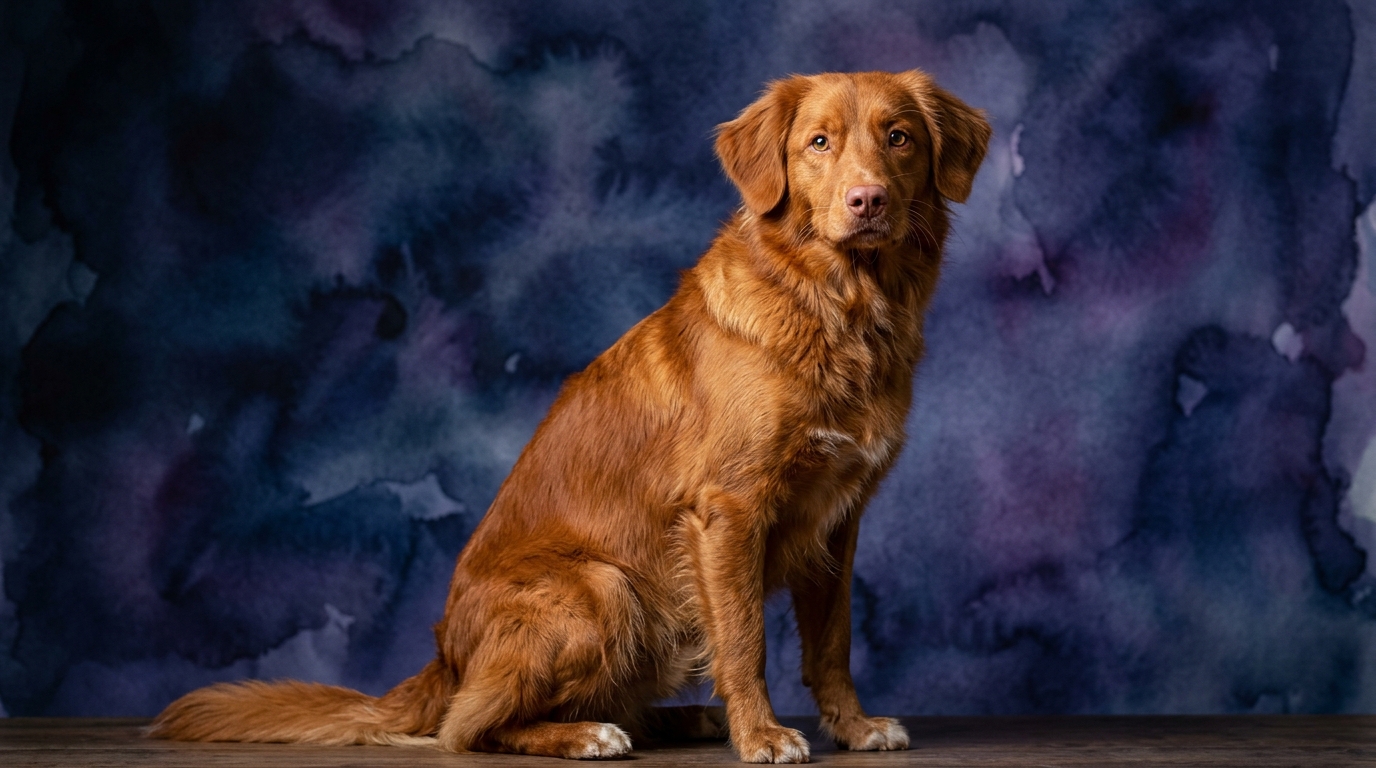
Nova Scotia Duck Tolling Retriever: Hailing from the Sporting Group, the Toller possesses a distinct set of cognitive attributes, though not Coren-ranked. Their Problem Solving is rated 3/5, signifying a capable ability to navigate challenges, particularly those related to their retrieving tasks, but perhaps less inclination for abstract problem-solving than a Rottweiler. Training Speed is 3/5, meaning they learn at a steady pace, responding well to engaging methods. Social Intelligence, also 3/5, indicates they are friendly and cooperative, forming good partnerships, though perhaps not with the same depth of protective discernment as a Rottweiler. Their Instinctive Drive, 3/5, is specifically channeled towards their namesake 'tolling' and retrieving behaviors, while their Memory, 3/5, is sufficient for retaining field commands and routines.
Where the Rottweiler Wins Cognitively
The Rottweiler's cognitive profile positions them as a formidable intellect in domains demanding strategic thought and unwavering retention. Their 5/5 Problem Solving score means they excel at deciphering complex situations, making independent judgments, and executing multi-step solutions, particularly in scenarios requiring protection or advanced obedience. This capability extends beyond simple command following; they can often anticipate events and react proactively.
Complementing this is their 5/5 Memory, allowing them to recall intricate sequences of commands, past experiences, and the specific dynamics of their social environment with remarkable accuracy. This deep memory aids in their consistency and reliability in both training and daily interactions. Furthermore, their 5/5 Instinctive Drive translates into a profound, focused determination to fulfill their perceived role, whether guarding their family or mastering a demanding task, providing an unparalleled mental resilience and work ethic that is less pronounced in the Toller's general drive.
Where the Nova Scotia Duck Tolling Retriever Wins Cognitively
While not achieving the Rottweiler's higher scores in general cognitive dimensions, the Nova Scotia Duck Tolling Retriever's intelligence is uniquely tailored and highly effective within its specialized niche. Their 3/5 Instinctive Drive is a significant cognitive win in its specific application: the 'tolling' behavior, where they lure waterfowl within gun range through playful antics. This is a complex, multi-stage, inherited behavioral sequence requiring focused attention and precise execution, a cognitive strength distinct from the Rottweiler's broader working drive.
Their 3/5 Problem Solving, while not as broad, is highly effective for tasks like locating hidden retrieves, navigating challenging terrain, or adapting their luring techniques based on environmental cues. Moreover, their 3/5 Social Intelligence is perfectly calibrated for cooperative partnership in the field, fostering a willing, eager-to-please attitude that makes them exceptionally agreeable hunting companions, prioritizing teamwork over independent decision-making in a way that benefits their specific role. Their memory, while rated 3/5, is perfectly functional for recalling the specific routines and commands necessary for effective fieldwork.
Which is Easier to Train and Why
Assessing which breed is 'easier' to train requires understanding their distinct cognitive makeups and behavioral tendencies. The Rottweiler, with a Training Speed of 4/5, learns new commands and concepts quickly. However, their high Problem Solving (5/5) and powerful Instinctive Drive (5/5) mean they are not simply passive learners; they analyze, question, and sometimes push boundaries. Training a Rottweiler demands a knowledgeable, consistent, and confident handler who can channel their substantial mental energy and strong will into productive avenues. Without firm, fair guidance, their independent thought can manifest as stubbornness or self-directed action. Their 5/5 Memory also means they retain both positive lessons and any inconsistencies in training.
The Nova Scotia Duck Tolling Retriever, with a Training Speed of 3/5, learns at a more moderate pace. Their lower instinctive drive (3/5) compared to the Rottweiler means they generally exhibit less inherent pushback or desire for dominance in a training context. Tollers thrive on positive reinforcement, engaging games, and a lighter touch. While they may take more repetitions to solidify a command, they are typically more eager to please and less inclined to challenge authority with their 3/5 social intelligence. For a novice owner, the Toller might feel 'easier' due to their generally more agreeable nature and less intense behavioral challenges, even if the learning curve for specific commands is slightly longer than the Rottweiler's initial acquisition speed.
Which Suits Active Owners vs. Relaxed Owners
Neither the Rottweiler nor the Nova Scotia Duck Tolling Retriever is suited for a relaxed, sedentary owner; both breeds demand significant engagement, albeit with different focuses. The Rottweiler, with its 5/5 Instinctive Drive and 5/5 Problem Solving, requires not just physical exercise but also substantial mental stimulation and a 'job.' They thrive when given purpose, whether it's advanced obedience, protection work, or participating in canine sports. An owner who can provide consistent, structured activity and mental challenges will find a deeply satisfied and well-behaved Rottweiler. Without this, their powerful cognitive abilities can lead to boredom, frustration, and destructive behaviors.
The Nova Scotia Duck Tolling Retriever, while also highly active, channels its energy and 3/5 Instinctive Drive primarily into vigorous physical activity, especially retrieving and water work. They are excellent companions for owners who enjoy hiking, running, swimming, or field trials. Their 3/5 Problem Solving and Social Intelligence mean they are happy to engage in repetitive, high-energy games and outdoor adventures. While they also benefit from mental enrichment, their core need is for sustained physical exertion that taps into their retrieving instincts. A Toller owner must be prepared for daily, energetic outdoor sessions, making them ideal for individuals or families with an active, outdoorsy lifestyle.
The Verdict
Choose a Rottweiler if you are an experienced dog owner seeking a deeply loyal, protective companion capable of complex work and advanced training, and you are prepared to provide consistent, firm guidance and extensive mental stimulation.
Choose a Nova Scotia Duck Tolling Retriever if you lead a highly active, outdoorsy lifestyle and desire an energetic, cooperative partner for adventures, field sports, and a generally more playful, less intensely protective presence.
🧠 Find Your Pet's IQ Score
Our Pet IQ Lab assessment covers 25+ tests across 5 cognitive dimensions — personalized to your breed.
Take the Full IQ Test →Frequently Asked Questions
Do Rottweilers need a lot of mental stimulation?
Absolutely. With 5/5 Problem Solving and Memory, Rottweilers require consistent mental challenges to prevent boredom and destructive behaviors. Daily training, puzzle toys, and engaging in canine sports are crucial for their well-being.
Are Tollers good family dogs?
Yes, Tollers are generally affectionate and cooperative family dogs. Their 3/5 Social Intelligence means they bond well with their family, though their high energy demands an active household that can provide ample exercise and engagement.
How do the breeds differ in their protective instincts?
Rottweilers have a 5/5 Instinctive Drive and 4/5 Social Intelligence, making them naturally protective of their family and territory, often requiring careful socialization. Tollers have a 3/5 Instinctive Drive, primarily focused on retrieving, and are generally less inclined towards protective behaviors, being more outgoing and friendly with strangers.