
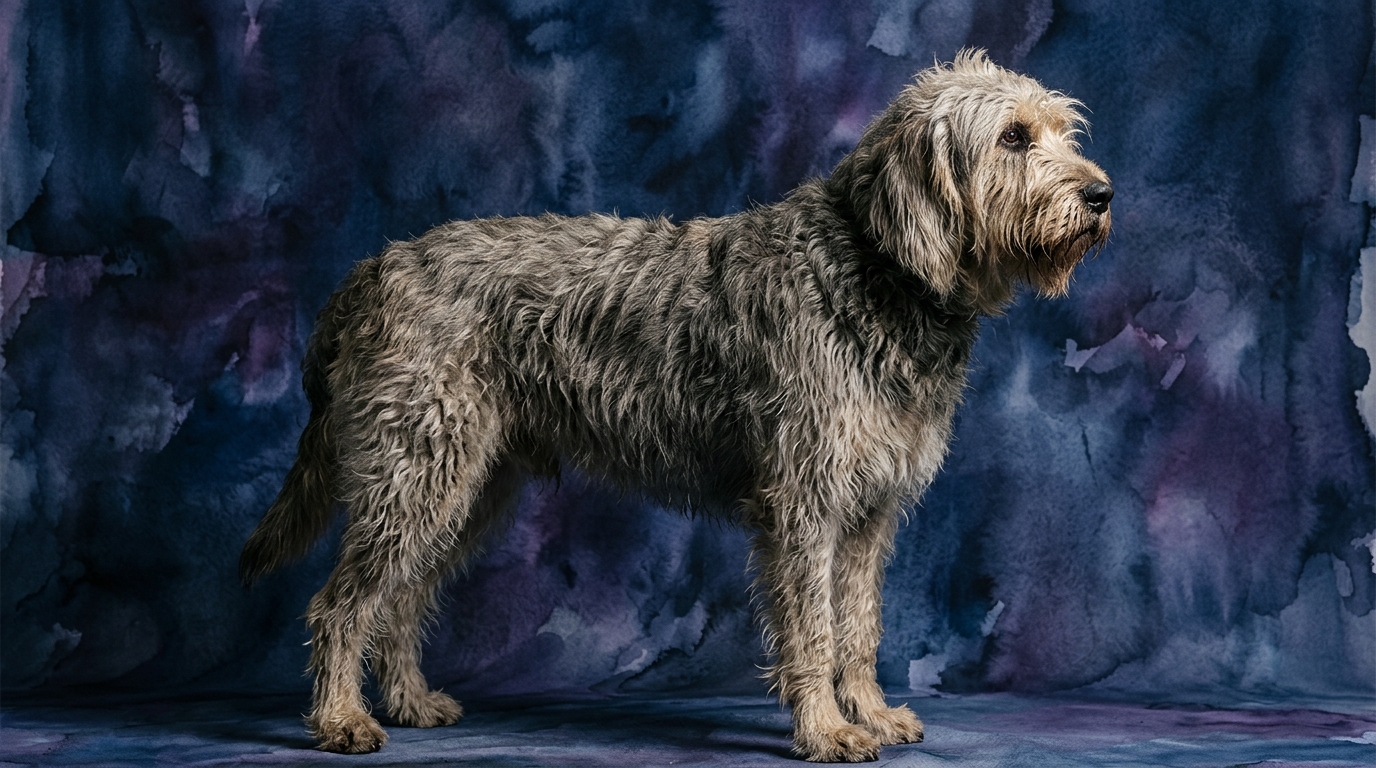
Side-by-Side IQ Profile: Rottweiler vs. Otterhound
The Cosmic Pet Pet IQ Lab employs a five-dimensional framework to assess canine intelligence, offering a nuanced understanding beyond simple 'smart or not' labels. For the Rottweiler, a breed hailing from the Working Group, we observe a profile indicative of a highly capable and adaptable companion. Their Problem Solving is rated 5/5, suggesting a profound capacity for strategic thinking and navigating complex situations independently. Training Speed, at 4/5, indicates a quick grasp of new commands and concepts, often eager to learn and cooperate. Social Intelligence, also 4/5, points to a strong awareness of human cues and social hierarchies, facilitating effective communication and bonding. Their Instinctive Drive is a powerful 5/5, manifesting as a strong protective instinct, a desire for purposeful work, and immense physical endurance. Finally, Memory at 5/5 means they retain information, commands, and experiences over long periods, contributing to their reliability.
In contrast, the Otterhound, a member of the Hound Group, presents a distinct cognitive blueprint. Their Problem Solving ability is rated 3/5, suggesting they approach challenges with persistence and sensory focus, particularly scent, rather than abstract strategy. Training Speed, at 3/5, implies they can learn, but often at their own pace and with a strong independent streak, requiring consistent, patient guidance. Social Intelligence, also 3/5, indicates they are generally amiable but may be less attuned to subtle human emotional shifts compared to more people-oriented breeds. Their Instinctive Drive, rated 3/5, is powerfully focused on scent work and tracking, often overriding other impulses once a trail is found. Memory, at 3/5, means they recall important information but might not have the same breadth or depth of retention for varied tasks as a Rottweiler.
Where the Rottweiler Wins Cognitively
The Rottweiler’s cognitive strengths are evident across multiple domains, making them particularly adept at tasks requiring precision and foresight. Their 5/5 Problem Solving score means they are not merely reactive but can anticipate outcomes and devise solutions, whether it's navigating an unfamiliar obstacle course or understanding complex multi-step commands. This strategic thinking allows them to excel in advanced obedience, protection work, and even service roles where quick, sound judgment is paramount. Furthermore, their 5/5 Memory ensures that lessons learned are retained, building a robust repertoire of skills and behaviors over their lifetime. This strong recall contributes to their reliability and consistency, making them highly dependable partners once trained. Their formidable Instinctive Drive (5/5) is also a cognitive asset, providing the profound motivation and focus needed to perform demanding tasks with unwavering determination, often channeling this drive into productive outlets under human direction.
Where the Otterhound Wins Cognitively
While the Otterhound's cognitive profile differs significantly from the Rottweiler, it possesses unique strengths perfectly suited to its heritage. Its 3/5 Problem Solving, though lower, reflects a distinct form of intelligence centered around sensory input and independent action. An Otterhound excels at following a complex, fading scent trail over vast distances, an intricate problem-solving task that requires immense focus, persistence, and an innate understanding of environmental cues. This isn't about abstract thought, but about deeply specialized sensory processing and an unyielding commitment to a goal. Their Instinctive Drive (3/5), while not as broadly applicable as the Rottweiler's, is a potent force when directed towards tracking, allowing them to work tirelessly and independently for hours. This independence, stemming partly from their 3/5 Social Intelligence, means they are less reliant on constant human validation, giving them a self-sufficient cognitive resilience that is invaluable in their specific working role.
Which is Easier to Train and Why
Based on their cognitive profiles, the Rottweiler is generally easier to train for a wide array of tasks than the Otterhound. The Rottweiler's 4/5 Training Speed and 4/5 Social Intelligence translate into a dog that is typically eager to please, responsive to direction, and quick to form associations between commands and actions. They possess a natural inclination to work collaboratively with their handler, making them receptive to various training methods, from basic obedience to complex behavioral modifications. Their superior memory further solidifies learned behaviors, requiring less repetition over time.
Conversely, the Otterhound's 3/5 ratings in both Training Speed and Social Intelligence indicate a more independent and sometimes stubborn learner. While capable of learning, they require more patience, creativity, and a deep understanding of their hound motivations. Their strong scent drive means they can easily become distracted by environmental odors, making consistent focus a training challenge. Training an Otterhound often involves leveraging their natural instincts and finding ways to make learning enjoyable and relevant to their sensory world, rather than relying solely on compliance or a strong desire to please.
Which Suits Active Owners vs. Relaxed Owners
The Rottweiler, with its 5/5 Instinctive Drive and 5/5 Problem Solving, thrives with active, engaged owners who can provide consistent mental and physical stimulation. They are best suited for individuals or families who enjoy structured activities like advanced obedience, protection sports, hiking, or even competitive dog sports. Their need for purposeful work means a relaxed, sedentary owner might find their Rottweiler becomes bored and potentially destructive, as their robust cognitive and physical energy needs to be channeled productively. They are partners in activity, demanding owners who are prepared to lead and participate.
The Otterhound, while possessing a strong drive for scent work, has a different energy profile. They are best suited for owners who appreciate a dog with an independent spirit and are prepared for long, exploratory walks where the dog can indulge its scenting instincts. Their lower scores in areas like Problem Solving and Training Speed for general tasks mean they are not necessarily ideal for highly structured, competitive activities requiring constant human direction. Relaxed owners who enjoy leisurely, sniff-heavy strolls and are content with a dog that values its own sensory world will find a better match with the Otterhound, understanding that 'activity' for this breed often means following a captivating trail, not necessarily performing complex tricks on command.
The Verdict
Choose a Rottweiler if you seek a highly trainable, strategically thinking partner for demanding tasks, protection, or advanced obedience, and are prepared to provide consistent, purposeful engagement.
Choose an Otterhound if you appreciate an independent, persistent dog driven by scent, enjoy long exploratory walks, and are patient with a less conventional, self-motivated learner.
🧠 Find Your Pet's IQ Score
Our Pet IQ Lab assessment covers 25+ tests across 5 cognitive dimensions — personalized to your breed.
Take the Full IQ Test →Frequently Asked Questions
Are Otterhounds difficult to train?
Otterhounds are not inherently difficult, but their independent nature and strong scent drive (3/5 Training Speed, 3/5 Social Intelligence) mean they require consistent, patient, and engaging training methods. They may not respond to traditional obedience as readily as other breeds, often needing motivation tied to their natural instincts.
Which breed is better for a first-time dog owner?
Neither breed is typically recommended for first-time owners without extensive research and commitment. However, the Rottweiler's higher Training Speed and Social Intelligence (4/5 for both) make them potentially more manageable with dedicated training, whereas the Otterhound's independence might be challenging for a novice.
Do Rottweilers need a lot of mental stimulation?
Yes, Rottweilers require significant mental stimulation due to their 5/5 Problem Solving and 5/5 Memory. They thrive on learning new commands, solving puzzles, and engaging in purposeful activities, which is crucial for their well-being and to prevent boredom-related behaviors.