
Side-by-Side IQ Profile: Rottweiler vs. Pembroke Welsh Corgi
The Cosmic Pet IQ Lab's proprietary metrics provide a granular view of each breed's cognitive architecture. For the Rottweiler, classified as a Working breed and ranking #9 on the Coren scale, we observe exceptional Problem Solving at 5/5, indicating a profound capacity for independent thought and strategic action. Their Training Speed is a solid 4/5, suggesting a readiness to learn, while Social Intelligence stands at 4/5, reflecting their ability to navigate complex pack dynamics. An Instinctive Drive of 5/5 underscores their powerful intrinsic motivation, complemented by a perfect Memory score of 5/5, signifying an impressive retention of information and experiences.
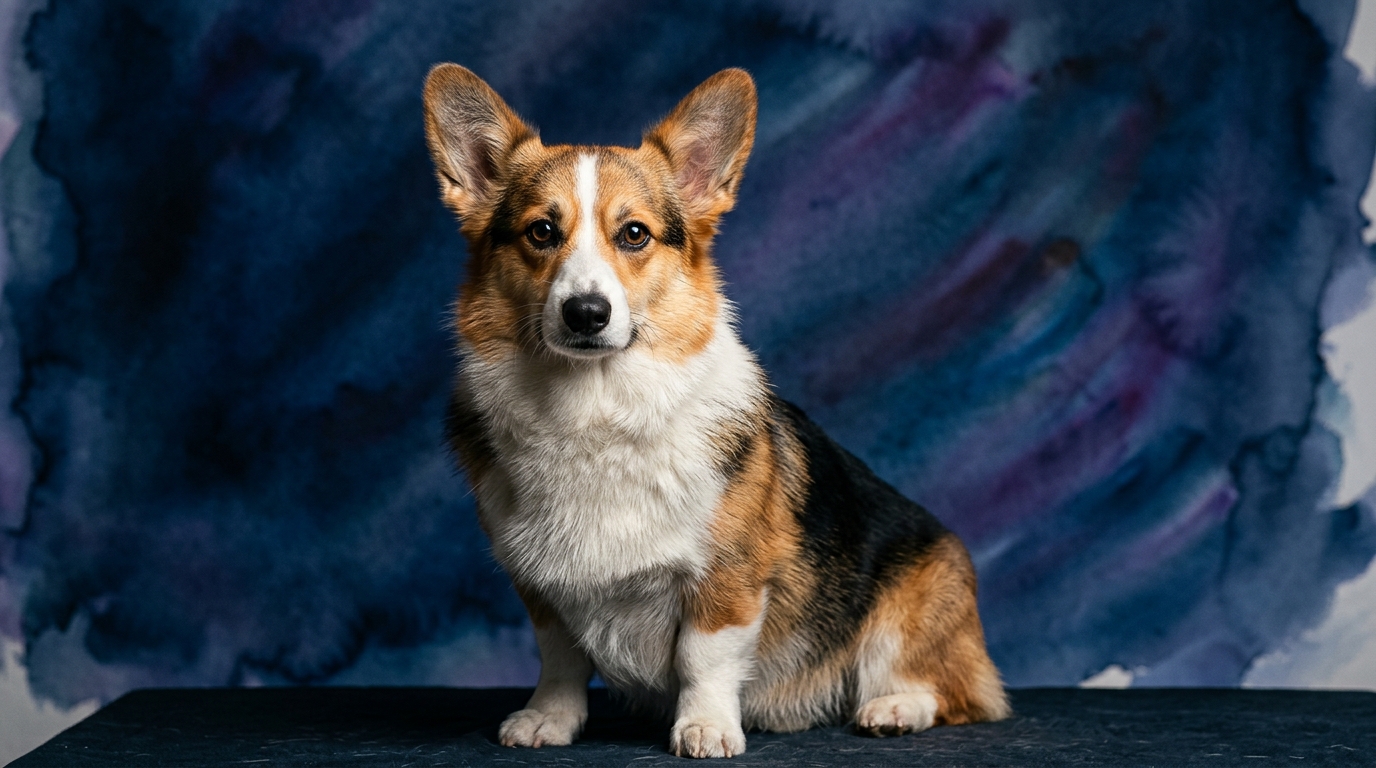
In contrast, the Pembroke Welsh Corgi, a Herding breed with a Coren rank of #11, presents a slightly different cognitive emphasis. Their Problem Solving is a strong 4/5, demonstrating competence in navigating challenges, while their Training Speed truly shines at 5/5, highlighting their eagerness and quick uptake of new commands. Social Intelligence matches the Rottweiler at 4/5, showing adeptness in interactions. Like the Rottweiler, their Instinctive Drive is 5/5, reflecting their active, purpose-driven nature, though their Memory is rated 4/5, indicating robust recall, albeit not quite the Rottweiler's perfect score.
Where the Rottweiler Wins Cognitively
The Rottweiler's cognitive edge is most apparent in its superior Problem Solving and Memory. A 5/5 in Problem Solving means these dogs don't just react; they can independently assess novel situations, devise strategies, and execute multi-step plans, often requiring minimal human intervention once a goal is understood. This translates into an animal capable of intricate task work, from protection duties to complex search and rescue scenarios where independent decision-making is paramount.
Their perfect 5/5 Memory score further solidifies this advantage. Rottweilers can retain complex sequences of commands, intricate routes, and detailed social interactions over extended periods, making them exceptional at long-term task recall and adapting learned behaviors to new contexts. This profound memory contributes significantly to their reliability in roles requiring consistent, precise execution over time, enabling them to build an extensive repertoire of skills and knowledge that endure.
Where the Pembroke Welsh Corgi Wins Cognitively
The Pembroke Welsh Corgi distinguishes itself with a perfect 5/5 in Training Speed. This metric signifies an exceptional capacity for rapidly grasping new commands and routines, often requiring fewer repetitions than many other breeds to achieve mastery. Their quick uptake is often fueled by an innate eagerness to engage and a strong desire to please their handlers, making initial training sessions remarkably efficient and rewarding.
While their Problem Solving is rated 4/5, it's still robust, allowing them to adapt learned behaviors to new situations effectively. Their high Training Speed, coupled with a 5/5 Instinctive Drive, means Corgis excel in activities that demand quick learning and precise execution, such as obedience trials, agility courses, and their historical role in herding livestock with agility and focus.
Which is Easier to Train and Why?
When considering ease of training, the Pembroke Welsh Corgi, with its 5/5 Training Speed, generally presents a more straightforward experience for most handlers, especially novices. They tend to pick up new commands with remarkable swiftness and enthusiasm, often requiring fewer repetitions to solidify a behavior. Their inherent biddability and desire to work alongside their human companions make them highly responsive to positive reinforcement techniques, leading to rapid progress in foundational obedience.
The Rottweiler, while possessing a formidable 4/5 Training Speed and superior Problem Solving, can present a different training dynamic. Their high Instinctive Drive and independent problem-solving capabilities mean they often require a more experienced, consistent, and firm handler who can channel their substantial mental and physical energies. While they learn deeply and retain information exceptionally well due to their 5/5 Memory, their training process might demand more patience and structured guidance to ensure their strong will is directed constructively, rather than being perceived as 'difficult' due to their independent thought processes.
Which Suits Active Owners vs. Relaxed Owners?
Both breeds share a 5/5 Instinctive Drive, but how this drive manifests dictates their suitability for different lifestyles. The Rottweiler's drive is often rooted in purpose, protection, and structured work, requiring an owner who can consistently provide physical outlets, mental challenges, and a clear leadership role. They thrive with active owners committed to daily exercise, advanced obedience, and potentially dog sports or working roles, ensuring their powerful physique and keen mind are adequately engaged. A Rottweiler whose drives are not met can become restless or destructive, making them less suitable for relaxed, passive owners.
The Pembroke Welsh Corgi, despite its compact size, also possesses a high instinctive drive, primarily expressed through their herding heritage. They require regular mental stimulation and consistent physical activity, often enjoying agility, obedience, and interactive play. While they might be perceived as more adaptable to varied activity levels than a Rottweiler due to their smaller stature, a Corgi is not a sedentary companion. They suit owners who enjoy daily walks, engage in active playtime, and are prepared to channel their herding instincts into constructive activities, rather than expecting a perpetually calm lapdog. A relaxed owner who ignores the Corgi's need for engagement will likely find themselves with a busy, vocal, and potentially nippy companion.
The Verdict: When to Choose Each Breed
The Verdict
Choose a Rottweiler if you are an experienced, active owner seeking a deeply loyal, highly capable working companion who thrives on complex tasks, consistent training, and purposeful engagement, valuing their exceptional problem-solving and memory.
Opt for a Pembroke Welsh Corgi if you desire an energetic, quick-witted companion who excels in rapid learning and enjoys interactive activities, and you can provide consistent mental stimulation and daily exercise to satisfy their strong herding drive.
🧠 Find Your Pet's IQ Score
Our Pet IQ Lab assessment covers 25+ tests across 5 cognitive dimensions — personalized to your breed.
Take the Full IQ Test →Frequently Asked Questions
Are Rottweilers good with families and children?
Rottweilers can be excellent family dogs when properly socialized from a young age and consistently trained. Their protective instincts make them loyal guardians, but their strength and drive necessitate responsible ownership and supervision around children, ensuring appropriate interactions.
Do Pembroke Welsh Corgis bark a lot?
Pembroke Welsh Corgis are often quite vocal, using their barks to alert their owners to new sights, sounds, or perceived threats, a remnant of their herding ancestry. While this can be managed with training, prospective owners should be prepared for a dog with a propensity for communication through barking.
Which breed is better for a first-time dog owner?
Given its 5/5 Training Speed and enthusiastic biddability, the Pembroke Welsh Corgi is generally more approachable for first-time dog owners. Rottweilers, with their substantial strength, profound drive, and independent problem-solving, typically benefit from an owner with prior dog experience who can provide firm, consistent, and knowledgeable guidance.