
Side-by-Side IQ Profile: Rottweiler vs. Petit Basset Griffon Vendéen
The Cosmic Pet Pet IQ Lab employs a five-dimensional framework to assess canine intelligence, offering a nuanced view beyond simple obedience. For the Rottweiler, a breed historically charged with guarding and herding, its profile is marked by exceptional cognitive prowess: Problem Solving 5/5, Training Speed 4/5, Social Intelligence 4/5, Instinctive Drive 5/5, and Memory 5/5. This paints a picture of a dog capable of complex thought, quick learning, strong social awareness, profound innate purpose, and excellent retention of information.
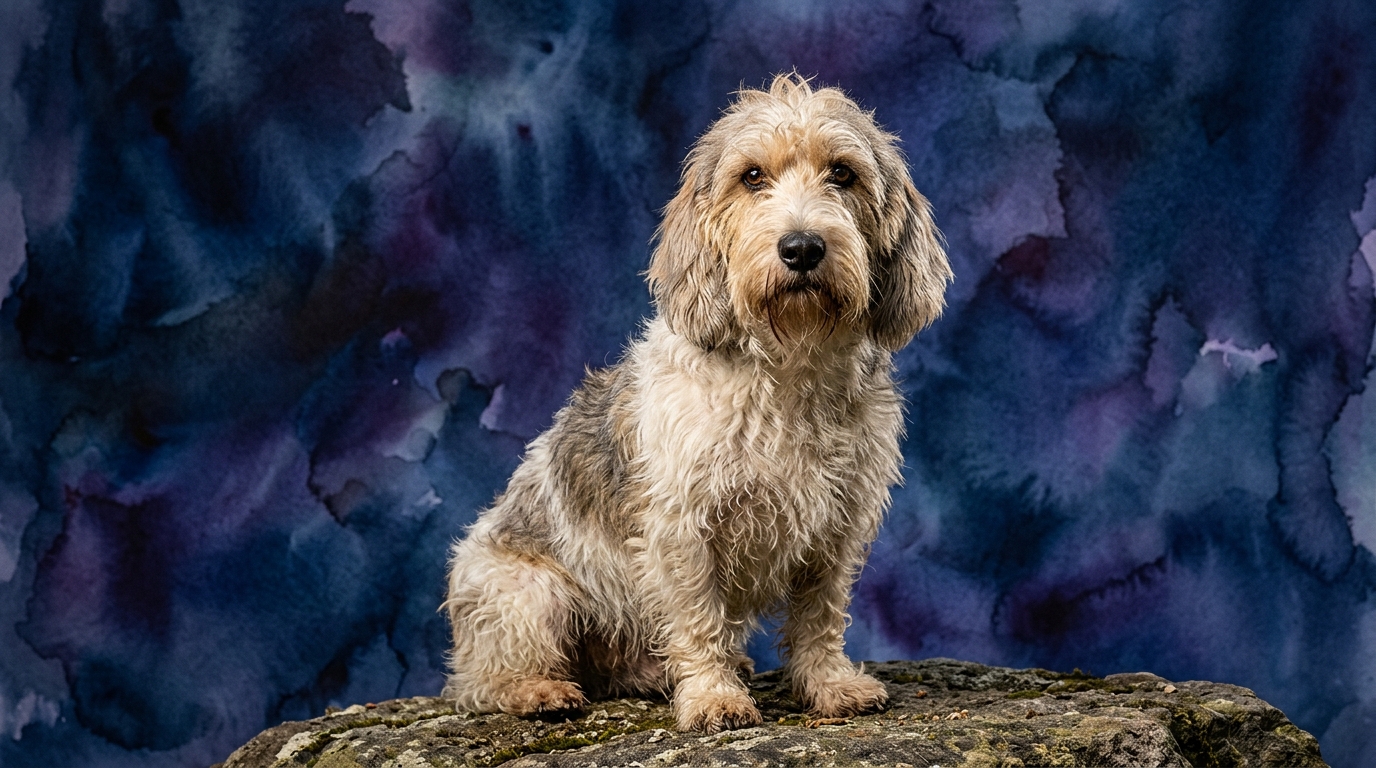
In contrast, the Petit Basset Griffon Vendéen (PBGV), a vibrant French scent hound, presents a different cognitive landscape. Its scores are Problem Solving 3/5, Training Speed 3/5, Social Intelligence 3/5, Instinctive Drive 3/5, and Memory 3/5. These ratings reflect a dog whose intelligence is geared more towards independent action, sensory processing, and a persistent pursuit of its primary drive, rather than the biddability and complex problem-solving seen in working breeds. The PBGV's cognitive strengths lie in its specialized hound capabilities, which are distinct from the generalist working intelligence of a Rottweiler.
Where the Rottweiler Excels Cognitively
The Rottweiler's cognitive strengths are evident across multiple dimensions, particularly in Problem Solving (5/5), Instinctive Drive (5/5), and Memory (5/5). Their superior problem-solving ability means they can quickly assess novel situations, devise strategies, and execute solutions, whether it’s figuring out how to open a gate or navigating a complex obedience course. This high score is a testament to their capacity for abstract thought and strategic thinking, crucial for their historical roles in protection and herding.
Their powerful Instinctive Drive isn't just about energy; it’s about a deep-seated purpose and focus. This drive, coupled with their exceptional memory, allows them to master and retain complex multi-step commands and routines with remarkable consistency. A Rottweiler can remember intricate scent trails, recall specific threats, and maintain long-term learned behaviors, making them highly reliable in demanding working environments. Their robust social intelligence (4/5) further enhances their ability to interpret human cues and respond appropriately, forming strong, responsive partnerships.
Where the Petit Basset Griffon Vendéen's Cognitive Strengths Shine
While the PBGV's overall scores are lower than the Rottweiler's, it possesses a unique set of cognitive strengths perfectly aligned with its heritage as a tenacious scent hound. Its Instinctive Drive (3/5), though numerically lower, is intensely focused on scent work. This isn't about general obedience but about an unwavering, single-minded determination to follow a trail, often tuning out all other stimuli. This specialized cognitive focus is a strength in its own right, allowing it to excel in activities like tracking and scent detection.
The PBGV's Problem Solving (3/5) and Memory (3/5) are geared towards navigating varied terrains and recalling scent patterns rather than complex human-centric tasks. Their cognitive independence means they excel at finding solutions to challenges within their hunting context, such as figuring out how to push through dense underbrush or bypass an obstacle to stay on a scent. Their social intelligence (3/5) manifests as an engaging, often comical demeanor, but it’s less about biddability and more about their charming, self-assured presence, making them delightful companions for those who appreciate a dog with its own agenda.
Which is Easier to Train and Why
Based on their cognitive profiles, the Rottweiler is unequivocally easier to train for general obedience and complex tasks. With a Training Speed of 4/5 and Problem Solving at 5/5, Rottweilers quickly grasp new commands and apply them effectively. Their high social intelligence means they are often eager to please and highly attuned to their handler's instructions and expectations. This combination of mental agility, strong memory, and a cooperative disposition makes them highly responsive to consistent, positive reinforcement training.
The Petit Basset Griffon Vendéen, with a Training Speed of 3/5 and Problem Solving also at 3/5, presents a different training dynamic. PBGVs are independent thinkers, and their strong instinctive drive for scent often overrides a desire for immediate human gratification. Training a PBGV requires patience, creativity, and an understanding of their hound nature. They are not unintelligent, but their intelligence is directed towards their primary purpose – scenting – which can make them appear stubborn or distracted in traditional obedience settings. Their training often benefits from incorporating scent games and allowing them to engage their natural drives, rather than solely focusing on rote commands.
Which Suits Active Owners vs. Relaxed Owners
The Rottweiler, with its profound cognitive needs and high instinctive drive, is best suited for active owners who can provide consistent mental stimulation and purposeful engagement. These dogs thrive on having a job, whether it's advanced obedience, protection sports, agility, or even complex puzzle toys. A Rottweiler needs more than just physical exercise; their minds require challenges to prevent boredom and channel their considerable intellect constructively. Owners who enjoy structured activities and can commit to regular training sessions will find a deeply rewarding partnership.
The Petit Basset Griffon Vendéen, while possessing an independent spirit, also requires an active lifestyle, albeit one focused on different types of activity. Their powerful scent drive means they need opportunities for robust outdoor exploration, ideally in secure areas where they can follow their noses safely. They are not lapdogs, and a relaxed owner who expects a sedentary companion will find a PBGV's energy and curiosity challenging. Owners who appreciate long walks, hikes, and engaging in scent-based games, and who can tolerate an independent, sometimes boisterous, companion, will find a PBGV a delightful match. Their cognitive needs are less about complex obedience and more about fulfilling their innate desire to track and explore.
The Verdict: When to Choose Each Breed
The Verdict
Choose a Rottweiler if you are an active, experienced owner seeking a highly trainable, purposeful companion capable of complex learning and requiring significant mental engagement and structure. They excel in roles demanding loyalty, problem-solving, and reliable obedience.
Opt for a Petit Basset Griffon Vendéen if you appreciate an independent, spirited companion with a powerful scent drive, are prepared for a dog that marches to its own drum, and enjoy outdoor adventures focused on exploration rather than strict obedience.
🧠 Find Your Pet's IQ Score
Our Pet IQ Lab assessment covers 25+ tests across 5 cognitive dimensions — personalized to your breed.
Take the Full IQ Test →Frequently Asked Questions
Do Rottweilers require a lot of mental stimulation?
Yes, Rottweilers have a high problem-solving capacity and strong instinctive drive, meaning they require significant mental challenges daily to prevent boredom and destructive behaviors. They thrive on learning new tasks and engaging in purposeful activities.
Are Petit Basset Griffon Vendéens difficult to train?
PBGVs are not inherently difficult, but their independent nature and strong scent drive mean training requires patience and consistency. They respond best to positive reinforcement and training methods that incorporate their natural instincts, rather than strict rote obedience.
Which breed is better for first-time dog owners?
Neither breed is typically recommended for first-time dog owners without significant research and commitment. Rottweilers require experienced handling due to their strength and cognitive needs, while PBGVs' independence and strong prey drive can be challenging for novices.