
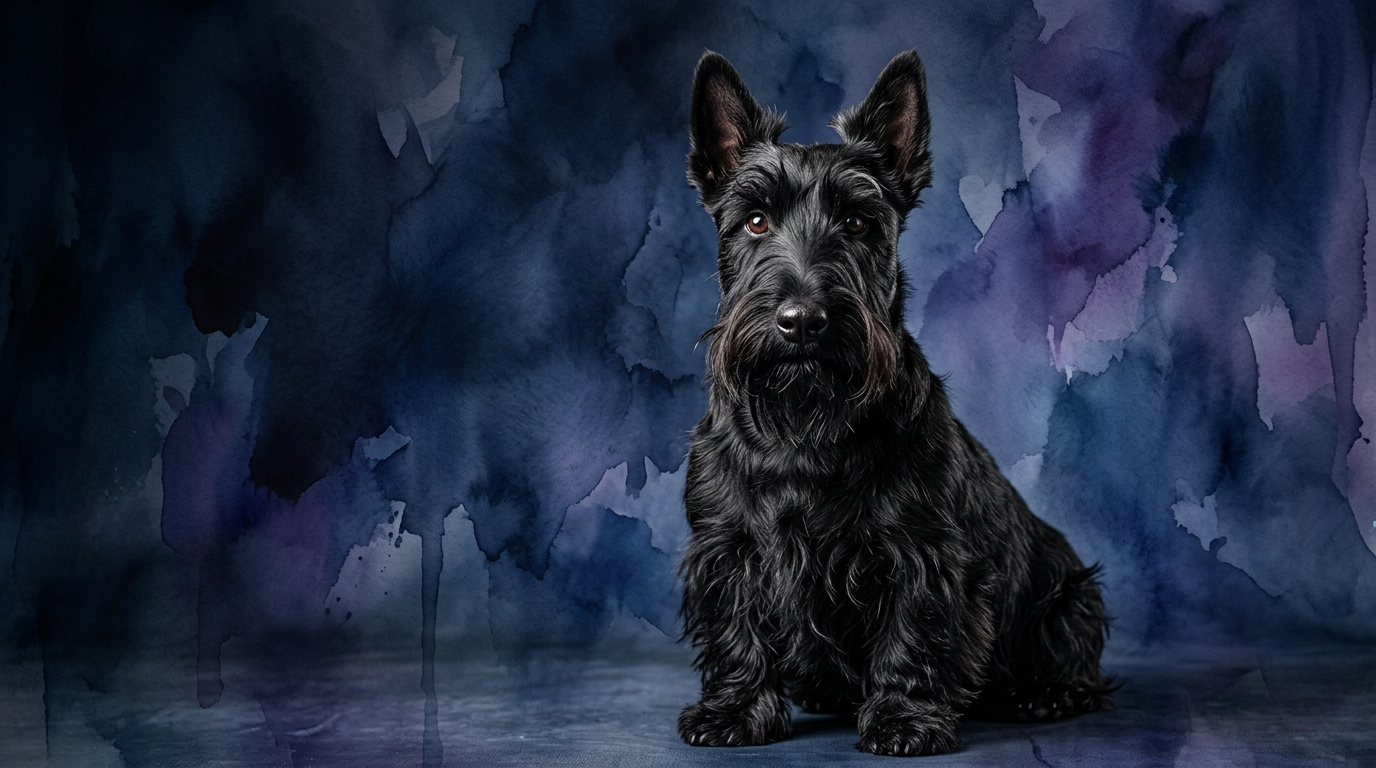
Side-by-Side Cognitive Profile: Rottweiler vs. Scottish Terrier
The Cosmic Pet Pet IQ Lab provides a detailed breakdown of five key cognitive dimensions for each breed. The Rottweiler, a formidable working dog with a Coren rank of #9, demonstrates a robust cognitive toolkit: Problem Solving at 5/5, Training Speed at 4/5, Social Intelligence at 4/5, Instinctive Drive at 5/5, and Memory at 5/5. These scores paint a picture of a dog equipped for complex tasks, rapid learning, nuanced social understanding, powerful motivation, and excellent retention.
In contrast, the Scottish Terrier, a tenacious terrier breed with a Coren rank of #65, exhibits a different set of cognitive strengths. Its scores are consistently moderate across the board: Problem Solving at 3/5, Training Speed at 3/5, Social Intelligence at 3/5, Instinctive Drive at 3/5, and Memory at 3/5. These metrics suggest a dog with practical, focused cognitive abilities, capable of learning and adapting, but perhaps with a more deliberate approach than its working group counterpart.
Where the Rottweiler Excels Cognitively
The Rottweiler’s superior problem-solving capacity (5/5) means it can adeptly navigate complex scenarios, understand multi-step commands, and even strategize to achieve a goal. This manifests in their ability to learn intricate protection routines, figure out how to open latches, or adapt to novel situations with a thoughtful approach rather than pure instinct. Their capacity for abstract reasoning and decision-making under pressure is a hallmark of their cognitive prowess.
Their exceptional memory (5/5) ensures that once a lesson is learned or a command is mastered, it is retained with remarkable consistency over time. This makes advanced, cumulative training highly effective and reliable, as they build upon previous knowledge. Paired with a high training speed (4/5), Rottweilers assimilate new information quickly, making them responsive and adaptable pupils.
Furthermore, the Rottweiler's robust instinctive drive (5/5) is not just about raw power; it's about a deep-seated motivation to engage in directed work, whether it's herding, guarding, or performing obedience. This drive fuels their focus and persistence, allowing them to sustain effort on challenging tasks. Their social intelligence (4/5) also plays a crucial role, enabling them to finely tune into human cues, intentions, and emotional states, fostering a strong, cooperative working partnership.
Where the Scottish Terrier Demonstrates Cognitive Advantages
While the Scottish Terrier’s cognitive scores are numerically lower, their strengths lie in the focused application of their abilities, perfectly suited to their heritage. Their problem-solving (3/5) is highly practical and tenacious, geared towards independent investigation and overcoming obstacles in pursuit of a goal, such as locating prey in complex underground environments. This isn't about complex strategy for a handler, but efficient, self-directed problem-solving for their own specific drives.
The Scottish Terrier’s instinctive drive (3/5), though not as broad as a Rottweiler's, is intensely concentrated on specific terrier tasks, particularly hunting small burrowing animals. This focused persistence allows them to pursue their objectives with unwavering determination, often showing remarkable self-reliance and grit. This cognitive trait means they are less likely to abandon a task once their terrier instincts are engaged, demonstrating a unique form of mental fortitude.
Their moderate social intelligence (3/5) can translate into a certain independent resilience. Scottish Terriers are not typically overly reliant on constant human validation or direction, which can be an advantage for owners seeking a companion that is comfortable in its own company. This cognitive independence means they process their environment and make decisions based on their own assessment, rather than solely waiting for a handler's cue, fostering a distinct self-sufficiency.
Training Ease: Rottweiler vs. Scottish Terrier
When it comes to training, the Rottweiler generally presents an easier path for the dedicated owner. Their high training speed (4/5) means they grasp new commands and behaviors rapidly, often requiring fewer repetitions. Coupled with their exceptional memory (5/5) and strong social intelligence (4/5), they are eager to engage with their handler, remember what they've learned, and are highly responsive to nuanced cues. Their powerful instinctive drive (5/5) can be channeled effectively into structured work, making them motivated and cooperative learners who thrive on having a purpose.
The Scottish Terrier, with its moderate training speed (3/5) and fiercely independent nature, can be more challenging to train. They require patience, consistency, and a deep understanding of their terrier mindset. Their instinctive drive (3/5) is often directed towards self-motivated pursuits, meaning they might weigh the immediate value of a command against their own desires. Training a Scottie often involves making the desired behavior more appealing than their innate urges, requiring creative motivation and a firm but gentle hand to navigate their self-assured temperament. They learn steadily, but often on their own terms, and may not offer the same rapid, eager compliance as a Rottweiler.
Suitability for Active vs. Relaxed Owners
Rottweilers are ideally suited for active, engaged owners who can provide consistent mental stimulation and physical activity. Their robust problem-solving skills, high instinctive drive, and substantial physical needs mean they flourish with a 'job' to do, whether it's advanced obedience, protection sports, or consistent, challenging exercise. Owners who can commit to structured training and provide outlets for their powerful cognitive and physical energy will find a highly rewarding partnership; without this, Rottweilers can become bored and potentially destructive.
Scottish Terriers, while needing regular exercise to stay healthy and happy, typically suit owners with a more relaxed lifestyle, provided their specific needs are met. They enjoy walks, exploring, and opportunities for digging, but generally don't require the same intensity or duration of structured activity as a Rottweiler. Owners who appreciate an independent, spirited companion that is content with a cozy home life and moderate daily engagement will find a good match. They still require mental enrichment to prevent boredom, but it often revolves around scent work, puzzle toys, and short, engaging training sessions rather than high-octane work.
The Verdict
Choose a Rottweiler if you seek a highly trainable partner for complex tasks, protection, or advanced obedience, and are prepared to dedicate significant time to structured training and mental engagement.
Choose a Scottish Terrier if you desire a tenacious, independent, and spirited companion that thrives with moderate activity and an owner who appreciates their unique self-sufficient character.
🧠 Find Your Pet's IQ Score
Our Pet IQ Lab assessment covers 25+ tests across 5 cognitive dimensions — personalized to your breed.
Take the Full IQ Test →Frequently Asked Questions
Do Rottweilers require a lot of mental stimulation?
Absolutely. With a problem-solving score of 5/5 and high instinctive drive, Rottweilers thrive on mental challenges. Without adequate mental stimulation, they can become bored, which may lead to unwanted behaviors.
Are Scottish Terriers considered stubborn?
Scottish Terriers can certainly exhibit a stubborn streak, which stems from their independent nature and focused instinctive drive (3/5 for both social intelligence and training speed). They often prefer to follow their own instincts rather than human commands, requiring consistent, patient, and reward-based training.
Can a Scottish Terrier be a good guard dog?
While not a traditional guard dog like a Rottweiler, a Scottish Terrier can be an excellent watchdog. Their alert nature and tendency to bark at strangers, combined with their territorial instincts, make them effective at signaling the presence of intruders, despite their smaller size.