
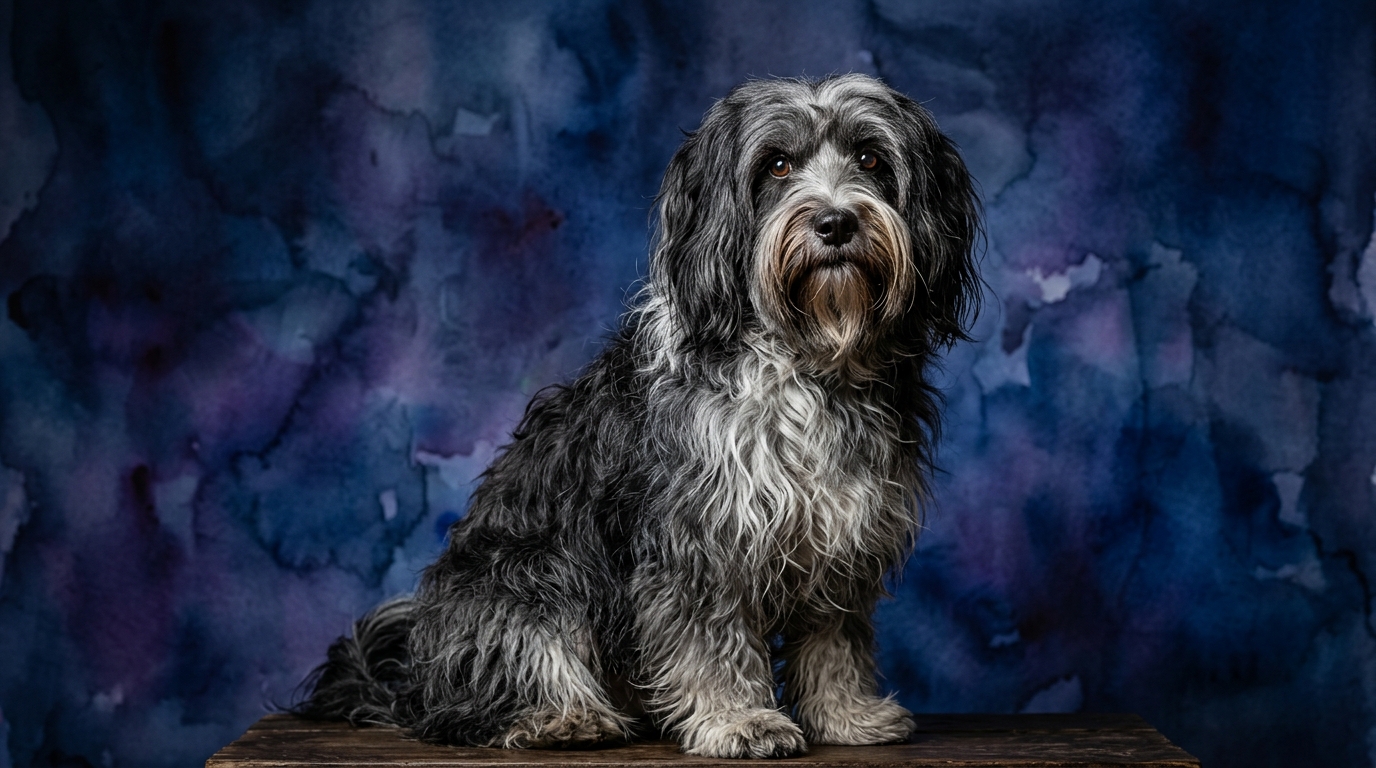
Side-by-Side IQ Profile: Rottweiler vs. Tibetan Terrier
The Cosmic Pet Pet IQ Lab provides a comprehensive five-dimensional assessment for each breed, allowing us to pinpoint their unique cognitive strengths. For the Rottweiler, a breed ranked #9 by Coren, its profile shows impressive capabilities across the board: Problem Solving 5/5, Training Speed 4/5, Social Intelligence 4/5, Instinctive Drive 5/5, and Memory 5/5. This data paints a picture of a dog highly attuned to its environment and purpose.
In contrast, the Tibetan Terrier, holding Coren's #63 rank, presents a different cognitive blueprint: Problem Solving 3/5, Training Speed 3/5, Social Intelligence 3/5, Instinctive Drive 3/5, and Memory 3/5. While not matching the Rottweiler's high scores, these ratings suggest a capable and adaptable mind, albeit one that operates with a distinct approach to learning and interaction.
Delving deeper into the Rottweiler's profile, its 5/5 Problem Solving indicates a profound capacity for analytical thought and devising effective solutions to complex challenges. A 4/5 Training Speed means they typically grasp new commands swiftly, requiring fewer repetitions. Their 4/5 Social Intelligence underscores their ability to read human cues and integrate into family dynamics, while a powerful 5/5 Instinctive Drive fuels their natural inclination for purposeful work and protection. Finally, an exceptional 5/5 Memory ensures they retain vast amounts of learned information, contributing to their reliability and consistency.
For the Tibetan Terrier, a 3/5 in Problem Solving points to a moderate degree of ingenuity, often employing persistence and a unique perspective to navigate obstacles. Their 3/5 Training Speed suggests they learn at a steadier pace, sometimes displaying an independent streak that requires patient, consistent methods. A 3/5 Social Intelligence indicates they form strong, discerning attachments within their chosen family, capable of nuanced interactions. Their 3/5 Instinctive Drive is present but less intense than working breeds, often manifesting as curiosity or companionship, rather than strong task orientation. Lastly, a 3/5 Memory means they are capable of recalling routines and familiar people, benefiting from consistent reinforcement.
Where the Rottweiler Wins Cognitively
The Rottweiler's formidable cognitive architecture truly shines in scenarios demanding sustained mental effort, strategic thinking, and unwavering focus. Their 5/5 Problem Solving score means they are adept at dissecting complex situations, like figuring out how to open a child-proof gate or learning intricate scent discrimination tasks. This isn't just about brute force; it's about understanding cause and effect and applying learned principles to novel challenges with remarkable efficiency.
Their 5/5 Instinctive Drive fuels a relentless pursuit of purpose, making them unparalleled in roles requiring dedication and follow-through, such as protection work, search and rescue, or competitive obedience. This drive translates into an intrinsic motivation to work alongside their human partners, seeking to understand and execute tasks with precision and an innate desire to fulfill their inherent roles.
Furthermore, their exceptional 5/5 Memory ensures that lessons learned and experiences gained are deeply embedded, leading to highly consistent performance over time. A Rottweiler remembers commands, boundaries, and social cues with remarkable clarity, minimizing the need for constant re-teaching and allowing for the development of an extensive behavioral repertoire. This combination of superior problem-solving, profound drive, and robust memory makes them exceptionally reliable in demanding environments and complex training regimes.
Where the Tibetan Terrier Wins Cognitively
While the Tibetan Terrier's cognitive scores are generally lower than the Rottweiler's, their unique profile presents distinct advantages for certain lifestyles and owner preferences. Their 3/5 Problem Solving, for example, often manifests as a clever, independent spirit rather than a direct, systematic approach. They might not solve a puzzle exactly as intended, but they'll find their own ingenious, often persistent, way to achieve their goal, demonstrating a charming resourcefulness that can be highly endearing and surprising.
Their 3/5 Social Intelligence, while not indicating effusive friendliness towards all, signifies a discerning and deeply bonded social nature within their chosen family. They excel at forming profound, loyal connections with their immediate human companions, often displaying a nuanced understanding of their family's emotional landscape without being overly demanding of attention from everyone. This selective social intelligence can be a "win" for owners who prefer a dog with a strong, focused attachment rather than one universally social and outgoing.
The Tibetan Terrier's moderate 3/5 Instinctive Drive also translates into a less intense need for highly structured "work," making them wonderfully adaptable companions for families seeking engagement without the demands of a high-drive working breed. Their cognitive energy is often directed towards companionship, playful interaction, and exploring their immediate environment with a joyful curiosity, thriving in a home where their independence is understood and celebrated rather than needing constant, rigorous direction.
Which is Easier to Train and Why
Based on the Cosmic Pet Pet IQ Lab data, the Rottweiler is generally easier to train for complex tasks and obedience. Their Training Speed of 4/5 means they typically grasp new commands quickly, often requiring fewer repetitions. This is coupled with their 5/5 Memory, ensuring that once a lesson is learned, it's retained for the long term, leading to consistent performance without constant refreshers. Their high Instinctive Drive (5/5) also makes them eager to work and please their handler, especially when training taps into their natural protective or task-oriented instincts, leading to a highly motivated and focused student.
The Tibetan Terrier, with a Training Speed of 3/5 and Memory of 3/5, will require more patience and consistency in training. Their problem-solving often involves a degree of independent thought, and they may not always see the immediate "point" of a command, preferring to figure things out on their own terms or for their own benefit. This independence, while charming, means trainers must employ positive reinforcement, make training sessions engaging, and understand that consistent repetition over time will yield results. While capable of learning, their behavioral differences mean they might not always offer the same immediate, eager compliance as a Rottweiler, often needing more convincing that a command is worth their effort, rather than simply obeying out of drive or compliance.
Which Suits Active Owners vs. Relaxed Owners
The Rottweiler's cognitive profile strongly aligns with active owners who are prepared to provide substantial mental and physical engagement. Their 5/5 Instinctive Drive and 5/5 Problem Solving capabilities mean they thrive when given a job to do, whether it's advanced obedience, protection sports, or even complex puzzle toys that demand significant cognitive effort. Owners who enjoy long, structured walks, daily training sessions, and activities that consistently challenge a dog's intellect and body will find the Rottweiler an incredibly rewarding and fulfilling partner. Their need for consistent mental stimulation means a relaxed owner who cannot dedicate this time might find their Rottweiler inventing their own, potentially undesirable, "jobs" to alleviate boredom.
Conversely, the Tibetan Terrier, with its moderate 3/5 Instinctive Drive and 3/5 Problem Solving, is often a better fit for more relaxed owners, though they are by no means a couch potato. They enjoy regular walks, playtime, and mental enrichment, but their demands are typically less intense and less structured than a Rottweiler's. Owners who appreciate a dog that can engage in moderate activities, enjoys quality time indoors, and doesn't require constant, high-stakes training will find the Tibetan Terrier's balanced energy and independent spirit appealing. They are content with a good walk, engaging companionship, and a few puzzle toys, rather than needing to fulfill a rigorous working role daily to remain content.
The Verdict
Choose a Rottweiler if you are an experienced owner seeking a highly capable, driven companion for protection, advanced training, or demanding activities, ready to invest significant time in their mental and physical engagement.
Opt for a Tibetan Terrier if you desire a charming, independent, and loyal companion for a moderately active household, appreciating their discerning social nature and unique approach to life's puzzles.
🧠 Find Your Pet's IQ Score
Our Pet IQ Lab assessment covers 25+ tests across 5 cognitive dimensions — personalized to your breed.
Take the Full IQ Test →Frequently Asked Questions
Do Rottweilers require extensive mental stimulation?
Absolutely. With a 5/5 in Problem Solving and Instinctive Drive, Rottweilers thrive on mental challenges and purposeful activities. Without adequate stimulation, they may become bored and channel their considerable intelligence into less desirable behaviors, highlighting their need for engagement.
Are Tibetan Terriers difficult to live with due to their independence?
Tibetan Terriers possess a charming independence, scoring 3/5 in Training Speed and Problem Solving. While not 'difficult,' they require consistent, positive training and owners who appreciate their unique thought process rather than expecting immediate, unwavering obedience, fostering a partnership built on understanding.
How do their social intelligence scores impact family life?
A Rottweiler's 4/5 Social Intelligence means they are generally perceptive and integrate well into family dynamics, often forming strong bonds and being responsive to their family's needs. A Tibetan Terrier's 3/5 score indicates they are deeply loyal to their family but can be more reserved or discerning with strangers, preferring a close-knit social circle and selective affection.