
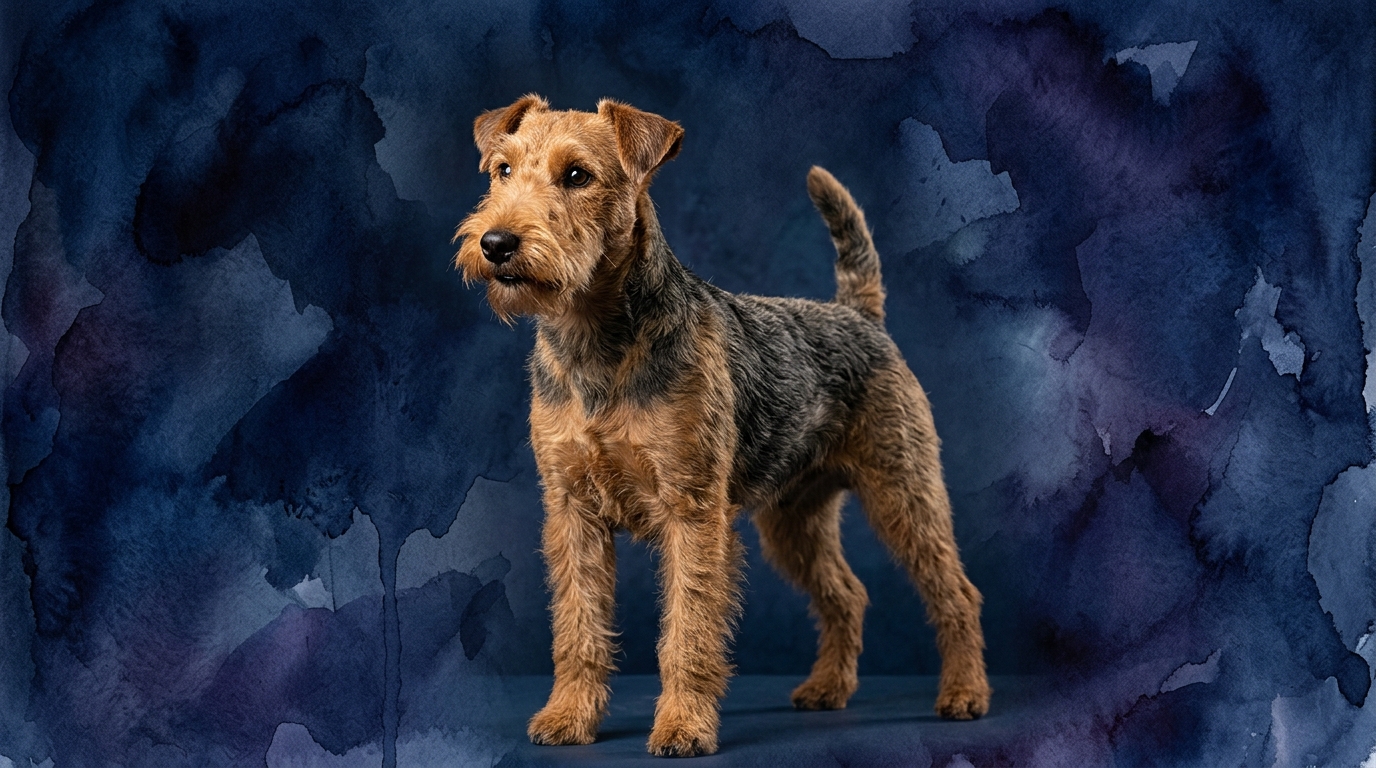
Side-by-Side IQ Profile: Rottweiler vs. Welsh Terrier
The Rottweiler presents a formidable cognitive profile, reflecting their working heritage. Their **Problem Solving (5/5)** skills are exceptional, indicating a capacity to analyze complex situations and devise effective solutions, often demonstrating foresight. **Training Speed (4/5)** is impressive; they grasp new commands and routines with relative ease, though their strong will necessitates consistent, fair guidance. **Social Intelligence (4/5)** allows them to interpret human cues and social hierarchies effectively, contributing to their role as guardians and companions, though they can be reserved with strangers. Their **Instinctive Drive (5/5)** is profound, encompassing a powerful protective instinct and a drive to work, which, when channeled, makes them formidable partners. Finally, their **Memory (5/5)** is outstanding, enabling them to retain vast amounts of information, from training commands to past experiences and routines, for extended periods.
The Welsh Terrier showcases a different, distinctly terrier-centric cognitive style. Their **Problem Solving (3/5)** leans towards practical, often independent, solutions, particularly when pursuing a goal like digging or hunting, rather than abstract reasoning. **Training Speed (3/5)** is moderate; they can learn, but their independent streak and occasional stubbornness mean they often require more repetition and creative motivation than some other breeds. **Social Intelligence (3/5)** is adequate for forming strong bonds with their family, but they tend to be less concerned with pleasing than a working dog, and can be assertive with other animals or strangers. Their **Instinctive Drive (3/5)** is primarily focused on their historical role as hunters, displaying a persistent prey drive and a determined focus on tasks that engage this instinct, rather than a broad working drive. Their **Memory (3/5)** is sufficient for retaining routines and commands, but perhaps not with the same depth or longevity as breeds bred for complex, multi-stage tasks.
Where the Rottweiler Excels Cognitively
The Rottweiler's cognitive strengths are evident across the board, particularly in structured learning and complex task execution. Their superior **Problem Solving (5/5)** allows them to quickly assess new situations and adapt, making them adept at advanced obedience, protection work, or service roles where critical thinking is paramount. This breed's remarkable **Memory (5/5)** ensures that once a lesson is learned or an experience recorded, it is retained, building a robust foundation for cumulative learning and reliable performance over time. Furthermore, their high **Instinctive Drive (5/5)**, when directed through training, translates into an unwavering focus and dedication to tasks, making them exceptionally reliable in demanding roles that require sustained effort and precision. They excel where a deep understanding of commands, strategic thinking, and consistent application of learned behaviors are essential.
Where the Welsh Terrier's Cognition Shines Uniquely
While not scoring as high in traditional cognitive metrics, the Welsh Terrier's unique cognitive profile offers distinct advantages for specific owners and lifestyles. Their **Instinctive Drive (3/5)**, though rated lower in overall breadth than the Rottweiler's, is intensely focused and persistent, particularly for tasks related to their terrier heritage. This translates into an unyielding determination when pursuing a scent or engaging in independent exploration, making them excellent companions for active owners who appreciate a dog with strong self-motivation and tenacity. Their **Problem Solving (3/5)**, while not for abstract concepts, is highly practical and resourceful in their pursuit of goals, often finding creative, albeit sometimes mischievous, ways to overcome obstacles when driven by their instincts. This independent spirit, a facet of their **Social Intelligence (3/5)**, means they are less reliant on constant human direction for stimulation, thriving on self-directed activities and offering a companion who brings a spirited, self-assured presence to the home.
Trainability: Which Breed is Easier to Guide?
The Rottweiler is generally easier to train for a wide range of complex tasks due to its higher scores in **Training Speed (4/5)**, **Problem Solving (5/5)**, and **Memory (5/5)**. They possess a strong desire to work with their human partners and a significant capacity to understand and retain commands quickly. Their drive to please, combined with their ability to process information efficiently, means they can move through training levels at a faster pace and perform intricate sequences reliably. In contrast, the Welsh Terrier, with its **Training Speed (3/5)** and **Problem Solving (3/5)**, often requires more patience and consistency. Their independent nature and strong prey drive mean they can be more easily distracted and may not always see the immediate value in complying with a command if it conflicts with their instincts. Training a Welsh Terrier often involves making the activity itself highly rewarding and engaging to overcome their natural inclination towards self-directed pursuits, rather than relying solely on a desire to please.
Lifestyle Match: Active vs. Relaxed Owners
The Rottweiler, with its profound **Instinctive Drive (5/5)** and impressive cognitive capacity, is best suited for active owners who are prepared to provide consistent mental and physical stimulation. They thrive on structured activities like advanced obedience, protection sports, or service work that engage their problem-solving abilities and strong work ethic. A Rottweiler needs a job, whether formal or informal, to remain content and well-behaved, making them a poor fit for a relaxed owner who cannot commit to rigorous training and daily engagement. The Welsh Terrier, while also requiring regular exercise to manage its terrier energy and **Instinctive Drive (3/5)**, can suit owners who are active but perhaps less inclined towards formal, intensive training routines. They enjoy vigorous play, long walks, and opportunities for independent exploration, making them a good match for owners who appreciate a spirited companion for outdoor adventures but might not seek a dog for competitive working roles. Their moderate **Social Intelligence (3/5)** and self-reliant nature mean they are comfortable entertaining themselves for periods, making them adaptable to an active household that might not always be focused on structured dog activities.
The Verdict
Opt for a Rottweiler if you are an experienced, active owner seeking a highly capable, trainable, and loyal partner for demanding tasks, advanced training, or protective roles.
Select a Welsh Terrier if you appreciate an independent, spirited, and tenacious companion for an active lifestyle, willing to engage in consistent, creative training to channel their distinctive terrier instincts.
🧠 Find Your Pet's IQ Score
Our Pet IQ Lab assessment covers 25+ tests across 5 cognitive dimensions — personalized to your breed.
Take the Full IQ Test →Frequently Asked Questions
Does Coren ranking accurately reflect a dog's real-world intelligence?
Coren ranking primarily assesses "working and obedience intelligence," focusing on how quickly a dog learns and obeys commands. It's a valuable metric for trainability but doesn't encompass all facets of canine cognition, such as problem-solving in natural environments or social nuance.
How does "Instinctive Drive" differ between these two breeds?
The Rottweiler's 5/5 Instinctive Drive refers to a broad, powerful motivation for protection, guarding, and working alongside humans. The Welsh Terrier's 3/5 Instinctive Drive is more narrowly focused on classic terrier traits like hunting, digging, and independent pursuit of prey, reflecting their historical purpose.
Can a Welsh Terrier learn complex tricks despite its lower training speed score?
Absolutely. While they may take more repetition and creative motivation than a Rottweiler, Welsh Terriers are capable of learning complex tricks. Their problem-solving and memory scores of 3/5 indicate they can certainly grasp and retain information with consistent, positive reinforcement.