
Side-by-Side IQ Profile: Russian Toy
The Russian Toy, a charming companion breed, exhibits a Problem Solving score of 3/5. This often manifests in their clever navigation of domestic environments, figuring out how to reach desired objects, or ingeniously soliciting attention from their human companions. They typically excel at puzzle toys designed for small breeds, quickly discerning mechanisms to release hidden treats.
With a Training Speed of 3/5, Russian Toys generally respond well to positive reinforcement, showing a moderate pace in acquiring new commands. Their desire to please their primary human, coupled with a generally bright and eager disposition, contributes to their trainability, though consistency is key to overcoming any occasional independent streak. Their Social Intelligence is rated 3/5; these dogs are highly attuned to their human companions, often reading emotional cues with precision, offering comfort, or seeking interaction appropriately. They form deep bonds and can be quite sensitive to household dynamics, though their social circle often remains small and familiar.
Their Instinctive Drive, at 3/5, means that despite their small size, Russian Toys retain a terrier-like alertness, frequently quick to sound the alarm at perceived threats or novel sounds. They may exhibit a moderate prey drive towards small scurrying creatures, reflecting their ancestral working roles as ratters. Finally, their Memory score of 3/5 indicates these dogs possess a good recall for routines, people, and specific locations, quickly learning household schedules and remembering past interactions. Both positive and negative experiences tend to stick, influencing their future responses to similar situations or individuals.
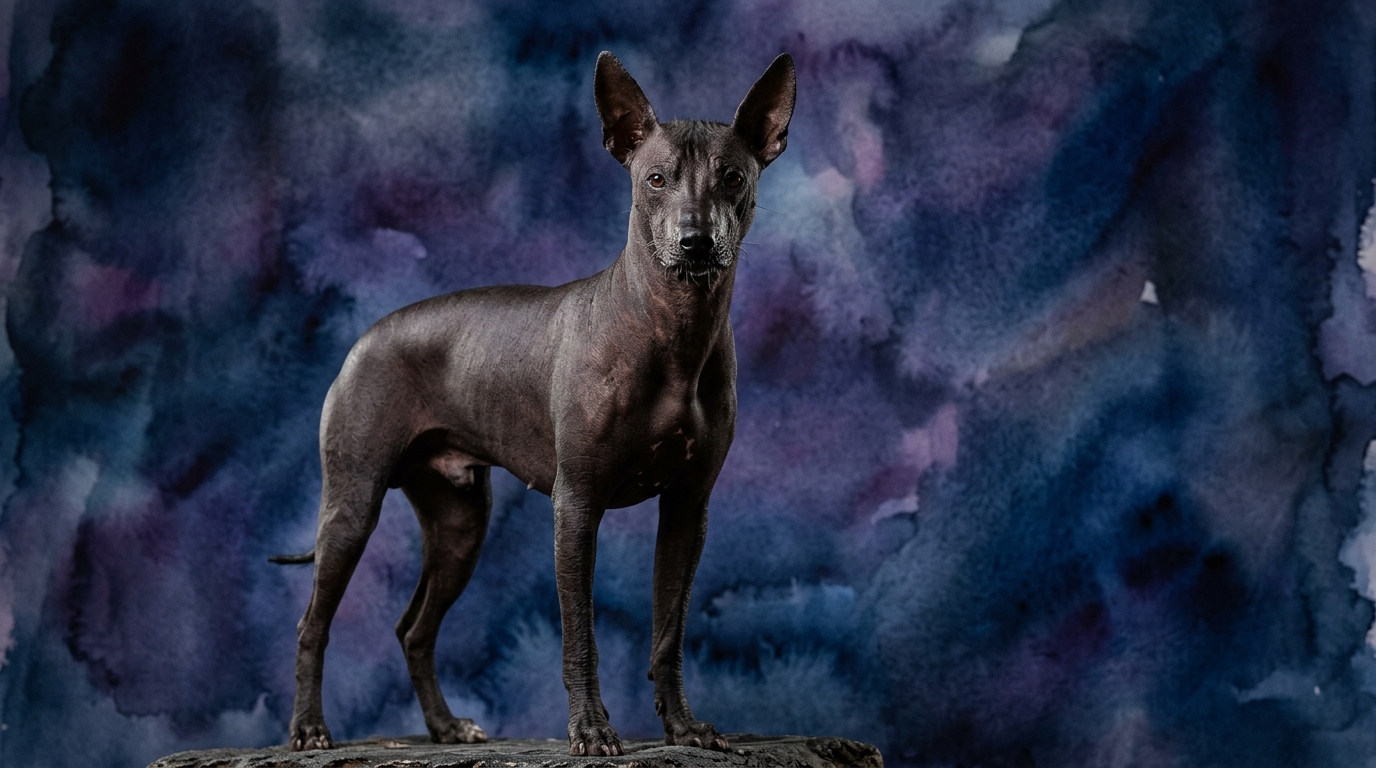
Side-by-Side IQ Profile: Xoloitzcuintli
The Xoloitzcuintli, an ancient and often hairless breed, also holds a Problem Solving score of 3/5. Their problem-solving abilities often manifest in their resourcefulness and determination, whether it's figuring out how to access a forbidden area or cleverly manipulating their environment to achieve a goal. Their ancient lineage suggests a practical intelligence geared towards survival and adaptation, often displaying a patient, methodical approach.
Regarding Training Speed, the Xoloitzcuintli scores 3/5. These dogs are known for their independent spirit and can be slower to mature, meaning training requires patience, consistency, and a strong, fair leader. Once they grasp a concept and trust their trainer, they demonstrate a solid understanding and retention, but they are not typically 'quick study' dogs who learn solely to please. Their Social Intelligence is also 3/5; Xolos exhibit a profound social intelligence within their trusted family unit, often forming extremely deep, almost empathetic bonds. They are highly perceptive of their owners' moods and intentions but tend to be reserved, even aloof, with strangers, assessing new individuals carefully before offering acceptance.
With an Instinctive Drive of 3/5, Xolos possess strong natural instincts, including a pronounced guarding tendency over their home and family. They also retain a moderate prey drive, particularly for small game, and may display a keen sense of their territory and surroundings, reflecting their ancestral roles. Their Memory score of 3/5 signifies excellent recall, particularly for people, places, and routines. They recall past events and interactions vividly, which contributes to their discerning nature with strangers and their deep loyalty to those they consider family. This strong recall also means negative experiences can leave a lasting impression.
Where the Russian Toy Wins Cognitively
Despite identical numerical scores, the Russian Toy often demonstrates a quicker initial grasp of novel concepts in a structured training environment. Their eager-to-please nature and smaller physical presence can make them more amenable to rapid repetition and positive reinforcement during early learning phases, particularly for foundational obedience cues. Their social intelligence, while rated the same, might manifest as a slightly faster adaptation to a wider variety of social settings, provided they feel secure, due to their inherent role as a companion. They might also show a quicker application of problem-solving skills in manipulating human attention or navigating new, less threatening domestic challenges.
Where the Xoloitzcuintli Wins Cognitively
The Xoloitzcuintli's cognitive strengths, while numerically similar, often lie in their depth and persistence. Their problem-solving might be characterized by a more tenacious, independent approach to overcoming obstacles, less reliant on constant human guidance. In social intelligence, their deep, discerning bonds translate to an almost intuitive understanding of their primary family members, sensing subtle shifts in mood or intent with remarkable accuracy, though this profound depth is often reserved for their inner circle. Their memory, coupled with their strong instinctive drive, makes them exceptionally reliable in remembering territory boundaries and individuals, contributing to their effective, albeit reserved, guardianship.
Which is Easier to Train and Why
When considering overall ease of training, the Russian Toy generally presents a more straightforward experience for novice owners. Their moderate training speed is often bolstered by a strong desire to please and a generally less independent temperament. They tend to be highly motivated by praise and treats, and their smaller size makes physical guidance easier when necessary. While they can have a stubborn streak, it's typically less pronounced and more easily redirected than the Xolo's inherent independence.
The Xoloitzcuintli, on the other hand, demands a more experienced and patient trainer. Their 3/5 training speed is coupled with a significant independent streak and a slower maturation rate, meaning they require consistent, fair, and firm leadership. They are not easily coerced and respond best to methods that respect their intelligence and inherent dignity, often questioning commands rather than blindly obeying. Their social intelligence means they need to trust and respect their trainer deeply, which takes time to build, making them a more challenging prospect for first-time dog owners.
Which Suits Active Owners vs. Relaxed Owners
The Russian Toy, despite its delicate appearance, possesses a surprising amount of energy and benefits from regular engagement. Owners who enjoy active indoor play, short brisk walks, and mental stimulation through puzzle toys or trick training will find a willing companion. While they can adapt to relaxed periods, they thrive with consistent interaction and opportunities to express their moderate instinctive drives. They are well-suited for owners who are home often and enjoy a highly interactive, always-present canine companion.
The Xoloitzcuintli can suit both active and relaxed owners, but with distinct nuances. They require regular exercise to satisfy their moderate energy levels and strong physical capabilities, enjoying activities like hiking, long walks, or even agility. However, they are also content to relax for extended periods, particularly once mature, often found lounging close to their family. Their independent nature means they don't constantly demand attention, making them suitable for owners who appreciate a dog with a strong 'off switch' but are committed to providing structured exercise and mental engagement when needed.
The Verdict
Choose a Russian Toy if you seek a charming, highly interactive companion who thrives on close human connection and is generally more amenable to initial training efforts, fitting seamlessly into an active domestic routine with consistent engagement.
Choose a Xoloitzcuintli if you value a discerning, deeply loyal companion with a profound bond to its family, appreciate an independent spirit, and are prepared to invest in patient, consistent training that respects their ancient lineage and unique temperament.
🧠 Find Your Pet's IQ Score
Our Pet IQ Lab assessment covers 25+ tests across 5 cognitive dimensions — personalized to your breed.
Take the Full IQ Test →Frequently Asked Questions
Are Russian Toys good with children?
Russian Toys can be good with older, respectful children who understand how to interact gently with a small, delicate dog. Due to their size and potential for being easily injured, supervision is always essential to ensure positive interactions for both the dog and the child.
Do Xoloitzcuintli bark a lot?
Xoloitzcuintli are not typically excessive barkers, but they do possess a moderate instinctive drive for guarding and will bark to alert their family to strangers or perceived threats. Their barking is usually purposeful, reflecting their role as vigilant protectors rather than being purely vocal.
How do their grooming needs compare?
The Russian Toy requires regular grooming for its long coat, including brushing to prevent mats and occasional trims. The hairless Xoloitzcuintli, while not needing brushing, requires regular skin care like bathing, moisturizing, and sun protection, while the coated variety needs standard brushing.