
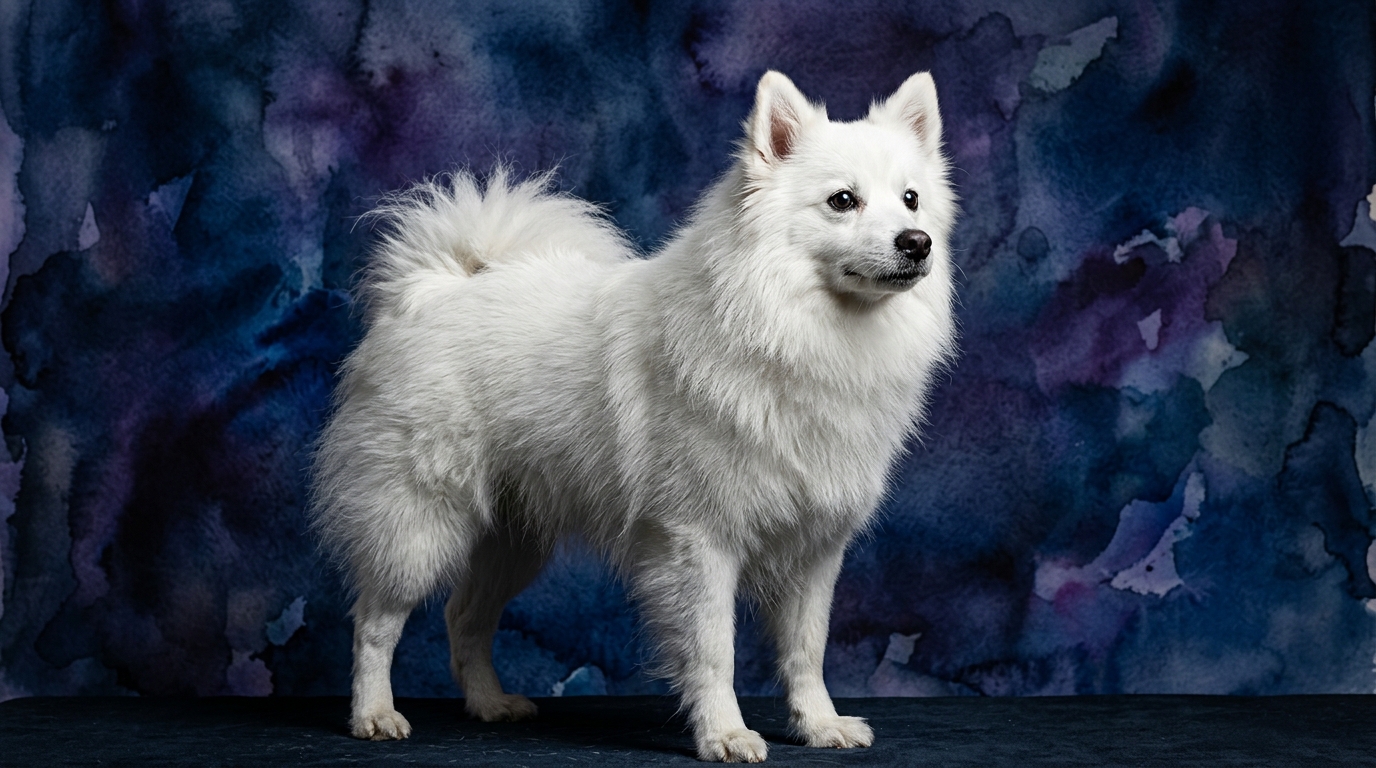
Side-by-Side Cognitive Profiles: Saint Bernard vs. American Eskimo Dog
The Saint Bernard's cognitive profile reveals a blend of moderate problem-solving (3/5) and memory (3/5), suggesting they can navigate moderately complex situations and retain learned information with reasonable reliability. Their Training Speed of 2/5 indicates a more deliberate learning pace, meaning new commands might require consistent repetition over time. Where they truly excel is in Social Intelligence (4/5), highlighting a remarkable capacity for empathy and understanding human cues, fostering deep, attuned bonds. An Instinctive Drive of 5/5 underscores their profound inherent motivations, often tied to their protective or nurturing predispositions, which can manifest as unwavering loyalty and a desire to 'mother' their human companions.
In contrast, the American Eskimo Dog also scores 3/5 in Problem Solving and Memory, indicating a comparable capacity to resolve moderate puzzles and recall past experiences. Their Training Speed of 3/5 suggests a relatively quicker grasp of new commands compared to the Saint Bernard, making them generally more responsive to learning efforts. A Social Intelligence score of 3/5 means American Eskimo Dogs are capable of forming strong bonds and understanding human intentions, though perhaps with a slightly less intense empathetic connection than the Saint Bernard. Their Instinctive Drive, also at 3/5, points to a balanced level of inherent motivations, which might include a moderate prey drive or a desire for vigilance, without the overwhelming intensity seen in some working breeds.
Where the Saint Bernard Wins Cognitively
The Saint Bernard distinctly shines in two cognitive areas: Social Intelligence (4/5) and Instinctive Drive (5/5). Their elevated social intelligence means they possess a remarkable capacity for empathy and understanding nuanced human emotions. This manifests as an innate ability to connect deeply with their families, often anticipating needs or offering comfort without explicit prompting, making them exceptionally attuned companions. Furthermore, their powerful instinctive drive is a defining cognitive trait. This isn't just about physical drive; it's a deep-seated, purpose-driven motivation, historically linked to their heritage as rescue dogs. This strong internal compass can translate into unwavering loyalty and a profound sense of responsibility towards their human 'pack,' guiding their protective and nurturing behaviors.
Where the American Eskimo Dog Wins Cognitively
The American Eskimo Dog's primary cognitive advantage lies in its Training Speed (3/5), surpassing the Saint Bernard's 2/5. This indicates a quicker uptake of new commands and routines, making them generally more agile learners in formal training settings. This faster processing of new information means an Eskie might master a new trick or obedience command with fewer repetitions, potentially making initial training sessions feel more efficient and rewarding for both dog and owner. While other cognitive dimensions are comparable or slightly lower, this accelerated learning pace is a distinct strength, allowing them to adapt more rapidly to novel instructions and environments.
Which is Easier to Train and Why
Based on their respective Training Speed scores, the American Eskimo Dog (3/5) generally presents as the easier breed to train compared to the Saint Bernard (2/5). The Eskie's quicker grasp of new commands means they often require fewer repetitions to solidify a behavior, which can make early obedience training a more streamlined process. Their balanced instinctive drive (3/5) also means their inherent motivations are less likely to intensely override training directives, allowing them to focus more readily on human instruction.
The Saint Bernard, while equally capable of learning, approaches training with a more deliberate pace. Their lower training speed suggests that patience and consistent, positive reinforcement are paramount. Owners might find that teaching a Saint Bernard new cues requires more time and repetition, but once learned, these behaviors are typically well-ingrained, supported by their solid memory (3/5). Furthermore, the Saint Bernard's exceptionally high instinctive drive (5/5) can sometimes present a unique training challenge: their strong inherent predispositions, such as guarding or nurturing instincts, might occasionally take precedence over a learned command, especially in emotionally charged situations. This doesn't mean they are untrainable, but rather that their training needs to account for and work with their powerful inner motivations, rather than against them.
Which Suits Active Owners vs. Relaxed Owners
The American Eskimo Dog, with its balanced instinctive drive (3/5) and quicker training speed, often suits owners who enjoy moderate activity and engagement. While not requiring extreme endurance, Eskies thrive on regular walks, interactive play, and mental stimulation through training or puzzle toys. Their social intelligence (3/5) means they enjoy being part of family activities, making them suitable for owners who want an engaged companion for daily adventures, whether it's a stroll in the park or learning new agility skills. They adapt well to routines that include both physical and mental exercise without demanding constant, intense output.
The Saint Bernard, despite its massive size, can surprisingly fit well with relaxed owners who appreciate a calm, deliberate companion, provided their profound instinctive drive (5/5) is properly channeled. While they need regular, moderate exercise to maintain health, their energy levels are often lower than many working breeds. Their exceptional social intelligence (4/5) means they deeply value companionship and being near their family, making them excellent couch companions for a quiet evening. Owners who appreciate a dog with a strong, inherent sense of purpose and a gentle, empathetic nature, and who are prepared to manage a strong-willed, loyal guardian rather than a highly agile learner, will find a Saint Bernard a deeply rewarding companion. Their deliberate nature means they are less likely to be constantly demanding intense activity, preferring to observe and participate at a steady pace.
The Verdict
Select a Saint Bernard if you seek a deeply empathetic, profoundly loyal companion with a strong, inherent sense of purpose, and you are prepared for a deliberate training pace and a dog whose gentle giant nature requires space and consistent, calm guidance.
Opt for an American Eskimo Dog if you desire a bright, responsive companion that learns quickly, enjoys moderate activity and mental engagement, and thrives on being an active, vocal participant in family life.
🧠 Find Your Pet's IQ Score
Our Pet IQ Lab assessment covers 25+ tests across 5 cognitive dimensions — personalized to your breed.
Take the Full IQ Test →Frequently Asked Questions
Do Saint Bernards or American Eskimo Dogs make better family pets?
Both breeds can be wonderful family pets, but in different ways. Saint Bernards offer deep empathy and a gentle, protective presence, while American Eskimo Dogs provide lively engagement and quick learning, making them adaptable companions for various family dynamics.
How do their problem-solving abilities compare in daily life?
Both breeds score 3/5 in problem-solving, suggesting they are equally capable of navigating moderately complex daily situations, like figuring out how to get a toy from under furniture or adapting to new household routines.
Is the Saint Bernard's high instinctive drive difficult to manage?
The Saint Bernard's 5/5 instinctive drive is powerful and needs understanding, not suppression; proper socialization and consistent, purpose-driven training can channel these strong natural inclinations into positive behaviors, such as protective guardianship or gentle companionship.