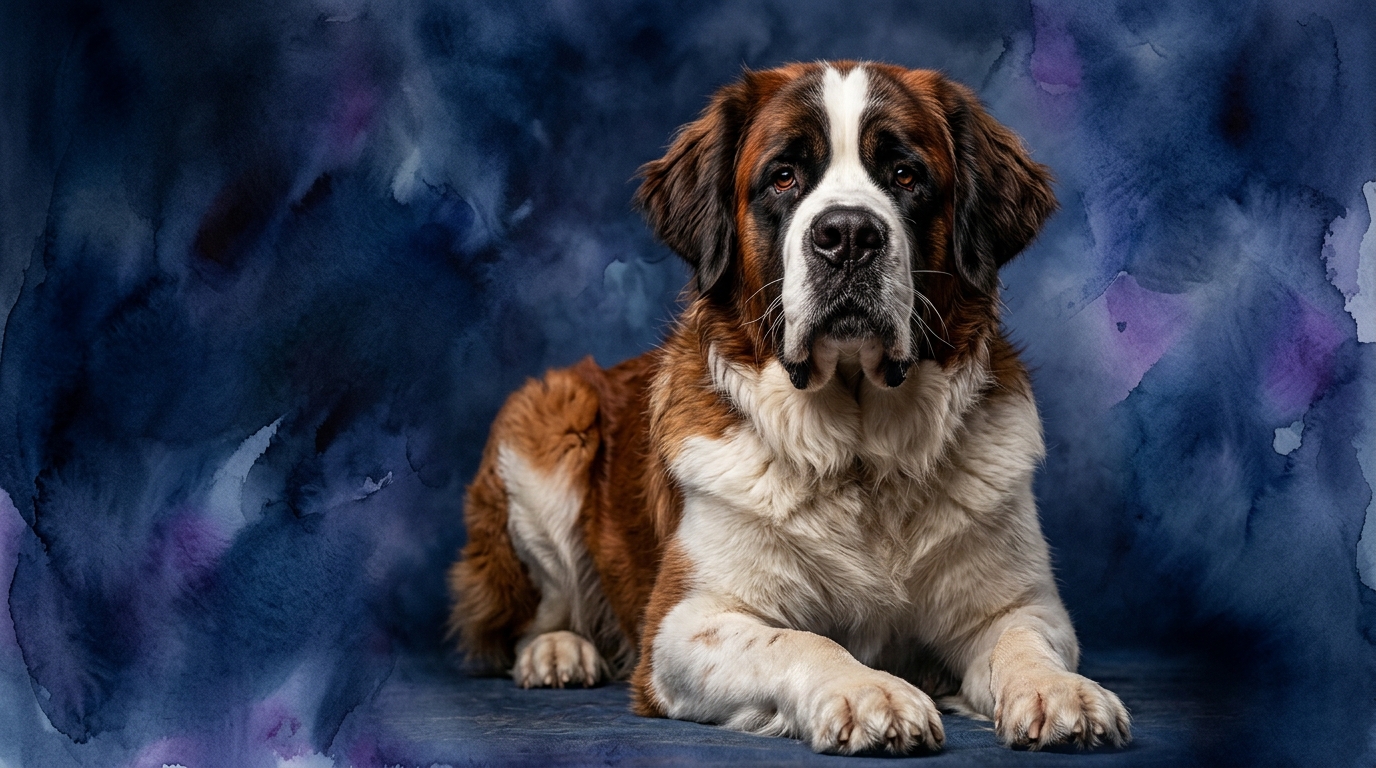
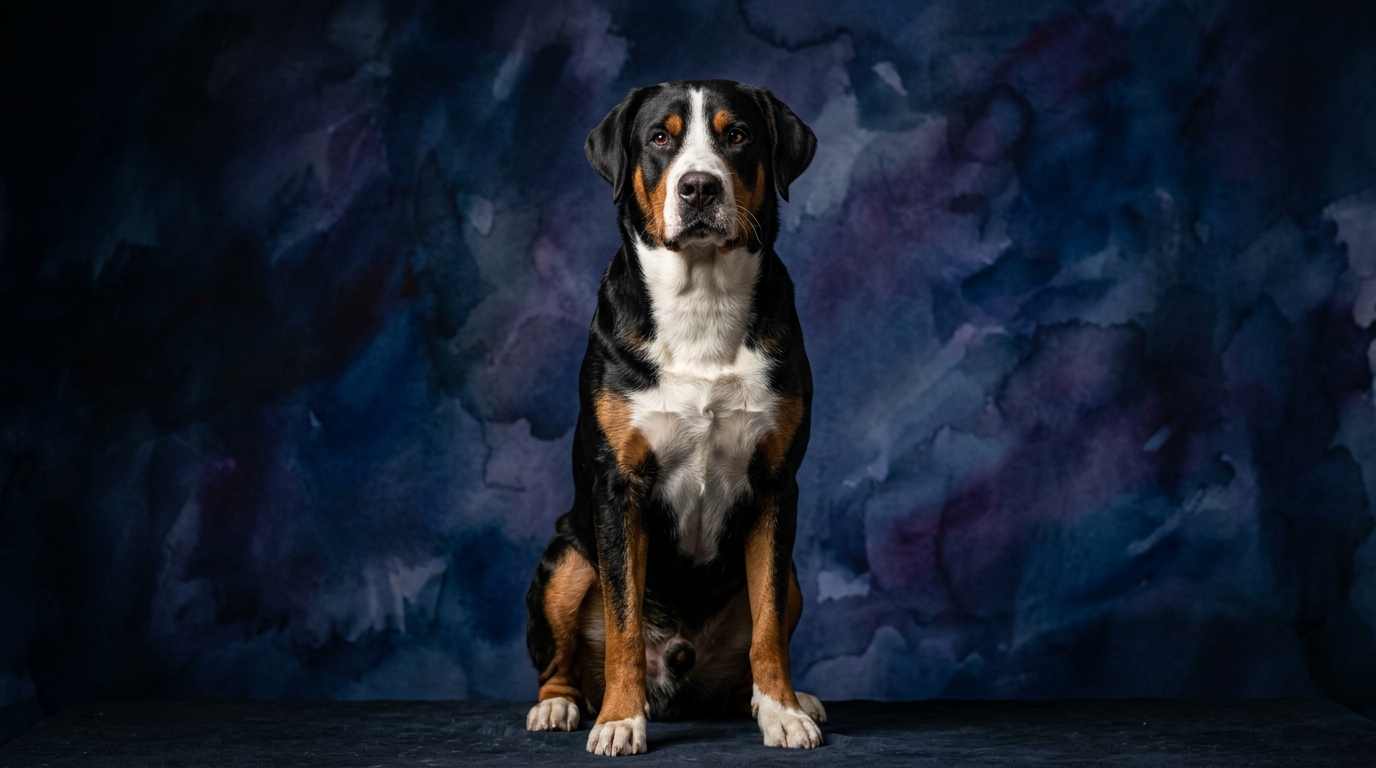
Side-by-Side Cognitive Profiles: Saint Bernard vs. Greater Swiss Mountain Dog
At The Cosmic Pet Pet IQ Lab, we dissect canine intelligence across five critical dimensions to provide a nuanced understanding of each breed's mental landscape. For the Saint Bernard, a Coren-ranked breed at #65, and the Greater Swiss Mountain Dog, which is not Coren-ranked, these metrics illuminate their unique intellectual pathways.
The Saint Bernard's profile shows a Problem Solving score of 3/5, indicating a moderate capacity for navigating challenges, often in practical, real-world contexts related to their historical rescue roles. Their Training Speed stands at 2/5, suggesting a more deliberate pace in acquiring new commands and routines, requiring consistent and patient instruction. Social Intelligence is a standout at 4/5, highlighting their profound ability to understand and respond to human emotions and social cues. An Instinctive Drive of 5/5 underscores their deep-seated urges for companionship, protection, and historical duties. Finally, their Memory is rated 3/5, reflecting a solid, reliable recall for learned behaviors and familiar experiences.
In contrast, the Greater Swiss Mountain Dog presents a Problem Solving score of 3/5, mirroring the Saint Bernard's practical ingenuity in overcoming physical obstacles or understanding familiar tasks. Their Training Speed is slightly higher at 3/5, suggesting a quicker uptake of new information and a more direct responsiveness to instruction. Social Intelligence is rated 3/5, indicating a good understanding of human interaction and family dynamics, albeit perhaps less overtly empathetic than the Saint Bernard. An Instinctive Drive of 3/5 points to a moderate inherent motivation for work, pulling, and guarding, present but less overwhelming than the Saint Bernard's. Their Memory also scores 3/5, indicating a dependable ability to retain training and past experiences.
Where the Saint Bernard Truly Shines Cognitively
The Saint Bernard's cognitive strengths distinctly lie in its profound Social Intelligence, rated at an impressive 4/5, surpassing the Swissy's 3/5. This higher aptitude means a Saint Bernard possesses an exceptional ability to read and react to human emotional states, often displaying an intuitive understanding of comfort or distress. They are more likely to offer unprompted solace, adjust their behavior to a family member's mood, and form deeply empathetic bonds, making them extraordinary emotional anchors within a household.
Furthermore, the Saint Bernard's perfect 5/5 in Instinctive Drive sets it apart. This isn't just about physical activity; it represents an overwhelming internal compass guiding their protective and nurturing behaviors, deeply rooted in their heritage as mountain rescue dogs and devoted companions. This powerful drive translates into an unwavering loyalty and a deep-seated desire to be present with and safeguard their family, a cognitive predisposition that profoundly shapes their gentle yet resolute demeanor.
Cognitive Advantages of the Greater Swiss Mountain Dog
The Greater Swiss Mountain Dog demonstrates a clear cognitive edge in Training Speed, scoring 3/5 compared to the Saint Bernard's 2/5. This slightly swifter learning curve means Swissies are generally more receptive to new commands and routines, often requiring fewer repetitions to solidify a behavior. Their willingness to engage in structured learning tasks is typically more immediate and direct, making the initial stages of obedience training potentially less time-intensive for owners.
While both breeds score 3/5 in Problem Solving and Memory, the Swissy's moderate Instinctive Drive (3/5) combined with its better Training Speed makes it potentially more adaptable to a wider array of modern dog activities and sports. Their drives are present and valuable for tasks like carting or hiking, but they are often more flexible and less intensely focused on specific historical roles, allowing them to pivot to diverse training goals with greater ease and enthusiasm.
Training Aptitude: Which Breed is Easier to Shape?
When considering ease of training, the Greater Swiss Mountain Dog generally presents a more straightforward path for owners, primarily due to its higher Training Speed of 3/5. Swissies tend to be more eager to please and respond with greater immediacy to commands, making them more amenable to consistent instruction across various disciplines. Their moderate Instinctive Drive of 3/5 means their inherent motivations are strong enough to engage them in work but typically do not override the desire to cooperate in training, allowing for a more focused and pliable learning experience.
The Saint Bernard, while highly capable of learning, approaches training with a more deliberate pace, reflected in its 2/5 Training Speed. They require significant patience, consistency, and positive reinforcement, often needing more repetitions to internalize commands. Their extremely high Instinctive Drive (5/5), particularly for companionship and protection, can sometimes mean they prioritize their own assessment of a situation or their bond with a person over a command, especially if they perceive a need for comfort or protection. This isn't stubbornness, but a powerful internal compass that influences their responsiveness, requiring a training approach that acknowledges and works with their profound emotional depth.
Matching Mentality: Active vs. Relaxed Lifestyles
For owners with an active lifestyle, the Greater Swiss Mountain Dog often proves to be an excellent companion. Their Instinctive Drive of 3/5, combined with a 3/5 Training Speed, makes them well-suited for regular engagement in consistent training, hiking, carting, or other physically and mentally stimulating activities. Swissies thrive on having a purpose and can enthusiastically keep pace with an active family, enjoying structured exercise and the challenge of learning new skills.
Conversely, the Saint Bernard's cognitive profile aligns more closely with relaxed owners who appreciate a calmer, more companion-focused presence. While they certainly need regular, moderate exercise, their Instinctive Drive of 5/5 is heavily geared towards profound companionship and being a gentle presence. Their 2/5 Training Speed and 3/5 Problem Solving suggest they are content with a less rigorous pace of learning and derive immense satisfaction from simply being with their family, fitting a home that values calm, affectionate interaction and a deeply empathetic bond over high-intensity activities.
The Verdict
Opt for a Saint Bernard if your home values profound empathy, unwavering devotion, and a gentle, comforting presence, and you are prepared for a slower, patient training journey focused on building a deep bond.
Select a Greater Swiss Mountain Dog if you seek a robust, engaged companion for consistent training, moderate physical activity, and a practical, willing participant in various family adventures.
🧠 Find Your Pet's IQ Score
Our Pet IQ Lab assessment covers 25+ tests across 5 cognitive dimensions — personalized to your breed.
Take the Full IQ Test →Frequently Asked Questions
Is the Saint Bernard truly less intelligent than the Greater Swiss Mountain Dog?
Not necessarily 'less intelligent,' but their cognitive strengths differ significantly. The Saint Bernard excels in social intelligence and instinctive drive for companionship, while the Swissy shows a slight edge in training speed, indicating distinct aptitudes rather than a blanket intelligence deficit.
How does Coren ranking relate to the IQ scores provided?
Coren ranking primarily measures 'working and obedience intelligence' or training aptitude. The Saint Bernard's Coren rank of #65 aligns with its lower Training Speed (2/5), whereas the Swissy, not Coren-ranked, shows a slightly higher Training Speed (3/5), suggesting it might rank higher if evaluated similarly.
Do these IQ scores mean one breed is 'better' than the other?
No, these scores highlight distinct cognitive profiles, not a hierarchy of 'better' or 'worse.' A higher score in one dimension simply means that breed is particularly adept in that specific area. The ideal breed depends entirely on an owner's lifestyle, expectations, and preferred training approach.