
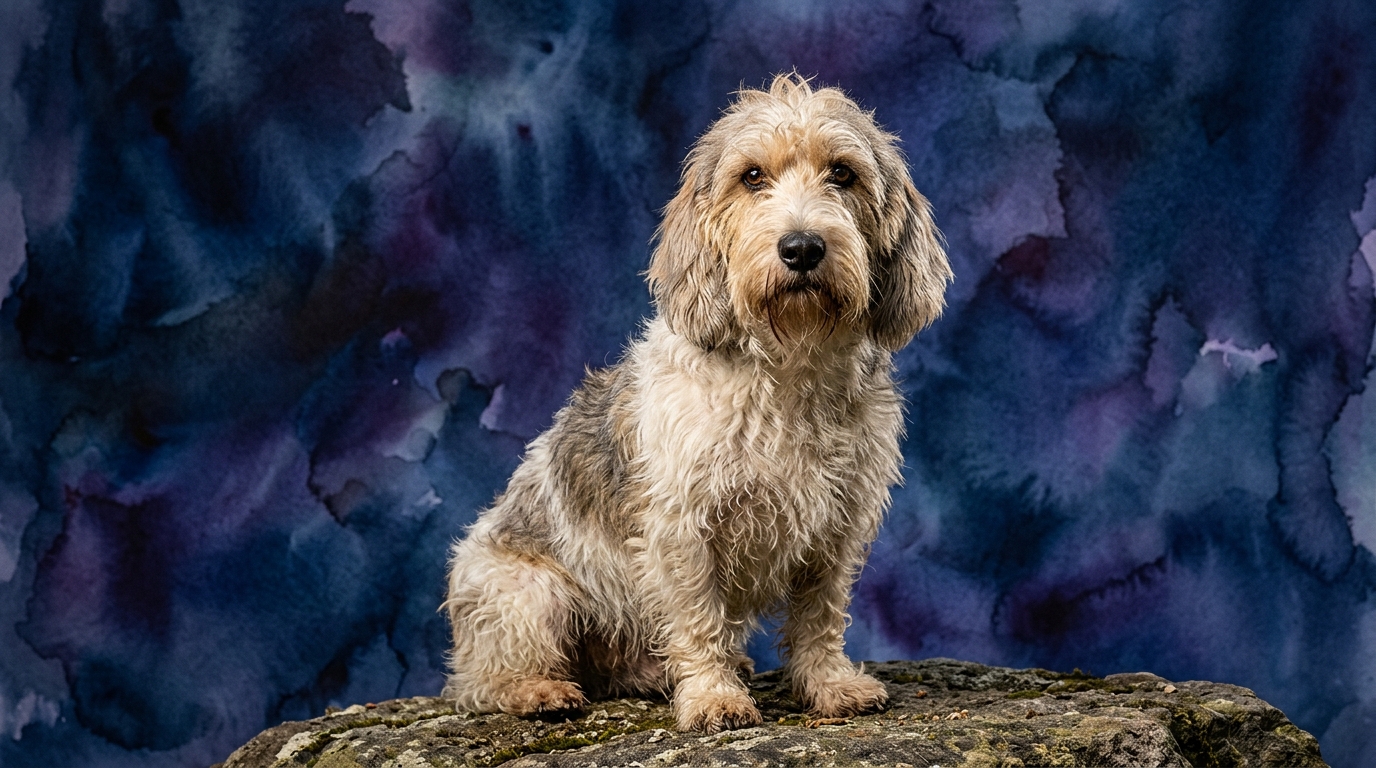
Side-by-Side Cognitive Profiles
To truly understand the cognitive makeup of these two breeds, The Cosmic Pet Pet IQ Lab employs a multi-dimensional assessment. We evaluate problem-solving, how quickly they learn new tasks (training speed), their understanding of social cues (social intelligence), the strength of their innate drives, and their memory recall.
The Saint Bernard, a breed historically dedicated to rescue and companionship, exhibits a 'Problem Solving' score of 3/5. This indicates a capacity to navigate complex situations, particularly those relevant to their historical roles, but not necessarily a drive for abstract innovation. Their 'Training Speed' is 2/5, suggesting a deliberate learning pace that requires consistent, patient repetition rather than rapid acquisition. 'Social Intelligence' stands out at 4/5, highlighting their exceptional ability to read and respond to human emotions and intentions, fostering deep, empathetic bonds. An impressive 'Instinctive Drive' of 5/5 underscores their powerful, inherent motivation for tasks aligned with their working heritage, such as guarding or searching. Finally, their 'Memory' is rated 3/5, meaning they retain learned information and experiences moderately well.
The Petit Basset Griffon Vendéen (PBGV), a lively hound, shares the Saint Bernard's 'Problem Solving' score of 3/5, demonstrating a practical ability to overcome obstacles, often driven by curiosity or the pursuit of a scent. Their 'Training Speed' is slightly higher at 3/5, indicating an average learning pace; they can pick up commands with consistent effort, though their independent nature can pose unique challenges. 'Social Intelligence' for the PBGV is 3/5, suggesting they are generally affable and capable of forming connections, but perhaps less acutely attuned to subtle human emotional shifts than their larger counterpart. Their 'Instinctive Drive' is also 3/5, primarily focused on their potent scenting and hunting instincts, manifesting as a strong desire to follow a trail. Like the Saint Bernard, their 'Memory' is 3/5, sufficient for recalling routines and maintaining an awareness of their environment, particularly useful for tracking.
Where the Saint Bernard's Cognition Shines
The Saint Bernard truly distinguishes itself in two key cognitive areas: social intelligence and instinctive drive. With a 'Social Intelligence' score of 4/5 compared to the PBGV's 3/5, Saint Bernards possess a nuanced understanding of human behavior and emotional states. This isn't just about being friendly; it's a sophisticated ability to interpret subtle cues, anticipate needs, and offer comfort, making them incredibly intuitive companions and highly effective in roles like therapy or assistance. Their deep empathy allows for a profound, communicative bond that transcends simple obedience.
Their 'Instinctive Drive' of 5/5 is another formidable cognitive asset. This isn't merely a physical drive but a deeply ingrained, purposeful motivation to perform tasks central to their heritage. Whether it's the historical drive for mountain rescue or the modern-day protective instinct, this score reflects an unwavering focus and persistence when engaged in activities that align with their breed's purpose. This powerful internal compass guides their actions, providing an enduring wellspring of motivation that the PBGV, with its 3/5 drive, cannot match in sheer intensity or breadth of purpose.
Where the Petit Basset Griffon Vendéen Holds a Cognitive Edge
While the Saint Bernard excels in social nuances and powerful purpose, the Petit Basset Griffon Vendéen demonstrates a slight advantage in 'Training Speed,' scoring 3/5 against the Saint Bernard's 2/5. This means that, on average, a PBGV may grasp new commands or learn new behaviors a bit more quickly, potentially requiring fewer repetitions to understand what is being asked of them. Their inherent curiosity and lively disposition can sometimes translate into a quicker initial uptake of novel information, provided the learning environment is engaging and competes effectively with external distractions.
Furthermore, the PBGV's cognitive strengths often manifest in their independent problem-solving, especially when driven by their keen sense of smell. While both breeds score 3/5 in 'Problem Solving,' the PBGV's approach is frequently self-directed and adaptable, particularly when a compelling scent is involved. Their moderate instinctive drive, centered on scenting, allows them to independently pursue and resolve challenges related to tracking, navigating complex scent trails, or finding hidden objects. This self-reliance in scent-driven tasks can be a distinct cognitive win, showcasing a different kind of practical intelligence.
Ease of Training: Behavioral Nuances
Determining which breed is 'easier' to train involves understanding their distinct behavioral profiles. The PBGV, with a 'Training Speed' of 3/5, theoretically picks up commands faster than the Saint Bernard (2/5). However, this doesn't automatically equate to easier training. PBGVs are hounds, and their strong, independent scent drive means that while they might understand a command quickly, their compliance can be conditional. If a captivating scent crosses their path, their innate drive to follow it will often override any learned command, making off-leash reliability a significant challenge. Training a PBGV requires making learning exceptionally rewarding and consistently competing with their nose.
The Saint Bernard, despite its slower 'Training Speed,' benefits from its high 'Social Intelligence' (4/5). They are deeply attuned to their owner and possess a strong desire to please and cooperate, once they fully grasp what is expected. This means that while they may need more repetitions to learn a new behavior, once it's solidified, their execution is often more reliable due to their strong bond and willingness to work alongside their human. Patience and positive reinforcement are paramount with a Saint Bernard, focusing on building understanding rather than speed.
Matching Breeds to Lifestyles: Active vs. Relaxed Owners
The Saint Bernard, despite its imposing size and working classification, often suits owners with a more relaxed lifestyle. Their 'Instinctive Drive' of 5/5, while powerful, is typically channeled into steady, purposeful activities rather than high-octane bursts. They thrive on companionship, moderate daily walks, and being an integral part of family life. Their slower 'Training Speed' and deliberate nature mean they are not generally suited for fast-paced competitive dog sports. Owners who appreciate a gentle giant content with a comfortable home and consistent, calm interaction will find a Saint Bernard a fitting companion.
Conversely, the Petit Basset Griffon Vendéen is better suited for more active owners. Their 'Instinctive Drive' of 3/5, though moderate, is primarily focused on scenting and exploration, demanding consistent physical and mental engagement. PBGVs require regular, vigorous walks, opportunities for off-leash (in secure areas) sniffing expeditions, and engaging activities that challenge their keen nose, such as scent work or earthdog trials. Owners who enjoy outdoor adventures, have a good sense of humor for their hound's independent antics, and are prepared to provide structured outlets for their energy will find the PBGV a lively and rewarding partner.
The Verdict: When to Choose Each Companion
Choosing between these two distinct breeds hinges on your lifestyle and what you value in a canine companion. Their cognitive profiles, while having some overlaps, point to fundamentally different interaction styles and needs.
The Verdict
Select a Saint Bernard if you value a deeply empathetic, loyal companion who excels in understanding human emotions and possesses a formidable, focused drive for their chosen purpose, even if training requires significant patience.
Opt for a Petit Basset Griffon Vendéen if you seek a spirited, independent companion who learns new tasks with moderate speed and thrives on consistent activity that engages their keen sense of smell.
🧠 Find Your Pet's IQ Score
Our Pet IQ Lab assessment covers 25+ tests across 5 cognitive dimensions — personalized to your breed.
Take the Full IQ Test →Frequently Asked Questions
Is a Saint Bernard difficult to train?
While a Saint Bernard has a training speed score of 2/5, meaning they require more repetitions and patience to learn new commands, their high social intelligence and desire to please their owner can make them very cooperative once a behavior is understood. Consistency and positive reinforcement are key to their success.
Do Petit Basset Griffon Vendéens make good family pets?
Petit Basset Griffon Vendéens, with a social intelligence of 3/5, are generally good-natured and can integrate well into families, often enjoying the company of children and other pets. However, their independent hound nature and strong scent drive mean they require consistent training and supervision, especially to manage their propensity for following interesting smells.
How do the problem-solving abilities compare between these two breeds?
Both the Saint Bernard and the Petit Basset Griffon Vendéen score 3/5 in problem-solving. This indicates they are both capable of figuring out practical tasks, with the Saint Bernard often excelling in context-specific challenges related to their working heritage, while the PBGV's problem-solving is frequently driven by curiosity or scent-tracking endeavors.