
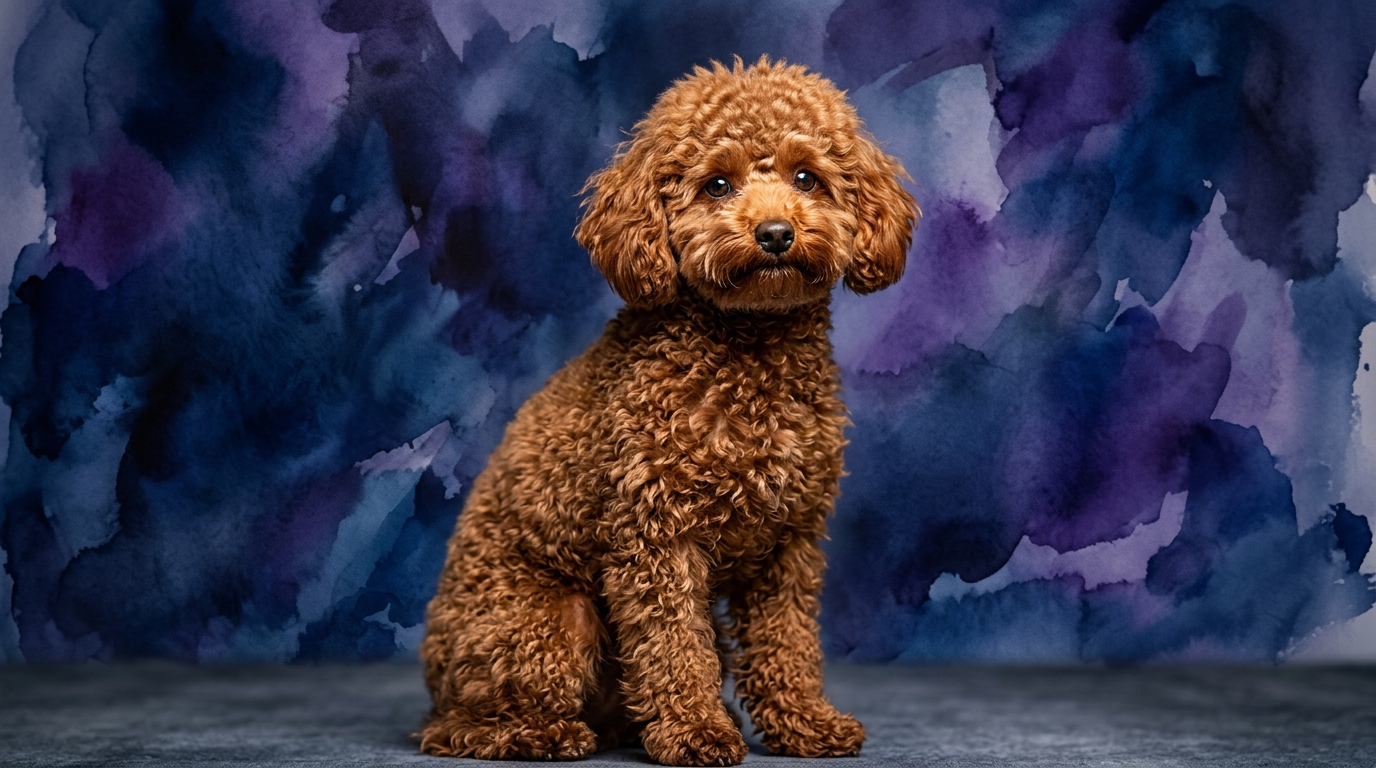
Side-by-Side Cognitive Profile: Saint Bernard vs. Toy Poodle
At The Cosmic Pet Pet IQ Lab, we evaluate canine cognition across five key dimensions, revealing the unique mental architecture of each breed. For the Saint Bernard (Coren rank #65), these scores paint a picture of deliberate, socially attuned thinking. Their Problem Solving is rated 3/5, indicating a capacity for practical solutions that may not be instantaneous but are often effective. Training Speed stands at 2/5, suggesting a need for patience and consistent reinforcement in learning new commands. Social Intelligence, however, shines at 4/5, highlighting their deep empathetic connection and understanding of human emotions. Their Instinctive Drive is a powerful 5/5, reflecting an inherent predisposition for purposeful action, historically rescue and guardianship. Memory for the Saint Bernard is a moderate 3/5, capable of retaining routines but perhaps less adept at recalling complex sequences without regular refreshers.
The Toy Poodle (Coren rank #2), in stark contrast, presents a profile of agile, rapid cognition. Their Problem Solving capability is a remarkable 5/5, showcasing an ability to quickly analyze and resolve novel challenges. This is complemented by an equally impressive Training Speed of 5/5, demonstrating their capacity to absorb new information and commands with exceptional swiftness. Social Intelligence for the Toy Poodle is 3/5, indicating a good understanding of human interaction, though perhaps not with the profound empathetic depth of the Saint Bernard. Their Instinctive Drive is 3/5, present but generally directed towards play or companionship rather than strong working roles. Finally, the Toy Poodle's Memory is an outstanding 5/5, allowing them to recall a vast repertoire of learned behaviors and experiences over extended periods.
Where the Saint Bernard Excels Cognitively
The Saint Bernard's cognitive strengths truly shine in areas demanding empathy and inherent purpose, reflecting their historical role as Alpine rescue dogs. Their social intelligence, rated at a robust 4/5, allows them to connect with humans on a profound level, sensing distress and offering comfort with an almost intuitive understanding. This isn't just about recognizing faces; it's about interpreting subtle shifts in mood and responding with appropriate, soothing behaviors, making them exceptional emotional anchors. Furthermore, their instinctive drive, a perfect 5/5, is a dominant cognitive force. This isn't just brute instinct; it's a deeply ingrained blueprint for action, historically guiding them through treacherous terrain to locate and aid lost travelers. Their cognitive framework is geared towards detecting environmental cues related to danger or need, processing them through a lens of protective action, and executing tasks like searching or guarding with unwavering focus. This profound capacity for empathetic vigilance and purposeful action sets them apart, indicating a specific cognitive architecture designed for their historical role and deep companionship.
Where the Toy Poodle Outshines Cognitively
Conversely, the Toy Poodle exhibits cognitive prowess in areas demanding rapid mental processing and adaptability. Their problem-solving ability, a perfect 5/5, means they approach novel situations not with hesitation, but with an eagerness to analyze and manipulate. This manifests as quickly figuring out how to bypass obstacles, open latches, or solve complex puzzle toys, often demonstrating a multi-step thought process. Coupled with an exceptional training speed of 5/5, they absorb new commands and behaviors with astonishing alacrity. This isn't mere obedience; it's a testament to their capacity for rapid information processing, pattern recognition, and the ability to associate actions with rewards almost instantaneously. Their 5/5 memory further solidifies this advantage, allowing them to retain a vast lexicon of commands and complex routines over extended periods without significant reinforcement. This cognitive profile points to a mind built for intricate learning, quick adaptation, and sustained mental engagement, making them adept at tasks requiring sequential thought and precise execution.
Training Dynamics: Which Breed is More Receptive?
When evaluating ease of training, the Toy Poodle undeniably holds a significant advantage. Their exceptional training speed (5/5) and robust memory (5/5) mean they typically grasp new commands and complex sequences in very few repetitions, often showing an eagerness to engage in learning sessions. This rapid acquisition stems from their cognitive efficiency in processing new information and forming strong associations between actions and outcomes. For instance, teaching a 'stay' command might involve just a handful of focused sessions for a Toy Poodle, who quickly understands the concept and remembers it reliably. Their focused nature and desire to engage make them highly receptive students, translating into swift progress in obedience and trick training.
In contrast, the Saint Bernard, with a training speed of 2/5 and memory of 3/5, requires considerable patience and consistent reinforcement. Their learning process is more deliberate, and they might need many more repetitions over a longer period to solidify a command. A Saint Bernard might initially seem disengaged or simply take a longer pause before responding, not out of stubbornness, but due to a different pace of cognitive processing and a more independent behavioral leaning. While eventually trainable, the Saint Bernard's cognitive architecture leans towards thoughtful consideration rather than immediate compliance, making the training journey a more extended and nuanced endeavor compared to the Poodle's swift mastery. Success with a Saint Bernard often relies on making training a calm, positive experience that reinforces their bond with their human.
Matching Canine Cognition to Owner Lifestyles
The choice between these two breeds also hinges significantly on an owner's lifestyle and energy levels. The Toy Poodle, despite its size, often suits active owners who can provide ample mental stimulation and engagement. Their high problem-solving capacity and desire for interaction mean they thrive on learning new tricks, participating in dog sports like agility or obedience, and engaging in interactive games that challenge their quick minds. An owner who enjoys teaching, exploring complex commands, or even just having a companion eager for daily brain games will find the Toy Poodle a rewarding match, as their cognitive needs align with an owner prepared for consistent mental enrichment.
Conversely, the Saint Bernard typically aligns better with relaxed owners or those seeking a more sedate companion once past their energetic puppy phase. While they still require regular, moderate exercise for their physical well-being, their cognitive profile doesn't demand constant mental gymnastics. They are content with consistent routines, leisurely walks, and ample time for quiet companionship, often exhibiting a calm, watchful presence. Their social intelligence makes them excellent, comforting family members who appreciate a predictable and loving environment rather than a whirlwind of new challenges, making them a fit for owners who prioritize a steadfast, gentle presence.
The Verdict
Choose a Saint Bernard if you value a deeply empathetic companion with a profound protective instinct, and are prepared for a deliberate, patient training journey focused on building a strong, trusting bond over rapid skill acquisition.
Opt for a Toy Poodle if you seek an agile, quick-witted partner eager to learn complex tasks and engage in consistent mental challenges, thriving on rapid understanding and precise execution.
🧠 Find Your Pet's IQ Score
Our Pet IQ Lab assessment covers 25+ tests across 5 cognitive dimensions — personalized to your breed.
Take the Full IQ Test →Frequently Asked Questions
Is the Saint Bernard truly less capable of learning than a Toy Poodle?
Not necessarily less capable, but they learn at a different pace and through different cognitive pathways. Saint Bernards require more repetition and patience, often excelling when training is tied to practical, real-world scenarios rather than abstract commands, reflecting their deliberate processing speed.
Do Toy Poodles need constant mental stimulation to be happy?
While Toy Poodles thrive on mental engagement due to their high problem-solving and memory scores, "constant" might be an overstatement. Regular, structured mental activities and interactive play sessions are crucial to prevent boredom and channel their cognitive energy constructively.
How does "instinctive drive" impact a dog's daily life?
Instinctive drive shapes a dog's inherent motivations and responses, influencing everything from guarding behavior to a desire to herd or retrieve. For a Saint Bernard, a high instinctive drive means a strong predisposition towards protective or rescue-oriented actions, while a moderate drive in a Toy Poodle might manifest as a keen interest in play or a generally adaptable nature.