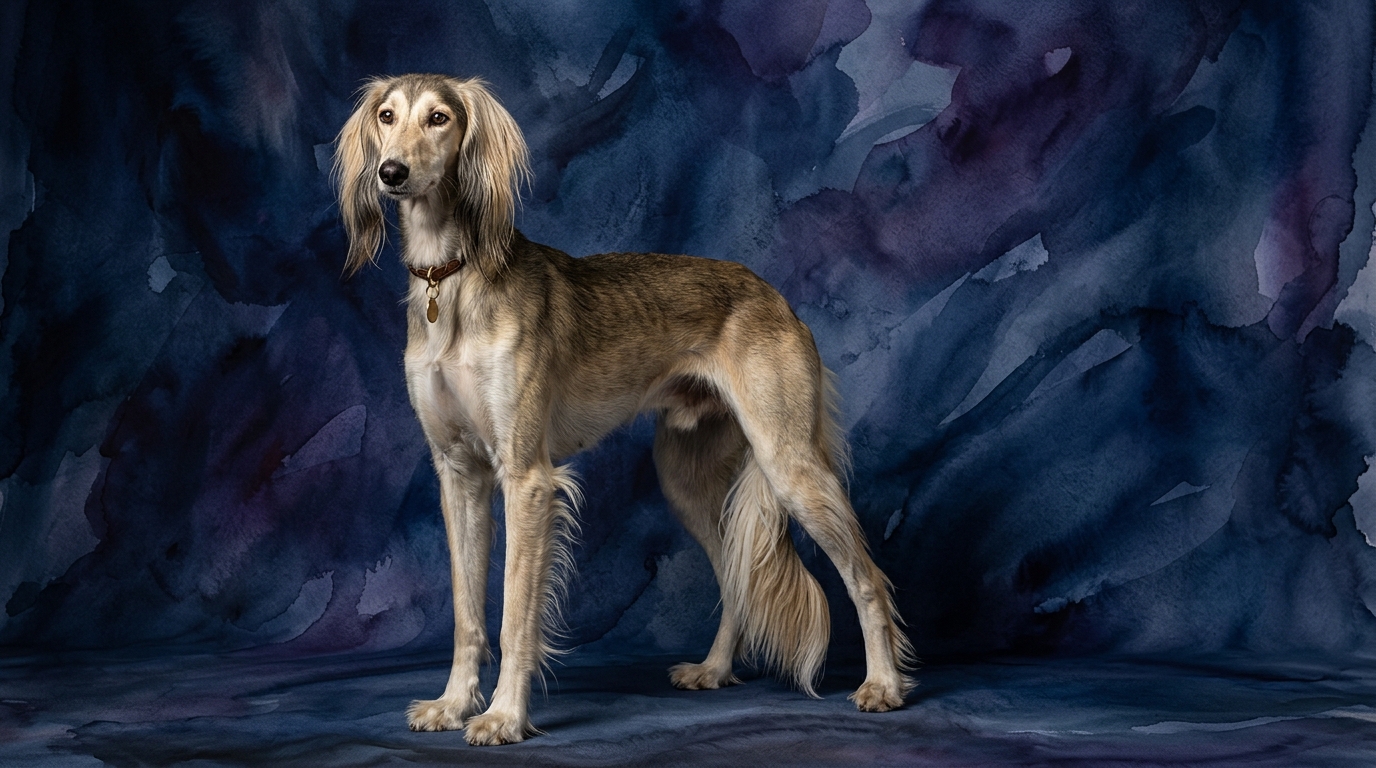
Side-by-Side IQ Profile: Saluki
The Saluki, an ancient sighthound, exhibits a Problem Solving score of 3/5, which manifests in its ability to rapidly assess dynamic environments and make independent decisions during high-speed pursuits. This involves quickly calculating trajectories, identifying optimal routes to intercept prey, and navigating complex terrain on the fly. Their Training Speed, also 3/5, reflects a capacity to learn but often on their own terms; they can grasp commands efficiently, yet their independent nature means consistent motivation and understanding their intrinsic drives are key to reliable execution. Social Intelligence at 3/5 suggests a breed that forms deep, nuanced bonds with its inner circle, reading familiar human cues with sensitivity, but often maintaining a reserved demeanor with strangers. Their Instinctive Drive, a strong 3/5, is almost entirely focused on visual prey detection and pursuit, an intense, almost singular focus that defines their cognitive landscape. Finally, a Memory score of 3/5 indicates they retain learned behaviors, routines, and spatial layouts, remembering specific hunting grounds or preferred running paths with clarity.
A Saluki's cognitive strengths are deeply rooted in their history as desert hunters, requiring them to process visual information at an incredible speed and act decisively without direct human intervention. This means their problem-solving often involves spatial reasoning and rapid decision-making in dynamic, high-stakes scenarios. Their memory serves them well in recalling the nuances of a chase, where specific turns or obstacles were encountered, refining their approach for future endeavors. While capable of learning, their independence means they are less inclined to perform repetitive tasks purely for human approval, making training an exercise in mutual respect and finding intrinsic motivators that align with their sighthound nature.
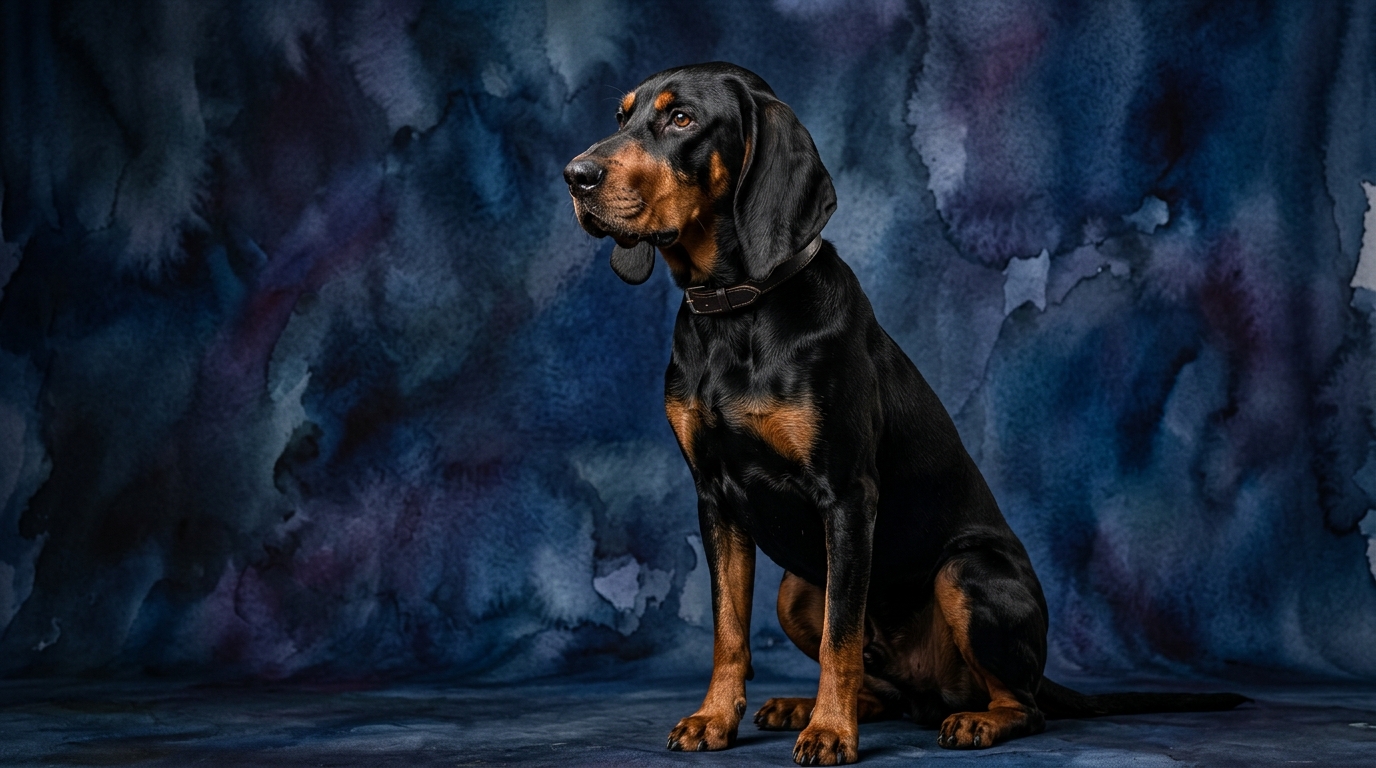
Side-by-Side IQ Profile: Black and Tan Coonhound
The Black and Tan Coonhound, a quintessential scenthound, also earns a Problem Solving score of 3/5, yet this manifests differently, primarily through their exceptional olfactory navigation. They excel at deciphering intricate scent trails, distinguishing target odors from environmental noise, and logically following a path that might be invisible to any other sense. Their Training Speed, a 3/5, acknowledges their capacity for learning, but also highlights their potential for stubbornness when a compelling scent captures their attention, requiring patient, consistent, and reward-based methods. Social Intelligence, rated 3/5, reflects a generally amiable and gregarious disposition; they are typically good-natured, forming strong attachments to their families and often demonstrating a cooperative spirit in group settings. Their Instinctive Drive, a powerful 3/5, is overwhelmingly dedicated to scent work, a relentless, focused pursuit of a particular odor that can override almost all other stimuli. With a Memory score of 3/5, they are adept at remembering specific scent profiles, locations where interesting trails were found, and the sequences of events that led to a successful 'find'.
For the Black and Tan Coonhound, cognitive prowess is centered around their nose, making their problem-solving primarily olfactory. They mentally 'map' their environment through scent, piecing together complex information over time and distance. Their memory is particularly strong for scent-related experiences, allowing them to learn and refine their tracking techniques. While their social intelligence makes them keen to be part of a family unit, their training can be a challenge due to their intense instinctive drive; a captivating scent can make them temporarily 'deaf' to commands. This means training often involves leveraging their natural drive, such as through scent games, to make learning enjoyable and reinforcing.
Where the Saluki Wins Cognitively
The Saluki's cognitive edge distinctly lies in its capacity for rapid, independent visual processing and decision-making. Their ancient role demanded they make split-second choices during high-speed chases, often over vast, open terrain, without human guidance. This translates to an exceptional ability to detect subtle movements at long distances, differentiate between potential prey and harmless animals almost instantly, and calculate the most efficient intercept trajectory. This cognitive strength is less about following a pre-set command and more about autonomous, adaptive problem-solving in a fast-paced, visually driven environment. They excel at spatial reasoning in motion, understanding how to navigate obstacles and terrain while maintaining incredible speed, a specialized form of intelligence not typically demanded of scenthounds.
Furthermore, Salukis often demonstrate a nuanced understanding of their environment through observation, quickly learning the layout of a new space or identifying escape routes. Their problem-solving in a domestic setting might involve figuring out how to open a gate or reach a desired item through observation and strategic planning, rather than brute force. This visual and independent problem-solving capacity is a hallmark of their sighthound cognition, allowing them to operate effectively as self-reliant hunters.
Where the Black and Tan Coonhound Wins Cognitively
The Black and Tan Coonhound's cognitive superiority is undeniably rooted in its unparalleled olfactory processing and sustained, single-minded focus. They possess an extraordinary ability to discriminate between an almost infinite number of scents, isolating a specific target odor from a cacophony of environmental smells, even when that scent is old or faint. This isn't just about 'smelling well'; it's a sophisticated form of problem-solving where they construct an entire narrative from scent molecules, tracing a path that might be several hours or even days old. This sustained focus on a single sensory input, often for hours on end, is a testament to their cognitive endurance and dedication to their primary instinct.
Their problem-solving through olfaction allows them to navigate complex environments purely by scent, effectively 'seeing' with their nose. This includes figuring out how a scent trail might have moved over obstacles, across water, or through dense undergrowth, requiring significant cognitive mapping and extrapolation. They excel at tasks that demand deep, persistent investigation based on smell, such as finding hidden objects purely by scent or following a complex track, skills where a sighthound's visual acuity would be irrelevant. This deep dive into the world of scent represents a distinct cognitive advantage for the Coonhound.
Which Is Easier to Train and Why
When considering ease of training, both Salukis and Black and Tan Coonhounds present unique challenges, despite their identical 3/5 Training Speed scores. The Saluki's independence means they learn quickly but often require a compelling reason to comply, especially if a command doesn't align with their immediate interest or perceived self-preservation. They can be highly sensitive and dislike harsh methods, responding best to positive reinforcement and a trainer who understands their sighthound motivations. Their recall can be particularly challenging outdoors, as their intense prey drive means a visual stimulus can instantly override any command, making off-leash reliability a long-term goal for dedicated owners in secure areas.
The Black and Tan Coonhound, while generally eager to please their family, faces a different training hurdle: their overwhelming scent drive. Once their nose is engaged, they can become completely oblivious to their surroundings, including their handler's commands. This makes teaching reliable recall in an environment with interesting smells incredibly difficult. Their tendency to bay when on a trail also requires specific training to manage. While they can learn complex sequences and tasks, the consistency of their performance is highly dependent on managing environmental distractions and making training more rewarding than the most enticing scent. Neither breed is inherently 'easier' to train; rather, they demand different approaches and an understanding of their deep-seated behavioral drivers.
Which Suits Active Owners vs. Relaxed Owners
For active owners, both breeds offer engaging companionship, but their activity needs differ in quality. The Saluki is best suited for owners who can provide regular opportunities for intense, high-speed running in a securely fenced area, such as a lure coursing track or a very large, private yard. While they enjoy bursts of incredible speed, they are often quite content to be couch potatoes indoors afterward, making them suitable for owners who appreciate a dog that can transition from extreme athleticism to quiet companionship. They thrive with mental stimulation that engages their sight and problem-solving, like puzzle toys or structured 'find it' games indoors, complementing their physical needs without requiring constant, low-intensity activity.
The Black and Tan Coonhound, on the other hand, suits owners whose 'active' lifestyle involves sustained, moderate-intensity exercise that allows them to engage their nose. This means long, leisurely walks, hikes, or scent work activities where they can follow trails and explore with their sense of smell. They are not typically suited for short, intense bursts of speed like a sighthound, but rather require endurance-based activities. While they can be relaxed indoors, their mental well-being is heavily dependent on regular outdoor time where they can 'work' their nose. Owners who enjoy exploring nature trails and are prepared for a dog that will lead them by scent will find a wonderful companion in the Coonhound, whereas a truly 'relaxed' owner who prefers minimal outdoor activity would likely find either breed challenging.
The Verdict
Choose a Saluki if you appreciate an independent, visually driven companion who thrives on intense bursts of speed and then enjoys quiet indoor relaxation, and you are prepared to manage their strong prey drive and sensitive nature. They are ideal for owners who can provide secure, expansive spaces for running and enjoy a dog with a reserved but deeply loyal personality.
Choose a Black and Tan Coonhound if you are drawn to a genial, scent-driven dog who excels at tracking and enjoys long, exploratory walks or hikes where their nose can lead the way. They are perfect for owners who appreciate a vocal companion with immense stamina and a persistent nature, and are ready for the commitment of managing a powerful scent drive.
🧠 Find Your Pet's IQ Score
Our Pet IQ Lab assessment covers 25+ tests across 5 cognitive dimensions — personalized to your breed.
Take the Full IQ Test →Frequently Asked Questions
Do Salukis and Black and Tan Coonhounds require the same amount of exercise?
While both breeds are active, their exercise needs differ significantly in quality. Salukis require opportunities for intense, high-speed sprinting in secure areas, followed by rest, whereas Black and Tan Coonhounds need sustained, moderate-intensity activity like long walks or hikes where they can engage their powerful sense of smell.
How does the 'Instinctive Drive' score of 3/5 manifest differently in these two breeds?
For the Saluki, a 3/5 instinctive drive is almost entirely visual, focusing on spotting and pursuing moving objects at high speed. For the Black and Tan Coonhound, the same 3/5 drive is overwhelmingly olfactory, meaning their instinct is to relentlessly follow and investigate scent trails, often to the exclusion of other stimuli.
Are these breeds suitable for first-time dog owners?
Both Salukis and Black and Tan Coonhounds can be challenging for first-time owners due to their strong breed-specific instincts and independent natures. They require owners who are committed to understanding their unique drives, providing appropriate outlets for their energy, and engaging in consistent, positive-reinforcement training tailored to their individual cognitive styles.