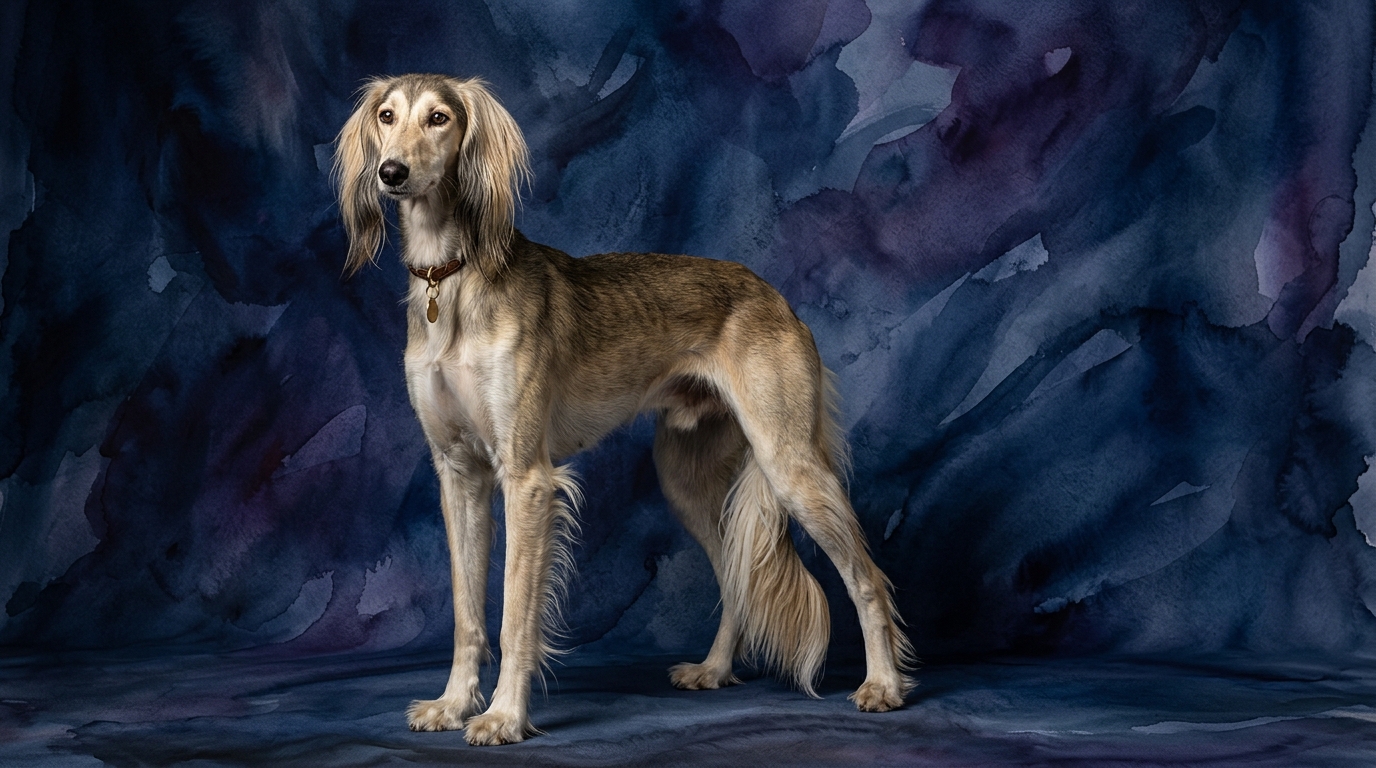
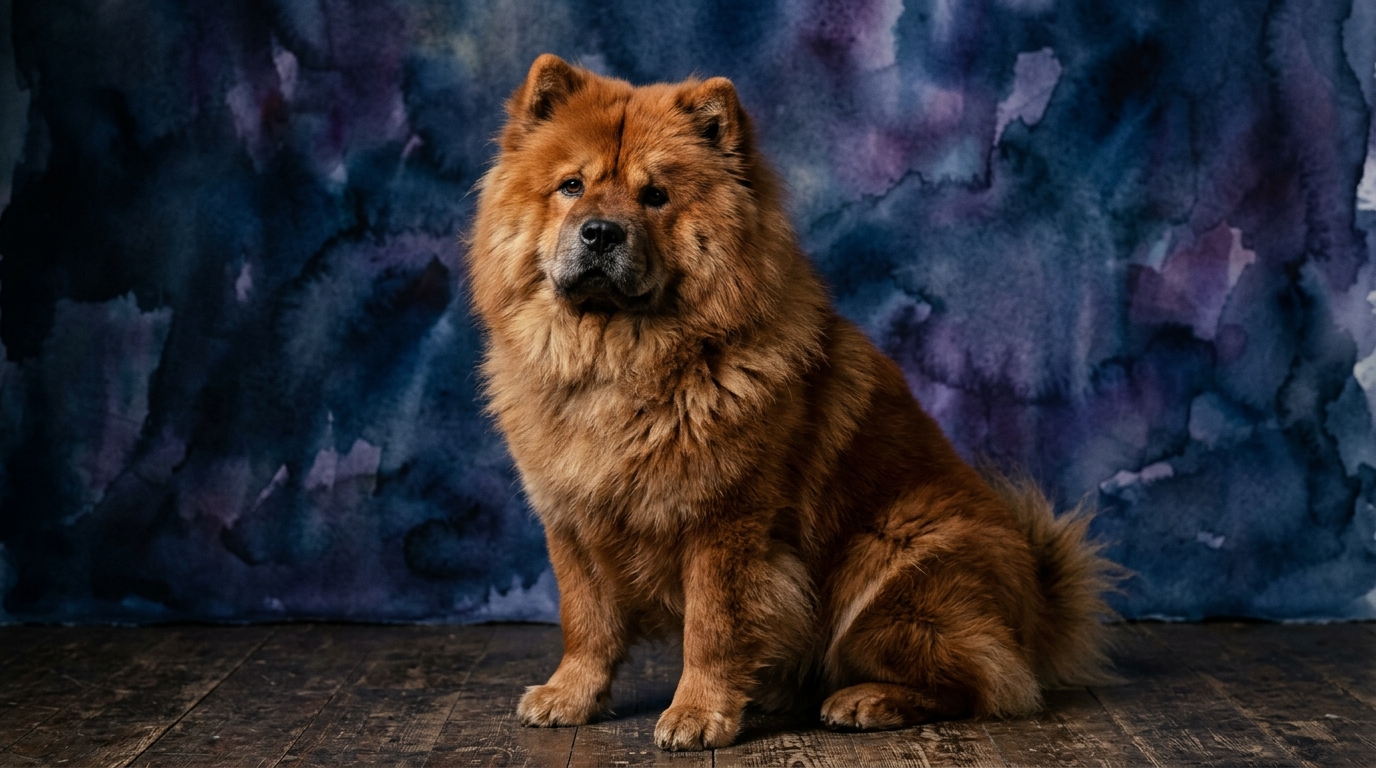
Side-by-Side IQ Profile: Identical Scores, Distinct Minds
At the Pet IQ Lab, both Salukis and Chow Chows register a consistent 3/5 across all five intelligence dimensions, indicating a solid foundation in cognitive abilities, but their application of these skills diverges significantly based on their historical roles. For the Saluki, a sighthound bred for independent desert hunting: its Problem Solving (3/5) manifests as agile, real-time tactical pursuit and terrain navigation; Training Speed (3/5) reflects quick understanding but selective compliance driven by interest; Social Intelligence (3/5) shows as deep handler attunement yet reservation with strangers; Instintive Drive (3/5) is a potent prey drive and need for freedom; and Memory (3/5) excels in recalling dynamic routes and social patterns. Conversely, for the Chow Chow, an ancient guardian breed: its Problem Solving (3/5) involves strategic threat assessment and household routine mastery; Training Speed (3/5) means rapid learning but strong-willed compliance; Social Intelligence (3/5) is profound family loyalty and discernment towards outsiders; Instintive Drive (3/5) is a dominant territorial and protective instinct; and Memory (3/5) is superior for established boundaries and routines. These identical numerical scores thus mask distinct cognitive applications tailored to their respective evolutionary paths.
Where the Saluki Wins Cognitively
The Saluki demonstrates cognitive strengths primarily in dynamic, physically demanding environments. Their Problem Solving (3/5) excels in tasks requiring agility, speed, and real-time decision-making, such as navigating complex lure courses or tracking moving objects over distances. This reflects a fluid, adaptive cognitive style, enabling split-second judgments about trajectory, speed, and obstacle avoidance with remarkable precision, an intuitive understanding of physics in motion. Furthermore, their Social Intelligence (3/5), while reserved, allows for seamless cooperation in a hunting partnership, anticipating human cues for release and direction, demonstrating a highly focused, task-oriented social awareness crucial for their ancient role.
Where the Chow Chow Wins Cognitively
The Chow Chow's cognitive advantages lie in areas demanding discernment, territorial awareness, and strategic observation. Their Problem Solving (3/5) shines in situations requiring assessment of social dynamics, identifying potential threats, and establishing clear boundaries within their domain, representing a more static, analytical form of intelligence. They possess a keen Memory (3/5) for complex household rules and routines, often anticipating events before they occur, indicating a strong grasp of pattern recognition and predictive reasoning within their established environment. Their Social Intelligence (3/5), though aloof to strangers, is profound within their family unit, enabling them to understand subtle shifts in mood or tension, and to act as a steadfast, protective presence rooted in deep memory for social hierarchies.
Training: Willingness vs. Capacity
Both breeds score 3/5 for Training Speed, indicating they possess the cognitive capacity to learn quickly, yet the 'ease' of training diverges significantly due to their inherent temperaments and motivations. The Saluki, with its independent sighthound nature, grasps commands efficiently but often chooses whether to comply. Training requires appealing to their intrinsic motivation, typically through engaging play, chase, or high-value rewards that tap into their prey drive. They are less inclined to 'people-please,' making consistent recall a challenge in open spaces where instinct often overrides learned commands. Effective training involves making the human more interesting than the environment, respecting their autonomous spirit.
The Chow Chow, while also learning routines and boundaries with impressive speed and memory, presents a different challenge due to its inherent stubbornness and strong will. Training a Chow Chow demands patience, unwavering consistency, and a calm, confident leader they respect. They are not naturally inclined to perform tricks or obey commands merely to please; they need to understand the purpose or consequence. Early and extensive socialization is crucial to positively channel their social intelligence, helping them discern appropriate interactions. The Chow Chow's Coren rank of #76, which measures obedience intelligence, underscores that while they are capable learners, their independent disposition often requires more effort in achieving consistent compliance compared to more biddable breeds.
Matching Owners: Active Seekers vs. Calm Companions
The Saluki is ideally suited for active owners who can meet its significant physical and mental exercise needs. They require ample opportunity to run at full speed in a securely fenced area, channeling their strong instinctive drive for chase into activities like lure coursing, long walks, or jogging. A bored Saluki can exhibit destructive behaviors or anxiety, highlighting their cognitive need for dynamic problem-solving through consistent physical engagement that honors their sighthound heritage. Owners must be prepared for their independent nature and potent prey drive, ensuring safety and appropriate outlets for their energy.
Conversely, the Chow Chow is more suited for relaxed owners, though this does not imply low maintenance. While they do require daily walks and mental stimulation, they are not typically high-energy dogs and are often content to observe their surroundings from a comfortable vantage point. They thrive on a predictable routine and a calm home environment, where their guarding instincts can be fulfilled without excessive stress. Owners must appreciate their dignified, independent companion and be prepared to provide consistent boundaries and early, thorough socialization to ensure their discerning social intelligence develops positively towards visitors and new experiences.
The Verdict
Choose a Saluki if you are an active owner who cherishes an independent, graceful companion and can provide secure, expansive environments for them to run and express their profound sighthound instincts. They thrive with engagement that respects their autonomous nature and keen physical intelligence.
Opt for a Chow Chow if you seek a dignified, loyal, and independent companion, are prepared to be a consistent, respected leader, and appreciate a dog with a discerning, protective nature that thrives on routine and clear boundaries. They are best suited for calmer households that value a strong, silent presence.
🧠 Find Your Pet's IQ Score
Our Pet IQ Lab assessment covers 25+ tests across 5 cognitive dimensions — personalized to your breed.
Take the Full IQ Test →Frequently Asked Questions
Do Salukis and Chow Chows have similar temperaments due to their matching IQ scores?
No, their temperaments are quite distinct despite identical cognitive scores. Salukis are typically sensitive, reserved, and independent sighthounds with a strong prey drive, while Chow Chows are known for their dignified, aloof, and protective nature, deeply loyal to their family but wary of strangers. Their IQ scores reflect *capacity*, not *personality*.
How does a sighthound's problem-solving differ from a guardian breed's, even at the same IQ level?
A Saluki's problem-solving (3/5) is often kinetic and adaptive, focused on dynamic scenarios like pursuit and navigation in open spaces. A Chow Chow's problem-solving (3/5) is more observational and strategic, centered on assessing threats, maintaining boundaries, and understanding complex social dynamics within their territory.
Is the Coren rank relevant when comparing breeds with identical Pet IQ Lab scores?
The Coren rank (Chow Chow #76, Saluki not ranked) primarily measures "working and obedience intelligence," reflecting a breed's willingness and ease of training for human commands. While both have 3/5 training speed in our lab, the Coren rank suggests Chows, though capable of learning, often require more effort in *compliance* due to their independent nature, highlighting a difference in temperament's impact on trainability.