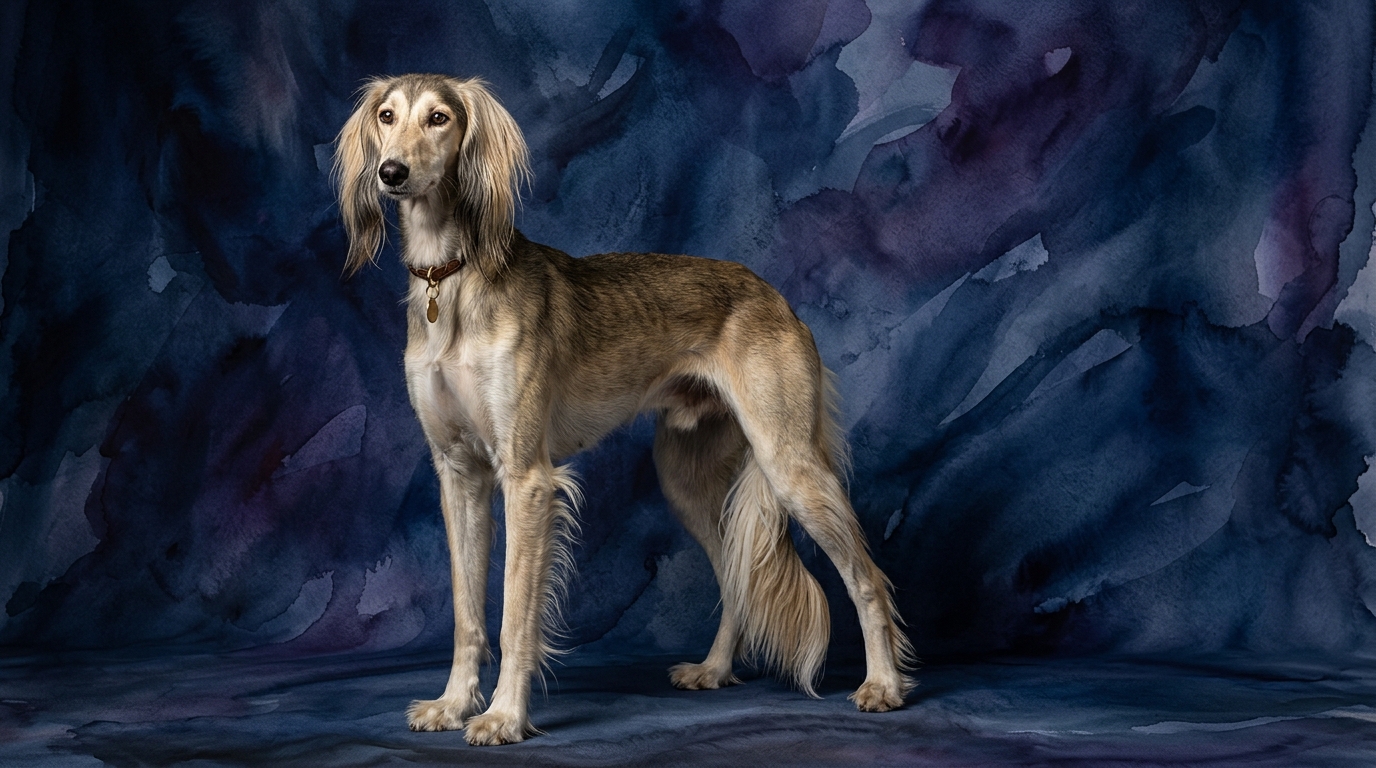
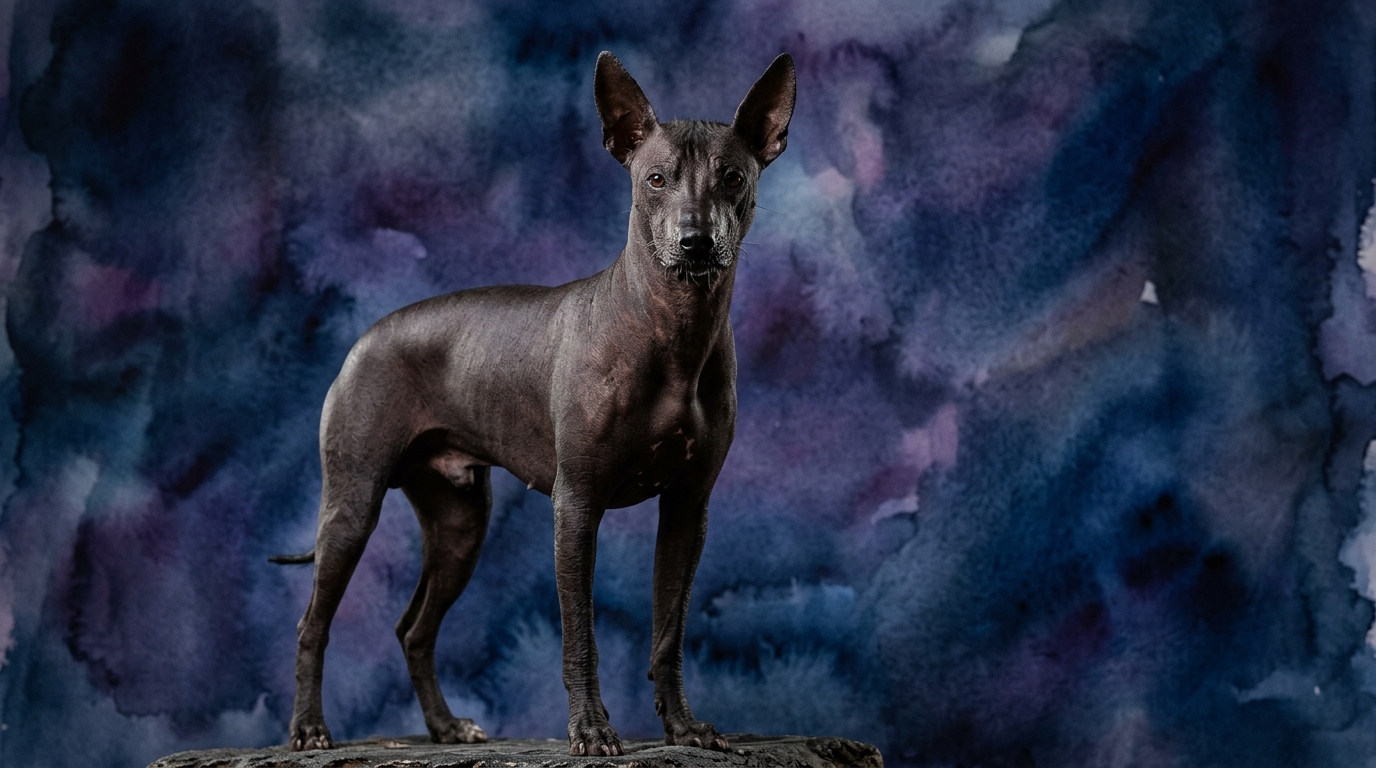
Side-by-Side IQ Profile: Saluki vs. Xoloitzcuintli
At The Cosmic Pet Pet IQ Lab, we assess canine intelligence across five critical dimensions. For both the Saluki and the Xoloitzcuintli, each dimension registers a score of 3 out of 5, indicating a competent, average application of these cognitive abilities within their breed context. However, understanding how these scores manifest requires looking beyond the numbers to their specific breed characteristics and historical roles.
For **Problem Solving (3/5)**, the Saluki, a sighthound, often applies its cognitive capacity to complex, real-time environmental challenges. This might involve devising intricate pursuit routes to outmaneuver perceived prey, navigating varied terrain at high speeds, or finding creative ways to access tempting objects. Their problem-solving is often independent and self-directed, rooted in their hunting heritage. The Xoloitzcuintli, on the other hand, a non-sporting breed historically valued as a companion and guardian, tends to apply its 3/5 problem-solving skills to understanding household dynamics and human routines. This could involve figuring out the optimal way to solicit attention, interpreting nuanced human body language, or adapting to changes in the domestic environment with a keen observational capacity.
In terms of **Training Speed (3/5)**, both breeds demonstrate a moderate pace of learning, but the underlying factors differ. A Saluki's 3/5 training speed is often influenced by their independent nature; they learn commands effectively but may choose when and if to comply based on their assessment of the situation or their own motivation. This isn't a lack of understanding, but a strong sense of self-direction. The Xoloitzcuintli's 3/5 training speed is typically tied to their sensitivity and desire to please their primary caregivers. They can pick up new cues readily when motivated by positive reinforcement and a strong bond, but they are also sensitive to harsh methods, which can slow down or even halt their learning progress.
**Social Intelligence (3/5)** in a Saluki is often characterized by its selective nature. They form incredibly deep, often exclusive bonds with their immediate family, demonstrating a nuanced understanding of their human companions' moods and preferences. However, they are typically reserved, even aloof, with strangers, not necessarily seeking to engage with new people but rather observing them with a quiet dignity. The Xoloitzcuintli's 3/5 social intelligence is deeply rooted in their pack mentality and strong family loyalty. They are highly attuned to the emotional states of their human family members, often acting as sensitive barometers of the household's mood. While devoted to their family, their protective instincts can make them wary of outsiders, leading to a careful assessment of new individuals before acceptance.
The **Instinctive Drive (3/5)** of each breed is a clear reflection of their heritage. For the Saluki, this drive is predominantly predatory, manifested as a powerful urge to chase and pursue anything that moves quickly. This strong prey drive is an intrinsic part of their sighthound identity, requiring careful management in environments with small animals. The Xoloitzcuintli's 3/5 instinctive drive is more focused on guardianship and companionship. They possess a natural alertness and territorial awareness, making them excellent watchdogs. Their drive also includes a strong need for physical closeness and comfort, reflecting their history as warm companions. Finally, **Memory (3/5)** in Salukis is often expressed through their ability to recall hunting grounds, preferred routes, and the details of past chases, alongside a long-term memory for people they have encountered. Xoloitzcuintli memory, conversely, excels in recalling routines, family member preferences, and past social interactions, both positive and negative, which informs their future behavior and emotional responses within their domestic sphere.
Where the Saluki Wins Cognitively
The Saluki's cognitive strengths truly shine in environments that demand independent thought and swift, strategic action. Their 3/5 problem-solving capacity, when combined with their strong instinctive drive, allows them to excel in tasks requiring spatial reasoning and dynamic decision-making without constant human direction. For instance, a Saluki might display superior cognitive application in navigating a complex, open field to intercept a lure, demonstrating an impressive ability to calculate trajectories and adapt to changing conditions on the fly. This specific manifestation of their problem-solving and memory allows them to operate as highly effective, self-sufficient units in pursuit-oriented activities.
Their social intelligence, while selective, enables them to form exceptionally deep, nuanced bonds with their chosen few, understanding subtle cues and anticipating needs within their close family circle without overt displays. This quiet attunement means they often 'know' their people intimately, responding to unspoken signals rather than constant verbal commands. This cognitive advantage lies in their ability to process and act upon subtle environmental and social information with a degree of self-reliance uncommon in many other breeds.
Where the Xoloitzcuintli Wins Cognitively
The Xoloitzcuintli's cognitive strengths are deeply intertwined with their role as a devoted companion and vigilant guardian. Their 3/5 social intelligence allows for an exceptional attunement to human emotion and household dynamics. They often demonstrate a profound understanding of their family members' moods, offering comfort or space as needed, which showcases a sophisticated application of their social awareness. This ability to 'read the room' and respond appropriately is a significant cognitive asset, making them highly integrated family members.
Their problem-solving skills, while rated the same as the Saluki's, are applied differently, often focusing on navigating the complexities of domestic life. A Xolo might excel at understanding the sequence of daily routines, anticipating meal times, or learning to manipulate objects to gain access to desired comforts. Their memory for routines and past interactions, combined with their instinctive drive for guardianship, translates into a keen awareness of their environment and a proactive approach to protecting their home and family. This domestic application of their cognitive faculties makes them highly perceptive and adaptive within a family setting.
Which is Easier to Train and Why?
When considering ease of training, the Xoloitzcuintli generally presents a more straightforward experience for the average owner, primarily due to their intrinsic desire to please their human family and their sensitive nature. Their 3/5 training speed benefits from consistent, positive reinforcement methods, and they respond well to gentle guidance. A Xolo is often eager to engage in cooperative learning, interpreting training as a bonding activity. However, their sensitivity means that harsh corrections or inconsistent methods can quickly lead to a shutdown or reluctance to participate, making patience and a positive approach paramount.
The Saluki, with its equally rated 3/5 training speed, offers a different challenge. Their independent spirit means that while they are certainly capable of learning commands, they often require a strong motivational incentive and a trainer who understands their sighthound nature. They might learn a command quickly but choose not to execute it if they perceive a more compelling alternative, such as chasing a squirrel. Training a Saluki often involves convincing them that compliance is more rewarding than self-direction, which demands creativity, consistency, and a deep understanding of their independent problem-solving and instinctive drives. Therefore, while both breeds possess competent learning abilities, the Xolo's inherent desire for cooperation can make the training journey feel less arduous for many owners.
Which Suits Active Owners vs. Relaxed Owners?
For owners with an active lifestyle, particularly those who enjoy bursts of high-intensity activity, the Saluki is often a fitting choice. Their profound instinctive drive for speed and pursuit means they thrive on opportunities to gallop freely in secure, expansive areas. While they are not endurance athletes in the way some working breeds are, they require regular outlets for their explosive energy and 3/5 instinctive drive. An owner who can provide daily opportunities for vigorous sprints, perhaps in a lure coursing setting or a very large, fenced yard, will find a content and well-exercised Saluki. After their energy has been expended, they are typically calm and relaxed indoors, demonstrating their balanced cognitive application.
The Xoloitzcuintli, conversely, often better suits owners seeking a more relaxed yet consistently engaged companion. While they still require daily walks and opportunities for play to maintain physical and mental well-being, their energy expenditure is typically less demanding than a sighthound's. Their 3/5 instinctive drive leans more towards companionship, guardianship, and comfort-seeking, making them content with moderate exercise coupled with ample family interaction. They thrive on being an integral part of daily household life, preferring the warmth of their human companions to solitary outdoor adventures. An owner who values close companionship, is attentive to their dog's emotional needs, and can provide a consistent, loving home environment will find a deeply loyal Xolo.
The Verdict
Choose a Saluki if you appreciate an independent spirit, can provide ample space for high-speed sprints, and enjoy a companion with subtle, deep family bonds. They are ideal for owners who understand and respect a hound's unique cognitive application in pursuit and independent decision-making.
Choose a Xoloitzcuintli if you seek a highly attuned, sensitive companion who thrives on close family interaction and offers devoted guardianship. They are well-suited for owners who appreciate a dog deeply integrated into domestic life and are committed to gentle, consistent training.
🧠 Find Your Pet's IQ Score
Our Pet IQ Lab assessment covers 25+ tests across 5 cognitive dimensions — personalized to your breed.
Take the Full IQ Test →Frequently Asked Questions
Do Salukis learn quickly despite their independent nature?
Yes, Salukis have a 3/5 training speed, meaning they are perfectly capable of learning new commands. However, their independent problem-solving often means they assess the value of compliance, requiring consistent, motivating training methods and a clear understanding of their sighthound instincts.
How does a Xoloitzcuintli's sensitivity influence its social intelligence?
A Xolo's sensitivity profoundly enhances its 3/5 social intelligence, allowing it to be highly attuned to human emotions and household dynamics. This enables them to interpret subtle cues and respond appropriately, making them excellent barometers of family mood, though they can be wary of strangers due to their protective instincts.
Given both breeds have a 3/5 instinctive drive, how do they differ in manifestation?
While both breeds possess a competent instinctive drive, it manifests distinctly: the Saluki's is primarily a powerful, independent prey drive focused on chase and pursuit, while the Xoloitzcuintli's is centered on guardianship, territorial awareness, and a strong drive for companionship and comfort within its family unit.